

Hisense Healthcare Empowers Community Clinics to Deliver Advanced Care: Enabling 'Small Clinics, Big Capabilities'
For over a month, Yang Xuefeng, director of the Qingyuan Community Health Service Center in Qingyuan Town, has been both busy and excited. On December 20, the center will relocate to the former site of the Weiyuan County People’s Hospital and establish its new campus. This move means that the center’s land area will expand by one-third, the number of inpatient beds will increase from 40 to 95, and the gastroscopy room, which could not be set up previously due to space constraints, will finally have a dedicated location.
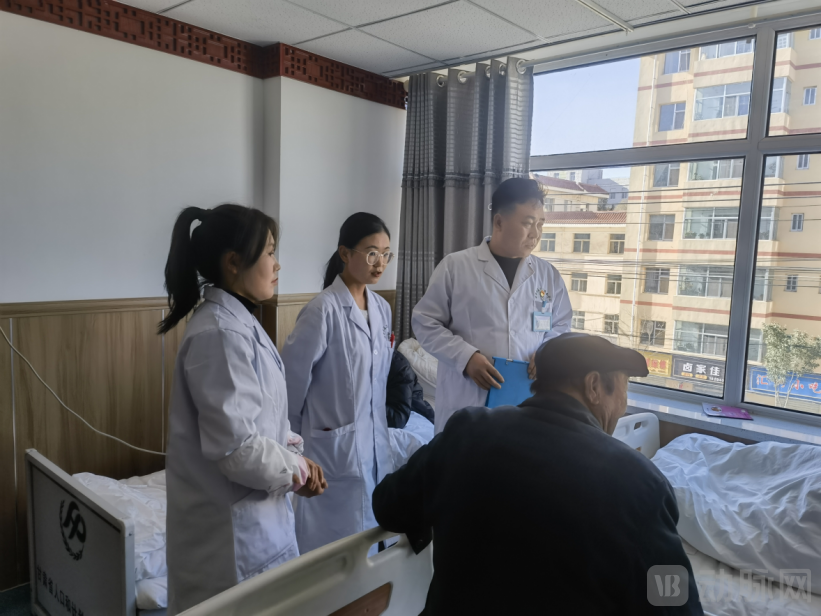
(Director Yang Xuefeng leads physicians on ward rounds, patiently inquiring about the patient’s hospitalization status)
Qingyuan Community Health Service Center in Qingyuan Town is located in Qingyuan Town, Weiyuan County, Dingxi City, Gansu Province, serving a population of over 70,000 residents across 25 administrative villages and six communities. As the area was previously designated as a national county with deep poverty, its medical capabilities were long constrained by outdated medical equipment and a shortage of professional personnel. With increased national poverty alleviation efforts and a rising urbanization rate, the Qingyuan Community Health Service Center was officially established in August 2021 with the support of the county party committee and county government. It is committed to enabling residents to access high-quality, efficient diagnostic and treatment services close to home.
According to reports, when the community health service center was first established, it had a total staff of only slightly more than 30 people. Most of its laboratory and diagnostic equipment consisted of outdated models that had been in service for over ten years, significantly compromising the quality of diagnosis and treatment. Taking color Doppler ultrasound as an example, poor image clarity made it difficult to detect even common polyps, leading to numerous missed diagnoses. “In such cases, we had no choice but to refer patients to higher-level hospitals for ultrasound examinations,” said Yang Xuefeng with resignation.
Fortunately, the Community Health Service Center soon benefited from medical assistance programs under the East-West Collaboration initiative. In recent years, Hisense Medical has partnered with Dingxi City in Gansu Province through this initiative, collaborating on products, technology, talent, and services to continuously provide high-quality medical resources for the development of local primary healthcare systems. In addition to donating ultrasound equipment to primary healthcare institutions in Dingxi and Longnan, including Weiyuan County, Hisense Medical has invited ultrasound experts to conduct online and offline training programs to enhance ultrasound diagnostic capabilities. Yang Xuefeng stated that leveraging this opportunity, the center has acquired new color Doppler ultrasound systems and fully automated biochemical analyzers, and added equipment such as trace element analyzers, electronic colposcopes, and Gamma Knife systems. It has also established an optometry and eyeglass fitting center, thereby meeting the infrastructure needs of primary healthcare institutions.
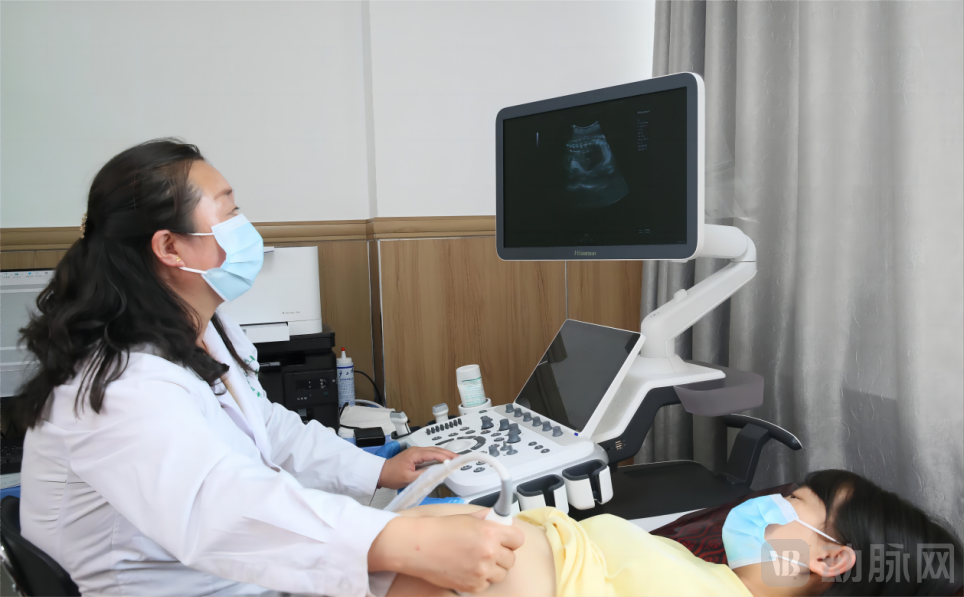
(The sonographer performs an ultrasound examination on the pregnant woman.)
“We didn’t have high expectations before using the new color Doppler ultrasound system, as hospitals had primarily relied on foreign brands in the past, believing they offered superior image quality. However, after putting it into operation, we found that the quality of domestically produced medical equipment far exceeded our expectations,” said Yang Xuefeng. The new color Doppler ultrasound system offers more comprehensive functionalities, including newly added cardiac and vascular color Doppler ultrasound services. It delivers clearer and more uniform images, with significant improvements in both examination speed and accuracy. Ultrasound equipment is playing an increasingly positive role in health screening for the elderly and in outpatient examinations.
Yang Xuefeng mentioned that in February this year, during routine health examinations for the elderly, the center identified a patient in his 70s with liver cancer. Based on imaging findings, the sonographer made the diagnosis and recommended timely transfer to Dingxi City People’s Hospital for interventional therapy. Feedback from the tertiary hospital confirmed that the diagnostic results of the community health service center were consistent with those of the higher-level hospital.
Thanks to these supports and improvements, the Qingyuan Community Health Service Center in Qingyuan Town has achieved leapfrog development since its establishment in 2021, earning the trust and recognition of local residents. Yang Xuefeng stated that the center’s daily outpatient volume has increased from 70–80 patients in 2021 to over 200 currently, while the number of hospitalized patients has risen from more than 20 to over 50. Furthermore, in 2022, the community health center launched gynecological and prenatal check-up services. Due to the upgrading of Hisense color Doppler ultrasound equipment, its diagnostic capabilities have reached a level comparable to that of large hospitals. As a result, many women in the town choose to establish their maternity records at the center, with annual examinations exceeding 1,000 visits.
Yang Xuefeng remarked with deep appreciation that the annual free health check-ups provided to seniors aged 60 and above have evolved into a relatively comprehensive service system. From increasingly diverse screening items to one-on-one professional analysis of results, followed by targeted treatment from family doctors, the offering constitutes an “end-to-end” service. Should the final diagnosis meet hospitalization criteria, community health service centers are also equipped to admit patients with general conditions. Thanks to these advantages, this basic medical service has been widely acclaimed, with voluntary participation rising year by year: approximately 3,000 participants in 2021, increasing to 4,000 in 2022, and reaching 5,000 this year.
When discussing the future development plans of community health service centers, Yang Xuefeng said, “The primary responsibility of primary-care hospitals is to ensure that residents have access to basic public health and medical services. Our key focus areas are mainly in the following three aspects:
First, ensure effective "triple management" of chronic diseases.The permanent residents in the jurisdiction are predominantly elderly individuals, among whom chronic diseases are the most prevalent issues. The center must improve the management of the “three highs” (hypertension, hyperglycemia, and hyperlipidemia). At present, the center’s management focus remains on blood glucose and blood pressure, while lipid management is relatively neglected and urgently needs improvement. Only by implementing joint management of all three conditions and establishing a model of “prevention first, then treatment” can effective prevention and control of chronic diseases be truly achieved.
Second, comprehensively enhance the service capacity of traditional Chinese medicine.Rural areas are largely affected by population outflow, making it inconvenient for the elderly to travel; thus, village and town doctors need to provide home-based diagnosis and treatment. Many Traditional Chinese Medicine (TCM) diagnostic and therapeutic techniques offer advantages such as simple instrumentation and ease of operation, demonstrating particular efficacy in treating conditions like lower back and leg pain, which holds significant practical value at the grassroots level.
Third, a closely integrated medical consortium has been established with the County People’s Hospital.Qingyuan Community Health Service Center has currently signed a medical consortium agreement with Weiyuan County People's Hospital, which can achieve better assistance effects between upper and lower-level hospitals. When patients need to be transferred to higher-level hospitals for diagnosis and treatment, they can also enjoy a more convenient green channel.
“Although we are still short of doctors and some equipment has not yet arrived, preventing us from establishing a dental department, our center’s goal is clear: to operate as a community hospital that allows residents to enjoy the service standards and quality of a secondary hospital while paying only the fees associated with a primary hospital,” said Yang Xuefeng, expressing his confidence in this vision.