

Universal Diagnostics Files for IPO Following €100M Raised Across 10 Rounds to Advance Liquid Biopsy-Based Cancer Early Detection

Universal Diagnostics
In Vitro Diagnostics Product Developer
Quest Diagnostics
Diagnostic Testing Service Provider
On November 20, 2023, Universal Diagnostics (“UDX”), a biotechnology company dedicated to transforming cancer into a curable disease, announced the completion of its Series B financing round of approximately €64.2 million (RMB 500 million). The round was led by Quest Diagnostics. Concurrently, UDX announced a strategic partnership with Quest Diagnostics, under which Quest Diagnostics will exclusively offer UDX’s Signal-C® colorectal cancer screening test in the United States.
After 10 rounds of financing, UDX has currently raised €100 million (equivalent to RMB 780 million).
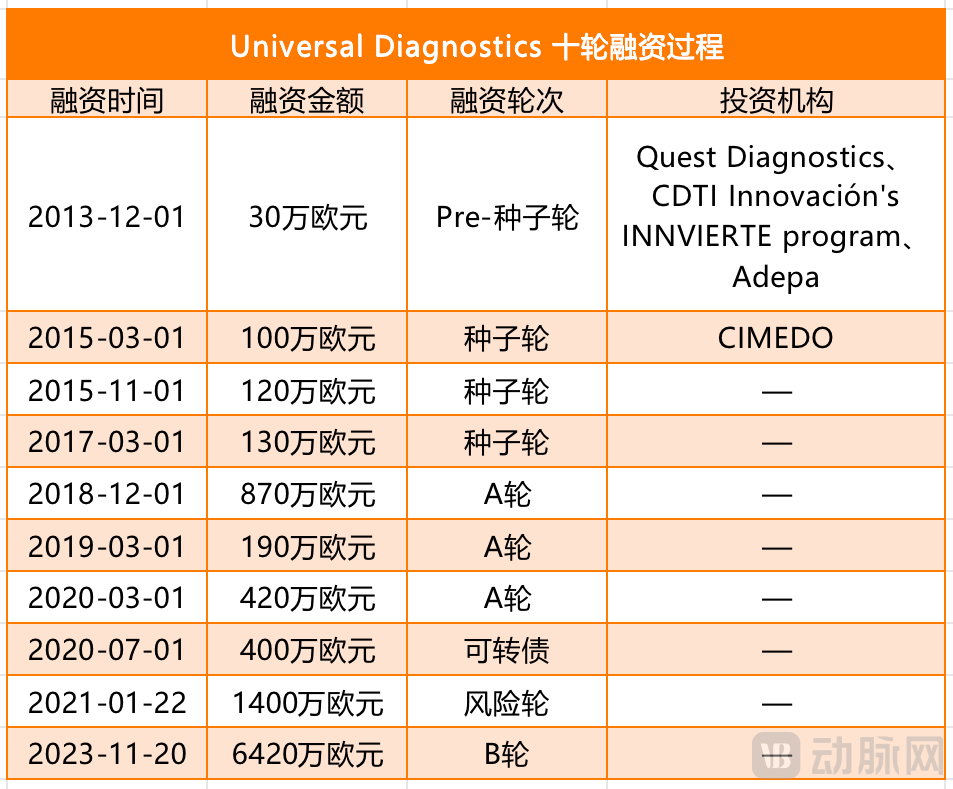
Universal Diagnostics Funding Overview | VCBeat
UDX, founded in Spain in 2012, is co-founded and led by CEO Juan Martínez Barea. He previously served as the founder and CEO of the MIT $50K Spain high-tech venture capital incubator, participating in the launch and fundraising of over 100 high-tech startups.
Among the UDX team members, Kristi Kruusmaa, the Research Director, is also noteworthy. She holds degrees in genetics, biotechnology, and biochemistry, and has over 10 years of experience in the biotechnology industry. Her expertise and research interests span genetics, cancer biology, liquid biopsy, method development, and data analysis. She also holds 22 patents.
The UDX Scientific Advisory Board is equally impressive, comprising 70 biotechnologists and bioinformaticians from 15 countries, including Josep Tabernero, President of the European Society for Medical Oncology (ESMO).
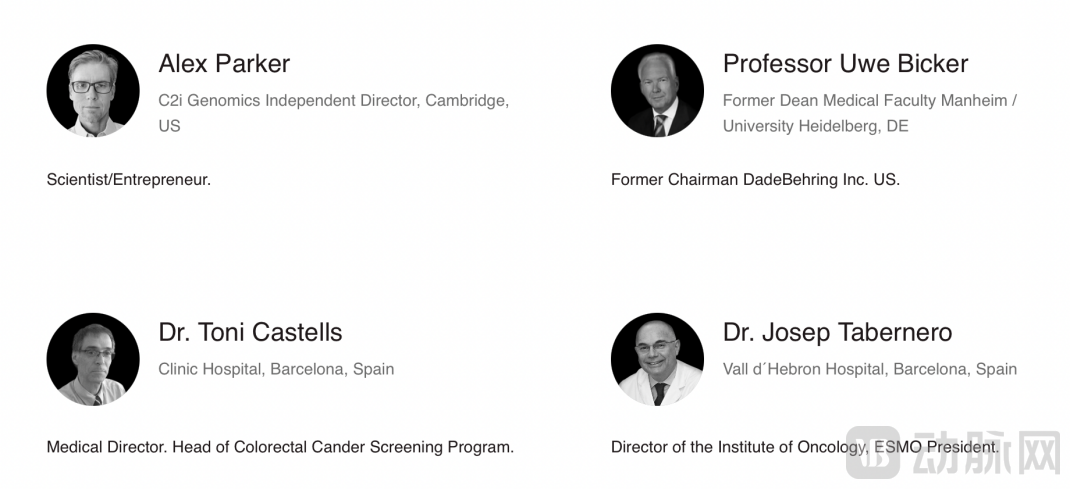
Some Members of the Scientific Advisory Team at Universal Diagnostics. Image source: Universal Diagnostics
Due to the insidious onset and rapid progression of cancer, patients are often diagnosed only at intermediate or advanced stages, thereby missing the optimal window for treatment. However, during the processes of growth, necrosis, and apoptosis, cancer cells release specific biomarkers into body fluids (including blood and urine). Detection of these cancer signals in body fluids enables early diagnosis of cancer.
Colorectal cancer is the third most common cause of cancer death among men and women in the United States and the second deadliest cancer. According to data from the American Cancer Society, approximately 153,020 people in the U.S. were diagnosed with colorectal cancer in 2023, and 52,550 people are expected to die from the disease. Based on the 2021 National Health Interview Survey, only 59% of individuals aged 45 and older were up to date with their colorectal cancer screening in 2021.
Taking colorectal cancer as an example, if it is detected at an advanced stage, the survival rate will be significantly reduced (the survival rate for Stage IV is 11%, while that for Stage I is 85%). If it can be detected at the precancerous stage (also known as advanced adenoma), the five-year survival rate can increase from 60% to 90%. In other words, early detection of cancer is highly effective in curing the disease.
However, traditional diagnostic and therapeutic approaches are highly invasive and lack sufficient sensitivity and accuracy. There is an urgent need to identify a minimally invasive method for early tumor screening, prognostic monitoring, assessment of treatment efficacy, and evaluation of drug resistance. Compared with conventional tissue biopsy, non-invasive liquid biopsy requires smaller sample volumes, allows for repeated sampling, and can real-time reflect changes in tumor heterogeneity.
UDX’s products leverage liquid biopsy technology to enable early cancer detection.
DNA Methylation: A Key Source for Cancer Sample Detection
UDX’s early research efforts focused on metabolites and proteins. However, the company ultimately shifted its focus to DNA methylation patterns. These patterns are tissue-specific and highly sensitive, enabling clearer differentiation between healthy individuals and cancer patients, including those with precancerous lesions. Furthermore, DNA methylation patterns exhibit greater disease and tissue specificity than SNP mutations and provide richer signals than high allele frequencies, making them an excellent choice for early cancer detection.
UDX has focused its research on colorectal cancer, characterizing the global DNA methylation patterns in pathological tissues from patients with colorectal cancer and advanced adenomas. Subsequently, they demonstrated that cancer can be detected from circulating tumor DNA (ctDNA) in blood by identifying these same DNA methylation patterns using next-generation sequencing.
Cancer detection is measured by two key metrics: sensitivity and specificity. These represent the proportions of tests that yield true positive and true negative results, respectively. One of the initial challenges UDX faced in developing its liquid biopsy test was meeting the required levels of sensitivity and specificity.
“Compared to the total DNA in a sample, the amount of ctDNA is extremely low; therefore, sensitivity and specificity must be as high as possible,” explains Kruusmaa. “The assay requires the ability to identify methylation patterns based solely on DNA fragments, where perhaps only one in a million reads originates from cancer.”
Liquid biopsy technologies primarily include three types: digital PCR (dPCR), real-time quantitative PCR (qPCR), and next-generation sequencing (NGS). Among these, dPCR is typically used for single-locus detection; qPCR is employed for multi-locus detection of a single gene; and NGS can simultaneously detect various mutation types across a large number of genes.
Initially, the research team adopted a qPCR-based approach because amplicon-based NGS methods at the time were unable to perform highly multiplexed targeted methylation detection on cfDNA. An article in Nat Rev Drug Discov demonstrated that over the past decade, driven by declining sequencing costs and advances in data analysis, the technologies underpinning liquid biopsy products have shifted from PCR and bioinformatics to NGS and machine learning.[1]。
The UDX team also recognized that progress required the use of next-generation sequencing (NGS) methods, as the sensitivity and throughput of PCR were insufficient to detect hundreds of distinct regions harboring colorectal cancer methylation signatures. The UDX R&D team collaborated with Twist Bioscience to develop an NGS-based liquid biopsy assay centered on hybrid capture of DNA fragments of interest.
In May 2023, UDX conducted a study using samples from four distinct genetic populations in the United States, Spain, Germany, and Ukraine, yielding the following results: Signal-C® demonstrated a sensitivity of 93% and a specificity of 92% for detecting colorectal cancer, compared to 92% sensitivity and 87% specificity for currently used stool-based standard tests; for detecting precancerous lesions, Signal-C® showed a sensitivity of 54% and a specificity of 92%, whereas the stool-based standard test achieved only 42% sensitivity.
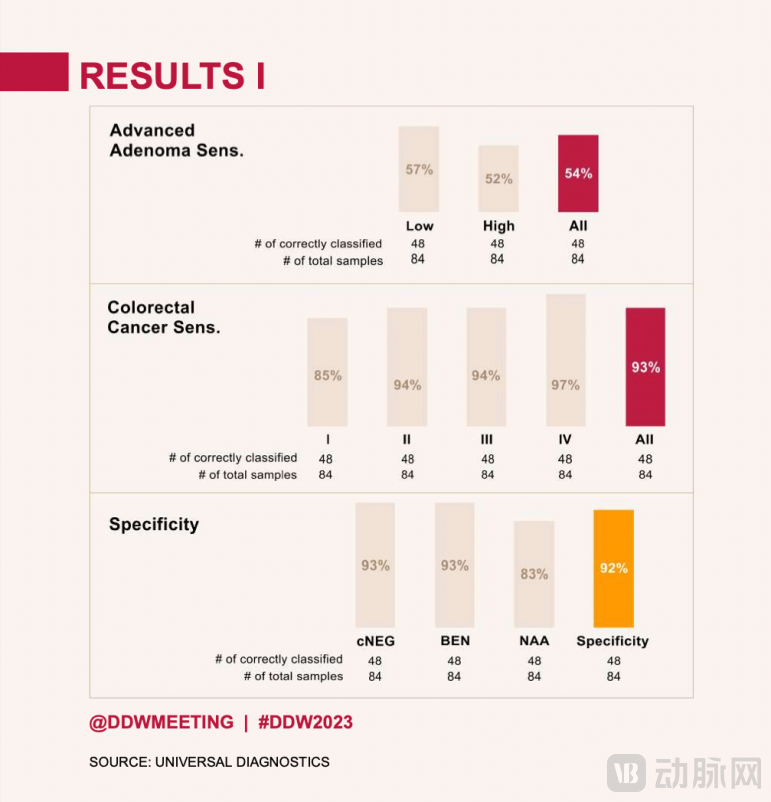
Signal-C® Colorectal Cancer Test Results Source: Universal Diagnostics
Previously, UDX demonstrated that non-invasive liquid biopsy technology can be used to detect colorectal cancer and advanced adenomas by analyzing ctDNA methylation and single-target sequencing-based fragmentation profiles, integrated with advanced computational biology and machine learning algorithms.
In 2022, the company expanded its early detection capabilities for colorectal cancer to include prognosis and stratification, demonstrating that analysis of microbiome signatures in plasma can enable early detection of colorectal cancer. In September 2023, UDX revealed that combining copy number variation (CNV) with cfDNA fragment size information could serve as a novel approach for the early detection of colorectal cancer.
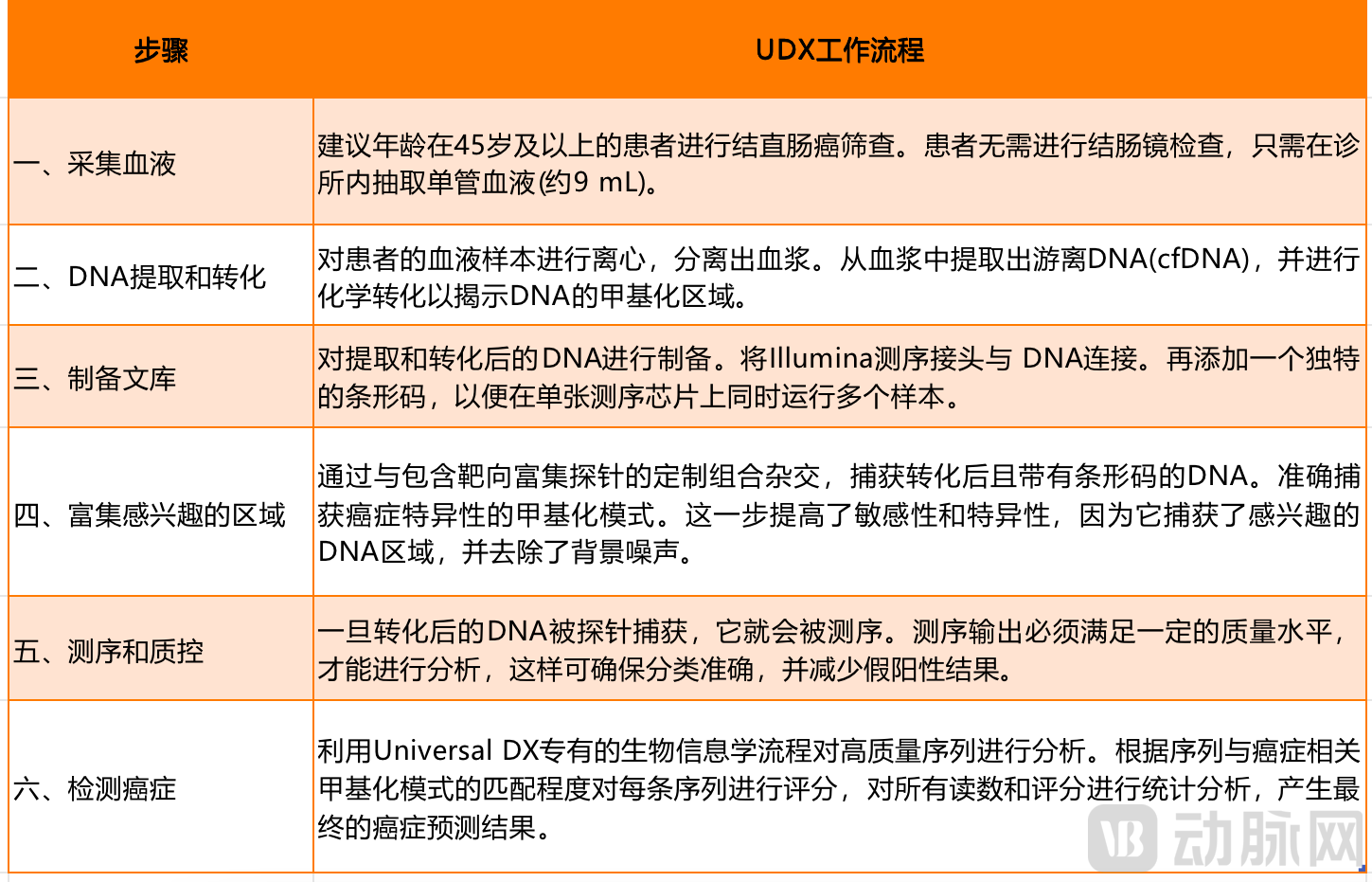
Universal Diagnostics Workflow | VCBeat
Although UDX initially focused on colorectal cancer, with ongoing research updates and iterations, the company’s current technology and platform are now capable of identifying unique DNA sequence regions associated with other high-burden cancers, such as lung cancer, breast cancer, gastric cancer, colorectal cancer, and liver cancer.
To support the submission of a premarket approval application, UDX has initiated a clinical validation study of Signal-C® involving 15,000 patients. The objective of this study is to evaluate the performance characteristics of Signal-C® in detecting colorectal cancer and advanced precancerous lesions among average-risk individuals aged 45–84 years undergoing screening.
The future of cancer treatment is believed to align with the vision proposed by UDX: “We have every reason to be optimistic about the future of early cancer detection based on these results. With a massive sample set, we are one major step closer to a future where cancer can become a curable disease.”
Compared with foreign countries, the domestic early screening industry started relatively late. However, as the incidence of cancer continues to rise, early cancer screening has become one of the important tasks in the field of public health. On the other hand, with the improvement of the payment environment such as commercial insurance in China, the market space for early cancer screening is expected to expand rapidly. Emphasizing early cancer screening has become an inevitable trend.
References
[1] Xie W, Suryaprakash S, Wu C, Rodriguez A, Fraterman S. Trends in the use of liquid biopsy in oncology. Nat Rev Drug Discov. 2023 Jul 10. doi: 10.1038/d41573-023-00111-y. Epub ahead of print. PMID: 37430116.
[2] J M Kinross et al. Accurate early-stage colorectal cancer detection through analysis of cell-free circulating tumor DNA (ctDNA) methylation patterns. Journal of Clinical Oncology 39, no. 15_suppl (May 20, 2021) 3606-3606. doi: 10.1200/JCO.2021.39.15_suppl.3606