

Female Urologist Xia Dan Pioneers Medical Innovation with Da Vinci Surgical System
In 1994, Xia Dan, a young graduate of Zhejiang Medical University, was assigned toDepartment of Urology, The First Affiliated Hospital, Zhejiang University School of Medicine, she felt a bit uneasy.
Urology, a department predominantly serving male patients, makes female doctors a veritable “rare species.” Awkwardness is inevitable for those new to the field. As a physician, Xia Dan relies on her professionalism to transcend gender barriers in her work, but not all patients share this perspective. “Some patients would open the door, see a female doctor, and immediately turn around and leave.” In addition, the heavy surgical workload left Xia Dan feeling overwhelmed. Gradually, she began considering a transfer to another department.
After learning of the situation, Professor Wei Kexiang, Director of the Department, had a lengthy conversation with her: “Xiao Xia, please hold on for two more years. If you still feel that urology is not suitable for you after two years, I will personally intervene to help transfer you to another department.”
Professor Wei Kexiang was the first female urologist in New China. Under her exemplary leadership and encouragement, Xia Dan gradually came to appreciate the allure of urology. Today, Xia Dan has grown into a leading female figure in the Department of Urology at the First Affiliated Hospital, Zhejiang University School of Medicine, dedicating herself to innovative medical practices, just like her mentor.
I. First Encounter with “Da Vinci”: A Personal Experience of the Changes in Medical Innovation
Surgeons are among those who most keenly perceive medical advancements through surgical instruments. For Xia Dan, the advent of the da Vinci Surgical Robot has given her a firsthand experience of the changes brought about by medical innovation.
In 2006, Xia Dan traveled to National Yang-Ming University in Taiwan to undergo training on the da Vinci Surgical System. At that time, there were only three da Vinci systems in all of Taiwan, and none had yet been imported into mainland China; this marked Xia Dan’s first encounter with the da Vinci system.
Through the “da Vinci” display, she clearly visualized microvessels finer than a human hair. Grasping the lightweight console controls of the “da Vinci” system, she manipulated surgical instruments capable of 720-degree flexible rotation to complete the suturing.
“After using the 'Da Vinci' system,"It feels like performing laparoscopic surgery is akin to operating with chopsticks.".” This was Xia Dan’s immediate impression after using the system. In traditional laparoscopic surgery, when dealing with lesions in confined spaces, surgeons can only adjust the manipulation angle through arm movements, which severely restricts operational flexibility; the motions are strictly vertical, akin to manipulating a scalpel with chopsticks.
Academician Zhang Xinshi happened to observe Xia Dan’s procedure and approached her, asking, “Your technique is very proficient. Did you receive training in the United States?” She can no longer recall exactly how she responded at the time, but the excitement she felt remains unforgettable: “It showed that I had a talent for this.”
In 2014, the first da Vinci surgical robot in Zhejiang Province was installed at The First Affiliated Hospital of Zhejiang University School of Medicine. On its inaugural day of operation, Dr. Xia Dan used the da Vinci system to perform a prostate cancer surgery. Compared with traditional open surgery, this procedure resulted in less blood loss, more precise tumor resection, and significantly reduced operative time. Furthermore, postoperative recovery speed and outcomes were superior to those of conventional surgery.
In this instance, Xia Dan believes that the "da Vinci" system is highly suitable for urological surgeries. She aims to promote this technology to allow more patients to benefit from the advances in medical care. In 2014, she co-foundedChina's Earliest Minimally Invasive Urology Center, with the aim of cultivating more urological surgical talents.
Not only that, but the “da Vinci” system also planted the seeds of innovation in her heart, inspiring her to continuously discard the old and embrace the new, remain open to novel approaches, and collaborate with her team to pursue innovative practices.
II. Telemedicine Has Become a Reality, While Surgical Robots Still Have Room for Innovation
In 2023, leveraging the development of 5G technology, Xia Dan performed a procedure on a patient in Quanzhou from the Phase I Robot Training Center at the headquarters of The First Affiliated Hospital, Zhejiang University School of Medicine.World's First 5G Remote Multi-Arm Robotic Radical Prostatectomy。
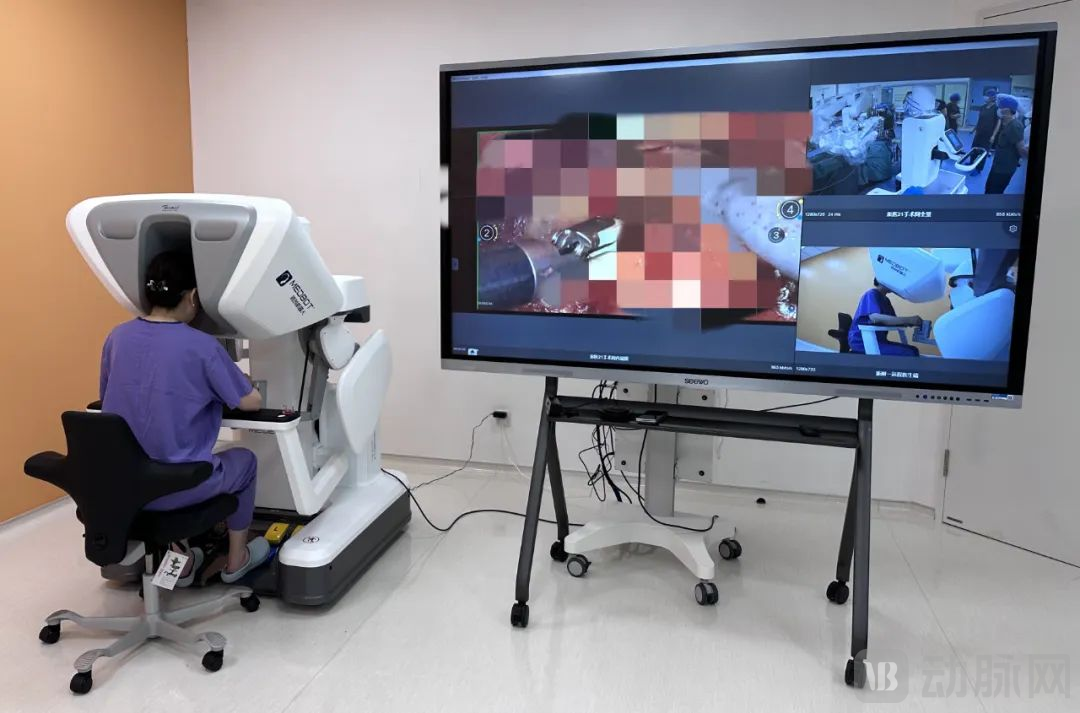 Xia Dan Performs 5G Remote Multi-Arm Robotic Radical Prostatectomy at The First Affiliated Hospital, Zhejiang University School of Medicine
(Image source: Department of Urology, Phase I of the Main Campus, The First Affiliated Hospital, Zhejiang University School of Medicine)
Advancements in information technology and innovations in surgical robots have transformed telemedicine from a distant fantasy into a reality, enabling the decentralization of medical resources to primary care settings. However, Xia Dan believes that there is still significant room for innovation in surgical robotics. Drawing from her clinical experience, she has identified two key directions for the future development of surgical robots: intelligence and diversification.
First is intelligence.Currently, most surgical robots focus on ease of operation, whereas clinicians prioritize enhancing surgical safety and efficacy. Therefore, future surgical robots need to be integrated with intelligent imaging systems, leveraging image-guided “navigation” capabilities to provide surgeons with reference surgical plans. Furthermore, given the significant variability in patient conditions, surgical robots require extensive databases to assist physicians in managing intraoperative emergencies.
Second is diversification,Here, diversification primarily refers to the diversification of energy platforms.Currently, the surgical knives available for use with surgical robots are primarily conventional monopolar or bipolar electrosurgical knives. Although ultrasonic scalpels have been employed in clinical practice, their limited energy transmission paths make them difficult to integrate with surgical robotic systems. Therefore, future surgical robots will need to be equipped with additional energy platforms to reduce intraoperative bleeding, achieve precise cutting, and improve surgical efficiency.
Xia Dan told VCBeat, “Although these are still just concepts for now, it is ideas that turn into reality. Clinicians have the best understanding of clinical needs,”Only when clinicians articulate their needs can they better guide innovation and development in the medical industry.。”
III. Precision Medicine Is Still on the Way
As of 2023, Xia Dan had completed more than 3,000 da Vinci robotic surgeries. For her, operating the “da Vinci” system has become second nature; nevertheless, she still devotes substantial time before each procedure to studying the patient’s condition. Even for patients with similar presentations, she formulates individualized surgical plans tailored to each patient’s specific circumstances.
“Patients are all independent individuals; no matter how similar they may appear, there are always differences, and we should treat them on an individualized basis.” This is the principle that Xia Dan has consistently upheld throughout her more than 20 years of medical practice.AlsoOne of the Reasons She Promoted Precision Medicine Within the Hospital。
Take Xia Dan’s focused area of prostate cancer as an example. According to the “Cancer Statistics 2023” report published in January 2023 by CA: A Cancer Journal for Clinicians, prostate cancer accounts for 29% of all cancer cases in men, making it the most prevalent cancer among males.
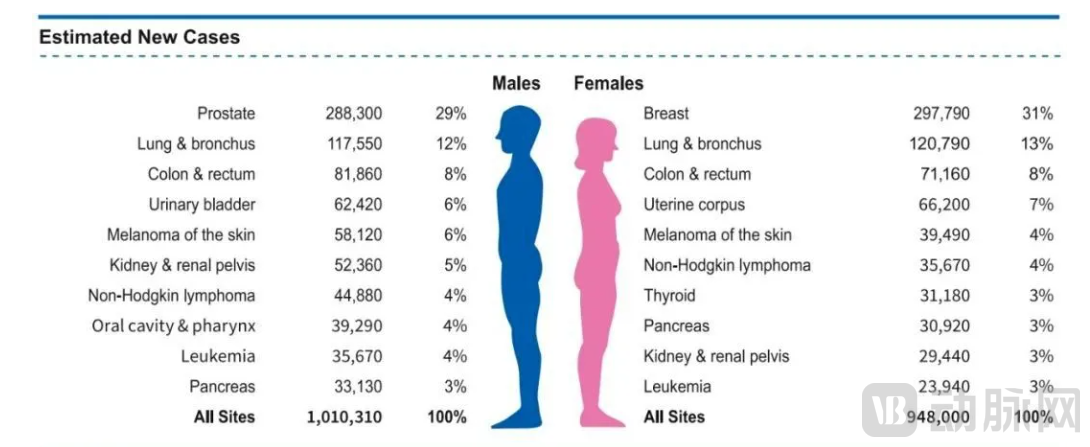
High-Incidence Cancers (Image source: "2023 Annual Cancer Report")
However, prostate cancer has numerous causes, and patients vary in tumor location, size, and pathological characteristics. In Xia Dan’s view, relying solely on surgical intervention without considering pre- and post-operative management does not constitute comprehensive treatment.
Since 2018, Professor Xia Dan has been pioneering the implementation of precision medicine in urology. Upon patient admission, an initial stratification is conducted based on the patient’s physical condition, pathological grading, and recommendations from the multidisciplinary team (MDT) to determine whether the treatment plan should be surgical or conservative. During the surgical phase, imaging data are integrated to formulate more refined, individualized treatment strategies, striving to achieve a “one patient, one protocol” approach that closely aligns with each patient’s specific clinical condition.
Furthermore, factors such as the patient’s financial situation are also within the scope of considerations for Xia Dan’s precision medicine approach. She emphasized to VCBeat: “Precision medicine requires not only a comprehensive integration of objective cancer pathological grading and physicians’ actual clinical assessments, but also consideration of patients’ financial circumstances and psychological preparedness, in order to improve their post-treatment quality of life and daily functioning.”
Precision medicine has achieved remarkable success in urology, significantly improving both cure rates and patient satisfaction. Currently, precision medicine is being piloted across the entire First Affiliated Hospital of Zhejiang University School of Medicine, serving as a model for numerous renowned medical institutions to emulate.
IV. Epilogue
Prostate cancer is a focal point of attention in the medical community, with new drugs and therapies emerging nearly every year. Nevertheless, Xia Dan maintains that “our understanding of prostate cancer remains at a nascent stage.”
Physicians are the main force in treating diseases, but they never fight alone. Combating disease requires the joint efforts of researchers across various fields and strengthened interdisciplinary collaboration to spare more patients from the burden of illness. In the future, Xia Dan will continue to harness innovative forces in clinical practice and contribute as a clinician to advancing medical innovation.