

Soft Endoscopy Rising Star CosMedic Completes Two Rounds of Financing in 2023, Led by IDG Capital with Continued Support from Existing Investors TCV and NEMIC

IDG Capital
Venture Capital Institution
VCBeat has learned that, recently, the rising star in flexible endoscopesShenzhen CosmoMed Medical Technology Co., Ltd.(hereinafter referred to as “Kesi Mingde”) announced the completion of its Series A financing round, raising tens of millions of RMB. This round of financing was led byIDG CapitalLead Investor, Existing ShareholdersCO-WINandNational Innovation Center for High-Performance Medical Devices(hereinafter referred to as the “National Innovation Center”) continues to make excess co-investments.
This financing round also marks the second one completed by CosmoMed within the year, following its Pre-A round in January 2023. With the combined support of existing and new shareholders, the company will continue to strengthen innovation and R&D in flexible electronic endoscopy products, expand its market influence and share, and accelerate the domestic substitution of flexible endoscopes in China.
CosmoMed was established in 2022. The company focuses on the research and development of innovative flexible electronic endoscopes, committed to identifying clinical needs, meticulously crafting high-quality products, and providing optimal diagnostic and therapeutic solutions for clinical users. The CosmoMed team possesses extensive experience in product R&D and manufacturing, having built a robust foundation of underlying technologies around its flexible electronic endoscopy platform. This capability enables in-depth independent research, development, and manufacturing of both processor units and endoscope insertions, with its novel technical solutions encompassing dozens of patented technologies.
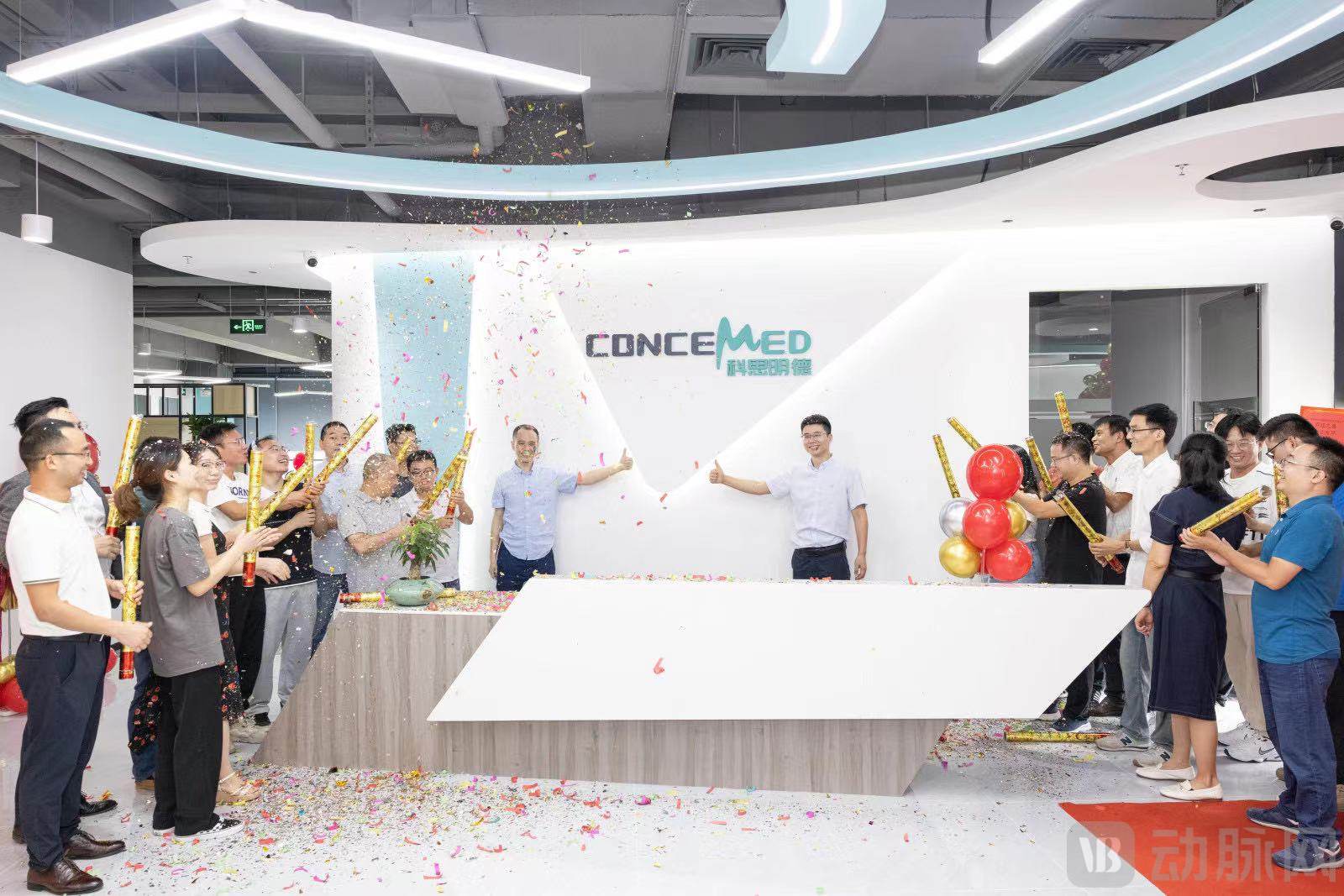 In August 2023, the company’s headquarters relocated to Phase III of Jinxiu Science Park in Longhua District, Shenzhen.
Currently,Kesi Mingde has launched the new high-end intelligent integrated flexible endoscopy platform V1000, along with complementary innovative gastroscopes and colonoscopes, and has deployed multiple groundbreaking products around the flexible endoscopy platform.Covering clinical fields including gastroenterology, respiratory medicine, otolaryngology and ophthalmology, gynecology, and urology.
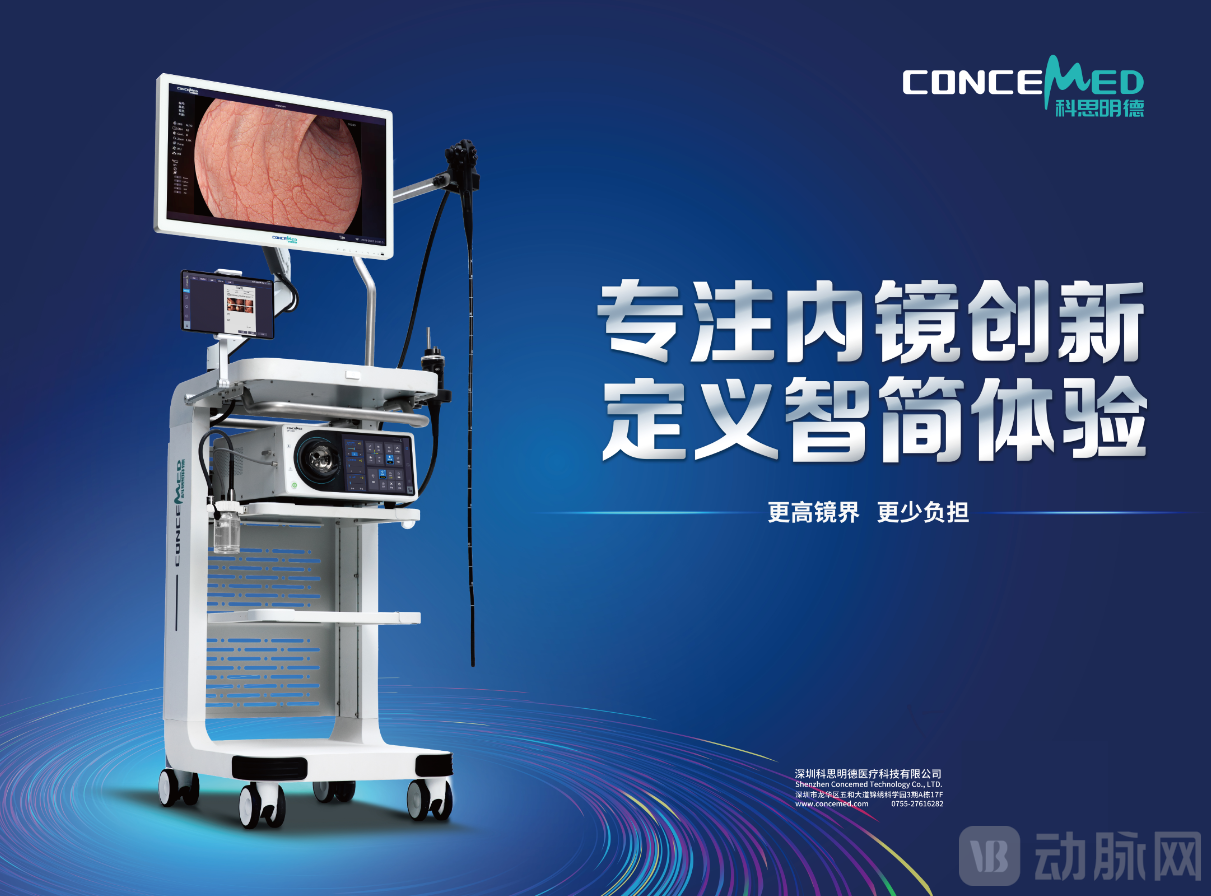
V1000, the New Generation Intelligent Electronic Endoscopy System
In 2023, the company made successive appearances at the Shanghai Spring CMEF, Shenzhen Autumn CMEF, and specialized summits and forums in gastroenterology. The company’s products garnered extensive industry attention due to their innovative product definition, high-quality imaging, and superior maneuverability.
According to data analysis from select authoritative World Health Organization market reports, the incidence and mortality rates of malignant tumors rise with age, increasing rapidly after the age of 40. Meanwhile, as China’s population aging intensifies, the incidence of gastrointestinal cancers is steadily rising.
At present, due to insufficient public awareness of early cancer screening and limited acceptance of gastrointestinal endoscopy in China, compounded by a shortage of endoscopists and uneven distribution of medical resources, the country continues to face challenges such as low awareness of early cancer screening, an imperfect screening system, and low screening coverage. These factors have made it difficult to implement large-scale population-based screening for gastrointestinal cancers. However, with the accelerating aging of the population, the advancement of favorable policies supporting early gastrointestinal cancer screening, healthcare infrastructure development, and tiered diagnosis and treatment, as well as the introduction of novel endoscopic techniques, the demand for endoscopic diagnosis and treatment is rapidly being unleashed, driving continuous expansion of China’s digestive endoscopy market.
Currently, flexible electronic endoscopes remain the primary devices for screening and treating gastrointestinal cancers.“Early detection, early diagnosis, and early treatment” of precancerous conditions and tumors of the digestive tract have gradually become a consensus. Histopathological examination of endoscopic biopsy or resection specimens is the gold standard for confirming gastrointestinal cancers, and endoscopic resection of precancerous lesions can reduce the incidence and mortality of gastrointestinal cancers.
However, according to the 2021 bidding and tendering data from China Medical Procurement Network,Domestic brands account for less than 10% of the market share in the endoscopy field,Domestic hospitals remain dominated by imported brands. Chinese manufacturers still urgently need to achieve breakthroughs in specialized technical areas such as endoscope craftsmanship, duodenoscopes, 4K flexible endoscopes, optical magnifying endoscopes, and ultrasound endoscopes. According to research data from CITIC Securities, the domestic market size for flexible endoscopy equipment is growing rapidly, with projections reaching RMB 8.12 billion by 2025 and RMB 11 billion by 2030.
As China’s population continues to age, the demand for early screening, diagnosis, and treatment of gastrointestinal cancers will rise accordingly. Consequently, domestic brands of flexible endoscopy devices, which are closely associated with these procedures, will become a focal point for both the industry and the market. Meanwhile, as serious medical products that combine diagnostic and therapeutic functions, flexible endoscopes require users to place significant emphasis on product safety and efficacy. Companies like CosmoMed, which possess years of accumulated expertise in the industrialization of medical devices, can not only drive technological innovation but also ensure product quality and stability, making them increasingly favored by the market.
IDG Capital“We consider digestive endoscopy a major sector of medical devices that we continuously monitor. The Kesi Mingde team has demonstrated clear product strategy, successful product development experience, and comprehensive in-house R&D capabilities across all modules. Moreover, the company is highly focused, entrepreneurial, and innovative. We strongly align with Kesi Mingde’s mission to ‘popularize innovative endoscopic technologies,’ thereby increasing the penetration rate of early screening, diagnosis, and treatment of gastrointestinal diseases. Looking ahead, IDG Capital aims to support Kesi Mingde in delivering better solutions for gastroenterology and creating greater clinical value.”
Ms. Huang Li, Founding Partner of CO-WIN CapitalIt was stated that since the last round of investment, Cosmind Medical has made significant progress in both product R&D and team building. On the clinical front, experts have given high praise to the company’s new generation of endoscopic products. Additionally, the company has built a pipeline of original innovative products. Historically, the endoscopy sector was monopolized by imported brands. Against the backdrop of dividends from domestic substitution and the overall advancement of “Intelligent Manufacturing in China,” we expect Cosmind Medical, as a dark horse, to reshape the landscape of the endoscopy sector and emerge as a leading brand. We believe that the team will continue to develop outstanding products, create clinical value in both domestic and international markets, and bring greater benefits to patients.
Dr. Liu Heng, Deputy General Manager of the National Innovation Center for High-Performance Medical Devicesstated that since the National Innovation Center’s previous round of investment, CosmoMed has demonstrated a professional, efficient, and cohesive work style, along with strong execution capabilities in team building, product R&D, and market expansion preparations. Its overall development has exceeded our prior expectations. The National Innovation Center remains optimistic about the flexible endoscopy sector and the growth prospects of Chinese manufacturers within it. Following its investment in CosmoMed, the Center has actively assisted the company in successfully relocating to a new facility in Longhua District, Shenzhen. Going forward, it will continue to provide multi-dimensional, full-lifecycle empowerment to outstanding domestic medical device innovators represented by CosmoMed, jointly contributing to the development of China’s high-end medical device industry.
Kesi Mingde TeamHe expressed gratitude for the strong support from IDG Capital, as well as the continued backing from existing and new shareholders such as CO-WIN Venture Capital and the National Innovation Center. As a medical technology company rooted in Shenzhen, Kesi Mingde is guided by the principles of innovation, focus, efficiency, collaboration, and a global perspective. Looking ahead, Kesi Mingde is committed to leveraging innovative technologies and advanced concepts to continue addressing clinical needs, empowering minimally invasive surgery, popularizing advanced endoscopic equipment, and developing more innovative flexible endoscope products to enhance integrated diagnostic and therapeutic solutions. In the future, Kesi Mingde strives to become a leading domestic enterprise in flexible endoscopy and a world-class provider of comprehensive flexible endoscopy solutions, thereby rewarding its investors while benefiting the general public.
About IDG Capital
IDG Capital pioneered venture capital operations in China in 1993, making it the country’s longest-established private equity investment firm and one of the largest private equity fund managers by assets under management (AUM). Over three decades of development, the firm has accumulated nearly RMB 200 billion in AUM. IDG Capital has maintained a strong focus on the healthcare sector for many years. In the past five years alone, it has invested in approximately 70 healthcare projects, strategically targeting sub-sectors such as biopharmaceuticals, medical devices and diagnostics, and artificial intelligence, while also capitalizing on opportunities arising from policy-driven innovative healthcare models.
In the biopharmaceutical sector, IDG Capital has not only invested in new drug R&D companies such as Kelun-Biotech, X-Wnt Biopharma, and Shengsi Bio, but also focused on upstream and downstream players across the industry chain, including BioAI, Zhenge Biotechnology, Southern Model Organisms, Noxegel, and Carestide. In the field of medical devices and diagnostics, IDG Capital has backed projects such as Yuanxin Technology, Huihe Medical, and ClearMed. In the artificial intelligence sector, it has placed bets on Changmugu and IceStone. By closely monitoring opportunities arising from national health insurance policy adjustments and healthcare service reforms, IDG Capital has identified star projects such as Weimai Healthcare and SiPay Health Tech.
About CO-WIN
Shenzhen CO-WIN Asset Management Co., Ltd. (hereinafter referred to as “CO-WIN”), established on June 26, 2000, is among the first batch of domestic professional venture capital firms in China. With over 22 years of investment management experience, the company manages assets exceeding RMB 30 billion, has invested in more than 600 enterprises, and facilitated the public listing of over 100 portfolio companies, including 24 listed on the STAR Market. As a leading domestic brand in the investment sector, CO-WIN is recognized for its long-standing operational history and consistently outstanding returns.
CO-WIN Venture Capital focuses on industrial chain investment, targeting emerging industries and specializing in segments such as healthcare, technology, information technology, and consumer goods. With extensive investment experience in hard-core and frontier technologies, the firm employs a prudent investment strategy to deeply uncover hidden champions and supports innovation and entrepreneurship through empowering investments, fully serving the real economy. Guided by the philosophy of being “a companion to startups and a guide to great enterprises,” CO-WIN Venture Capital is committed to progressing and growing alongside founders and entrepreneurs with an open mindset, acting as a “super partner” to businesses.
About the National Innovation Center
National Innovation Center for High-Performance Medical Devices (hereinafter referred to as the "National Innovation Center") was jointly established under the leadership of institutions including the Shenzhen Institutes of Advanced Technology, Chinese Academy of Sciences; Shenzhen Mindray Bio-Medical Electronics Co., Ltd.; Shanghai United Imaging Healthcare Co., Ltd.; LifeTech Scientific (Shenzhen) Co., Ltd.; and Harbin Institute of Technology. It received approval for construction from the Ministry of Industry and Information Technology in April 2020. As Shenzhen’s first national-level manufacturing innovation center, it is also the sole innovation center established by the state in the field of medical devices. Focusing on critical demands for high-end medical equipment in areas closely related to healthcare—namely prevention, diagnosis, treatment, and rehabilitation—the National Innovation Center concentrates on key domains such as high-end medical imaging, in vitro diagnostics and vital signs monitoring, advanced therapies, implantable and interventional devices, and rehabilitation and health informatics. It is committed to overcoming common core key technologies that hinder industry development, covering all stages from technology development and transfer/diffusion to initial commercial application, thereby building an innovative ecosystem for the high-performance medical device industry that integrates the innovation chain, industrial chain, and capital chain.