

Five Emerging Trends in Medical AI and Digital Health Following ChatGPT's Breakthrough
“With the rapid advancement of AI technology and the continuous expansion of model parameters, quantitative changes have led to qualitative leaps, giving rise to emergent intelligence,” remarked Liu Junwei, General Manager of Baidu Smart Healthcare, at the Future Medical Technology Conference.
Although 2022 appeared to be a year of cooling sentiment for digital health, with the early-pandemic enthusiasm waning from the primary market to IPOs, investors have become more cautious.In 2023, the digital technology sector once again witnessed a surge of fervor.Most notably, industry leaders have emerged. OpenAI’s ChatGPT fired the first shot in the deep application of AI.
The underlying reason isIn-Depth Exploration of Technological Value。
Large Models Have Drawn Widespread Attention from Academia and Industry
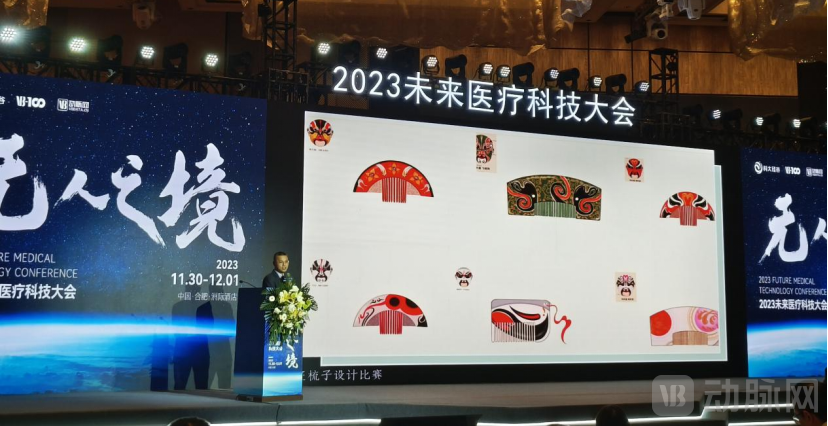
Judging by the attendees at the 2023 Future Healthcare Technology Conference, we could also sense the audience’s immense enthusiasm for digital technologies. The conference rooms were packed with scientists, investors, and corporate business development professionals.
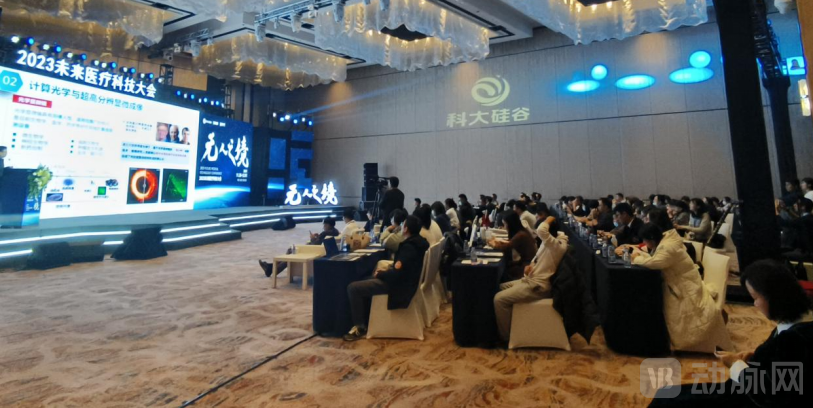
In the words of Wang Guangyu, a professor at Beijing University of Posts and Telecommunications,The development of foundational (large) models has endowed machines with the capabilities to perceive, think, explore, and create, which will have a profound impact on society and industries. This has attracted significant attention and R&D efforts from both the research community and industry.。
At the conference, Professors Zhang Yuanting, Zhou Shaohua, Wang Guangyu, and Gong Yan—prominent academics in attendance—concurred that artificial intelligence will profoundly impact the industry as digital technologies advance. They are respectively conducting frontier explorations in intelligent diagnostic devices, medical imaging, healthcare services, and microscopic imaging.
Meanwhile, in the capital markets, digital technology has experienced a rapid surge in heat. The fervor for ChatGPT has spread from the product itself to various sectors, igniting global interest starting from Silicon Valley. Google Trends data shows a sharp spike in ChatGPT’s global popularity index; from the perspective of the venture capital and private equity community, startups in this sector have continued to attract strong investor interest since the beginning of 2023.
Undoubtedly, this surge of momentum has presented opportunities for all enterprises, while also serving as a breakthrough point for digital technologies—Identify genuine application scenarios and aim for rapid implementation.。
Five Major Application Trends in the Integration of Digital Technology and Healthcare
Digital technology has become deeply embedded within the healthcare industry. Taking medical services as an example, Elsevier’s “White Paper on the Future Physician” indicates that over the next decade, three major trends will shape global healthcare development: the deep integration of digital technologies with medical services, a comprehensive improvement in patients’ health literacy, and the diversification of healthcare scenarios. Big data will be extensively integrated into population health management. The continuous accumulation of data from scientific research, electronic medical records, and interconnected medical devices will help physicians formulate more precise diagnosis and treatment plans, thereby enhancing decision-making efficiency.
At the Future Technology Conference, we witnessed not only the integration of digital technology with healthcare services but also its diversified convergence with intelligent diagnostics, drug development, and medical imaging.
1Entering the Healthcare Services Sector to Improve Patient Care Efficiency
The integration of digital technology with medical processes offers multifaceted advantages.
From the patient’s perspective, digital healthcare not only transcends time and space to address information asymmetry between patients and providers, but also simplifies care-seeking processes, reduces medical costs, and improves the overall patient experience. From the physician’s perspective, digital healthcare enables the digitization of patient medical records and health archives, thereby enhancing the efficiency of disease diagnosis and patient management, and further unleashing medical productivity. From the healthcare institution’s perspective, digital healthcare facilitates refined internal management, leading to improved managerial and service standards.
At the Future Medical Technology Conference, Professor Wang Guangyu shared“Multimodal Foundation Large Models for Healthcare”, the BUPT team, leveraging tens of millions of biomedical data points, has conducted research on understanding and generation based on large-scale language models. By integrating medical knowledge with a reasoning core and multimodal intelligent semantic computing methods, they are advancing “human-centric” semantic alignment and natural interaction.
Currently, the BUPT team has developed ClinicalBERT 1.2B for general medical scenarios, the large language model ClinicalGPT 175B (with ClinicalGPT 7B-Base released on Hugging Face), and UniBind, a protein function analysis framework based on large-scale pre-trained models (published inNature Medicine). Furthermore, the team has explored TCM-GPT, a multimodal large language model for Traditional Chinese Medicine (TCM), built upon ClinicalGPT. It demonstrates superior performance across multiple dimensions, including TCM theory, syndrome differentiation and treatment, meridian and acupoint knowledge, and herbal compatibility.
Xu Liqun, Chief Scientist at China Mobile Research Institute, also discussed “Opportunities and Challenges in the Transformation of Healthcare Services in the Era of Large Language Models,” whereinAutomated Medical Record Generation SolutionIntegrate large language models into clinical workflows to assist physicians with documentation tasks across various care settings, including outpatient, emergency, and inpatient services.
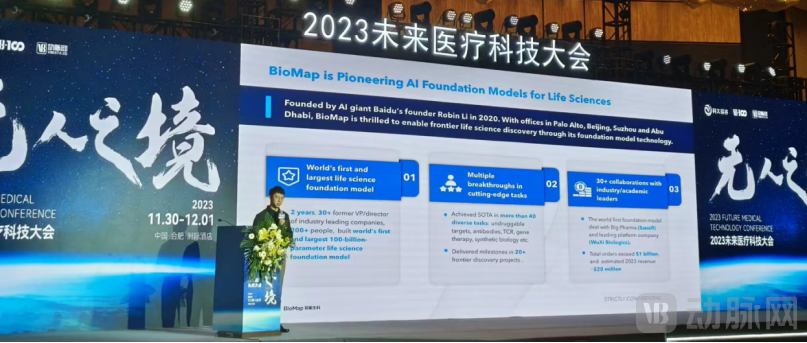
In addition, Liu Junwei, General Manager of Baidu Smart Healthcare, also shared at the conference Baidu’s initiatives based on the Lingyi large language model in “Patient-Physician-Pharmaceutical “Regarding practical implementation in these areas, he stated, “Large language models offer higher accuracy and shorter development cycles. They will deliver new outcomes in professional empowerment, quality improvement, efficiency enhancement, and experience optimization across applications such as intelligent health managers, AI-powered physician assistants, and smart enterprise services, thereby truly introducing new productive forces to the big health industry.”
2Upgrading Wearable Detection Equipment to Predict Cardiovascular Diseases
“Health initiatives advocate for early screening, early diagnosis, and early recovery. While policies are in place, medical devices remain severely scarce,” said Zhang Yuanting, Academician of the International Academy of Medical and Biological Engineering and Founder of the Hong Kong Institute of Medical Engineering.
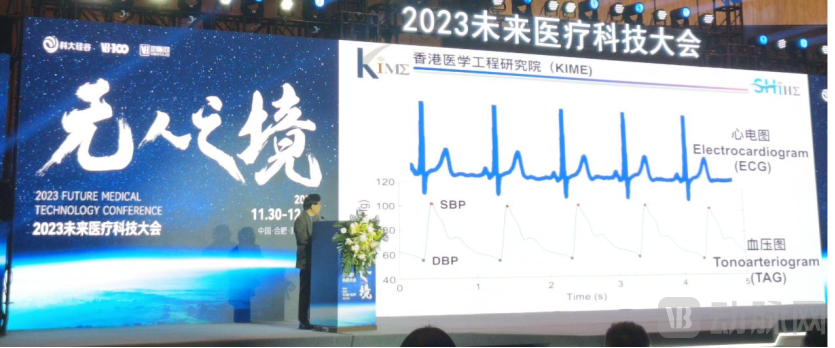
Therefore, wearable monitoring devices hold significant importance for both consumer (C-end) and business (B-end) users. For consumer users, wearable medical devices will provide usersProvides Real-Time Health Monitoring Data, enabling users to understand their health status and facilitating scientific health management. For B-side users, the timeliness of wearable medical health devices provides robust medical support for resource allocation in healthcare institutions, allowing physicians to conduct remote consultations and reduce treatment costs.
“Previous wearable monitoring devices were not very convenient,” said Professor Zhang Yuanting. In 2001, Professor Zhang pioneered the concept of non-wearable intelligent monitoring devices. He further stated,Future smart wearable detection devices will evolve toward miniaturization, intelligence, standardization, and non-intrusiveness.。
3Next-Generation Optoelectronic Imaging Technology: Computational Optical Fusion Microscopy Imaging
The domestic high-end microscope market is currently monopolized by the four major German and Japanese manufacturers. Most domestically produced equipment is characterized by high volume but low quality, with extremely low market share. Whether from a market perspective or a technological integration perspective,The Integration of Computational Optics and Microscopy Imaging Is an Inevitable Trend in the Market/Information Age。
Traditional optical imaging is built upon the principles of geometric optics, adopting the “what you see is what you get” paradigm of human vision, while neglecting many high-dimensional optical information. In the field of microscopic imaging, it fails to simultaneously meet the demands for a wide field of view and high resolution.
In contrast,Computational Optical ImagingGuided by specific application tasks, this approach acquires or encodes light field information across multiple dimensions (such as angle, polarization, and phase) to establish a new sensing paradigm for sensors that far surpasses human vision. Meanwhile, by integrating mathematical and signal processing expertise, it deeply mines light field data to break through the limits of traditional optical imaging.
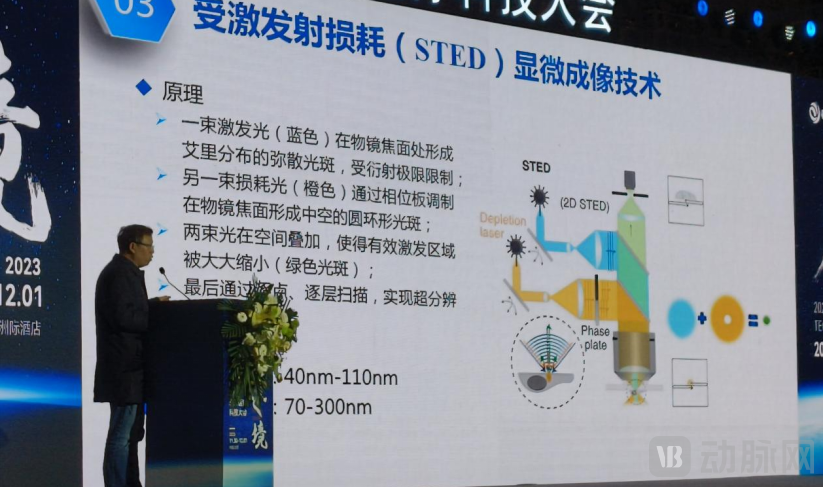
Gong Yan, a Distinguished Research Fellow at the Chinese Academy of Sciences, stated,Optical microscopy, characterized by its non-invasiveness and broad applicability, is the preferred observational tool in current research fields such as biology, medicine, and pharmacy.In this field, Professor Gong Yan’s team has comprehensively upgraded the full-chain digital manufacturing processes encompassing design, machining, assembly integration, and system testing, and has independently developed multiple series of high-end microscope objectives.
These include the development of a STED–two-photon hybrid microscope prototype (achieving an ultra-high resolution of 47 nm and an imaging depth of 141.5 μm); focusing on asymmetric three-beam interference illumination combined with segmented half-wave plates to enhance imaging speed; and implementing large-field-of-view optical tomography microscopy to increase the spatial resolution of the imaging system to hundreds of megapixels.
In the future, high-end microscopes will continue to pursue higher resolution, faster imaging speeds, and greater imaging depth. Professor Gong Yan noted that emerging technologies will be increasingly integrated with optoelectronic microscopy.
One isNovel Optical Devices and Light Field Modulation Mechanisms. Novel devices such as metalenses, metamaterials, plasmonics, and photonic crystals provide new means of optical control for computational optics. Another isEmerging Mathematical Algorithms and Computational Performance. To address various complex real-world imaging applications, new theories, mechanisms, and technologies are being developed to establish superior multi-parameter design and optical regulation mechanisms, thereby providing strong support for the advancement of computational imaging.
4Generative AI Enters Medical Imaging, Breaking Temporal and Spatial Barriers
Another prominent application of digital technology is in medical imaging. The global surge in popularity of software such as ChatGPT has demonstrated the capability of generative AI to produce text or images from complex user prompts, indicating broad application prospects and already yielding significant results in the healthcare sector.
In 2023, Siemens Healthineers showcased innovative concepts and technical prototypes based on generative AI. Unlike other companies that focus on text or image generation, Siemens Healthineers enables users to quickly locate and highlight corresponding areas in reports by clicking on medical images, through the loading, linking, and preparation capabilities of its intelligent chat system. More notably, Siemens HealthineersLeverage AI to dynamically generate diagnostic imaging reports and prioritize them by clinical significance, enabling physicians to process information more efficiently.。
At this conference, Chair Professor Shao-Hua Zhou, a Fellow of the U.S. National Academy of Inventors, outlined two potential forms of AI-generated medical imaging: one is medical image restoration, and the other isMedical Image Synthesis。
Currently, Professor Zhou Shaohua’s team is exploring novel methods for synthesizing MRI images. “We measure various parameters, including demographics, genomic sequencing data, biomarkers, and imaging data. It is evident that causal relationships exist among these categories of measurements. The resulting images can reflect both demographic information and biomarker data.” By leveraging causal models to regulate different parameters, this approach also overcomes spatiotemporal limitations."Images from a decade ago can also be synthesized using computer technology."。”
5Digital Technologies Empower Drug R&D
Drug discovery and development are key research areas for pharmaceutical companies and medicinal chemists. However, low efficiency and high costs have long been obstacles in this field.
Many professionals engaged in drug research and development acknowledge that the digital era is transforming the pharmaceutical industry. Machine learning and deep learning algorithms have been applied to various stages of the drug discovery process, including peptide synthesis, virtual screening, toxicity prediction, drug monitoring and release, pharmacophore modeling, quantitative structure-activity relationship (QSAR) analysis, drug repurposing, and the assessment of polypharmacological and physiological activities.Significantly Shorten Drug Time-to-Market and Enhance Safety。
Wang Taifeng, Head of AI Algorithms at BioMap, is another example. At the Future Medical Technology Conference, Wang shared insights on “AI Foundation Models for Target Discovery and Drug Design.” He stated that natural language is ill-suited to help pharmaceutical companies leverage more information. Therefore, BioMap has developed aBillion-Scale Protein Language Large Model, leveraging this model to advance protein prediction and design, and further utilizing AI-driven drug generation systems to screen compounds for novel drug development.
Key to the Implementation of Digital Technologies
Above, we have described the integration of digital technology with multiple application scenarios. Despite its diverse innovations, immense power, and boundless creativity, it has not been able to escape the following critical juncture:How to Rapidly Implement Digital Technologies While Ensuring Information Accuracy and Security?
In terms of technology commercialization, the Chinese large language model (LLM) industry is currently plagued by intense involution. In contrast, foreign vendors place greater emphasis on the practical deployment and application of LLMs.From competing on technology itself to competing on application scenarios is an inevitable stage in the commercialization of China’s data technology.。
Regarding information accuracy, Wang Guangyu stated: “Current general-purpose large language models still lack domain-specific knowledge.“Although ChatGPT can, to some extent, answer medical questions, it remains significantly deficient in highly specialized areas, such as optimizing the diagnosis of patient symptoms or formulating treatment plans. Current large language models still lack genuine professional reasoning capabilities, as well as the domain-specific accuracy, regulatory compliance, and safety required in healthcare.” Moving from general-purpose foundational models to specialized large models for the health sector, there remain numerous technical challenges that need to be explored and resolved.
On issues of morality and ethics,The training and application of generative AI require large amounts of patient data, which may raise issues regarding data privacy and confidentiality.. To ensure the security of patient information, healthcare institutions and enterprises must implement strict data management measures and comply with relevant laws and regulations.
Revolutionary changes often coexist with risks. Despite the challenges and ethical dilemmas facing digital technology, industry stakeholders are addressing this domain with a focus on safety, fairness, evidence-based practice, and privacy. With rational planning and management, digital technology is poised to propel the healthcare industry into a new era characterized by greater efficiency, precision, and personalization.