

Amid Multi-Regional Policy Support, Scoliosis Screening Emerges as a Quietly Booming Sector: Fosotech Files IPO Prospectus
Scoliosis screening has frequently entered the public eye only in the past two to three years.
Initially, the Central Committee of the Communist Party of China and the State Council issued the Outline of the “Healthy China 2030” Plan, which listed scoliosis as a key disease for screening and monitoring among adolescents. Subsequently, various regions gradually implemented initiatives to improve systems and infrastructure, thereby expanding efforts in scoliosis prevention and control.
However, due to factors such as insufficient public awareness of scoliosis in the early stages, school- and education-based scoliosis monitoring being still in its infancy, traditional screening methods, and the lack of a digital management system, large-scale coverage of scoliosis screening has not been achieved in a short period.
Subsequently, the “Notice on Issuing the Administrative Measures for Health Examinations of Primary and Secondary School Students (2021 Edition),” the “Technical Guidelines for Prevention and Control of Spinal Curvature Abnormalities in Children and Adolescents,” and the “Opinions on Comprehensively Strengthening and Improving School Hygiene and Health Education in the New Era” were successively implemented.Spinal Health Screening Officially Included in Physical Examinations for Primary and Secondary School Students。As policies, infrastructure, and screening models continue to improve, the nationwide promotion of scoliosis screening and health management has entered a full-scale surge.
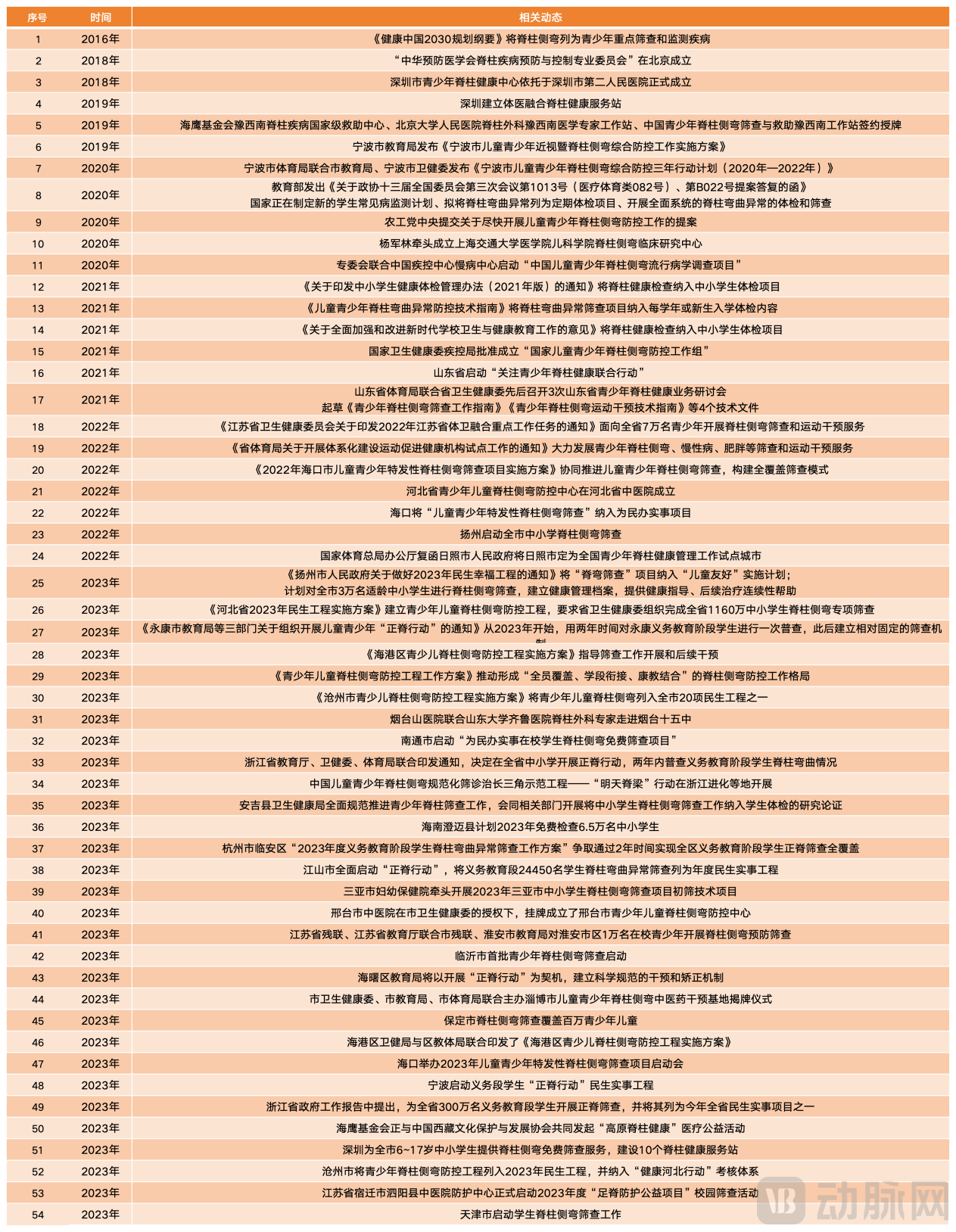
National Updates on Spinal Screening in China
(Due to time and information constraints, the collected data may not be comprehensive. Please contact us if any omissions are found.)
According to VCBeat data statistics,Between 2021 and 2023, a total of 43 policies and developments related to “scoliosis screening” were recorded.far exceeding the 11 data points recorded from 2016 to 2020. Driven by policies in multiple regions, most areas across China are intensifying scoliosis screening efforts while actively exploring, establishing, and improving mechanisms for scoliosis screening, diagnosis, and treatment. Correspondingly, the niche sector of spinal assessment has quietly emerged.
Scoliosis is a three-dimensional deformity characterized by lateral curvature of the spine in the coronal plane, alterations in physiological sagittal alignment, and vertebral rotation in the transverse plane. However, due to the subtle early manifestations of scoliosis, there has been a significant lack of awareness among children, adolescents, and their parents regarding this condition.
In recent years,The Prevalence of Scoliosis Among Children and Adolescents in China Is on the Rise. According to statistics from the National Health Commission,The number of primary and secondary school students in China with scoliosis has currently exceeded 5 million, and is increasing by approximately 300,000 each year.
Early detection and early treatment help to inhibit the progressive changes in muscles and bones, effectively controlling or reversing scoliosis. It is precisely for this reason thatScoliosis screening is becoming increasingly widespread and has been elevated to a national and local public health policy.
For example, the Special Committee, in collaboration with the National Center for Chronic and Noncommunicable Disease Control and Prevention of the Chinese Center for Disease Control and Prevention, launched the “Epidemiological Survey Project on Scoliosis among Chinese Children and Adolescents.” Scheduled from 2021 to 2024, this project aims to screen approximately 120,000 primary and secondary school students across 124 counties (districts) in 31 provinces (autonomous regions and municipalities directly under the Central Government). The Health Commission of Jiangsu Province has explicitly stated that it will provide scoliosis screening and exercise-based intervention services to 70,000 adolescents throughout the province. Hebei Province, meanwhile, has incorporated scoliosis screening into its 2023 Livelihood Project Implementation Plan, requiring the Provincial Health Commission to organize and complete specialized scoliosis screenings for all 11.6 million primary and secondary school students in the province, among other initiatives.
According to data from the Seventh National Population Census, China’s population of children aged 0–17 years reached 298 million in 2020, ranking second worldwide. This group accounted for 21.1% of China’s total population and 12.7% of the global child population. This also implies that the market for nationwide scoliosis screening among children and adolescents will experience explosive growth in the coming years.
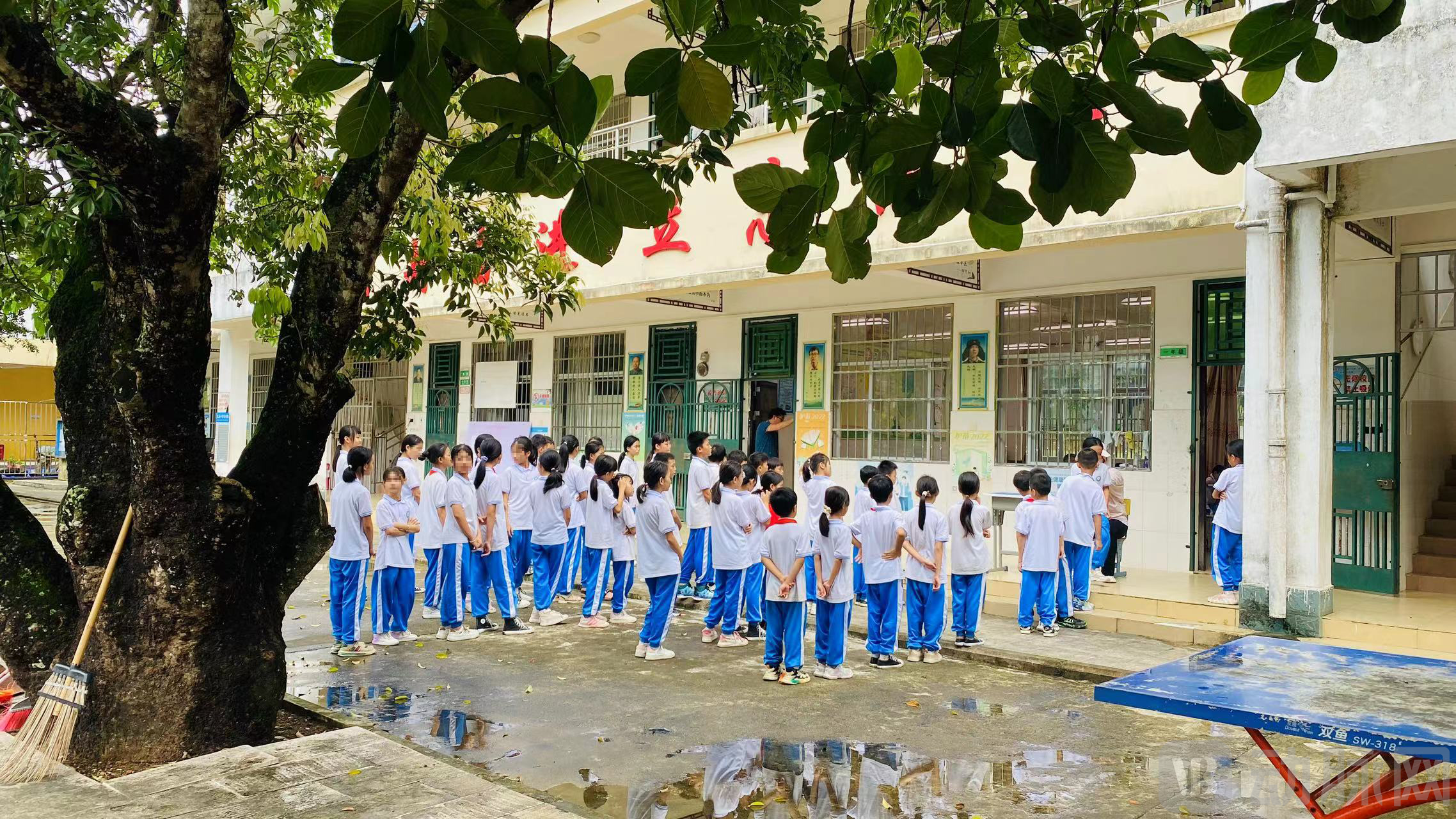
InScoliosis screening is included in the physical examinations conducted each academic year or upon enrollment for new students.Subsequently, as various regions respond to the policy, it may only be a matter of time before comprehensive scoliosis screening is truly implemented nationwide across China, whereas in the pastThe long-neglected demand for scoliosis screening is also set to grow significantly, providing broader development opportunities for emerging technologies.
Scoliosis screening programs, both domestically and internationally, have traditionally comprised three stages: initial school-based screening, secondary screening, and tertiary hospital-based assessment. Among these, the preliminary detection of scoliosis is currently emphasized as a key focus in policy directives.
Generally, initial screening methods include physical examination, the Adams forward bend test combined with a scoliometer, Moiré topography, and radiographic X-ray examination. Although traditional scoliosis screening methods are still widely used in clinical practice, it is undeniable thatConventional methods suffer from significant drawbacks, including large measurement errors, low sensitivity, prolonged detection times, high labor costs, and radiation-induced damage to the human body.,It is basically unable to meet the demand for large-scale screening.This is also one of the key reasons why, between 1980 and 2021, spinal health management initiatives were implemented locally in various regions on a piecemeal basis, while large-scale screening was virtually absent nationwide.
But what kind of screening equipment does the market actually need?
In addition to the dissemination of relevant knowledge,Digitalization is a key direction in the advancement of scoliosis screening.
From a policy perspectiveIn Jiangshan City’s “Spinal Alignment Initiative,” explicit mention was made of advancing the normalization, standardization, and digitalization of spinal health screening, prevention, and control. Hebei Province has further incorporated scoliosis screening into the “Implementation Plan for Hebei Province’s 2023 Livelihood Projects,” established a provincial-level health data monitoring system for scoliosis, and formulated unified diagnosis and treatment protocols as well as quality control standards. Shandong Province, meanwhile, drafted four technical documents, including the “Guidelines for Scoliosis Screening in Adolescents” and the “Technical Guidelines for Exercise-Based Interventions in Adolescent Scoliosis,” to strengthen technical specifications and safeguards for adolescent spinal health management.
From a technical perspective, currently, multiple enterprises have embarked on the research and development of various screening products, while actively integrating cutting-edge technologies such as ultrasound, intelligent optical sensing, and artificial intelligence. These efforts aim to establish a more efficient, radiation-free, highly accurate, and low-learning-curve detection method to address the pain points of traditional scoliosis screening, meet growing market demand, and support policy implementation. Some of these products have already been successfully applied in routine spinal examinations for primary and secondary school students.

Based on feedback from real-world scoliosis screening scenarios, experts believe that the most suitable tools for scoliosis screening must possess the following characteristics: ease of operation, rapid process, accurate measurement results, flexibility in usage settings, and digitized detection results.
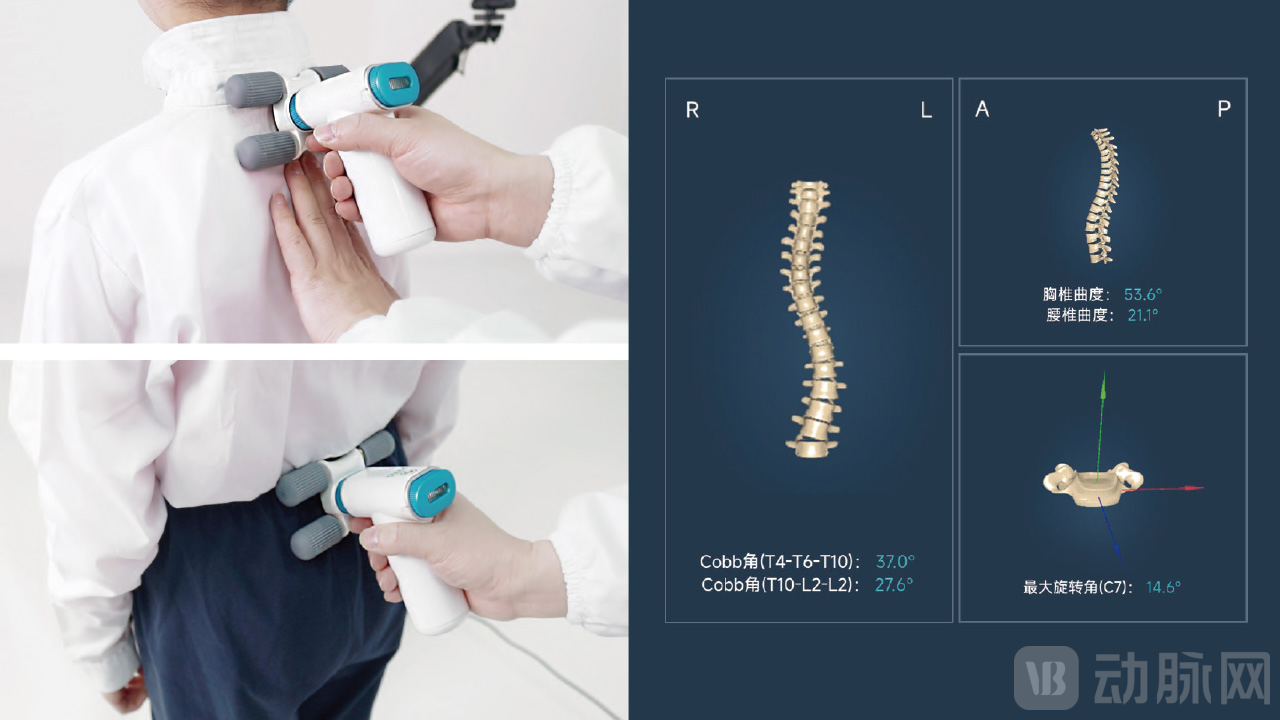
VCBeat has noted that Fusote has developed spinal health examination equipment that integrates light-sensing technology, topographic scanning technology, multi-sensor information fusion technology, gain control technology, digital twin technology, and digital mapping technology. The device currently enables radiation-free measurement of the spinal Cobb angle and Angle of Trunk Rotation (ATR), and generates 3D spinal reports.
Notably, Fusote’s technology is currently the only tool on the market capable of measuring the spinal Cobb angle in a standing position, with the Cobb angle being the sole standard for assessing scoliosis. The company’s independently developed “3D Electronic Spinal Measurement Instrument” can determine the presence or absence of scoliosis in approximately 10 seconds, allowing for measurements without removing clothing. This innovation addresses key issues in traditional scoliosis diagnosis, such as high false-positive rates, poor result reproducibility, and extensive radiation exposure caused by variations in clinicians’ skills. By truly overcoming limitations related to venue, technology, and personnel, the device meets the demands for large-scale spinal health screening.
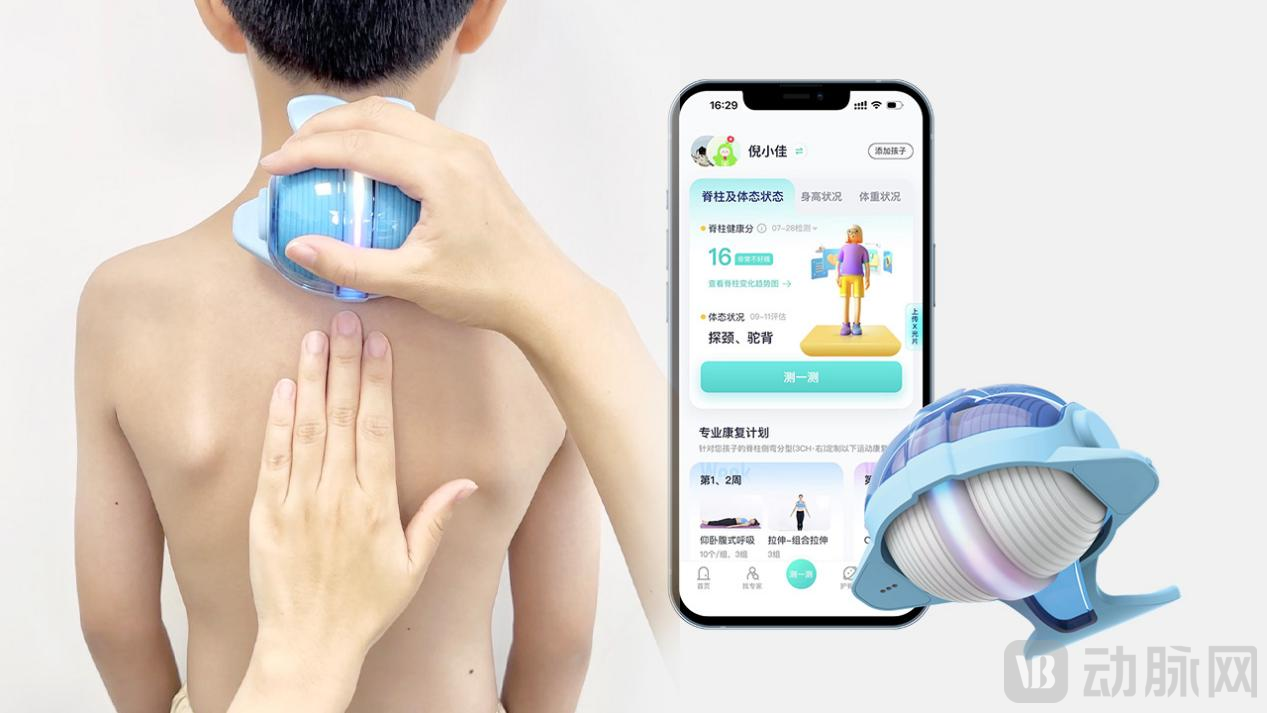
Furthermore, Fusote has developed the “Little Tree Companion Spinal Monitor” for home use. In just one minute, users can measure spinal health indicators, view detailed reports via a mobile app, and share them with online experts for professional analysis and recommendations. This solution truly achieves seamless integration between B-end and C-end users, as well as between hospitals and homes, providing comprehensive spinal health management services for children and adolescents, in alignment with the development direction outlined by relevant policies.
This year, Fusote successively obtained U.S. FDA clearance, EU CE certification, and an Internet Hospital license. As the technology provider for scoliosis screening, it participated in the “2023 Sanya City Primary and Secondary School Student Scoliosis Screening Project – Initial Screening Technology Project.” This initiative marked the first nationwide use of a radiation-free measurement tool capable of directly obtaining Cobb angles in a government-led screening program, enabling spinal health assessments for 112,000 primary and secondary school students in the city and truly integrating the entire workflow of scoliosis screening, diagnosis, and treatment.
With the exception of Sweden and Singapore, China is one of the few countries worldwide that have incorporated relevant screening into national-level student health examinations through clear top-down policies. Governments, institutions, and experts across China have also actively responded to these policies by establishing clinical research centers, assistance centers, expert workstations, the National Working Group on Scoliosis Prevention and Control in Children and Adolescents, scoliosis prevention and control centers for children and adolescents, and integrated sports-medicine spinal health service stations, thereby expanding the coverage of scoliosis screening.
From the perspective of industry development, although China started relatively late in scoliosis screening, it is still steadily advancing the research and development of related equipment. According to data from VCBeat,Currently, there are fewer than 40 companies in the market focused on developing innovative scoliosis screening devices, none of which have gone public.It has been proven that,Screening technologies for scoliosis have gradually matured, and numerous companies have identified market opportunities and recognized the growth potential of this sector.
In the future, as scoliosis screening and health management initiatives continue to advance across China, it is foreseeable that these efforts will evolve into a comprehensive undertaking involving healthcare institutions, schools, families, and other stakeholders, with related demand steadily increasing.
In this process, the introduction and application of new technologies and methods capable of resolving the long-standing barriers to the large-scale implementation of scoliosis screening are particularly crucial. Enterprises that align with policy development trends and have established a closed-loop development model encompassing scoliosis screening, diagnosis, and treatment will also gain a competitive advantage in this landscape.
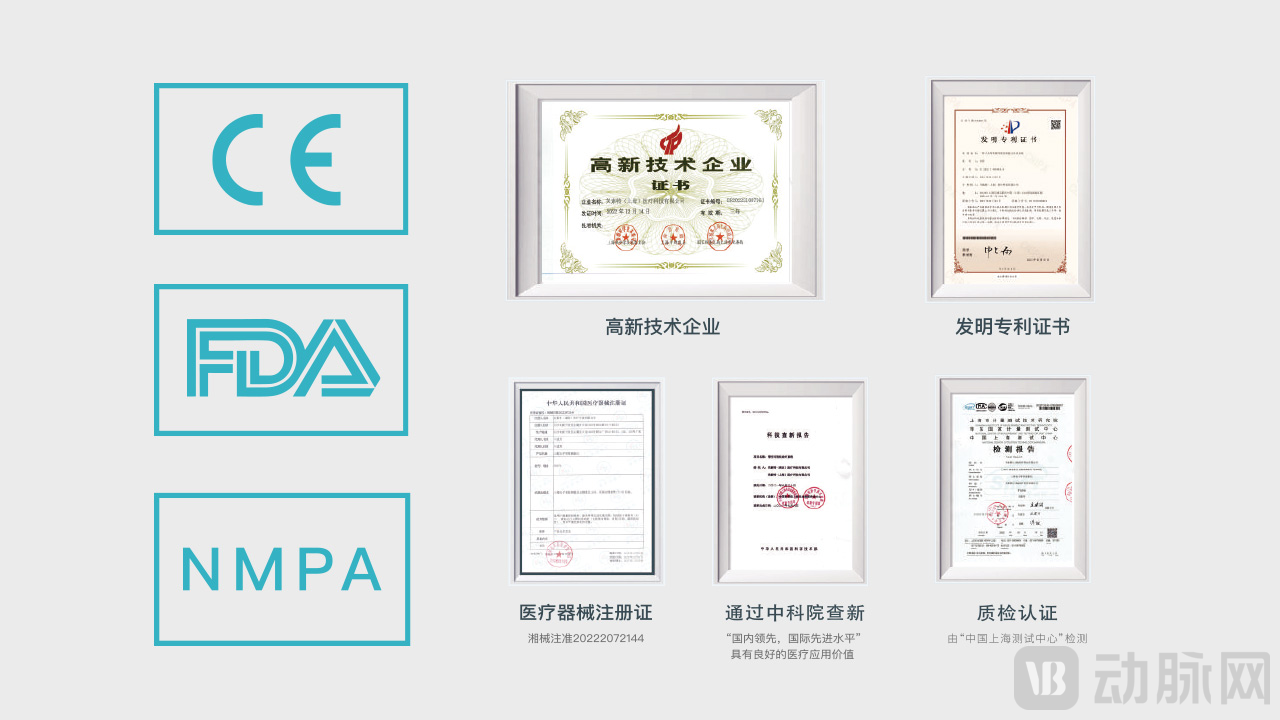
As one of the few companies in this sector to secure financing this year, Fusote has not only gained capital recognition but also achieved rapid growth. In just two years since its establishment, the company has filed 28 patent applications, been recognized as a National High-Tech Enterprise, and obtained Class II Medical Device Registration Certificates, EU CE certification, FDA clearance, and an Internet Hospital License. Additionally, it has passed the novelty search conducted by the Chinese Academy of Sciences and received radiation-free testing certification. Leveraging its scoliosis detection devices as a strategic foothold, Fusote addresses the pain points associated with traditional scoliosis screening.
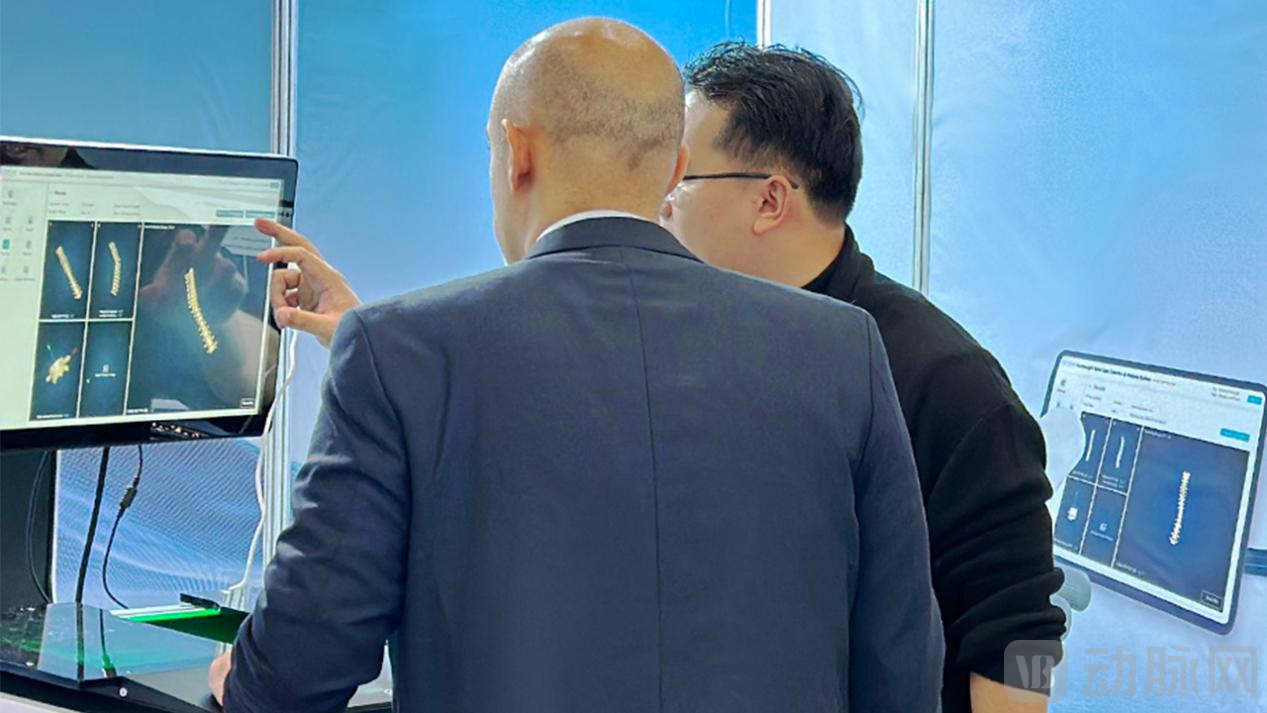
This year, Fusote has also expanded into overseas markets. According to the internationally comparable estimates provided by the United Nations Department of Economic and Social Affairs, Population Division in the World Population Prospects 2022 Revision, both the global total population and the population of children aged 0–17 have grown rapidly over the past 60 years. The child population increased from 1 billion in 1950 to 2.4 billion in 2020. This November, Fusote showcased its second-generation products at Medica in Germany, with its technology gaining strong favor among distributors from various countries. It is reported that preliminary cooperation agreements have been reached with distributors in Italy, Turkey, Romania, Albania, Germany, Brazil, Morocco, South Korea, India, France, Taiwan (China), Hong Kong (China), and Colombia. Fusote will officially enter the international market in 2024.
Currently, supported by innovative medical devices, Fusote has successively developed a series of smart braces, created a metaverse-based somatosensory interactive community for scoliosis training exercises, and established a specialized internet hospital for spinal screening, thereby truly providing comprehensive spinal health management services for children and adolescents.
This is precisely the value proposition of innovative R&D enterprises specializing in scoliosis screening devices, such as Fusote. By making significant strides to address the prominent drawbacks of traditional methods—including substantial measurement errors, prolonged detection times, and radiation exposure—these companies are meeting the growing market demand and making it feasible to incorporate scoliosis screening into annual health examinations or entrance physicals for new students across various regions.
Reference Article:
1. “Is the Incidence of Scoliosis in Children 30%? Experts: Absolutely Exaggerated!”