

PeptiDream Attracts 16 MNCs with Deep Peptide Platform Expertise and Over $8 Billion in Recent Partnerships
PeptiDream
Drug Developer
On February 7, 2023, local time in Israel, the so-called “bellwether of the Nobel Prize”Wolf Prize(Wolf Prize) Announces the List of Winners. Professor Chuan He from the University of Chicago, USA,Professor Hiroaki Suga, The University of Tokyoshared the 2023 Wolf Prize in Chemistry with Professor Jeffery W. Kelly of The Scripps Research Institute, in recognition of their pioneering discoveries in elucidating the functional and pathological dysfunction of RNA and proteins, as well as their strategic work in leveraging these biopolymers through novel approaches to improve the treatment of human diseases.
It is worth mentioning that Professor Hiroaki Suga is the founding and current Editor-in-Chief of the Royal Society of Chemistry journal RSC Chemical Biology. He developed a technology named“Flexizyme”RNA-based catalysts (nucleases) represent a transformative achievement in the field of bioactive polypeptides. PeptiDream, a company founded on this technology, is now listed on the Tokyo Stock Exchange and is regarded as one of Japan’s most successful startups.
In 1989, Hiroaki Suga earned his master’s degree from Okayama University in Japan. He then went to the Massachusetts Institute of Technology (MIT) in the United States to pursue a Ph.D. in chemistry and served as a postdoctoral fellow at Massachusetts General Hospital. Throughout his career, Suga has been engaged in chemical research, yet this “unconventional” researcher harbored a dream of becoming an electric guitarist, always aspiring to excel in that role.
It was not long before Hiroaki Suga realized that this dream was impractical, a revelation that dealt him a significant blow. Amidst his confusion, he began to contemplate the meaning of life. Ultimately, he decided to explore the essence of life, stating, “I want to study the origin of life.” This decision led him to decisively embark on a research career in the field of biology. Subsequently, he began his independent professional career at the University at Buffalo, State University of New York. In 2003, he moved to the Research Center for Advanced Science and Technology at the University of Tokyo. Since 2010, Hiroaki Suga has served as a full professor in the Department of Chemistry at the University of Tokyo.
In the 1990s, a wave of ribozyme research swept through academia, a trend that Hiroaki Suga keenly recognized. Unlike his peers, he chose to focus on practical applications. While other scientists were investigating the fundamental properties of ribozymes, Suga aimed to utilize them to construct a peptide library, thereby transforming the process of new drug development.
After a decade of relentless effort, Hiroaki Suga identified three enzymes involved in peptide synthesis. One of these ribozymes can arbitrarily combine more than 400 different amino acids with tRNAs (whereas peptide synthesis systems at the time could utilize only 20 types of amino acid molecules), thereby synthesizing virtually any desired peptide molecule. Hiroaki Suga named this ribozyme“Flexizyme”。
In 2006, Hiroaki Suga met Keiichi Kubota, and they subsequently co-foundedPeptiDream, this isThe First Company to Successfully Synthesize Special Peptides Artificially and Integrate Them into Drug Development. Keiichi Kubota serves as President, responsible for formulating the company’s business strategy.
Later, Hiroaki Suga further expanded the Flexizyme technology, establishing a system for the translational synthesis of specialized peptides containing non-natural amino acids and cyclic structures.FIT System, and rapid screening by combining in vitro display methodsRaPID System. In 2010, he developed and established a proprietary peptide drug discovery platformPDPS (Peptide Discovery Platform System), and signed a collaborative research agreement with Bristol-Myers Squibb in the same year.
Following the establishment of the PDPS technology platform, PeptiDream successively formed joint ventures with other companies to establish PeptiStar, a peptide drug CDMO; PeptiGrowth, a developer of cell culture medium peptide ingredients; and PeptiAID, a company dedicated to the development of peptide-based therapies for COVID-19. In 2022, PeptiDream acquired PDRadiopharma, which now oversees its radiopharmaceutical business.
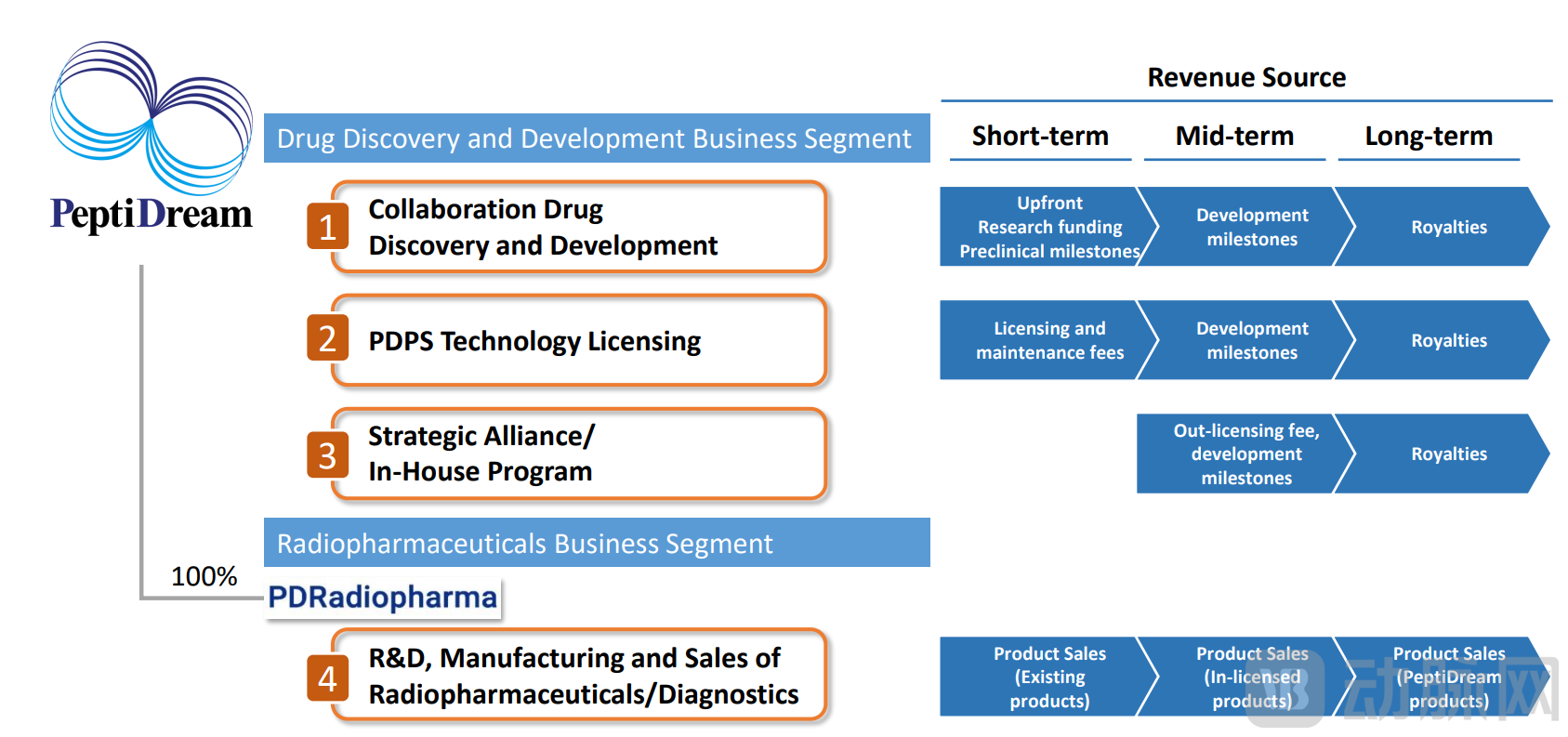
Currently, PeptiDream has two business models: the PDPS platform-basedRadiopharmaceutical BusinessandDrug Development Business。
(Image source: PeptiDream official website)
The radiopharmaceutical segment primarily adopts three strategies: out-licensing, joint development, and in-licensing, with a strategic focus on the Japanese market. Japan’s radiopharmaceutical market is characterized by stringent regulatory oversight and high barriers to entry, with only two major R&D companies operating in the space, one of which is PDRadiopharma.
Drug development operations, conducted primarily through the PDPS platform, encompass collaborative partnerships, technology licensing, and internal project development.
PDPS is a multifunctional drug discovery platform that integrates technologies for synthesizing highly diverse macrocyclic peptide libraries and screening hit compounds. In drug discovery activities, this platform can rapidly and efficiently identify novel hit compounds with high potency and selectivity against protein targets. It has the following three main features:
1、Trillions of macrocyclic peptides are accessible.The PDPS platform can generate trillions of macrocyclic peptides, offering chemical diversity unmatched by any other discovery technology. In cell-free transcription/translation systems, researchers can efficiently synthesize peptides using random DNA libraries and standard or non-standard amino acid building blocks. All peptides are tagged with their respective mRNA/CDA "barcodes."
2、High success rate in hitting the target.Peptide libraries can be screened against biological targets of interest and counter-screened against other targets to identify peptides (hit peptides) with high affinity and selectivity for the desired target. The “barcodes” attached to the peptides enable amplification of hit peptides during iterative screening cycles and rapid identification of their amino acid sequences. This platform can also be used to optimize and evaluate hit peptides, thereby significantly accelerating the drug discovery process.
3、Continuous Innovation.Researchers have continuously enhanced the functionality of PDPS, expanding the chemical diversity of amino acid building blocks accommodated by the platform, and developed an automated system that increases production capacity and reduces result variability, consistently striving to remain at the forefront of innovation in drug discovery.
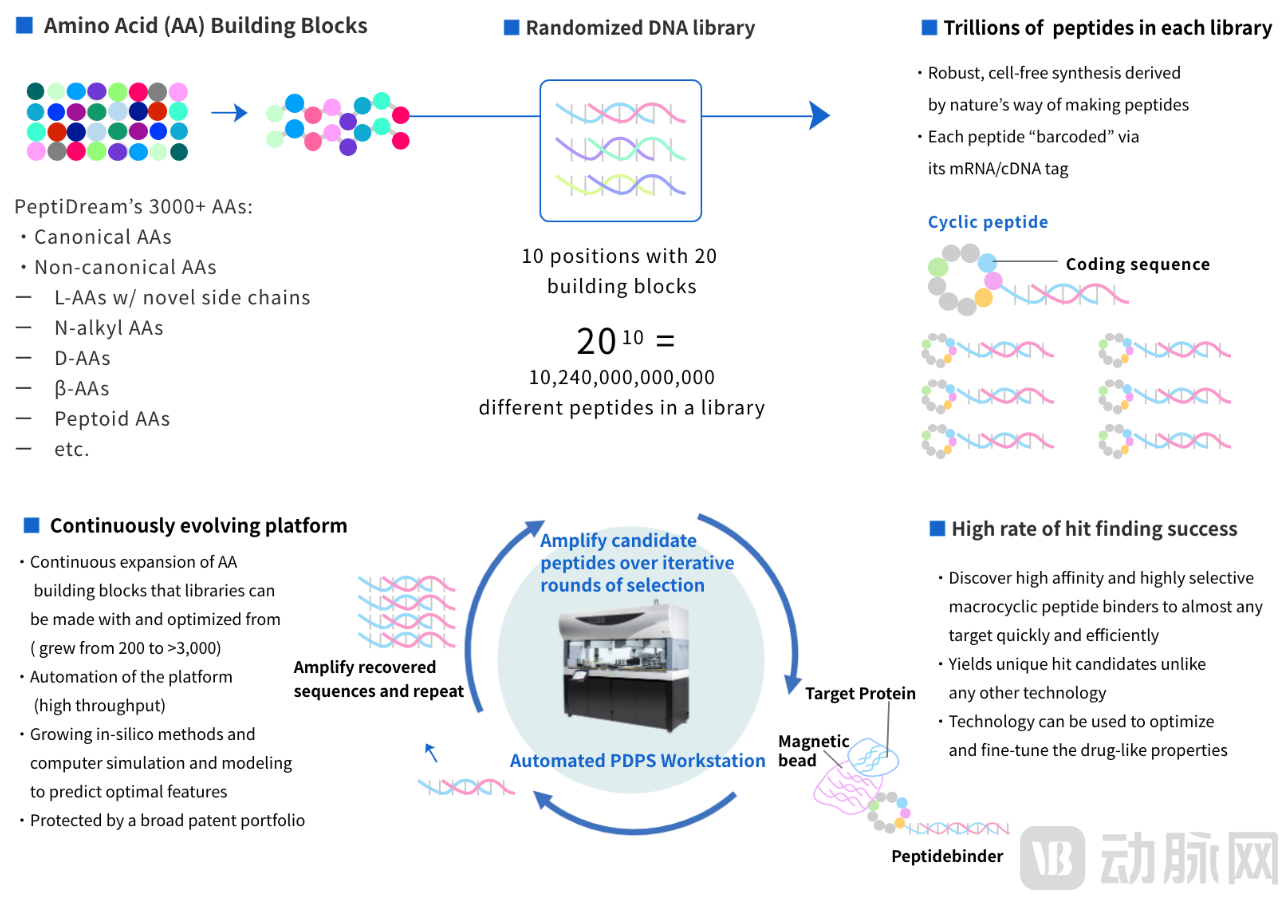
Schematic Diagram of the PDPS Platform (Image source: PeptiDream official website)
Currently, through continuous optimization, the PDPS platform can combine more than 3,000 types of non-natural amino acids (AAs), constructing a peptide library with a scale of ten trillion. By establishing an automated platform, it enables rapid screening (approximately one month) for target compounds, with a screening success rate exceeding 95%.
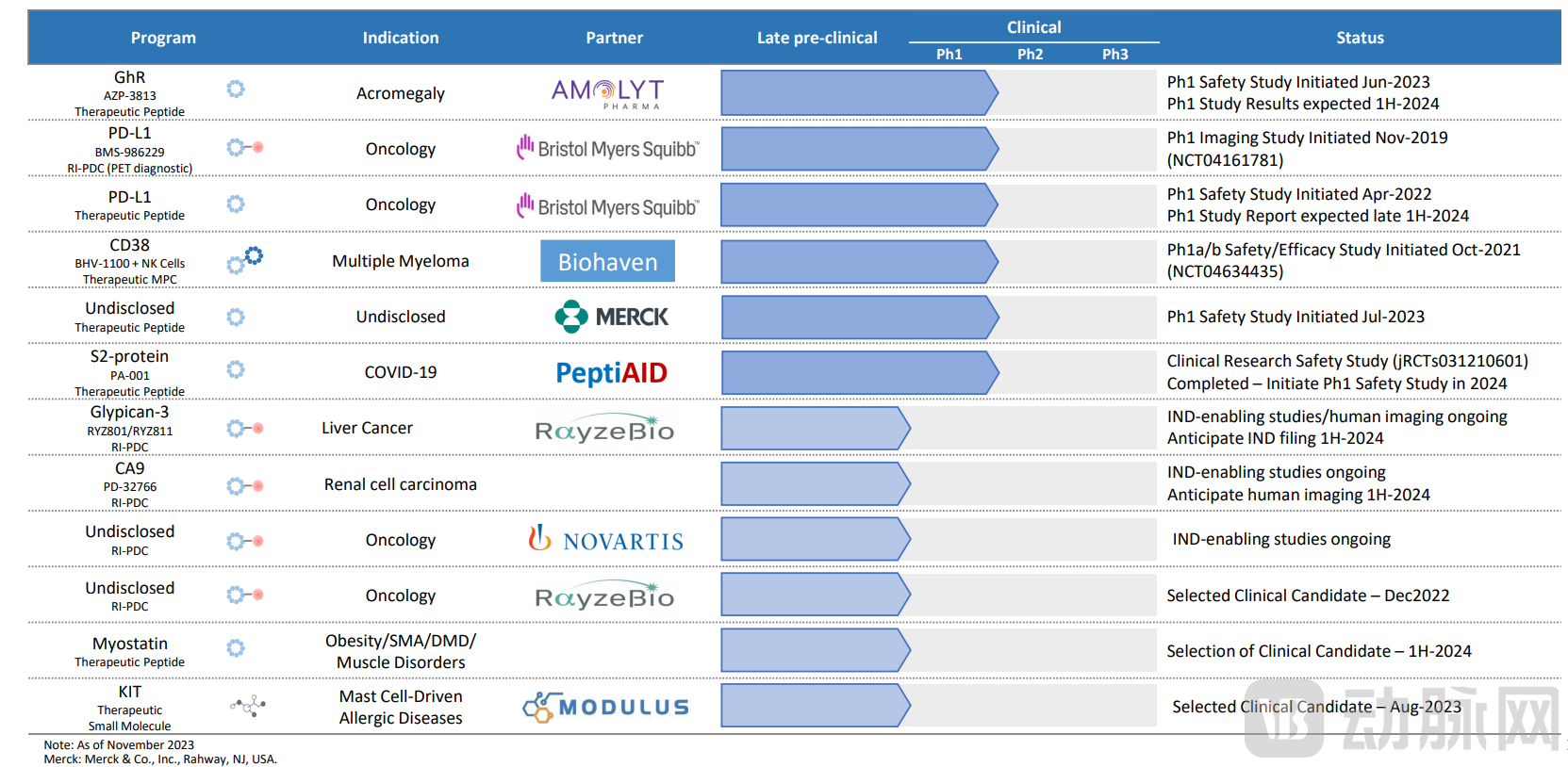
Based on this platform,PeptiDream has developed 130 pipeline candidates。
(Image source: PeptiDream official website)
The main pipeline is as follows:
1、GhR Project AZP-3813It is a macrocyclic peptide growth hormone receptor antagonist (GHRA) currently undergoing Phase 1 studies (initiated in June 2023). The study aims to investigate the safety, tolerability, pharmacokinetics, and pharmacodynamics of AZP-3813 following single and multiple ascending doses in healthy subjects, evaluating its potential as an adjunctive therapy for acromegaly when used in combination with somatostatin analogs. Results from the Phase 1 study are expected to be announced in the first quarter of 2024.
2、BMS-986229 PD-L1 Bioimaging Agent ProjectIt is a radiotracer for tumor imaging developed in collaboration with Bristol Myers Squibb. The project aims to determine whether positron emission tomography (PET) imaging is practical and safe. It can both diagnose the condition of patients with esophageal, gastric, and gastroesophageal junction cancers and enable real-time tracking. The 18F-BMS-986229 PET scan can better visualize a protein called PD-L1 located on tumor cells, helping physicians select PD-L1-targeted therapies for cancer treatment.
3、PD-L1 Inhibitor ProjectA Phase 1 study is currently being conducted in collaboration with Bristol Myers Squibb. This study aims to investigate the safety, tolerability, and pharmacokinetics of a macrocyclic peptide PD-L1 inhibitor in 136 healthy volunteers. The Phase 1 study is expected to conclude in November 2023, and the clinical study report is anticipated to be completed by the end of the first half of 2024.
4、CD38-ARM (Antibody Recruiting Molecule) Project BHV-1100It is a bispecific molecule developed in collaboration with Biohaven. The project aims to establish the safety of an extracorporeal combination product. In patients with minimal residual disease-positive (MRD+) multiple myeloma (MM) who are in their first or second remission, the project involves infusing cytokine-induced memory-like (CIML) natural killer (NK) cells together with BHV-1100 and intravenous immunoglobulin (IVIG), followed by the administration of low-dose interleukin-2 (IL-2) to target and kill multiple myeloma cells expressing the cell surface protein CD38. In March 2023, Biohaven reported that the first patient survived for one year, and two additional patients have been randomized into the ongoing clinical study.
5、Undisclosed ItemsThis is a collaborative project with Merck & Co. Under the PDPS technology licensing agreement signed between Merck & Co. and PeptiDream in 2018, Merck & Co. utilized PeptiDream’s PDPS technology to discover an undisclosed therapeutic peptide. The project is currently in Phase I clinical trials (which commenced in July 2023), and detailed information has not yet been publicly disclosed.
6、S2 Protein Inhibitor Project PA-001This is a collaborative project with PeptiAID. In accordance with Japan’s Pharmaceutical and Medical Device Act, researchers conducted an exploratory single ascending dose clinical study. The report as of August 2022 indicated that PA-001 demonstrated a favorable safety profile, with no compound-related adverse events observed, and exhibited clear dose-dependent pharmacokinetic characteristics. PeptiAID is currently preparing to submit an Investigational New Drug (IND) application for PA-001 to the U.S. FDA.
16 MNCs Flock In, with Cooperation Deals Exceeding $8 Billion in the Past Two Years
The PDPS platform has attracted significant interest from major pharmaceutical companies since its launch. Capable of identifying potential compounds for various diseases with exceptional efficiency, it facilitates new drug discovery in fields ranging from neurological disorders to cancer. Therefore, 16 major global pharmaceutical companies, including Amgen, AstraZeneca, Bristol Myers Squibb, Eli Lilly, GlaxoSmithKline, Novartis, Merck & Co., Sanofi, and Genentech, have established partnerships with PeptiDream. Moreover, Bristol Myers Squibb, Eli Lilly, and Novartis have secured internal licenses for the platform.
In terms of out-licensing collaborations, PeptiDream’s deal value over the past two yearsOver $8 billion。
In July 2021, PeptiDream separately announced collaborations withTakeda, Alnylamreaching a total amount of up to$5.7 billionPDC drug development collaboration.
On December 22, 2022, PeptiDream announced that it wouldMerck & Co.Signed a joint research and license agreement for novel peptide-drug conjugate (PDC) therapeutics. Under the agreement, PeptiDream will leverage its PDPS technology platform to identify candidate peptide molecules for targets of interest to Merck & Co., supporting the development of PDC drugs. Merck will obtain exclusive rights to the candidate peptide molecules linked to cytotoxic payloads and will be responsible for all development activities related to the PDC products arising from the collaboration. Pursuant to the terms of the agreement, PeptiDream will receive an upfront payment from Merck and will be eligible to receive development, regulatory, and commercial milestone payments for candidate products, with a potential total value of up to$2.1 billion, in addition, PeptiDream is also eligible to receive royalties based on the net sales of the product.
On December 26 of the same year, PeptiDream announced that it wouldEli LillySigning of Research Collaboration and License Agreement. Both parties will commit to the discovery and development of novel peptide-drug conjugates (PDCs). Under this agreement, PeptiDream will leverage its PDPS technology platform to discover high-affinity macrocyclic peptide ligands, assisting Eli Lilly in delivering payloads to target cells and tissues. PeptiDream will be responsible for peptide discovery and optimization, while Eli Lilly will lead payload discovery and optimization and assume full responsibility for the development of PDC products resulting from the collaboration. Pursuant to the terms of the agreement, PeptiDream will receive an upfront payment from Eli Lilly and will be eligible to receive development, regulatory, and commercial milestone payments for candidate products, with a potential total value$1.235 billion, in addition, PeptiDream is also eligible to receive royalties based on net product sales.
This collaboration marks the third partnership between PeptiDream and Eli Lilly. As early as December 2013, the two companies signed their first collaboration and license agreement. In March 2016, PeptiDream and Eli Lilly entered into a non-exclusive license for PDPS technology, which explicitly excluded work on PDC projects.
On September 20, 2023, PeptiDream announced a collaboration with Roche’sGenentechReached a new multi-objective collaboration and licensing agreement, under which both parties will jointly commit to the discovery and development of novel macrocyclic peptide–radioisotope (“peptide-RI”) drug conjugates.
Under the agreement, PeptiDream will leverage its PDPS platform technology to discover, optimize, and develop macrocyclic peptide candidates for peptide–RI drug conjugates targeting Genentech’s areas of interest. Prior to the development and commercialization of these drug conjugate products, PeptiDream will lead early preclinical development. Meanwhile, PeptiDream will retain the rights to develop and commercialize such peptide–RI drug conjugate products in Japan.
This collaboration and licensing agreement is also built on the foundation of a long-standing partnership between the two parties. The two sides initiated their first collaboration as early as December 2015. In 2016, PeptiDream licensed Genentech to use its PDPS technology. In 2018, the two parties embarked on a more in-depth collaboration.
Under the terms of the agreement, PeptiDream will receive a $40 million upfront payment from Genentech and will be eligible for payments upon the achievement of specified development, regulatory, and commercial milestones, totaling up to$1 billion. In addition, PeptiDream is entitled to receive tiered royalties on net sales of any such products resulting from the collaboration (excluding Japan).
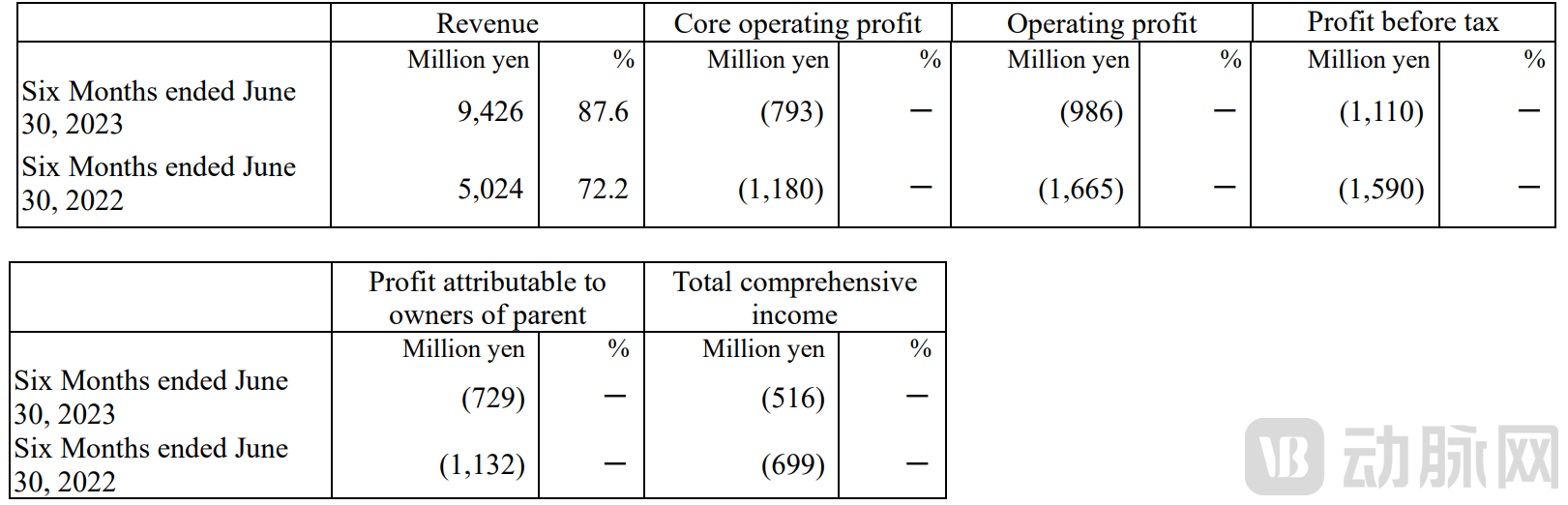
On November 9, 2023, PeptiDream released its 2023 interim financial report: revenue for the first half of the year reached JPY 9.426 billion, a year-on-year increase of 87.6%; net profit was -JPY 729 million; and R&D expenses amounted to JPY 1.506 billion, a year-on-year increase of 29%.
(Image source: PeptiDream official website)
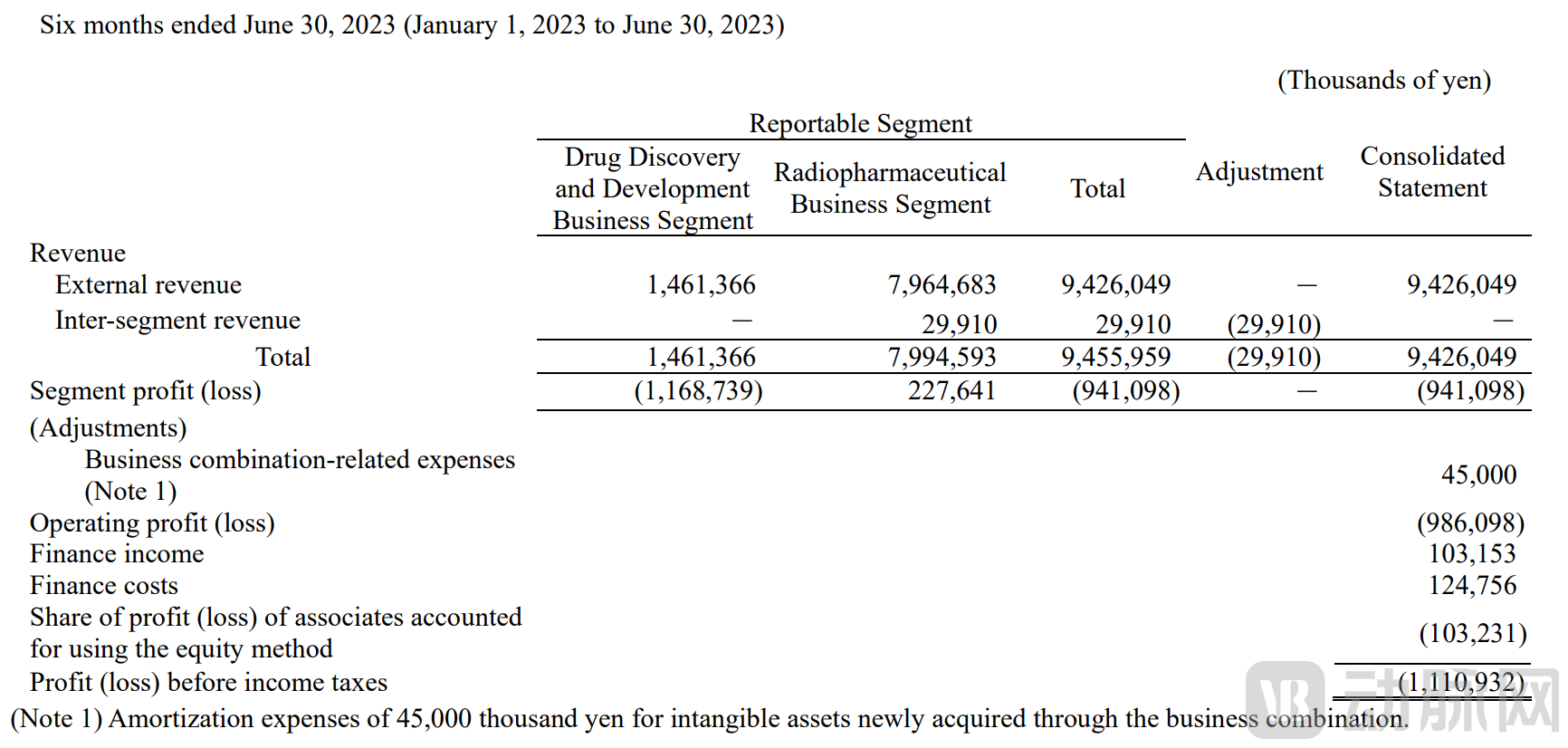
Revenue from the drug discovery and development business in the first half of the year was ¥1.461 billion; revenue from the radiopharmaceuticals business was ¥7.964 billion.
(Image source: PeptiDream official website)
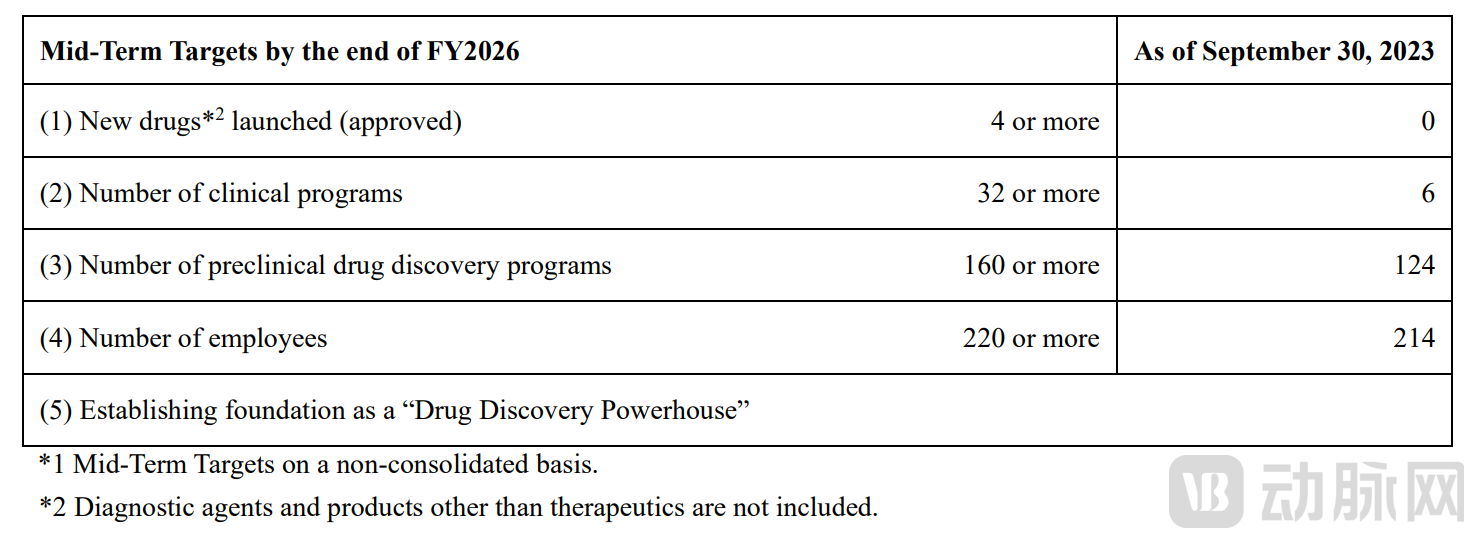
In March 2021, PeptiDream Inc. announced its new medium-term operational goals. Specifically, the company plans to launch (or obtain approval for) at least four new therapeutic drugs (excluding diagnostics) by the end of 2026, with at least 32 projects in clinical development and at least 160 projects in preclinical development. Furthermore, to achieve its goal of becoming a global “drug discovery giant,” the company will continue to expand its partner network and solidify its leading position as the hub of the global peptide drug discovery ecosystem.
(Image source: PeptiDream official website)