

YouHuan Bio, a Chinese circRNA Pioneer, Files for IPO Amid Surging Global Interest in Next-Gen RNA Therapeutics
Regarding mRNA technology, many people are only aware of Side A of the story: from global pandemic response to the Nobel Prize, mRNA vaccines have emerged as heroes of our time. However, on Side B of the story: linear mRNA has a very short half-life; within hours, intracellular nucleases degrade it. This transient nature is unfavorable for most therapeutic applications.
Unlike linear mRNA,Circular RNAThe covalently closed circular structure of (circRNA) can protect itself from degradation by nucleases, thereby exhibiting greater stability and a longer lifespan. Theoretically, even at low dose levels, circular RNA can enhance therapeutic potential.
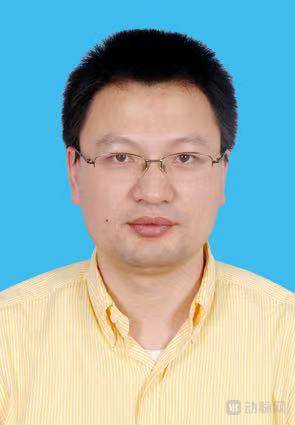
Co-founder of Youhuan Biotechnology, Dai Dongsheng

Professor at the University of Science and Technology of China, Co-founder of Youhuan BiologyShan Ge
It is also for this reason that, in 2022, the University of Science and Technology of ChinaShan GeProfessor Collaborates with Industry ExpertsDai DongshengPh.D., co-foundedYouhuan Bio,Focused on the research, development, and application of circular RNA in biological prevention and therapy. Since its inception, UH Biotech has continuously explored novel in vitro splicing and circularization methods, integrating studies on classic Group I and Group II intron structures to establish a proprietary structural component and circularization system, named“TIE” System。
As insiders and firsthand participants, they drive and document the industrialization and commercialization of circular RNA.
Next-Generation RNA Technology
The commercial success of COVID-19 RNA vaccines has sparked interest in circular RNA as a next-generation therapeutic.
As mRNA Technology Wins the Nobel Prize, Top International Journal Nature Publishes Article Stating “Circular RNA (circRNA) Is the Next-Generation Blockbuster Technology for RNA Therapies,” and Introduces Various Application Prospects of Circular RNA as a Novel Drug Modality.
A Review of the History of Circular RNA Development: In 1976, circular RNA (circRNA) was discovered for the first time, but it was initially considered a product of erroneous splicing. In 1993, Capel found that circRNA derived from the mouse Sry gene might perform specific functions in mouse testes, bringing circRNA into the spotlight of scientific research and gradually making it a focus of study. In 2013, Nature published a research paper stating that circRNA is a class of non-coding RNAs with regulatory roles, modulating the expression of other genes by acting as microRNA (miRNA) sponges...
Circular RNA: A Sensational Breakthrough After More Than 30 Years of Silence, emerging as a rising star in the RNA field.
Dai Dongsheng told Chengguo Bureau that, from a technical perspective, circular RNA is a closed single-stranded RNA with covalently linked ends. It can achieve protein translation without the 5’ cap and 3’-poly(A) tail commonly found in mRNA, and can also function as a protein sponge or mimic small molecules to perform other functions. The circular structure of circular RNA can effectively avoid degradation by nucleases.Characterized by high efficacy, superior stability, low-cost production, and low toxicity, overcoming the limitations of linear mRNA and significantly expanding its druggability development and applications.
Therefore, circular RNAs can serve not only as biomarkers for disease diagnosis but also as therapeutic targets for a variety of diseases. Furthermore, they function as a foundational technological platform for the development of multi-target drugs, and are widely applied in the prevention and treatment of various conditions, including infectious diseases, rare diseases, hematologic disorders, and cancers.
It is foreseeable that the analysis, preparation, and application of circular RNA will become a key technology for the future development of biotechnology, and it is already attracting significant interest from investors.
In 2019, Daneil Aderson, Alex Wesselhoeft, and others founded Orna Therapeutics, the world’s first company to develop novel therapies using circular RNA, securing $321 million in financing. Laronde, another company focusing on circular RNA, has raised approximately $500 million.
In China, emerging companies specializing in circular RNA are entering the field, including Genseed Biotech, RingCode Biosciences, and YuanYin Biotech. These companies are focused on building proprietary circular RNA technology platforms, with some of their product pipelines leading globally.
As Alex Wesselhoeft, co-founder of Orna Therapeutics and a leading figure in international circular RNA technology, stated: “Despite the tremendous success of linear mRNA vaccines, circular RNA represents the future direction and will be the preferred choice for RNA therapeutic technologies.”
Whether in the field of research or in the capital market, circular RNA is ushering in a new wave of enthusiasm and development opportunities.
One-Step Cyclization Method
Also bullish on circular RNA and entering the field are Dr. Dai Dongsheng, who brings over 20 years of R&D and manufacturing experience in biopharmaceutical companies, and Professor Shan Ge, who has long been engaged in fundamental research on circular RNA. In 2022, they integrated clinical research resources from the University of Science and Technology of China’s scientific team, Sir Run Run Shaw Hospital of Zhejiang University, Shanxi Cancer Hospital, and Shanghai Renji Hospital, among others, to jointly establish UHuan Bio.
Currently, UHuan Bio has developed an enhanced sequence optimization platform for circular RNA. By leveraging its proprietary translation efficiency optimization technology, the company has endowed circular RNA with superior stability. Furthermore, through ingenious design, UHuan Bio has achieved a high-purity circular RNA production process that is scalable, effectively addressing the critical bottlenecks in circular RNA manufacturing.
Regarding cyclization technology, Professor Dan Ge stated, “The most commonly used approaches currently involve the engineering of Group I and Group II introns. Regardless of the method employed, the process consists solely of a two-step transesterification reaction. Taking Group I introns as an example, the first step involves attack by an exposed hydroxyl group, followed by the second step, in which the exposed hydroxyl group initiates the second transesterification reaction.”
The uniqueness of Youhuan Biology lies first inComprehensive Simultaneous Consideration of Group I and Group II Intron Applications, enabling a one-step transesterification reaction.
“Specifically, we designed reverse-complementary sequences targeting the introns flanking the alternatively spliced exons of specific target genes and incorporated them, along with PolyX sequences, into plasmids. This approach resolved purification challenges following in vitro transcription (IVT) of mRNA through affinity flow-through chromatography, significantly simplifying the manufacturing process. ‘Our unique circularization and purification technologies have streamlined the scale-up and production of circular RNA,’ said Shan Ge.”
Currently,U-Ring Bio has filed patents for its proprietary circularization system and established a pipeline of four biotherapeutic candidates based on circular RNA expression and regulation.。
“As long as the technology is appropriate, there is an opportunity.”
Regarding entrepreneurship, Dai Dongsheng believes that there is no such thing as an optimal or least appropriate time to start a business. He prefers to make judgments from a technical perspective, “"In the pharmaceutical industry, I believe there are always entrepreneurial opportunities as long as the technology is appropriate."。”
In fact, as early as 2015, Dai Dongsheng approached Shan Ge to discuss entrepreneurship. That year, Shan Ge was atNature Structural & Molecular BiologyThe journal published the research paper “Exon-Intron circular RNAs regulate transcription in the nucleus,” reporting the discovery of a class of circular RNAs containing both exons and introns (EIciRNAs) that localize to the nucleus and regulate gene transcription.
Dai Dongsheng and Shan Ge were college classmates, and both have been working in biomedical-related fields for many years. Several years ago, Dai Dongsheng invited him to co-found a startup. However, at that time, Shan Ge’s specialized one-step cyclization technology was not yet mature, so the entrepreneurial venture was temporarily put on hold. Since then, Shan Ge has continued to devote himself to research on the functions and functional mechanisms of non-coding RNAs, and hasNature Communications、Genome Biology、Development Cellpublished findings in multiple international journals. It was not until 2022 that Shan Ge decided to enter the industry.
In fact, there are many reasons for entering the market. On one hand, after the accumulation of time and the baptism of the pandemic,circRNA technology has become a hot topic and developed relatively maturely.; on the other hand, based on years of trust and mutual understanding between Shan Ge and Dai Dongsheng, their camaraderie as former classmates, and the complementarity of their expertise, an effective“Basic and Applied Levels”supplement, which facilitates the industrialization and commercialization of the product.
“We co-founded Youhuan Biotech with Mr. Dai. It was also during this period that we independently developed a unique system for invention and translation,” said Shan Ge.
Dai Dongsheng also acknowledged that disagreements are inevitable in the course of collaboration. “Because there are still certain differences between science and industry.” On another note, based on Dai Dongsheng’s own experience, he has previously engaged in commercialization efforts at the viral and protein levels, but has never ventured into the commercialization of RNA.
Then, Dai Dongsheng said again: “In the end, we will allBased on Industrialization Standards, jointly promote the translation and implementation of circRNA achievements.”