

How China's Biomaterials Researchers Are Driving Domestic Innovation: Bionics, Personalization, and Regulatory Science
Biomaterials have long been a key driver of innovation in healthcare, witnessing and propelling the sector’s robust growth. In cardiac surgery, for instance, advances in biomaterials have made coronary stent procedures routine. With anesthesia, guidewire insertion, and stent implantation completed in just 30 minutes, lives are extended. Yet fifty years ago, this remained an uncharted and forbidden frontier.
Cardiac stents are merely a microcosm of the broader advancements in biomaterials. With the continuous progress of disciplines such as biotechnology and biomedical engineering, innovative biomaterials have emerged to save the lives of tens of millions of critically ill patients, thereby reducing mortality rates associated with major diseases including cardiovascular disease, cancer, and trauma.Consequently, innovations in contemporary medical technology have opened up new pathways.
At the 2023 Future Medical Technology Conference, innovations in materials science also constituted a significant chapter. From the insights shared by Professor Zhang Mingjun of Tsinghua University, Professor Wang Yanju of Harbin Institute of Technology, and Professor Wang Shouli of Soochow University, we can seemingly foresee the commonalities and trends in the development of biomaterials.
DevelopmentLocalization, which appears to be the topic they discuss most frequently. Emphasizing bionic principles, ensuring designs meet personalized requirements, and implementing scientific regulation may well be the “prescription” they offer.
I. Bionic Philosophy: Imitating Not Only Structure but Also Performance
Just as people drew inspiration from the ears and structure of jellyfish to design storm predictors,Bionics has always been a key direction in technological development.
Professor Zhang Mingjun of Tsinghua University, withPufferfish Swells by Absorbing WaterInspired by this, the team developed gut-driven biomimetic microneedle robots, addressing safety concerns associated with traditional gut-driven microneedle robots, such as off-target effects and intestinal obstruction. The team also conducted simulationsInsect Wing SpreadingWe designed a brain-computer interface device featuring an ultra-small incision yet capable of extensive neural coverage, and validated it through closed-loop modulation for acute epilepsy.

Tenured Professor Zhang Mingjun, Tsinghua University
Professor Liu Yanju of Harbin Institute of Technology modeled afterLotus Rootstructure, a bionic bone tissue scaffold was designed using 4D printing technology, which can not only match the shape of any bone defect but also ensure sufficient support strength. In addition, she mentioned that the team is currently working on biomimeticGlass Sponge StructureDesign of tracheal stents, etc.
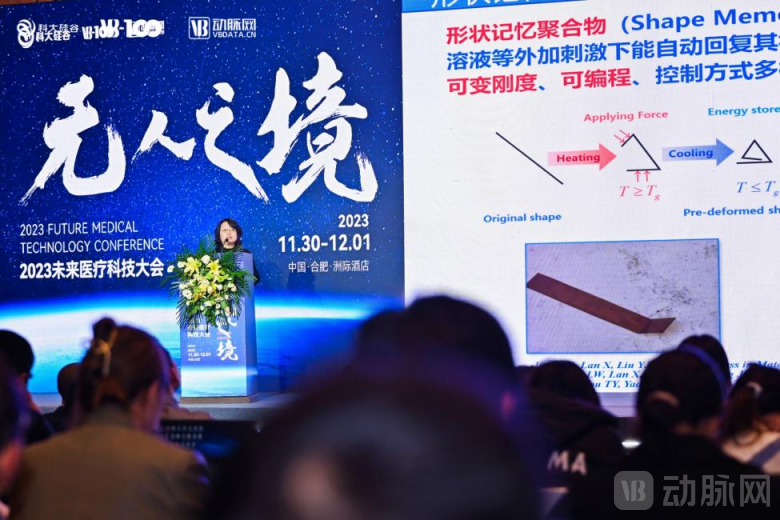 Liu Yanju, Professor, Department of Astronautical Science and Mechanics, School of Astronautics, Harbin Institute of Technology
Numerous cases have demonstrated that biomaterials manufacturing and bionics are two complementary fields. By studying the structure, function, and properties of biomaterials and drawing on design principles and functions found in nature, researchers can develop materials and technologies that better meet clinical needs.
Nowadays, the application of biomimetics in biomaterials is no longer limited to structural technologies, but is moving towards“Performance-Driven”Transformation. As Professor Chi Bo from the State Key Laboratory of Materials-Oriented Chemical Engineering at Nanjing Tech University stated, “Our initial inspiration for studying the regenerative functions of bioactive hydrogels came from the renewable biological characteristics of marine organisms. Scientific research sometimes requires bold imagination.”
II. Personalized Needs: Meeting Clinical Requirements While Aligning with Market Demands
"Personalized"These have become buzzwords in the medical field in recent years. Whether it is the subspecialization of medical departments or the precision of treatment regimens, they all indicate that the future of healthcare will develop towards specialization, refinement, and advanced expertise. This trend has also extended to the field of biomaterials.
Taking the “Acellular Allogeneic Nerve Repair Material” (hereinafter referred to as “Shenqiao”) developed by Zhongshan Medical as an example. Professor Yang Chaoxiong, an adjunct professor of Biomedical Engineering at Sun Yat-sen University, introduced at the conference that “Shenqiao” can build a “bridge” at the site of nerve defects, accelerate nerve regeneration, and can be used in almost any trauma site. Its indications are currently being expanded to other diseases.
On one hand, “Shenqiao” enables mass production at the market level; on the other hand, its regenerative efficacy can adapt to the needs of different patients, thereby demonstrating personalization.
Furthermore, Professor Ai Hua from the National Engineering Research Center for Biomaterials at Sichuan University also mentioned:“Human tissues exhibit heterogeneity, and the design of biomaterials must also account for tissue individuality.”
 Professor Ai Hua, National Engineering Research Center for Biomaterials, Sichuan University
Professor Ai Hua cited artificial disc implantation devices as an example. During the design process, in addition to ensuring the curvature of the vertebral body, consideration should be given to the compositional heterogeneity among different structures of the intervertebral disc, such as the nucleus pulposus, annulus fibrosus, and cartilage, including variations in water content, collagen, and other components. If artificial discs can replicate these unique structural characteristics, it would help avoid localized stress imbalances, thereby potentially yielding better clinical outcomes.
Drawing on this case, Professor Ai Hua emphasized that when researchers design other medical devices,Attention should be paid to the heterogeneity of human tissues for personalized adaptation.. This approach can effectively extend the product's service life, thereby alleviating both the financial burden on patients and the overall healthcare burden.
Why Are Biomaterials Exhibiting This Trend?The primary driver is the growing public demand for health. As independent individuals, patients with the same disease may exhibit clinical heterogeneity, and personalized treatment regimens can effectively enhance therapeutic outcomes. However, for biomaterials to be applied in clinical settings, they must meet mass-production standards. In light of this, researchers need to incorporate the concept of personalization into the material design phase, striving to align as closely as possible with diverse clinical needs.
III. Advancing domestic production requires scientific regulation
Although China’s biomaterials industry boasts broad prospects overall, opportunities always come hand in hand with challenges. At the forum, guests repeatedly mentionedRegulatory ScienceThis is also a challenge currently facing the industry.
We are delighted to see that many guests have brought “first-of-their-kind” domestically produced products. For instance, Liang Jun has broughtNanoVision Multi-Source Static CT, this product not only achieves full domestic localization from design to R&D and manufacturing, but also delivers high-definition visualization of microvessels approximately 1 mm in diameter, reaching an internationally leading level.
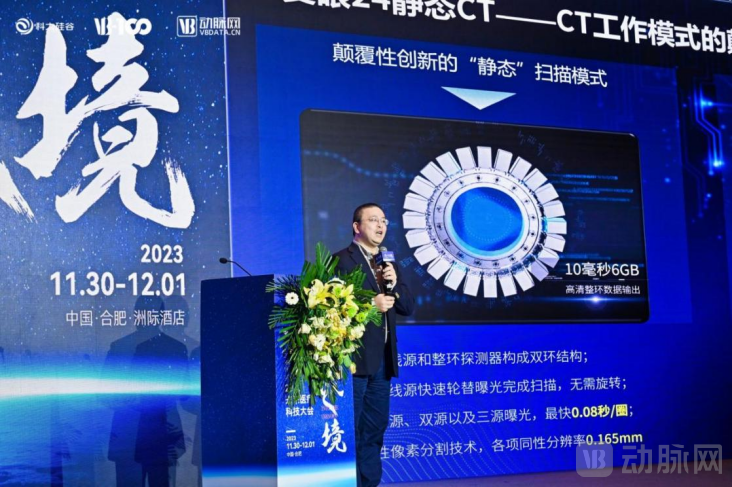 NanoVision Imaging Liang Jun
However, we must clearly recognize that China currently holds a dominant position only in the low- to mid-end market for biomedical materials, while the upstream and high-end product markets remain constrained by foreign enterprises.
In today’s complex international landscape, domestic substitution is not only necessary but imperative. This shift will not only free us from the control of foreign capital and promote the independent development of the national economy, but also address critical “chokehold” issues in key areas affecting people’s livelihoods.
As Professor Ai Hua stated:“The innovative translation of biomaterials and medical devices is a vital source for driving the localization of products.”
“Enhancing domestic production capabilities” is a point repeatedly emphasized by every panelist. Professor Wang Shouli, Director of the Pathology Center at Soochow University Medical College, derived a new question from this: the degree of localization is closely related to translation efficiency.
China’s number of patent inventions has ranked among the top, yet there remains significant room for improvement in translation efficiency. Professor Wang Shouli believes that the reason may be: “Innovation in traditional products is still too impetuous.” The key to addressing this issue lies in further advancing regulatory science.
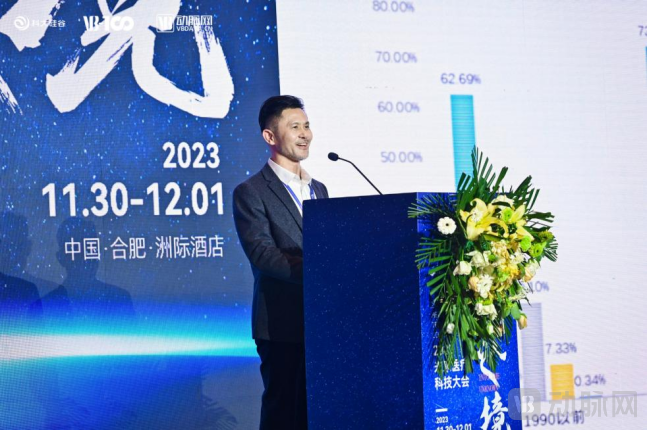 Professor Wang Shouli, Director of the Pathology Center, Medical College of Soochow University
As Professor Wang Shouli particularly emphasized, domestic innovative medical enterprises must attach great importance toPreclinical Large Animal Studies。
Although companies may face nearly a million in economic expenditures and the risk of failure during large animal trials, Professor Wang Shouli believes that increasing investment in this phase can effectively enhance their subsequent risk resilience.
Nowadays, going global has become one of the choices for many innovative Chinese medical enterprises. However, due to inconsistencies in review standards between China and other countries, if companies do not thoroughly complete preclinical large animal studies, they will face even heavier costs during their international expansion.
Professor Ai Hua believes that regulatory science should span the entire product lifecycle, employing new standards, tools, and methods to evaluate product safety and efficacy.
Furthermore, Professor Chi Bo briefly discussed the importance of regulatory science from the perspective of a researcher. During the process of submitting clinical trial applications for hydrogel products, he encountered a “lack of comparable precedents,” such as uncertainty regarding how to classify products combined with cell engineering. This required him to devote considerable time to exploration. He expressed hope for a more scientifically grounded regulatory framework to accelerate the translation of research outcomes into practical applications.
Only by enhancing the scientific rigor of regulation can we improve the success rate of translating scientific research achievements in China. Therefore, we also anticipate that future regulatory frameworks will become increasingly science-based, thereby both liberating researchers from undue constraints and mitigating market risks associated with the commercialization of these achievements.
IV. Future Vision: Biomaterials Will Be More Than Just Carriers—They Will Become the Therapeutic Agent Itself
If achievements and challenges help us understand reality, then forecasts for the future can guide the industry’s direction forward.
From the guests' visions of the future, we can foresee that,In the future, biomaterials will no longer be limited to serving as carriers for therapy; they may also become the therapeutic agents themselves.Researchers are currently leveraging the unique properties of biomaterials to develop therapeutic approaches such as tumor ablation and nerve regeneration. Meanwhile, scientific advancements like regenerative bone cements and rapid-hemostasis hydrogels demonstrate how biomaterials are making significant strides in the medical field by virtue of their distinctive attributes.
Biomaterials is a new discipline born to break through the narrow confines of traditional fields, and it is also a novel product emerging from the collaborative efforts, mutual permeation, and cross-pollination among multiple disciplines. Every major breakthrough in biomaterials ushers in a significant transformation in the medical industry. Therefore, both in the past and in the future, it will make substantial contributions to humanity’s pursuit of health.