

Raylens Medical's Binocular Autorefractor ANGEL500 Receives NMPA Approval with 25-Fold Improvement in Refractive Precision
Recently, the Ruier Mingkang ANGEL500 binocular autorefractor obtained the National Class II Medical Device Registration Certificate. The domestic optometry industry is witnessing a long-awaited change.
VCBeat has learned that the binocular autorefractor recently approved for Ruier Mingkang employs Hartmann wavefront sensing technology. By leveraging binocular automatic tracking and precise three-dimensional pupil localization, the device enables rapid testing within 15 seconds and achieves a refractive measurement accuracy of 1 diopter. This innovation will effectively alleviate the current shortage of qualified optometrists and meet market expectations for improved precision in medical optometry.
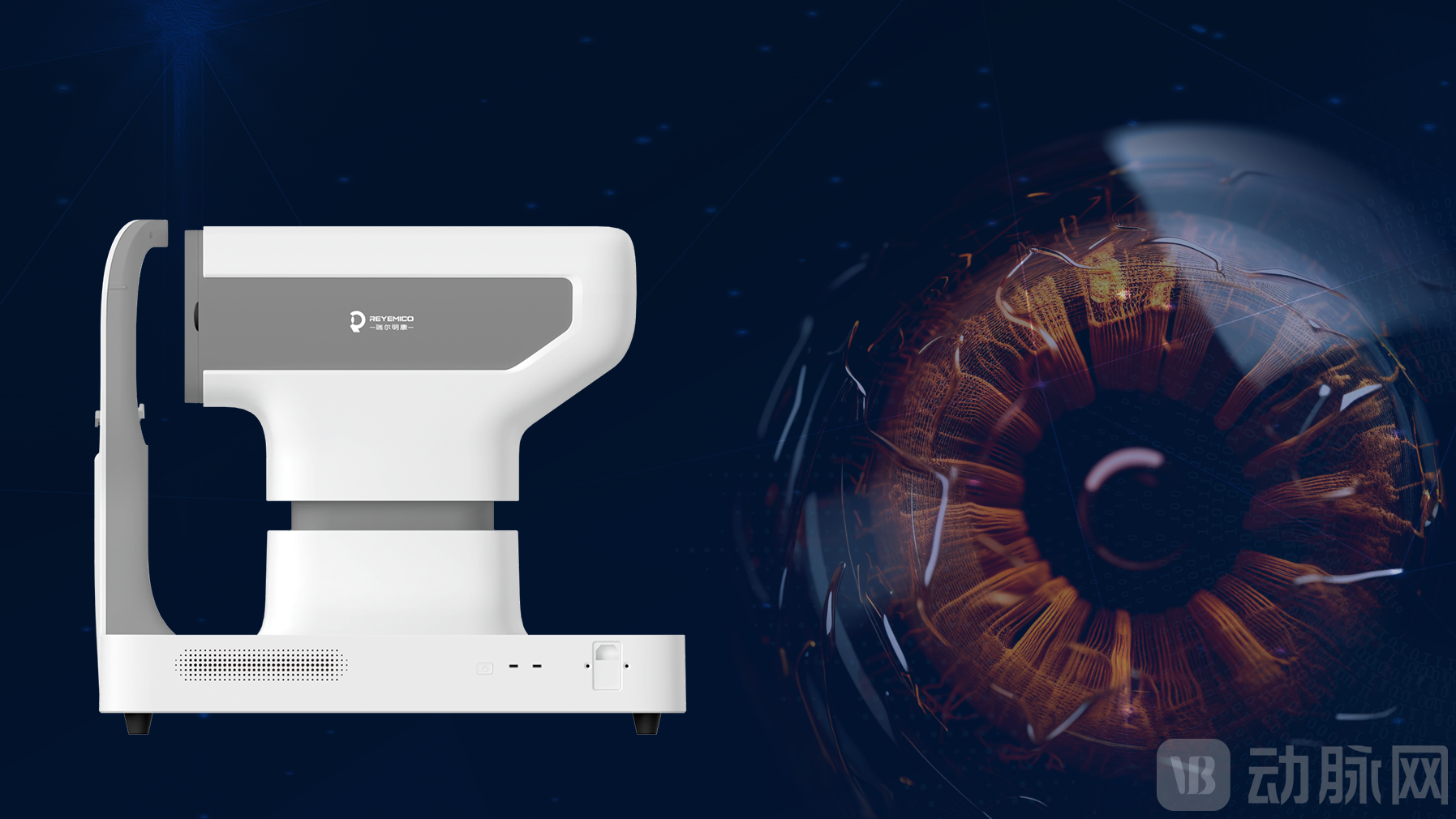
“Our original aspiration has always been to develop products that effectively address critical pain points in the industry. This was true for our previous ultra-widefield digital fundus camera, and it remains so for the newly approved binocular autorefractor,” said the founder of RealMingKang in an interview with VCBeat.
This demonstrates that RealMingKang, grounded in the R&D and manufacturing of precision ophthalmic medical devices, ensures that every product pipeline it develops and every product it launches has a clear mission: “to address core pain points in the industry.”
So, what pain points in the optometry field urgently need to be addressed, making it the target market for Aier Mingkang to develop its second product pipeline?
"Why can't I see clearly even though I just got new glasses?"
In many optometry-related communities and online consultation platforms, questions like this are frequently posted. Among the numerous responses, “the subject’s testing condition” and “the optometrist’s operational proficiency” are often cited.
Here, “subject test status” refers to the phenomenon where tension or emotional fluctuations in the subject during testing may cause transient changes in refractive error, thereby affecting optometry results. Moreover, even with the aid of modern technologies such as autorefractors and phoropters, current optometry methods remain susceptible to the individual factors of the optometrist.
Therefore, to enhance the stability of optometry results, it is necessary to relax the test subjects’ state during testing on one hand, and improve the professional competence of optometrists on the other.
Unfortunately, at the current stage, China not only faces a shortage of optometrists but also suffers from uneven quality among practitioners. According to a 2019 report by Optometry Lecture Hall, there were only slightly more than 4,000 qualified optometrists in China. In contrast, the number of myopic individuals in China reached 630 million in 2022, ranking first worldwide.
Furthermore, the figure of 630 million represents only the number of patients diagnosed with refractive errors. In recent years, heightened attention from national authorities and industry stakeholders toward myopia prevention and control in children and adolescents has led to the routine, large-scale implementation of early vision screening and the establishment of visual health records across China. This trend has undoubtedly placed greater strain on the already limited pool of optometrists.
To make matters worse, even with an adequate supply of optometrists, refraction results may still differ from the actual refractive error. This is because, in addition to the availability of optometrists and the subject’s condition, the performance of the autorefractor used is also a major factor affecting the accuracy of refraction.
According to the founder of Ruier Mingkang, similar to many niche segments within the high-end medical equipment industry, the domestic market for high-end optometers is also dominated by imported brands. However, in recent years, driven by the acceleration of import substitution, the improvement and establishment of policies supporting local innovation, and the presence of substantial unmet market demand, domestic optometer brands have embarked on a journey of innovation.
The first step in innovation is to address the core market development issue of insufficient optometric accuracy. The key to resolving this lies in three aspects: first, relaxing the test subject’s state as much as possible; second, minimizing “interference” from the optometrist; and third, enhancing the performance of the optometer itself.
So, how does Ruier Mingkang’s newly approved binocular autorefractometer enhance refractive accuracy from these three aspects?
Binocular synchronous refraction is the standout feature of the RealMingKang binocular autorefractor.
During traditional optometry examinations, the optometrist instructs the subject to sit in front of an autorefractor, adjust their posture, and fixate on the image displayed within the instrument. A common target image used is a red house on a green lawn. The variation in clarity and blurriness of the red house image helps relax the subject’s eyes. When the red house appears blurred, the autorefractor emits infrared light into the pupil and determines the presence and degree of myopia or hyperopia based on the intraocular infrared imaging.
This is the optometric principle of monocular autorefractors, whereas the RealMingKang binocular automatic refractometer differs from traditional refractometers in its design principle, enabling it to achieve more precise optometric results.
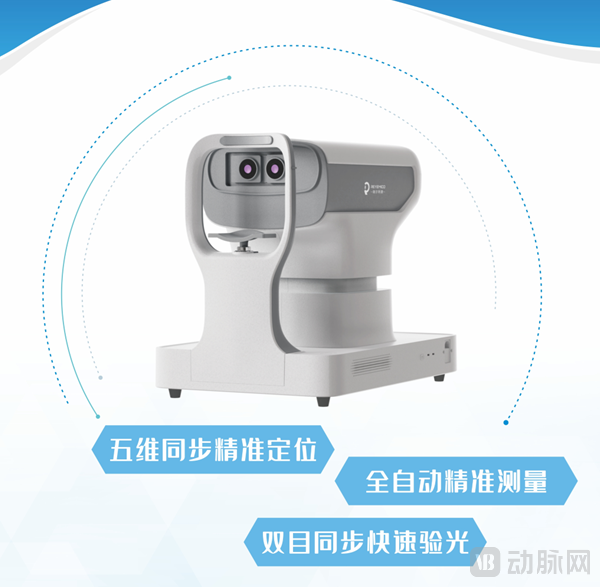
One reason is that binocular synchronous refraction better aligns with human visual habits. It not only facilitates bilateral relaxation during fogging measurements but also prevents overcorrection in either eye, thereby enhancing fixation stability and enabling more accurate determination of refractive error along the visual axis.
Specifically, unlike common autorefractors on the market that offer a refractive accuracy of only 0.25 diopters, the Realmingkang binocular autorefractor achieves a refractive accuracy of up to 0.01 diopters. This enhanced refractive precision can, to a certain extent, improve the compatibility of lenses with visual demands across different scenarios.
“In fact, visual demands vary across different environments. As ambient brightness changes, the human pupil adjusts its diameter accordingly. Therefore, enhancing refractive precision not only meets visual needs in a single scenario but also accommodates eye usage requirements in diverse, real-world conditions as much as possible,” stated the founder of Ruier Mingkang.
Furthermore, to address variations in refraction results that may arise from differences in optometrists’ professional proficiency, the RealMingKang binocular autorefractor features one-touch intelligent operation, aiming to minimize the impact of individual practitioner factors on refraction outcomes. Thanks to simultaneous binocular refraction, the RealMingKang binocular autorefractor also significantly reduces refraction time.
“In fact, although autorefractors are classified as Class II medical devices and fall within the category exempt from clinical trials, we conducted standardized clinical studies. After pilot hospitals simultaneously trialed our binocular autorefractor alongside that of a well-known brand, they showed a stronger preference for our binocular autorefractor,” revealed the Head of R&D at Ruier Mingkang.
When VCBeat asked about the reasons behind the approval of Ruier Mingkang’s products, the head of R&D at Ruier Mingkang, after a brief pause, stated: “If we were to explore this issue solely from a technical perspective, we might never arrive at a definitive answer. This is because all the underlying technologies are quite fundamental. What we have done is to balance and integrate key foundational technologies from core domains of ophthalmic optical medical devices—such as optics, mechanics, electronics, computing, and image processing. It seems that is all there is to it.”
“Indeed, what has sustained us from 2016 to the present? And what has empowered us to successively develop ultra-widefield digital fundus cameras and binocular autorefractors, thereby providing the confidence for our continued foothold in the high-end precision ophthalmic medical device sector? I suppose it may simply be a series of fortuitous coincidences and the harmonious convergence of timing, location, and human synergy,” Wang Qingyang said slowly.
Yet, behind this “coincidence,” we seem to be able to identify some more tangible reasons—
Founder Wang Qingyang is a seasoned entrepreneur in her own right. Her decade-plus experience as an ultrasound physician, combined with her tenure in the marketing department of a leading Chinese medical device company, has endowed her with keen insights into both clinical and market needs, thereby helping RealMedcon attract numerous R&D talents. Meanwhile, the R&D team’s profound expertise accumulated over more than ten years in fields such as optical design and algorithms has made possible the development of RealMedcon’s ultra-widefield digital fundus camera and binocular autorefractometer.
These two products represent merely the beginning of RealMingKang’s journey in the field of precision ophthalmic medical devices. Looking ahead, RealMingKang remains committed to advancing the industrialization of more high-tech innovations in ophthalmic optics, creating products that deliver exceptional value to human health and quality of life, and sharing premium care for well-being.