

Navigating Pitfalls and Gaining Insights: 11 Pharma Experts Share Strategies for Chinese Innovative Drug Globalization
Over the past year, the healthcare market has just weathered a harsh winter, with many feeling the chill in what is known as the innovative drug sector. Nevertheless, as the old adage goes, crisis often breeds opportunity.The allure of investment lies precisely in uncovering new opportunities amidst crises.
As biotech deals in China continue to heat up, the global expansion of innovative drugs has become this year’s hottest topic. Although going global is never easy, the number and scale of Chinese innovative drugs expanding overseas this year are unprecedented, giving rise to a series of notable transactions.To a certain extent, now is the best time for Chinese pharmaceutical companies to set sail and expand overseas.
Coexisting with the challenges of the financing environment, an increasing number of biotech founders are also beginning to recognize the importance of business development (BD) and self-sustaining revenue generation. When the tide recedes—Securing tangible financial support from industry partners may better reflect a company’s value.
Xianfeng Qiyun, founded in 2016, specializes in early-stage venture capital investments in the life sciences and healthcare sectors. We focus on high-potential platform opportunities, maintain deep engagement with entrepreneurs, and are fully committed to supporting top scientists and founders in navigating the journey from zero to one. We have also invested in numerous Chinese biotech startups.
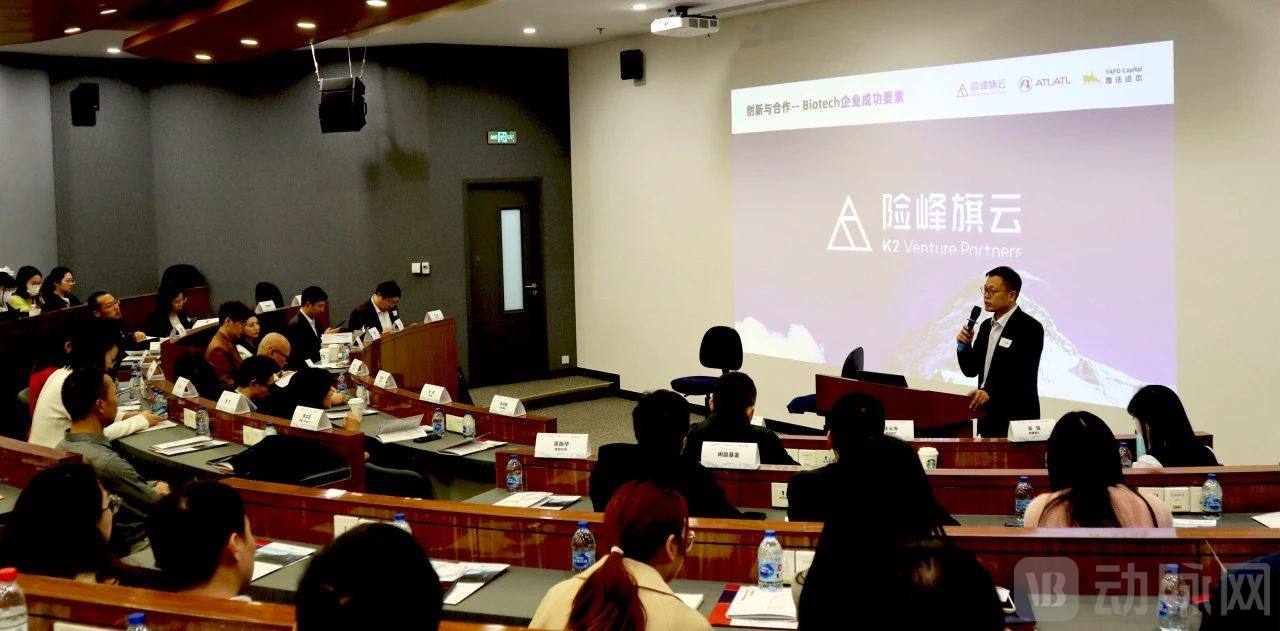
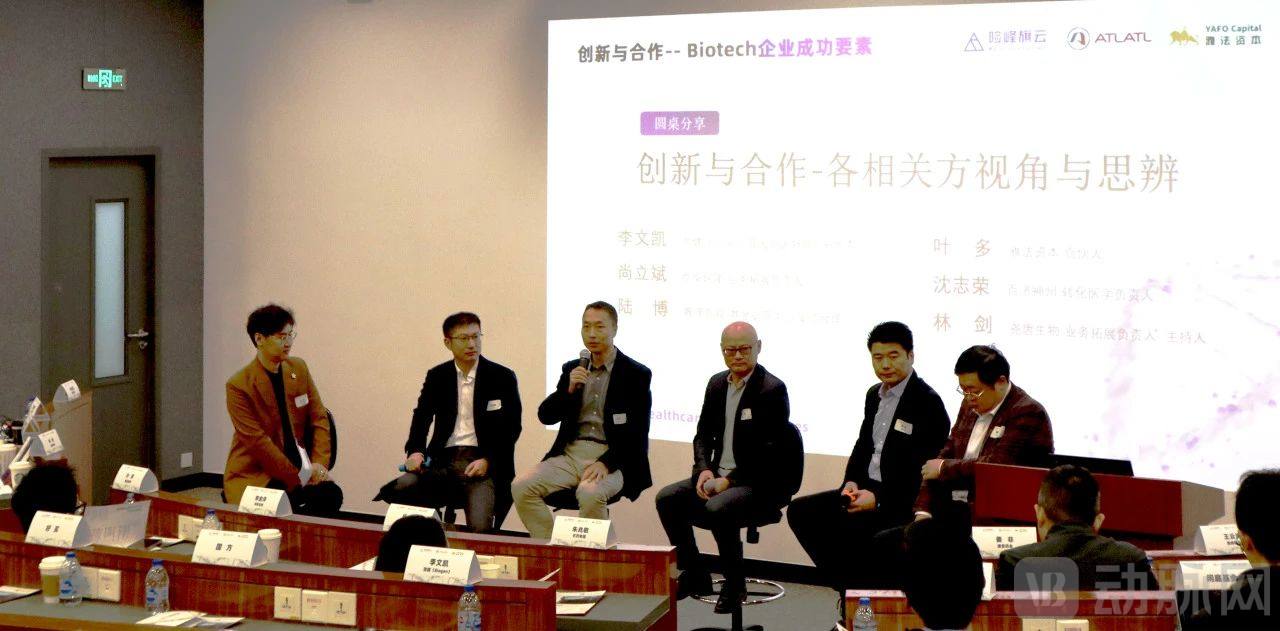
On the last weekend of November, we joined forces with ATLATL Innovation Center and Yafa Capital to co-host a closed-door event titled “Innovation and Collaboration: Key Success Factors for Biotech Companies.”
We have invited:
● Yang Ying, Head of Strategy and Business Development, Sanofi Greater China
● Zhu Zhaomin, Director of Global Business Development and Licensing Execution at CSPC Pharmaceutical Group
● Jiang Fei, Chief Investment Officer of CMS Pharmaceutical
● Geng Yuchao, Head of Business Development at Keymed Biosciences
● Li Wenkai, Head of External Innovation, Biogen Asia Pacific
● Lu Bo, Operation Center of Jiaze Venture Capital Fund
● Zhirong Shen, Head of Translational Medicine, BeiGene
and representatives from Xianfeng Qiyun’s portfolio companies:
● Li Jinze, Founder of Ze'an Biotech
● Wu Zhenhua, Founder of Jiayin Bio
● Shang Libin, Head of Business Development at Vitaron
● Lin Jian, Head of Business Development at Yaotang Biotech
The group discussed several issues currently drawing the most attention in the industry, including but not limited to:
1. What changes have occurred in the global expansion of innovative drugs over the past year?
2. What types of assets are suitable for overseas expansion? Who are the target buyers?
3. From the Perspective of MNCs, What Constitutes a High-Quality Asset?
4. What are the core competencies of a successful BD professional?
5. What are the common pitfalls and lessons learned in the global expansion of innovative drugs?
We cannot fully capture the brilliance of the four-hour event; instead, we have distilled its core insights and applied partial anonymization to preserve the authenticity and integrity of the content as much as possible. It is our simple hope that a spark of insight from one of the speakers may inspire you, which was the primary motivation behind creating this article.
Macroeconomic Analysis: Over the Past Year,
What Changes Have Occurred in the Global Expansion of Innovative Solutions?
1. The licensing market continues to cool down, a trend that is widely felt across the industry. It is projected that by the end of 2023, China’s innovative drug in-licensing market will continue to experience a halving in both transaction volume and value.In stark contrast to the winter chill in the domestic market, this year has seen a surge in the global expansion of innovative drugs.
In the first half of 2023, there were 25 license-out deals for new drugs in China. With one month remaining until the end of the year, the full-year transaction volume is projected to reach approximately 60 deals, representing a 40% increase compared to the previous year. In terms of transaction value, the total amount in the first half of 2023 reached $13.1 billion, marking an 83% year-on-year growth.Notably, the total upfront payment for the transaction reached $1.1 billion, representing funds directly accessible to the enterprise. This figure marks a substantial year-on-year increase of 258%, approaching the full-year level recorded in the previous year.
From the perspective of transaction counterparties, the six deals with the highest upfront payments this year all involved multinational corporations (MNCs). Among them, AstraZeneca (AZ) was the most active company, completing three transactions (with Conmed, LexinPharma, and Kelan Pharmaceutical).Thus, it is evident that multinational corporations (MNCs) are playing an increasingly important role in the current wave of Chinese innovative drugs going global.
The underlying reasons are twofold. First, the global financing environment has been challenging, making it difficult for previously high-valued biotech companies to raise capital through equity dilution, thereby compelling them to seek funding overseas. Second, China’s R&D capabilities in innovative drugs have improved significantly in recent years, with many enterprises now capable of developing first-in-class products.
In addition, the Middle East is also a very hot region, particularly Saudi Arabia,"If you only have clinical data from China and no other overseas data, conducting a very small bridge study would suffice to use Saudi Arabia as a hub for expanding into surrounding Middle Eastern countries.", with an approval timeline of approximately 12–18 months, Saudi Arabia may currently be another region, aside from Southeast Asia, that is relatively friendly toward Chinese innovations.
2、Currently, U.S. companies remain the most demanding globally for the introduction of preclinical new drugs.This may be because the United States has a large number of incubator companies that are more willing to acquire early-stage assets, nurture them, and then resell them to larger corporations, reflecting a higher risk appetite. In contrast, European, Japanese, and South Korean companies prefer to wait until Phase II clinical proof-of-concept (POC) is completed and risks are mitigated before in-licensing or acquiring these assets.
Therefore, although many people were concerned about the risk of decoupling between China and the United States at the beginning of the year, at least from the perspective of innovative drug transactions, the two countries have maintained a steady upward trend, with U.S. companies continuing to purchase Chinese innovative drug assets. For instance, a few weeks ago, Pfizer’s CEO posted that the company would vigorously introduce innovative drugs from China. Previously, 50%–60% of license-in deals in the United States may have originated from the United Kingdom,But now China has undoubtedly become one of the most important “ammunition supply routes” for the United States.。
Highlights of Key Insights

FA Perspective:Chinese Companies’ Global Expansion Remains a Trend, with Domestic Pharmaceutical Firms Engaging in More Diverse Collaborations and Actively Seeking Differentiation
Viewpoint 1:I believe the CEO must first have a clear understanding of what type of asset my product represents: is it first-in-class, best-in-class, orMe too or me better? Then, determine different transaction strategies based on asset quality, deciding whether to sell to multinational corporations (MNCs), mid-sized pharmaceutical companies, licensing firms, or in non-regulated markets.
It is worth noting that even if asset quality is poor, it does not mean there are no buyers; “me-too” products and even those below the “me-too” level can still be exported overseas.However, never harbor illusions about the counterparty or transaction amount that exceed the asset’s “intrinsic quality.”. Additionally, it is essential to identify a benchmark product; claiming “best in class” status requires substantiation through extensive animal and clinical data comparing the product against competitors, rather than self-declaration.
Based on transaction data from 2023, although 40% of counterparties were multinational corporations (MNCs), 60% still originated from mid-sized pharmaceutical companies or small biotech firms.Therefore, the strategy of “marrying into a wealthy family” is not necessarily suitable for everyone, and large multinational pharmaceutical companies are not always the best choice.; just as when casting a fishing net, setting the mesh too wide may cause some fish to slip through, we can appropriately relax the criteria based on our own conditions, striving to bring more people to the negotiating table.
Viewpoint 2:From the perspective of transaction asset stages,The proportion of early- to mid-stage deals in China’s biotech sector has been rising year by year, particularly for preclinical asset transactions., recently, many founders have also asked me, “When exactly should we start discussing deals? Is it too early to do so now?”
Based on our own experience,The median value of cross-border transactions is approximately 9 months.Of course, given the current cool market environment, this cycle has gradually extended to 12 months. Therefore, if you are dealing with early-stage assets, looking back 12 months, you may have already started preliminary discussions with others during the Lead Optimization or PCC stage.
In terms of counterparties, among the 149 outbound transactions from China over the past five years (2018–2023), nearly half (47%) involved U.S. companies as counterparties. This was particularly evident for early-stage products, with early-stage assets (Phase I and preclinical) accounting for 55% of all assets licensed in from the United States.
Viewpoint 3:The Keyword for High-Quality Assets Is Differentiation, specifically, it can be divided into five dimensions:
The first is "new":For instance, if your product is novel, it will naturally attract significant attention. However, the transaction process for such assets tends to be slower, as multinational corporations (MNCs) need time to understand your platform and technology, and must further invest time in collaborating with you to explore and validate its potential.
Second, speed:“My product may not be highly innovative, but I move fast. For instance, within this pipeline, I rank third or fourth in the industry, yet I can target the same indications as the top two players; alternatively, I may choose a different indication but outpace the leaders in development speed. If another company acquires this product in the future, it could rise from third place to first, offering significant growth potential.”
The third is good:Although my development pace is slower than others, my data are superior. Whether in animal or human studies, and in terms of both safety and efficacy, my results are indeed better and more robust than yours.
Fourth is "more":The product itself may not be highly innovative, or may even already be on the market; however, I have accumulated extensive clinical data. While such assets may not be attractive to multinational corporations (MNCs), they can be licensed to emerging markets, such as Southeast Asia, where the market size is substantial and growing rapidly, thereby facilitating easier deal closure.
Fifth is comprehensiveness:It involves having a global perspective. For instance, my product’s data set includes not only Asian populations but also Caucasian populations, and I have conducted clinical trials in Australia or the United States. Alternatively, I have engaged in in-depth communications with the FDA, which has reviewed my asset and provided positive feedback or comments. This enables buyers to rapidly mitigate risks and make swift decisions.
Biotech Perspective:BD is a long-cycle endeavor; strategy, communication, and high-quality data are all indispensable.
Viewpoint 1:BD is essentially an extension of corporate strategy., this expansion does not mean waiting for the BD team to join the company before assessing which assets are suitable for license-out; rather, from the very inception of the company,It is essential to clarify whether my future strategy should be oriented toward an initial public offering (IPO) or toward partnerships.
For instance, during the industry boom of the past couple of years, when capital was abundant in the market, some domestic companies might have had as many as 10 pipelines in development simultaneously, covering both China and overseas. When asked whether they planned to pursue commercialization, they would state that they intended to handle all commercialization efforts in-house. However, as funding conditions have become increasingly tight, many CEOs are gradually coming to realize this,Strategy must be clearly defined from the very beginning.。
For example, if I had decided from Day 1 to sell the company to a multinational corporation (MNC), I could have structured it as a single-asset company. This approach is relatively rare in China but very common overseas. Alternatively, if I intend to launch a global clinical trial, what is the rationale behind this decision, and on what basis should such a decision be made?
It may be that my product holds greater advantages for Caucasian populations, facilitating more effective out-licensing in the future; or perhaps large multinational pharmaceutical companies possess extensive data from US clinical trials, which could better substantiate the product’s efficacy if leveraged; alternatively, I might choose to focus exclusively on deepening penetration in the Chinese market, where sufficient commercialization can be achieved. These strategic questions should be clarified at the outset of product development, or even at the company’s inception. By the time Business Development (BD) professionals become involved, their role is essentially to help the CEO execute these pre-established plans.
Viewpoint 2:To be honest, multinational corporations (MNCs) have an inherent distrust of Chinese data, particularly when the data is generated domestically. You need to undertake extensive preparatory work and provide highly detailed explanations to clarify why it works. Given that these companies are making substantial financial commitments—with non-refundable upfront payments—and ultimately bearing the cost, their demands for freedom-to-operate (FTO) analyses, real-time patent verification, and repeated validations are understandable. This process is essential.
Therefore, the biggest challenge for innovative drugs going global remains how to build trust. In this process, communication is the core skill of business development (BD).This situation is somewhat akin to the "bucket effect," where your water level is determined by your shortest stave. Since each company’s weaknesses differ, you must first identify your own company’s shortcomings and then find an appropriate way to assure your partners that these weaknesses will not pose a problem.
Viewpoint 3:Everyone says that China's biotech sector is hyper-competitive. So, how can companies carve out their own path to success amidst such intense competition?
First, I believe it all hinges on your data—high-quality data speaks for itself. Second, storytelling is equally critical. How can you distinguish yourself as the best among a sea of competitors? You need to showcase your company on the global stage, such as by actively participating in BIO International and the JP Morgan Healthcare Conference, crafting a compelling narrative that leaves a lasting impression. Underpinning this success are product differentiation and professional business development (BD) capabilities—both are indispensable.
MNC Perspective:Logically structured and standardized clinical data, along with the speed of Chinese pharmaceutical companies, are key considerations.
Viewpoint 1:First, “marrying into a wealthy family” is no easy feat. Now, suppose you are a multinational corporation (MNC) faced with two similar projects, one in the United States and the other in China—which would you choose? As we know, the concept of biotech originated and is centered in the United States. When the differences between assets are minimal, the outcome is hardly in doubt.
Of course, innovation cannot all truly happen in Cambridge, so the most important thing is to look at the advantages of your product. The data package is very important, and it must show very good clinical data, demonstrating that you havepromotable advantage, in other words, if this product can truly address a major clinical pain point upon its actual market launch, commercialization will naturally become very easy.
Another issue isData StandardizationA few days ago, I was in discussions with a domestic biotech company that has a rare-disease product in Phase II clinical trials. However, the design of their clinical trial deviates significantly from current international standards, and the enrolled patient population is very small. Under these circumstances, although they claim to have completed Phase II, we do not consider their data to represent a true Phase II study, which precludes more in-depth discussions with them.
Therefore, it is recommended that the CEOs present avoid adopting the simplest clinical trial design merely to save costs or for other reasons. If your objective is to pursue a license-out strategy, particularly to sell to multinational corporations (MNCs),Your entire clinical design must be prospective, referencing the most current and widely adopted control groups, rather than being driven solely by cost considerations.。
Viewpoint 2:The greatest advantage of Chinese companies remains their engineering capabilities; therefore, whether in ADCs or bispecifics, our platform’sIt is particularly strong in optimization capabilities., it is often possible to quickly identify a potentially best-in-class candidate; furthermore, Chinese companies operate with high efficiency, enabling rapid pipeline development. In contrast, multinational corporations (MNCs), after years of development, tend to make most decisions slowly. Therefore, I believe this is the aspect that MNCs find most appealing about Chinese companies.
But the pursuit of ultimate efficiency is also a double-edged sword., but if we move too quickly and much of the data is non-compliant, with data packages failing to meet FDA submission requirements, pharmaceutical companies acquiring such assets would need to go back and generate additional data. As a result, these deals are often challenged by the acquirer’s R&D department during transaction due diligence.
Many people hold the misconception that, since multinational corporations are wealthy, they are not constrained by operating expenses. In reality, even with substantial financial resources, multinationals maintain tight control over their operating expenses.If the company is required to raise an additional round of data funding at this stage, it often leads to an internal stalemate where no party is willing to contribute capital., ultimately making it virtually impossible to complete the transaction; I believe this is a point that Chinese companies should pay particular attention to.
Perspective of Domestic Pharmaceutical Companies:Getting the project approved is half the battle—product positioning, clinical development, and deal structure are all critical.
Viewpoint 1:Today’s topic is BD, but in my view, many issues may extend beyond mere business development concerns.For instance, if you develop a product with the sole intention of selling it from the outset, you may ultimately find that it fails to gain any traction in the market.
It is akin to raising a child: if you intend to sell them from the outset, your mindset will differ. You may lose the drive for further refinement once the Investigational New Drug (IND) application stage is reached, and your team may not commit fully, as the lack of a truly proprietary product makes it difficult to foster cohesion and morale. Therefore, a CEO who lacks the determination and courage to pursue a New Drug Application (NDA) is unlikely to achieve significant long-term success.
Personal Perspective: Three Key Milestones in Product Development
The first step is project initiation; a well-defined project proposal essentially guarantees half the success., in my view, some project proposals may be too academic or laboratory-oriented. While they might potentially treat certain diseases, much like publishing papers in academia where researchers rush to claim discoveries, if your strategic direction is flawed from the outset, subsequent business development (BD) efforts will become increasingly difficult. Therefore, when initiating a project, it is essential to ask yourself: What makes this project valuable in the future? Which patient population will it target? Prioritize targets with clearly defined indications.
Second, it is essential to determine whether the entire clinical development pathway can be clearly defined at the early stage of project initiation.In reality, many biotech founders are R&D, process development, or technical specialists. During early project initiation, they may not have given sufficient consideration to downstream implications. By the time the IND stage is reached and clinical or BD colleagues take over, it is too late to make changes; they must work with what has been delivered, as there is no turning back.
Third, during the business development (BD) phase, is there a translational medicine expert?I believe that one key indicator of whether a company is truly engaged in innovation is whether it has dedicated translation personnel. If I am developing a “me-too” product, similar to the generic drugs of previous years, translation is unnecessary because the translational work has already been completed at the U.S. or European headquarters. There is no need to explain what the product is; it can be directly introduced into the Chinese market.
However, if you aim to develop a first-in-class therapy and explore indications and combinations, you must demonstrate your differentiation. It is at this stage that you need translational professionals. Of course, such talent is scarce not only in China but also in the United States, as the current industry lacks an environment capable of training such individuals. These professionals must possess expertise in technology, clinical development, and commercialization—a combination that is extremely rare. I believe this critical responsibility may ultimately have to be shouldered by the CEO themselves.
Viewpoint 2:Effective BD communication is not only external but also internal. Internally, this means starting from a professional perspective to clearly determine how the asset will be marketed in the future. If it seems trulyIf a product is difficult to sell, or simply unsellable, it is advisable to recommend adjustments at the pipeline level.
On the other hand, as a non-R&D professional, you will inevitably face significant resistance when adjusting the R&D pipeline. Coordinating with various departments in the aftermath will severely test your business development (BD) communication skills, yet this is an imperative task that must be undertaken.
Several Innovative Drugs Going Global
Tips to Avoid Pitfalls
Tip 1: Firmly Safeguard Control Over Overseas Registrations
Ideally, if a drug were licensed globally to a multinational corporation (MNC), overseas registration issues would be avoided. However, in practice, most transactions involve so-called regional licensing (e.g., granting rights for the Japanese market to a Japanese company and those for the Korean market to a Korean company)., which severely tests biotech companies’ overall judgment in clinical and regulatory strategies. In other words,If the clinical trial design proposed by the licensed enterprise is unreasonable in the local market, it is highly likely to adversely affect our global strategic layout and value realization.
Tip 2: Pay Attention to Patent-Related Risks
For exampleSome biotech companies have also told us that if a certain drug lacks patent protection in India, many European and American companies would be hesitant to purchase it, given India’s strong local R&D capabilities, which make copying relatively easy. As an increasing number of innovative drugs from China enter emerging markets, patent protection strategies should extend beyond traditional markets such as Europe, the United States, and Japan to include these regions and countries, striking a balance between cost and risk that suits each company’s needs.
Tip 3: The Gentleman’s Agreement on “Non-Compete” Clauses
Non-compete clauses are also quite tricky. They are designed to restrict partners, for example, by prohibiting them from engaging in activities that compete with ours. However, defining exactly which activities are prohibited and delineating the boundaries can be challenging. Nevertheless, such provisions are essential. Both parties must clearly negotiate these terms before closing the deal to ensure our product receives sufficient priority. In the event of a breach, we reserve the right to reclaim the product and part ways amicably.
Tips 4: Start Well, End Well—A “Dignified” Breakup
From 2018 to 2023, there were 149 license-out deals for new drugs in China, among which 10 involvedThe return cases mentioned above are not actually low in proportion.
Therefore, companies must also take into account when granting licenses,There is a possibility that the two parties may “quarrel” or even “break up” in the future., against the backdrop of current global challenges in biopharmaceutical financing, the risks associated with such uncertainty are particularly critical to transactions. Therefore, we should make advance preparations in our commercial and legal terms to ensure adequate protection when risks materialize.
Tip 5: The involvement of three parties is essential
First, Tax AdvisorA competent tax advisor will guide you on which entity to use for signing contracts with overseas parties, which entity should receive payments, and how to maximize your tax savings. If your company plans to go public in the future, they can help design a comprehensive strategy, including whether to list on the A-share market or the Hong Kong stock exchange, and whether to adopt a VIE (Variable Interest Entity) structure or a red-chip structure. Therefore, having an advisor who is easy to work with is crucial.
In addition,Lawyers are also indispensable., lawyers are naturally the best partners for business development (BD); they can help you avoid many pitfalls, although they themselves may sometimes become a source of trouble, making careful selection crucial.
Conclusion
For the biotechnology and biomedical industries, 2023 was a year lacking in investment hotspots. Although global expansion emerged as a rare bright spot, the recovery of market sentiment and investment enthusiasm may still take time.
However, in the long run, advancements in human medicine are ultimately inseparable from breakthroughs in science and technology. As long as the global trends of population aging and the public’s pursuit of a better life remain unchanged, the demand for innovative pharmaceutical research and development will persist, thereby alleviating excessive anxiety about the future.
Crises always entail both danger and opportunity; every winter serves as a reshuffling, where only the plants that survive the wind and snow can exclusively enjoy more sunlight. Perhaps only by maintaining the resolve to continuously scale perilous peaks can one witness the “boundless scenery” atop them.