

EUROSTAR Medical Submits IPO Prospectus Following Success in Securing Over 200 CE Certificates Through China-EU Dual-Center Model
Poland is located in Central Europe and serves as a gateway connecting Eastern and Western Europe. In terms of national development, Poland is the ninth-largest country in Europe, with a total population of 38.08 million, ranking 41st globally. In 2022, Poland’s GDP reached $690.68 billion, ranking 21st worldwide and 9th in Europe.
Based on its population size and economic strength, Statista data shows that Poland’s healthcare expenditure as a share of GDP rose steadily from 1990 to 2022.
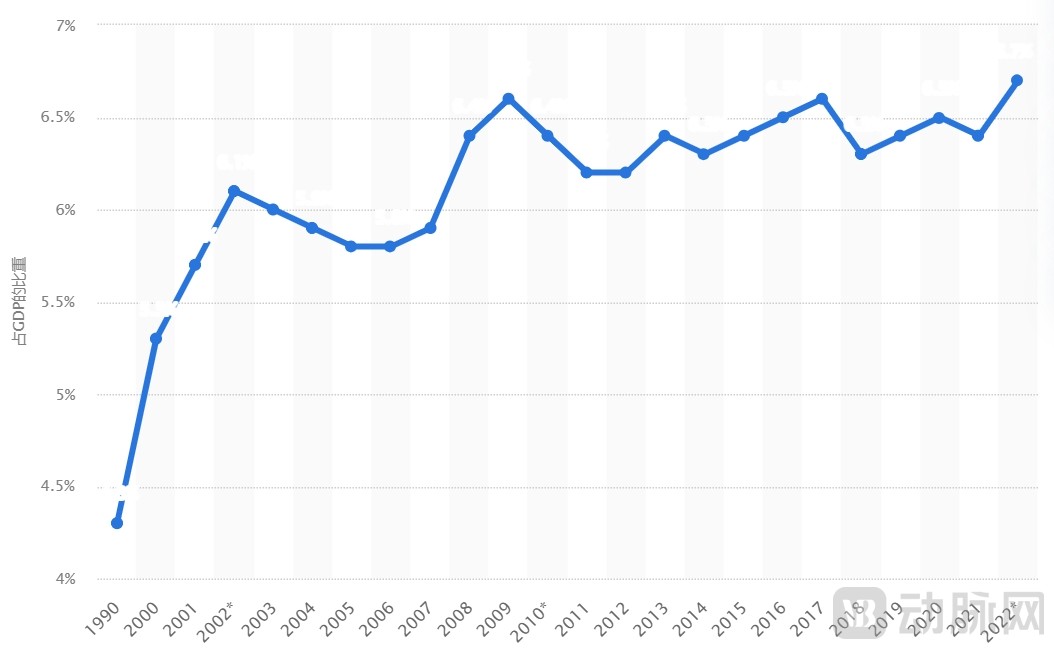
Healthcare Expenditure as a Percentage of GDP in Poland, 1990–2022
Source: Statista.com
In this context, an international CRO company rooted in Poland has provided Chinese medical enterprises with one-stop international regulatory consulting and clinical solutions through efficient, zero-distance, full-process services, with a core focus on conducting compliant clinical trials. This company is EUROSTAR Medical Technology (Nanjing) Co., Ltd. (EUROSTAR, hereinafter referred to as “EUROSTAR Medical”).
EUROSTAR, founded in 2017, is dedicated to providing customized one-stop solutions for international market access. The company’s business processes cover the entire product lifecycle, including medical device R&D project initiation, standards compliance, clinical trials, registration submissions, and post-market surveillance.
According to Li Xiaowei, General Manager of EUROSTAR,“EUROSTAR Medical adopts a dual-center operational mechanism in China and Europe, with its Business and Solutions Center, EUROSTAR (China), located in Nanjing, Jiangsu Province, and its Medical Laboratory and Clinical Center, EUROSTAR (Europe), located in Warsaw, Poland.”
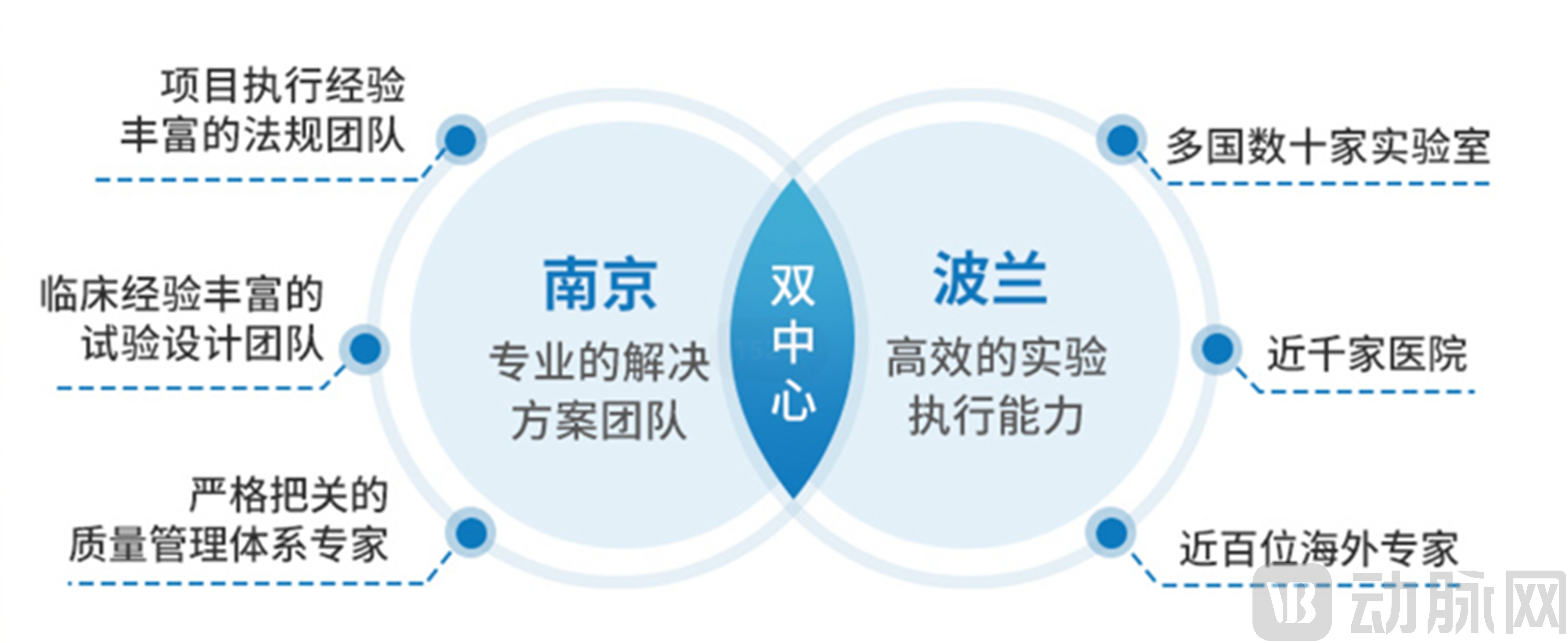
China-Europe Dual-Center Operational Mechanism
Clinical trials are a critical component of pre-market regulatory oversight for medical devices. Taking the EU medical device market, where EUROSTAR operates, as an example, the EU’s Medical Device Regulation (MDR) and In Vitro Diagnostic Regulation (IVDR) stipulate that manufacturers must conduct clinical trials at healthcare institutions for applicable products, following scientific validity assessments and in accordance with regulations governing medical device clinical trials. These clinical investigations must adhere to stringent regulatory and ethical requirements, ensuring the scientific rigor, transparency, and ethical integrity of the research process.
In this regard, Li Xiaowei has profound insights, stating: “Demonstrating the safety and efficacy of medical devices is a key focus of product certification and review. Therefore, clinical strategies should be considered from the project initiation stage, building a chain of clinical evidence around safety and efficacy to achieve early design, early implementation, and early benefits.”
In response, EUROSTAR has made substantial investments in the experimental and clinical domains of medical device CRO services since its establishment.Specifically, the company has established a professional clinical project team at the Medical Experimental and Clinical Center in Poland, capable of scientifically and effectively managing the execution of clinical trials for enterprises. Meanwhile, clinical experts with whom the company maintains deep collaborations can assist enterprises in risk management, statistical data analysis, and other aspects of their clinical projects.
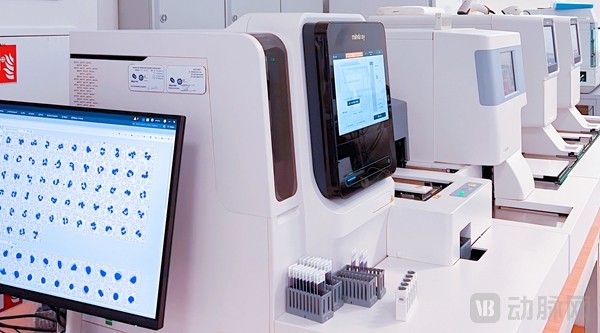
EUROSTARPolish Clinical Center
Following the globalization pace of domestic enterprises, EUROSTAR has partnered with high-quality clinical institutions in Europe, the Americas, Africa, and the ASEAN region. It assists Chinese companies in conducting global regulatory consultations, clinical trials, and usability studies, while providing professional management for Clinical Research Associates (CRAs).
In addition, by leveraging data on the incidence, temporal trends, and geographic distribution of all diseases listed in the WHO’s International Classification of Diseases and Related Health Problems across various regions, as well as its proprietary patient database, EUROSTAR can rapidly and precisely match subjects for each clinical trial, thereby shortening project timelines and reducing clients’ costs.
The pandemic propelled numerous IVD companies to rapid growth, but while it may have altered the commercial dynamics of profitability in the IVD sector, it has hardly changed the fundamental principles governing technological R&D. As the pandemic recedes, the industry is accelerating into a phase of upgrading and consolidation. Companies that pursued “quick profits” without adhering to regulatory standards will be eliminated by the market. In contrast, those deeply entrenched in in vitro diagnostics are strategically pivoting, seeking new growth curves. Having accumulated sufficient financial resources, these companies are now willing to invest in high-cost, high-risk projects and leverage overseas expansion to access broader global markets.
However, for companies expanding overseas, the challenges extend beyond the vast geographical distances to include differences in consumer habits, healthcare models, languages, and cultural backgrounds. In response, EUROSTAR has leveraged its years of experience in the medical device CRO sector to assemble a cross-border expert technical team covering CRO project management, regulatory registration in various countries, and quality system establishment, with over 50% of its members holding master’s degrees.
Li Xiaowei introduced to VCBeat, “Half of the company’s European team are Polish employees. The company currently has a total staff of over 20 people, all with more than five years of experience in the medical industry, capable of independently managing the entire process from R&D project initiation to market launch and regulatory certification. Currently, EUROSTAR is assisting clients in obtaining regulatory approval for the market launch of diagnostic reagents for HIV, HPV, HBV, and other conditions.”
As a key executive, Mr. Li Xiaowei brings over 20 years of experience in the medical device industry, with deep expertise in interpreting standards, analyzing regulations, and planning certifications. He has previously held positions at major medical device companies such as BGI Shenzhen and Puai Medical, serving as the Management Representative for multiple organizations.
Leveraging the professionalism and close collaboration of its cross-border team, EUROSTAR helps domestic medical enterprises seamlessly integrate with the international market, assisting partner companies in achieving global product commercialization.
According to reports, EUROSTAR’s medical services have been implemented in multiple regions and countries, including China, the European Union, and the United States. During the pandemic, leveraging the collaborative efforts of its dual centers in China and Europe, the company independently established certification channels, securing over 200 CE certificates for Chinese enterprises. It achieved an overall clinical trial completion rate of 99%, accumulated more than 100 service project cases, and generated over €3 billion in foreign exchange from the export sales of certified products.
Meanwhile, EUROSTAR leverages its clinical advantages to continuously enrich its business offerings and service scope. Specifically, this strategy is driven by two new growth engines. First, in terms of channels, against the backdrop of increasing uncertainty in global trade policies, EUROSTAR will continue to actively expand its core business globally—such as in ASEAN, Russia, and South America—to provide first-class international CRO services to more clients. Second, having successfully assisted numerous domestic enterprises in “going global,” EUROSTAR is also actively exploring a reverse operational model, helping overseas medical device companies connect with domestic resources for animal testing, standards testing, clinical trials, and other services.
Meanwhile, EUROSTAR has been continuously expanding its business offerings and service scope, leveraging clinical advantages as a strategic fulcrum. Specifically, this expansion can be categorized into two new growth poles.First, in terms of channels, against the backdrop of increasing uncertainty in global trade policies, EUROSTAR will continue to actively expand its core business globally, including in markets such as ASEAN, Russia, and South America, providing first-class international CRO services to more clients. Second, after successfully helping numerous domestic enterprises “go global,” EUROSTAR is also exploring a reverse operational model, namely assisting overseas medical device companies in accessing domestic resources, such as animal testing and clinical trials.
Looking ahead, Li Xiaowei stated, “As an international CRO enterprise deeply rooted in both domestic and global markets, EUROSTAR aims to build an open database for global medical device regulatory compliance in the future. This platform will provide free access to regulatory resources from different countries and regions for users seeking to expand into overseas markets, thereby breaking down industry information asymmetries and resource monopolies.”
In the face of an intricate and complex macro environment, global expansion is no longer a battle to be fought alone, but rather a collaborative endeavor fostering win-win outcomes among numerous medical device companies and CROs. True to its commitment to “rapidly match domestic and international resources to meet any need,” EUROSTAR is actively coordinating global resources and steadily strengthening its position to establish itself as a hub and center for high-quality medical resources.