

China's Largest Digital Healthcare Platform Health 160 Files for Hong Kong IPO, Nearing Profitability

Shenzhen Ningyuan Technology
Integrated Internet Healthcare Service Platform
On December 15, 2023, Health 160 International Limited (hereinafter referred to as “Health 160”), a leading internet healthcare company, filed its prospectus for a proposed listing on the Main Board of The Stock Exchange of Hong Kong.
Shenzhen Ningyuan Technology, founded in Shenzhen, has evolved over 18 years to build a digital healthcare service platform. It is currently the largest such platform in China. The platform offers hospital-facing services, including digital management systems and online traffic marketing; physician-facing services, such as appointment scheduling, online practice, patient management, and doctor branding; and patient-facing services, including online consultations and pharmaceutical retail.
Driven by synergies across multiple business lines, Health 160 generated revenues of RMB 279 million, RMB 423 million, and RMB 526 million in 2020, 2021, and 2022, respectively, with year-on-year growth rates of 51.7% and 24.3%. During the same period, its adjusted net losses amounted to RMB 19.5 million, RMB 38.5 million, and RMB 70.7 million, respectively, increasing in tandem with revenue.
In the latest data release, Shenzhen Ningyuan Technology achieved a dual narrowing of both operating loss and adjusted net loss, having recorded a 15.9% year-on-year revenue growth in the six months ended June 30, 2023.
Among them, the adjusted net loss for the period ended June 30, 2023, narrowed from RMB 32.7 million in the previous period to RMB 7.9 million, bringing the company within striking distance of turning a profit.
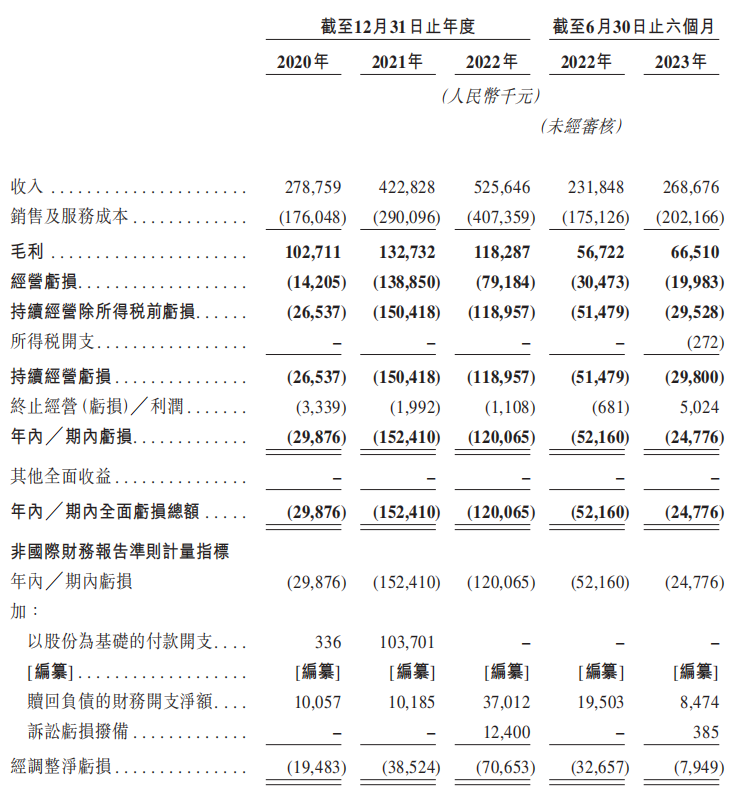
Shenzhen Ningyuan Technology: Summary of Consolidated Statement of Profit or Loss and Other Comprehensive Income (Source: Shenzhen Ningyuan Technology Prospectus)
Before venturing into the new frontier of internet healthcare, Ningyuan Technology (the predecessor of Health 160) primarily focused on developing software for hospital internal management systems and maintaining hospitals’ own websites. At that time, there was frequent exchange among various hospitals in Shenzhen. The management systems developed by Ningyuan Technology for these hospitals were well-received in the industry, and its reputation spread far and wide.
Capitalizing on this momentum, Ningyuan Technology launched its first commercialized system in 2006—the Blue Dragonfly Real-Time Monitoring and Management System for Hospital Infections. This system has a remarkable legacy, rising to rank among the top five in China within just ten years of operation.
However, Ningyuan Technology did not continue to increase its investment in the medical IT sector simply due to the success of its infection control system. Luo Ningzheng, the founder of Ningyuan Technology, served as the Director of the Information Department at a public hospital in Shenzhen for seven years. He viewed the medical IT market as one that had been accumulating for many years and was nearly mature, with a clear ceiling and limited room for imaginative growth.
Therefore, when the internet began to gain momentum in China in 2005, Luo Ningzheng and his founding team started to ponder whether the internet could make a meaningful impact in the healthcare sector. Could emerging technologies help address the medical access challenges faced by China’s 1.3 billion people?
In fact, Ningyuan Technology established “Jiuyi 160” (renamed “Health 160” in 2017) while selling its systems, attempting to shift offline medical services online. However, due to a lack of operational experience and policy support, this business segment remained largely under the radar.
It was not until 2009, when the former Ministry of Health issued the “Opinions on Implementing Appointment-Based Diagnosis and Treatment Services in Public Hospitals,” requiring hospitals with the necessary conditions to launch such services, that the situation of Shenzhen Ningyuan Technology was fundamentally transformed.
At that time, many internet healthcare companies had already entered the appointment registration market. However, they tended to focus on building connections among platforms, doctors, and C-end patients. In Luo Ningzheng’s view, patients at that time did not seek out specific doctors first when seeking medical care; instead, they prioritized hospitals, a phenomenon described as “recognizing the temple but not the monk.” Therefore, Health 160 (Shenzhen Ningyuan Technology) placed its strategic emphasis on the hospital side, prioritizing partnerships with major hospitals in Shenzhen.
Beyond Shenzhen, Health 160 has also established a presence in provinces and cities such as Changsha, Qingdao, and Chongqing, and has formed partnerships with internet technology companies like Alipay and Huawei. Currently, the Changsha Municipal Government has entrusted Health 160 with operating the medical and healthcare services section of its local services app, “My Changsha.” Additionally, Huawei has designated Health 160 as the exclusive operational partner for the minus-one screen on its smartphones.
It is worth noting that Shenzhen Ningyuan Technology’s strategic approach is neither conventional nor static. As the internet healthcare sector enters its second half, the company has made swift and decisive adjustments to its product matrix in response to evolving market conditions.
For instance, as the wave of internet hospital construction was just gaining momentum, Shenzhen Ningyuan Technology launched its “Cloud Hospital” solution, connecting hospitals’ internet hospital platforms with its own digital medical health service platform. This not only supports the operation of internet hospitals but also enables them to share Shenzhen Ningyuan Technology’s distinctive services.
As patients’ healthcare preferences shift toward doctors’ personal brands, Shenzhen Ningyuan Technology has optimized its physician-facing services to help enhance doctors’ visibility and recognition, building on its existing patient management capabilities.
To strengthen community medical service capabilities under the tiered diagnosis and treatment system, Health 160 has introduced the “160 Cloud Community Health” solution. On one hand, it empowers hospital development and promotes the implementation of tiered diagnosis and treatment; on the other hand, it eliminates information asymmetry between community healthcare providers and residents, thereby increasing the signing rate for primary community health services through high-quality community engagement.
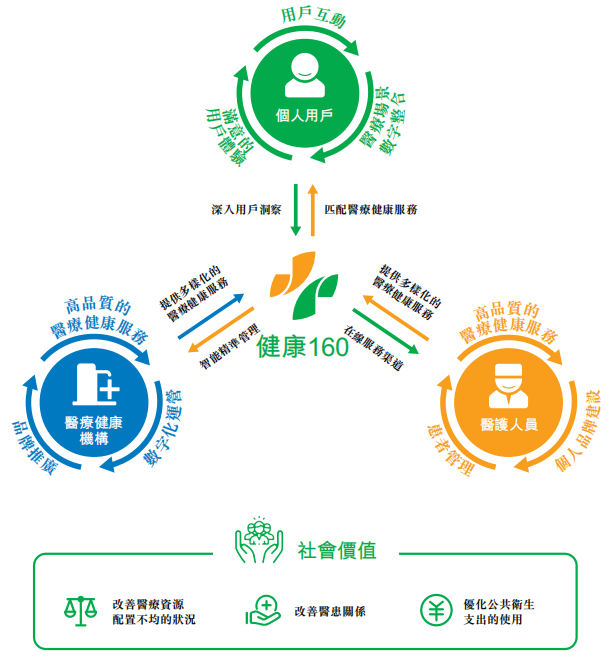
Health 160 Business System (Data Source: Prospectus)
Insights into market changes and the decisive implementation of decisions have helped Health 160 achieve this year’s results.
As of June 30, 2023, the Health 160 platform’s service coverage spanned more than 260 cities across China, connecting over 30,000 healthcare institutions, including more than 14,000 hospitals, 16,000 primary care facilities, and approximately 6,600 private medical institutions. The platform provides these institutions with consumer-oriented medical services such as dental care, ophthalmology, and health checkups. Meanwhile, Health 160 boasted 44.9 million registered users and 3 million monthly active users, and collaborated with 720,000 registered physicians for online practice, thereby solidifying its position as China’s largest digital healthcare service platform.
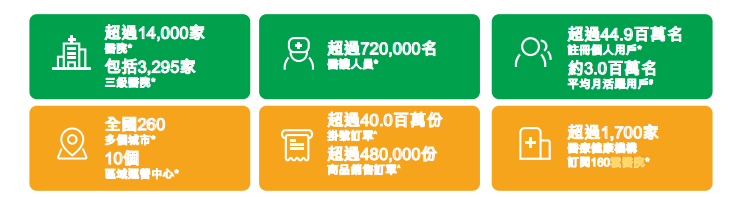
2023 Performance of Shenzhen Ningyuan Technology (Source: Prospectus))
Having witnessed the evolution of internet healthcare from its inception to maturity, has Health 160 found its path to profitability?
Deconstructing the business matrix of Health 160 is not complex. Its extensive operations, which encompass hospitals, doctors, and patients, can be simply categorized into two segments: digital health solutions and sales of medical health products. The digital health solutions segment is relatively complex, highly personalized, and labor-intensive, but it boasts high gross margins. In contrast, the sales of medical health products is a simpler operation with significant revenue contribution, yet its gross margins are average.
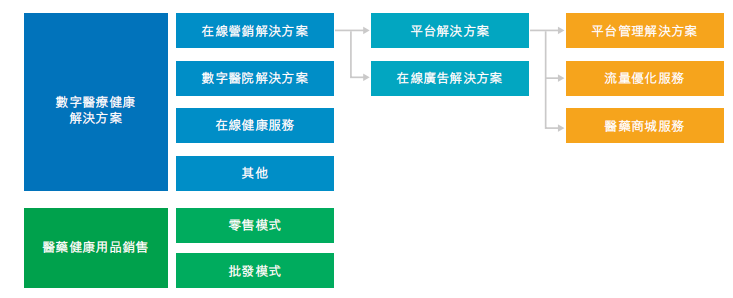
Main Sources of Revenue for Shenzhen Ningyuan Technology (Source: Prospectus)
Digital healthcare solutions, as the core business of Health 160, are critical to the company’s ability to truly turn losses into profits. In 2020, 2021, and 2022, as well as for the six months ended June 30, 2022 and 2023, the gross profit from Health 160’s digital healthcare solutions amounted to RMB 90.4 million, RMB 122.16 million, RMB 102.64 million, RMB 47.44 million, and RMB 62.71 million, respectively, with corresponding gross margins of 73.1%, 76.6%, 72.8%, 76.8%, and 75.4%. These figures place the company above the industry average.
Adopting a cautious strategy, Shenzhen Ningyuan Technology did not begin large-scale replication and promotion of its “Shenzhen model” until 2020, leaving substantial room for expansion in terms of provincial and municipal coverage. Therefore, if more cost-effective and efficient solutions can be identified for subsequent deployments in other provinces and cities, Shenzhen Ningyuan Technology may not only turn losses into profits but also achieve considerable profitability.
Revisiting the Sales of Medical and Healthcare Products. Although this segment features low gross margins, its substantial volume contributes a significant absolute gross profit. Furthermore, this business line, launched in 2016, completes the closed loop of Health 160’s To-C services, better meeting patients’ needs for online diagnosis and treatment.
As the sales of medical health products are ancillary to digital medical health solutions, the continuous expansion of coverage areas and the growing number of covered users for these solutions will drive a corresponding increase in medical health product sales, thereby creating greater profit growth potential for Shenzhen Ningyuan Technology.
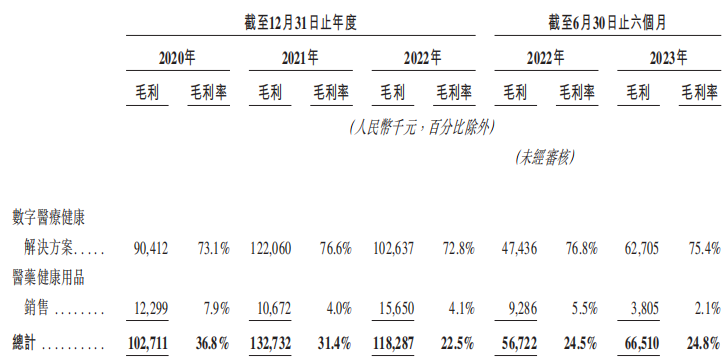
Gross Profit Distribution of Shenzhen Ningyuan Technology’s Core Businesses (Source: Prospectus)
Unlike other players in the internet healthcare sector, Shenzhen Ningyuan Technology (Health 160) places particular emphasis on research and development (R&D). As of June 30, 2023, the company had a total of 588 employees, among whom 161 were R&D personnel, accounting for 27.4% of the workforce. This level of human resource investment in R&D surpassed that in business operations, sales, and marketing, and was higher than the industry average.
According to the prospectus, Health 160 has allocated these human resources to advancing and refining the Health 160 platform, while strengthening its access channels, such as the Health 160 mobile app, the 160 Medical Professional app, and the 160 Merchant app. Specifically, Health 160 is quietly building strength in data middleware, with a focus on technologies such as AI-driven search and recommendation algorithms, message processing technology, and health management technology.
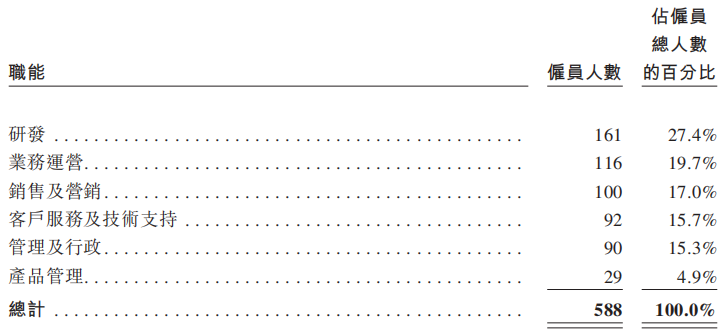
Shenzhen Ningyuan Technology Employee Composition (Source: Prospectus)
For Shenzhen Ningyuan Technology, limiting the scale of its research team may be an effective path to achieving profitability in the short term. However, looking back at its 19 years of development, its ability to swiftly seize emerging opportunities amidst each era’s shifts has undoubtedly relied on the R&D team’s efficient dissection of requirements and product innovation.
From this perspective, the “losses” incurred by Shenzhen Ningyuan Technology in recent years may yield returns far exceeding this figure in the coming years.
Looking at the entire landscape of internet healthcare, every enterprise is continuously experimenting and exploring along its own business model. As of today, they have subtly transformed hospitals’ profit models, physicians’ work practices, and patients’ healthcare-seeking behaviors in many aspects.
As a key player, Shenzhen Ningyuan Technology’s achievements lie not only in empowering the healthcare system but also in charting a viable path that enables internet healthcare enterprises to continue their next phase of exploration on the premise of sustainable development.
Now that it has reached the IPO threshold, Shenzhen Ningyuan Technology will undoubtedly bear greater expectations.
In addition to hospitals, physicians, patients, financial institutions, and technology companies, the internet healthcare ecosystem also encompasses numerous other stakeholders, including pharmacies, pharmaceutical manufacturers, insurance providers, and charitable organizations.
It remains unclear whether Shenzhen Ningyuan Technology, after securing funding, will steadily expand along its existing business model or strive to integrate new roles into its platform to identify the next source of positive cash flow.