

How Strong Is Clinical Innovation? Insights from Cleveland Clinic’s Translational Success
"Scalpel"
"Gauze"
"Hemostat"
In operating rooms depicted in films and television dramas, such a scene frequently occurs.
The lead surgeon began the procedure, keeping his eyes fixed on the anesthetized patient while instructing the nurses to hand over instruments in an orderly manner.
Let’s pause the scene.
The instrument with serrations and a hinge held by the lead surgeon is one of the most common hemostatic forceps used in surgery, also known as Crile hemostatic forceps, which has a history of nearly 100 years.
And its inventor, George Washington Crile, was one of the principal founders of the Cleveland Clinic, a world-renowned medical institution.
Since its founding in 1921, Cleveland Clinic has consistently upheld its mission of dedication to patients, commitment to health research, and service to talent throughout its century-plus history, continuously driving innovation and seeking better ways to help patients.
How, then, has such a healthcare institution—founded by clinicians and with innovation in clinical practice embedded in its DNA—successfully closed the loop among scientific research, translation, and commercialization?
1Clinical Innovation Attributes in Genes
Founded in 1921 by a group of visionary physicians, Cleveland Clinic has grown into a global leader in healthcare. Since its inception, the clinic has adopted a pioneering multidisciplinary approach, bringing together experts from various medical fields to advance the frontiers of patient care and research.
A pivotal moment for the Cleveland Clinic and in the history of medicine occurred in 1967, when Dr. René Favaloro, a surgeon at the Cleveland Clinic, performed the world’s first successful coronary artery bypass graft (CABG) surgery. This groundbreaking procedure marked a turning point in cardiac care, solidifying the clinic’s reputation as a center of medical innovation. In the subsequent years, the Cleveland Clinic continued to lead transformations in healthcare, establishing its renowned heart transplant program in 1984 and achieving ongoing breakthroughs in cardiac surgery, neurology, cancer treatment, and medical imaging.
Cleveland Clinic’s commitment to global impact has enabled it to transcend U.S. borders by establishing international branches and partnerships worldwide, thereby extending the institution’s expertise across the globe. This expansion has not only broadened the Clinic’s influence but also facilitated the exchange of medical knowledge on a global scale.
The clinic’s commitment to education is embodied in the Cleveland Clinic Lerner College of Medicine, established in 2002, which emphasizes training the next generation of healthcare professionals. Patient-centered care has also long been a cornerstone of the Cleveland Clinic’s philosophy, highlighting patients’ active participation in medical decision-making.
Cleveland Clinic has consistently ranked among the top hospitals in the United States, earning acclaim for its exceptional clinical quality, patient outcomes, and innovative practices. The establishment of the Cleveland Clinic Innovations center has further solidified its position as a pioneer in the healthcare sector, fostering the development of breakthrough technologies and incubating a portfolio of spin-off companies that deliver innovative solutions to the market.
During the global COVID-19 pandemic, Cleveland Clinic played a pivotal role by providing research, expertise, and exceptional patient care in challenging times. With its rich history and unwavering commitment to excellence, Cleveland Clinic stands as a model of innovation, continuously advancing healthcare for patients worldwide.
Beyond the earliest Crile hemostatic forceps, physicians at Cleveland Clinic have demonstrated unique insights and made significant advancements in surgical instruments, operative techniques, and even pharmacotherapy. At every landmark stage in the evolution of medicine, researchers at Cleveland Clinic have delivered milestone contributions.

The ability of Cleveland Clinic physicians to sustain innovation across multiple clinical domains over the long term is underpinned by the vast patient population served by its global network of medical centers.
Taking the latest data from 2022 as an example: In addition to its main campus in Cleveland, the Cleveland Clinic system operates 23 hospitals and 265 outpatient facilities across Florida, Nevada, Toronto (Canada), London (UK), and Abu Dhabi (UAE). These facilities collectively support nearly 80,000 healthcare staff and approximately 7,000 hospital beds.
Such a robust foundation in both hardware and software enables the Cleveland Clinic system to accumulate extensive clinical practice.In 2022, the Cleveland Clinic system served 14 million patients worldwide, admitted over 300,000 inpatients, and performed 270,000 surgeries. Clinical and research staff maintain the highest level of vigilance in disease diagnosis, treatment, and research, while sharing surgical expertise across its global network of healthcare facilities.
2"Clinical Practice Is the External Force, Research Is the Internal Force"
If robust clinical practice capabilities are the external force acquired through recruitment, then consistent investment in research and development from the outset is the internal strength that ensures a firm foothold. The two complement and reinforce each other, mutually driving their respective success.
In 1999, thanks to the donation from the Lerner couple, Cleveland Clinic launched the Lerner Research Institute and its biomedical research initiatives. In 2002, Cleveland Clinic partnered with Case Western Reserve University to establish the Cleveland Clinic Lerner College of Medicine, achieving an organic integration of clinical practice, scientific research, and medical education.
As the hub for basic, translational, and clinical research at Cleveland Clinic, the Lerner Research Institute boasts scientific capabilities on par with those of top-tier academic institutions:
In 2022, the Cleveland Clinic received a total of $402 million in research funding, with scientists at the Lerner Research Institute securing nearly half of all externally funded research grants;
In 2021 (the most recent year for which complete data are available), Lerner researchers published 1,379 papers in academic journals, with an average citation impact exceeding that of 93% of papers on related topics worldwide in the same year;
In 2022, the Lerner Research Institute’s frontier scientific research resulted in the successful approval of 57 patents and the establishment of two spin-off companies;
In 2022, the Lerner Institute’s in-house scientific service programs provided approximately $15 million worth of services to researchers at local universities and hospital systems.
What further bolsters the Cleveland Clinic’s research prowess and visionary outlook is its annual “Top 10 Medical Technology Innovations” special report.
Since 2018, the Cleveland Clinic has launched its “Top 10 Medical Technology Innovations” special series, aiming to share its insights with the broader healthcare community, convey cutting-edge information to professionals across all fields, and inspire continuous improvement in industry practices to benefit patients worldwide.
Each year, the Cleveland Clinic team interviews nearly 100 clinical opinion leaders within its system to gather more than 150 nominations, which are ultimately compiled and reviewed by an established committee. To be considered for nomination, technologies must meet the following criteria:
Innovation must demonstrate significant clinical impact and provide certain patient benefits relative to current practice (e.g., improved outcomes, reduced costs, addressing unmet needs);
Innovations must have a high probability of being widely adopted by the health ecosystem within the next year;
If applicable, the innovation must be in clinical trials or nearing exit from clinical trials, with published superior results and a high probability of approval within the next year;
Innovation must demonstrate a significant focus on humanistic concerns in its application or benefits.
Under rigorous standards, the Cleveland Clinic’s annual list has demonstrated unprecedented foresight. Take its Top 10 Medical Technology Innovations of 2019 as an example:

Four years on, a revisit to this list reveals that many of the topics have already been implemented on a large scale in clinical practice and remain hot areas of continuous research exploration.
With a global network of clinical centers as the soil and practice-oriented research as the seed, all that is needed for the flower to bloom is a skilled cultivator.
3Focus on Process, Cast Products
In 2000, Cleveland Clinic established Cleveland Clinic Innovations.Cleveland Clinic Innovations, responsible for the commercial translation of technologies developed by doctors and researchers within the system.
To date, the department has established an incubator spanning over 4,600 square meters for Cleveland Clinic, facilitated more than 800 outbound licensing deals, secured approval for over 2,400 patents, and spawned 102 startups/spin-offs.
This is all thanks to the improvement and adherence to the conversion process.
The processes of Cleveland Clinic Innovations are structured around three primary objectives:
Streamline the innovation process;
Ensure that each idea receives the attention it deserves;
Keep the inventor involved and provide them with regular updates on the status of the invention.
With this goal in mind, the four teams within the Innovation Department took the stage in rotation.
Docking Team
The initial liaison team will provide support to inventors throughout the technology transfer process. They will guide inventors on how to properly disclose their ideas and develop a strong value proposition for the inventions. Inventors and the liaison team will work together to ensure that the inventions can be reviewed and advanced to the evaluation stage.
Evaluation Team
The evaluation team focuses on analyzing market intelligence and intellectual property, assessing the commercial potential and patentability of inventions. They also evaluate the competitive landscape and examine whether inventions meet clinical needs. Their industry expertise helps determine which inventions are ready to enter the development phase.
Development Team
The development team primarily transforms screened concepts into viable technologies. Leveraging their extensive expertise, scientists and engineers formulate development plans, define milestones, and build prototypes. They mitigate commercialization risks by validating the design, performance, and safety of the inventions.
Commercialization Team
The developed technologies can enter the market through various channels. They may be licensed to strategic industry partners or independent companies. The commercialization team identifies suitable investment partners for new technologies, establishes strategic relationships, negotiates licensing terms, executes agreements, and optimizes the potential for long-term market success of the products.
The process was established through exploration and practice, but its implementation also involves an intrinsic art.
On the one hand, the Innovation Department must rely on its expertise to assess the practical feasibility of technological innovations in addressing patients’ problems during the recommendation and translation process. This requires balancing not only efficacy but also cost and accessibility. On the other hand, a clearly defined 3:3:4 benefit distribution ratio (hospital : technology transfer office : inventor) and an conflicts-of-interest committee that ensures fairness help uphold market-oriented values of balanced interests and transparency.
4The Last Mile from Research to Product
Soil, seeds, planting; clinical practice, scientific research, processes.To ensure that every flower bears fruit, Cleveland Clinic provides final protection using incubators.
Unlike some repurposed operational incubators, Cleveland Clinic was built from the ground up specifically to incubate startup projects within its own system.
In 2007, with support from relevant programs of the Ohio state government, Cleveland Clinic established the Global Cardiovascular Innovation Center (GCIC), one of the earliest cardiovascular healthcare incubators in the United States. It provided significant opportunities for researchers to focus on shared application areas and share best practices and resources. While many initial tenants primarily concentrated on the cardiac and vascular fields, GCIC later expanded its scope to include companies across various biomedical disciplines.
Since commencing operations in early 2007, GCIC has achieved remarkable success with the support of its incubator facilities:
Provided a total of $24.6 million in funding for the development of 60 innovative cardiovascular products;
Supported 47 different companies and eight research institution-based projects across the entire state;
Attracted 28 new enterprises to establish their presence, with continued operations through on-site and remote models;
29 new products have been launched or are under clinical trial evaluation.
In the final layer of protection within the incubator, Cleveland Clinic’s soil is abundant with flowers and fruits.
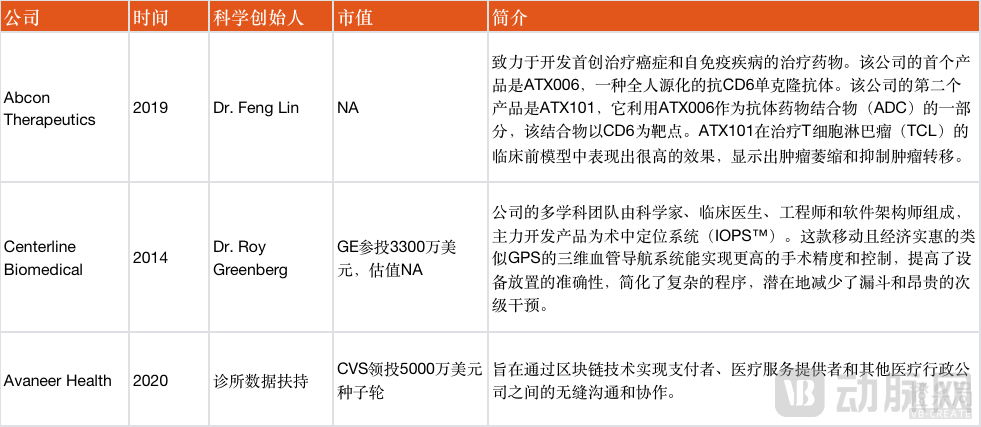
5Summary
The case of the Cleveland Clinic has its uniqueness, which is different from other medical institutions.
In contrast to other universities where affiliated medical institutions boast academic prestige and research capabilities that are no less than, or even surpass, those of the hospitals themselves, the Cleveland Clinic prioritizes clinical excellence. Its development and research agenda are driven by clinical needs, which in turn feed back into and further enhance clinical practice. This work is primarily undertaken by its own Lerner Research Institute, with some contributions from nearby state universities.
Unlike other leading academic institutions that have made significant strides in drugs and therapies by leveraging their strength in basic scientific research, the Cleveland Clinic’s strengths and translational achievements are more prominently reflected in the development of surgical techniques and medical devices.
As a case with a very high “clinical rate,” the Cleveland Clinic is undoubtedly an excellent control group for the model of “identifying problems in clinical practice and solving them in clinical practice.”