

China's Indigenous Innovation at the Inflection Point of Technological Emergence
Over the past few years, China’s original innovation has been the dominant narrative in upstream R&D across various industries, including healthcare. Driven by both internal and external factors, R&D and the market have converged, seeking optimal solutions through mutually beneficial synergy.
However, all things follow their own laws of development. Under the slogans of “resolving chokehold problems” and “domestic substitution” that have persisted for years, foundational scientific and technological research is being implemented in the industry at its fastest pace, albeit at a speed imperceptible to the naked eye.
In the latest Nature Index rankings released mid-year, China has risen to the top spot for the first time.
The unprecedented volume and quality of scholarly articles, akin to a vast root system deeply embedded in the soil, have made the explosive emergence and widespread proliferation of technologies inevitable.
1Technological Emergence Drives China's Original Research
Technological EmergenceSo-called technological emergence refers to the phenomenon in which new technologies or concepts suddenly appear and rapidly develop within the field of science and technology. This phenomenon typically manifests as a convergence of technological innovations, inventions, or ideas, leading to new technological trends or transformations. Technological emergence may stem from various factors, including novel approaches to existing problems, technological breakthroughs, and interdisciplinary collaboration.
At the 2023 Future Healthcare Technology Conference, we could observe with the naked eye the changes brought about by technological emergence in China.
One of the hallmarks of technological emergence is its suddenness, with the most representative recent example beingDigital Technology ForumThis article focuses on large language models (LLMs), represented by ChatGPT. Technological emergence often occurs after a long period of quiet accumulation, manifesting at an unusual speed and scale. The compounded accumulation of data and computational power has enabled LLMs to rapidly evolve into consumer-grade technologies, driving disruptive transformations across multiple sectors, including healthcare, at an extraordinary pace.
Interdisciplinarity is another important characteristic of technological emergence. This phenomenon often involves the integration of knowledge and skills from multiple fields, fostering collaboration and exchange across different disciplines. At this conference, we haveForum on Intelligent Manufacturing and MaterialsIt is intuitively evident how materials science, automation, imaging, aerospace, and mechanics converge in medical technology. These interdisciplinary innovations are no longer mere laboratory prototypes but tangible, market-ready products.
Technological emergence can be the result of multi-domain integration, or the cause of multi-domain breakthroughs. As a prerequisite and foundational technology for multiple current clinical applications,Frontier Technologies in Gene Sequencing...innovation has also unlocked new possibilities for genetic disease testing, tumor liquid biopsy, and point-of-care testing (POCT) for companion diagnostics.
This conference can be described as a concentrated manifestation of how technological emergence, bolstered by multi-party support, is driving original innovation in China.
2The Limits of Digital Technology and Time
The first version of Generative Pre-trained Transformers (GPT) was announced five years ago and has rapidly surged in prominence over the past year, driven by iterative version updates and the accumulation of massive datasets, becoming a quintessential example of recent technological emergence. Meanwhile, the application of generative AI, as represented by GPT technology, in clinical settings has garnered significant attention.
Diversified Trials and Exploration of New Technologies in Healthcare Have Become the Industry Consensus and Direction in the Short Term.
In the “New Future of Digital Technology” chapter, Chair Professor at the University of Science and Technology of China, Academician of the U.S. National Academy of InventorsZhou ShaohuaDiscussed the intersection of generative artificial intelligence and medical imaging.
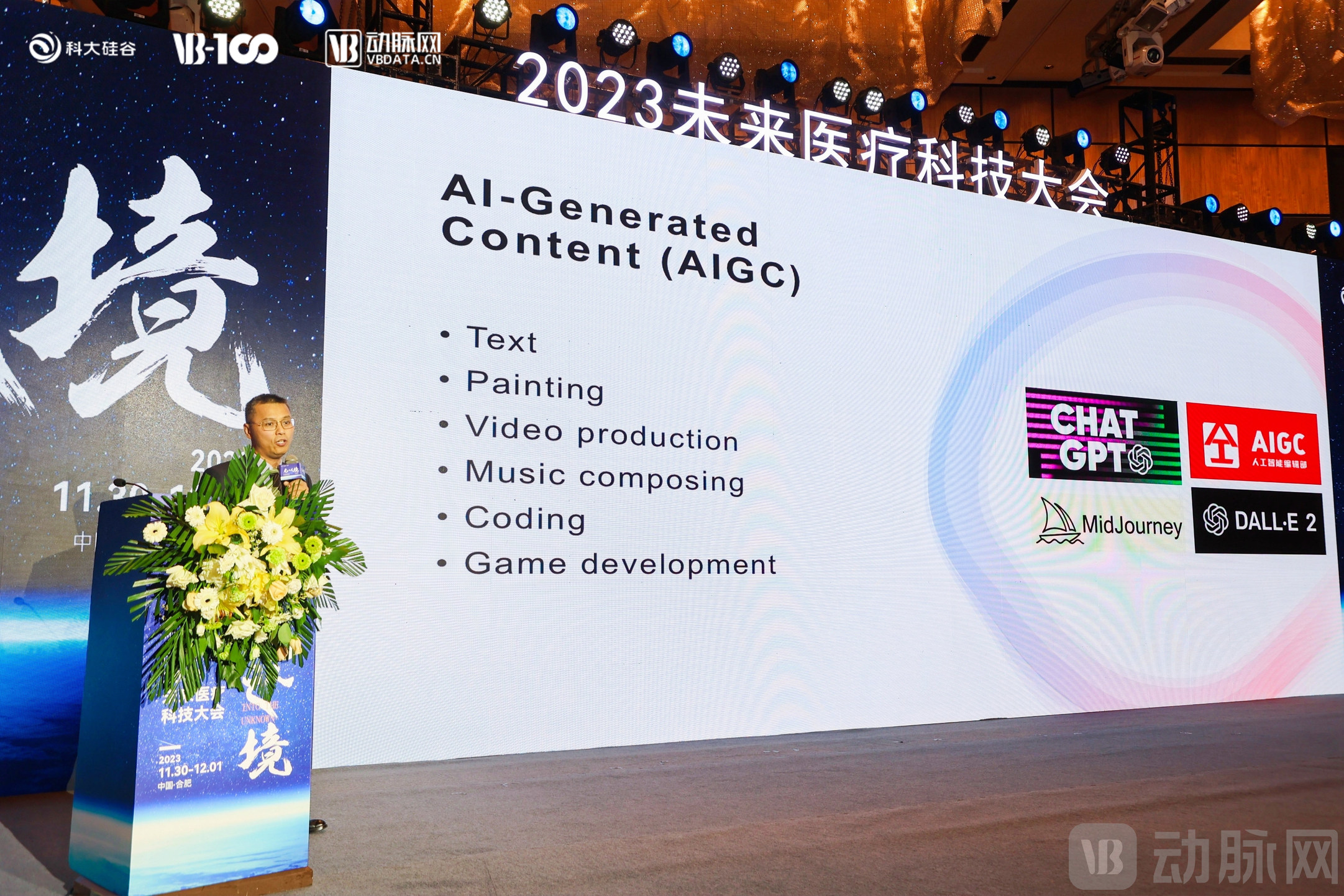
Professor Zhou used AIGC as a lens to showcase its remarkable capabilities in natural image generation, as well as its powerful creativity and emergent abilities. Professor Zhou believes that AIGC’s prowess in visual content is not only an excellent example but also opens up avenues for transferring these capabilities to the field of medical imaging.
Professor Zhou introduced that there are two paradigms for AI in evidence-based imaging: restoration and image synthesis. Although the latter may sound like fantasy, he considers it an intriguing research direction. Using computational methods to generate physical images that are difficult to acquire allows patient data to transcend time and space to serve present-day needs—a form of romance unique to science and engineering.
In fact, it is not just about medical imaging. We can enumerate the primary applications of large language models and AI in the healthcare sector: literature review and case interpretation generation; digitalization of healthcare services; and prediction of small-molecule drug structures.We will find that the ability of these applications to be, or gradually become, utilized in clinical practice stems partly from advancements in algorithms, but more importantly, it relies on the accumulation of massive datasets for algorithm training and the large-scale deployment of hardware resources.
The Iteration of Digital Technologies Means Time Is No Longer Against Us.
3Pushing Materials Beyond the Limits of Imagination Through Biomimicry
The integration of multiple disciplines has facilitated the widespread application of new materials in the medical field. The research and development of various consumables and devices enable patients to benefit in novel ways.As the development of entirely new material molecular structures becomes increasingly challenging, pushing the performance limits of existing technologies has emerged as a new trend in certain sectors.This can be gleaned from the insights shared by Professor Zhang Mingjun of Tsinghua University.
In the final session of the main forum of the conference, Tenured Professor and Doctoral Supervisor at Tsinghua UniversityZhang MingjunShared the latest research on micro/nanorobots in drug delivery and brain-computer interface applications.
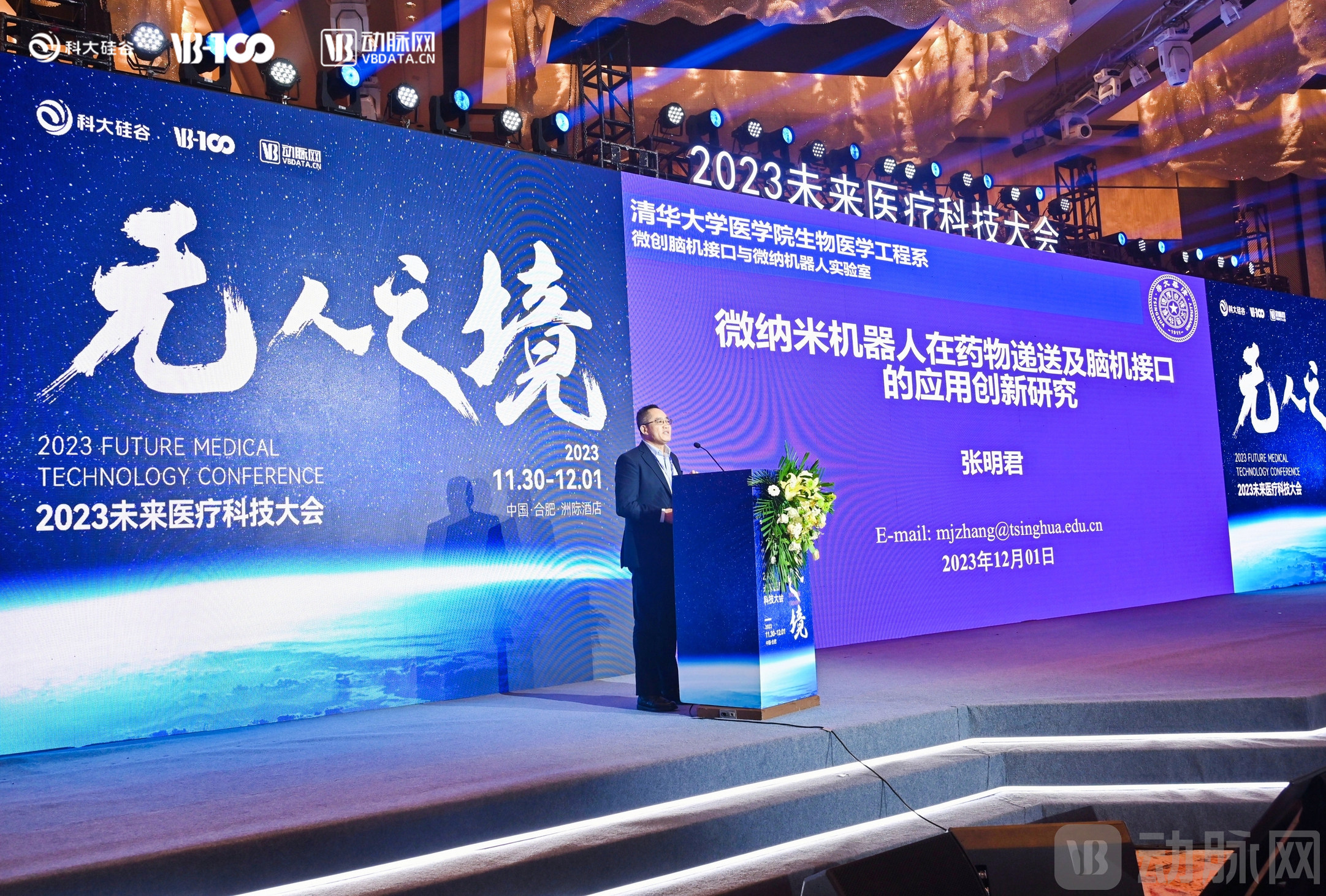
Starting with the three major obstacles to traditional oral delivery of biologics (biochemical barriers, physical barriers, and chemical barriers), Zhang Mingjun began to elaborate on his development and design of micro- and nanorobots aided by bionic concepts.
First, there is the gastrointestinal wall microneedle drug delivery device, which offers the advantages of direct administration, painless application with good patient compliance, and broad drug compatibility. As a traditional strength of Tsinghua University, micro- and nano-scale modifications effectively ensure that the microneedles on the robot can harness intestinal peristaltic contractions as a driving force, thereby facilitating efficient drug penetration into the small intestine via the microneedles.
In the field of brain-computer interfaces, Zhang Mingjun continues to uphold the principles of minimally invasive and bionic design. In addition to their excellent biocompatibility, the microfilament electrodes developed by his team are characterized by insect-inspired fan-shaped and cross-shaped deployment configurations.
Zhang Mingjun’s presentation highlighted the interdisciplinary integration of cutting-edge advances in materials science, pharmaceutics, neuroscience, and other fields within medical technology.
As the speech drew to a close, Zhang Mingjun seemed reluctant to squander precious time on pleasantries. Instead, he swiftly outlined several recent research advances published in *Science* that might interest his peers in attendance, repeatedly describing these industry novelties as “very interesting.”
4Exploring the Frontiers of Gene Sequencing Technology Across All Dimensions
Meanwhile, the discussion on cutting-edge gene sequencing technologies taking place in the adjacent room exhibited a similar trend.
In China’s most fiercely competitive sequencing sector within the life sciences industry, practitioners have begun to expand the boundaries of the field through original technological approaches, scaling their expertise and products to a global level.
Director of the Super Cell Institute at BGI Research, Chief Scientist of Single-Cell Omics, and Dean of Hangzhou BGI Research InstituteLiu LongqiHe expanded the concept of spatial-temporal omics from four perspectives: developmental processes, organ structure analysis, species evolution, and disease exploration. His presentation immediately captured the attention of colleagues in the sequencing industry present at the event.
This sustained attention guided the audience through a series of presentations on the latest industry advancements, including the application of liquid biopsy technology in early cancer screening, the current status of nanopore sequencing technology research and development, and the application of tNGS technology in infectious diseases.
Looking back to industry conferences several years ago, some companies were still sharing the latest progress on their engineering prototypes, and the overall industry attitude remained largely one of wait-and-see. However, at today’s conference, we witnessed a robust portfolio of original research and development products, long anticipated by the entire industry and poised to influence the global landscape.
When we break free from the cycle of merely benchmarking overseas innovation, we find that our original research products are highly competitive on a global scale.
5"Flowers Bloom Outside, Fragrance Lingers Within"
On the second day of the conference, the Dean of the Institute of Gene and Cell Therapy at Xi’an Jiaotong University, Founder of Legend Biotech, and Founder and CEO of Bay Island Cell TechnologyFan Xiaohu, demonstrating the confidence and positive returns that Chinese original research products can achieve.
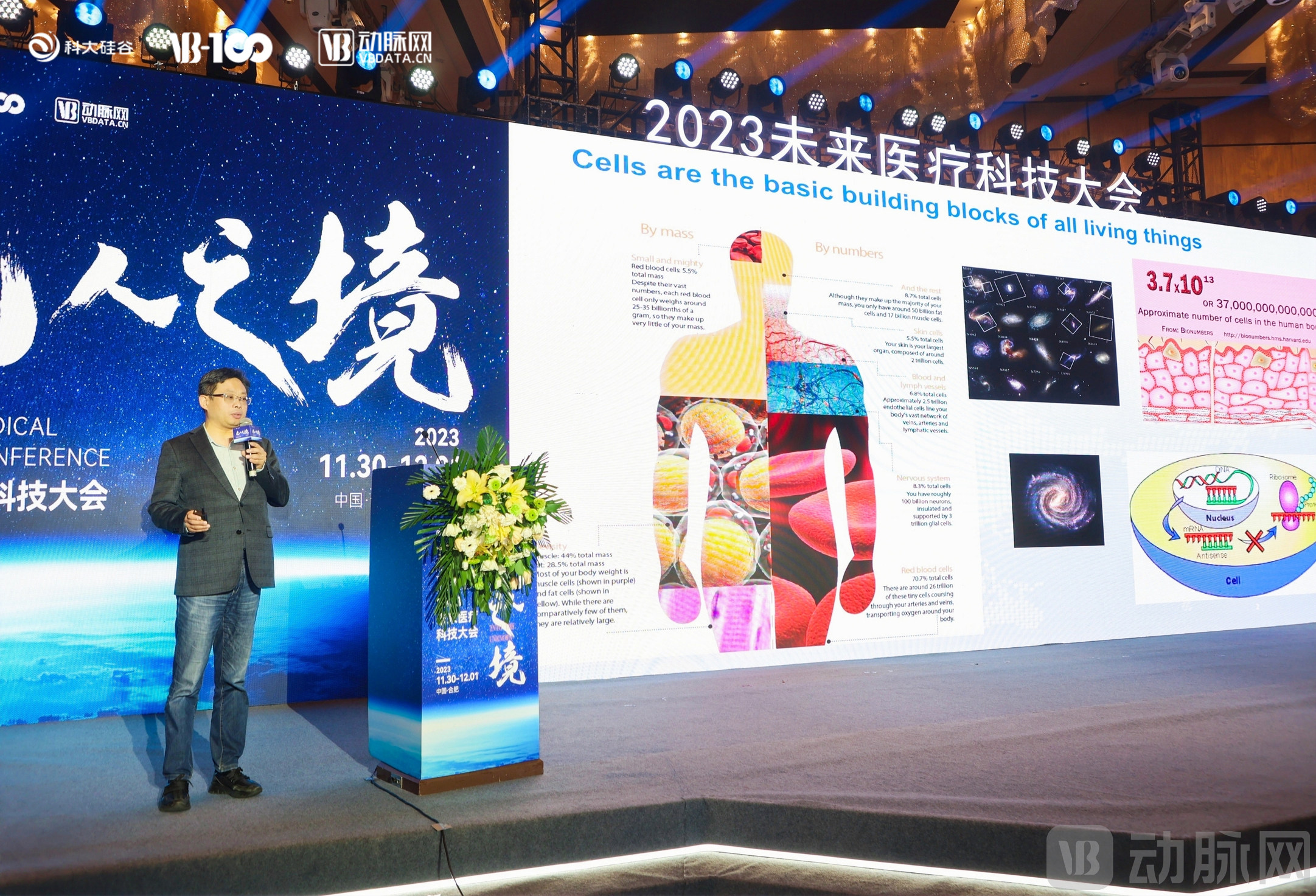
Dr. Fan Xiaohu is a global leader in applied immunology and immune cell therapy. As a co-founder of Legend Biotech, Dr. Fan assembled an R&D team with remarkable efficiency and developed ciltacabtagene autoleucel, a CAR-T therapy for the treatment of multiple myeloma. In February 2022, ciltacabtagene autoleucel received approval from the U.S. FDA for market launch, followed by subsequent approvals in the European Union and Japan. Dr. Fan is known in the industry for his bold, determined, and all-in approach, a trait that was evident in this presentation as well.
From the application perspective, Dr. Fan believes that it is precisely because stakeholders recognize the future opportunities in gene therapy that frequent explorations between biotechnology companies and hospitals have emerged. This has given rise to research efforts targeting solid tumors and the tumor microenvironment, while CAR-T therapy has expanded from hematologic malignancies to autoimmune diseases.
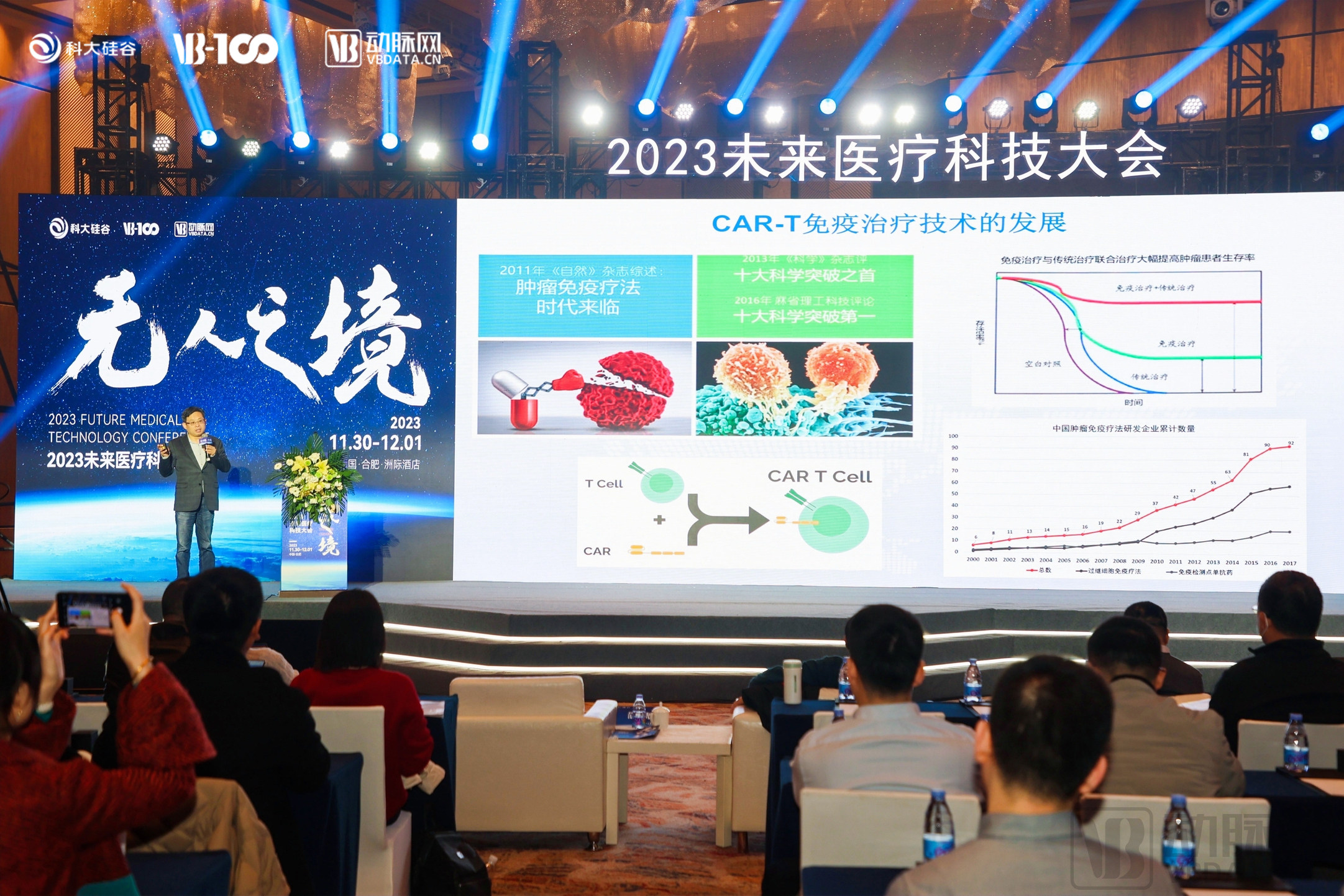
On the sales front, Dr. Fan’s conclusion was unequivocal: “Going global is not optional.” He candidly shared Legend Biotech’s experience accumulated over the past decade.
In fact, it is not just ciltacabtagene autoleucel. Over the past few years, domestic contenders—from the BTK inhibitor zanubrutinib to the PD-1 inhibitor tislelizumab—have successfully broken through. While generating well-deserved commercial value, their success has also inspired professionals within China’s industry and bolstered our confidence in the global competitiveness of Chinese original innovative products.
6China’s Original Internal and External Forces
Although the two-day conference was brief, certain impressions were distinctly clear.
It is evident from the demeanor of all attendees that the industry, research, clinical, and government sectors are converging toward a common goal with tacit understanding. If technological emergence represents the internal drive of China’s original innovation, then this multi-party integration and synergistic force constitute an invisible external impetus.
Scientific research continues to undergo organic translation into industrial applications, while industry, in turn, is shaping the direction of scientific inquiry. Enterprises are innovating in product development and technological advancement to create products with greater global competitiveness. While maintaining its characteristic prudence, the government is also unleashing support for early-stage companies through policies, infrastructure, and pilot-scale manufacturing initiatives. Clinically, we are witnessing a growing number of physicians collaborating with enterprises based on their own achievements and with more rational expectations. This trend is further corroborated by the keen interest shown by investors present at the event in pursuing clinical doctors and collaborative projects.
In contrast to the severe product homogenization that plagued certain industries just a few years ago, the presentations by various companies at this conference showcased a vibrant diversity. Perhaps the intensifying domestic competitive landscape has heightened the urgency for enterprises to expand globally, rendering the involutionary tactics of homogeneous competition obsolete. The development and R&D directions of these companies are driven not merely by emotional slogans, but by rational business competitive logic.
Amidst the interwoven forces of multi-party interactions, each entity is propelled toward its destined path of organic development. This conference acts as a gentle pause button, allowing us to step outside the imperceptible long-term timeline and glimpse the singularity moment when China’s original innovative breakthroughs reach their critical tipping point within this snapshot.