

Huanhuaxi International Smart Medical Valley Proof-of-Concept Center Files IPO Prospectus
Since 2021, the integration of industry, academia, and research has accelerated continuously, driving the sector deeper into the heartland of innovation. A growing number of researchers are moving toward the industrial side, striving to break down barriers between cutting-edge theories and clinical needs, thereby ensuring the practical implementation of innovative technologies.
However, for innovative application research in the medical field, this merely represents the first step of the journey. How to truly bridge the academic innovation chain and the industrial innovation chain, achieve deep integration of scientific research, industry, and capital, and help scientists cross the “Valley of Death” in technology transfer remains a challenging issue for all sectors.
Since the world’s first “proof-of-concept” (PoC) initiative emerged at the turn of the millennium, this development model has become a potent remedy for addressing this challenge. It has not only been incorporated twice into the U.S. Strategy for American Innovation, but has also been implemented in the European Union, Singapore, and other regions, serving as a key mechanism to accelerate the commercialization of academic scientific and technological achievements and bridge the gap between R&D and the market. Consequently, in 2023, the application for and establishment of PoC centers have spread rapidly across China’s first- and second-tier cities.
December 20,Wuhou District, in collaboration with West China Hospital of Sichuan University (hereinafter referred to as “West China Hospital”), andChengdu Science and Technology Innovation Investment Group Co., Ltd. (hereinafter referred to as "Chengdu Sci-Tech Investment")Co-created“Huaxi International Smart Medical Valley Concept Validation Center” Officially Unveiled and Launched, setting a benchmark for the “Proof-of-Concept Center” model in the western region.
It is reported that the “Huan Huaxi International Smart Medical Valley Proof-of-Concept Center” was established by leveraging the combined strengths of three major platforms: Wuhou District, West China Hospital of Sichuan University, and Chengdu Technology Innovation Investment Group Co., Ltd. The center deeply integrates innovation conversion resources across the innovation chain, capital chain, talent chain, and industrial chain. It has built a multi-level proof-of-concept support system and a technology transfer commercialization infrastructure, providing personalized services such as industrialization guidance, supplementation of market elements, validation in application scenarios, and matchmaking with industrial capital. These efforts aim to identify projects with commercial potential and help university researchers successfully take the first step in translating scientific and technological achievements into practical applications.
The commercialization of scientific and technological achievements is a complex systemic endeavor characterized by its long-term nature, uncertainty, and high risk. Bradley Lashan, CEO of Bastille, LLC, a world-leading technology transfer firm, noted in sharing experiences on advanced technology transfer and commercialization in Europe and the United States that the success rate for scientists founding startups is only around 3%.
Why Is the Success Rate of Scientist-Led Startups So Low?
The reality is that bringing innovative achievements to fruition requires at least three stages: basic research (the scientific research phase), applied and development research (the stage of translating results into innovations), and mass production (the industrialization phase). A “valley of death” exists between scientific research and the translation of results, as well as between the translation of results and industrialization.
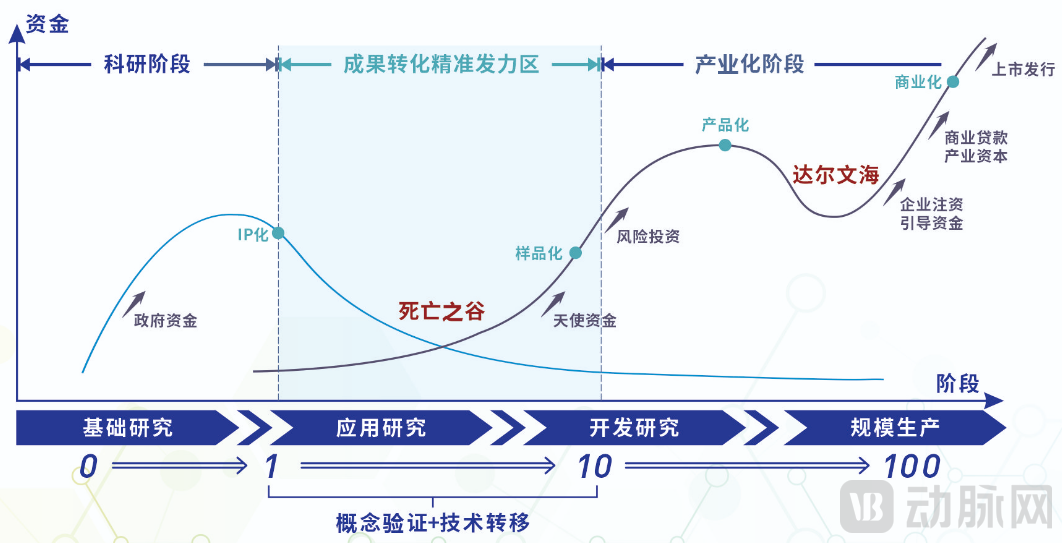
Based on the experience of Wuhou District in translating scientific and technological achievements into practical applications, it can be observed that the “Valley of Death” primarily encompasses the following three issues:
First,Insufficient Innovation Concept Validation Capability: From “Outcome-Oriented Innovative Development” to “Scenario-Driven Application”, there is a lack of sufficient demonstration by research personnel regarding the economic viability and benefits of technological achievements; the maturity level of scientific and technological outcomes is generally low, their commercial potential is insufficient, and both the industrialization rate of patents and the level of returns are not high. Second,Insufficient Talent Service Capability: From “Understanding Technology and Products” to “Understanding Markets and Needs”, lacking an interdisciplinary and cross-functional talent pool that spans from technical expertise to market acumen, and from product knowledge to understanding customer needs. Third,Insufficient Capacity for End-to-End Resource Support from “Achievement Commercialization Services” to “Enterprise Incubation and Development”Technological innovation and translation can be divided into five stages: basic R&D, proof of concept, pilot-scale maturation, engineering, and commercialization. For a long time, market attention has been predominantly focused on the “last mile” of commercializing mature scientific and technological achievements, leaving early-stage technological outcomes under-resourced and trapped in the “valley of death.”
The “West China International Smart Medical Valley Concept Verification Center” was established to address this issue.
Technological innovation translation is typically divided into five stages: basic research and development, proof of concept, pilot-scale maturation, engineering, and commercialization. Proof of concept is a critical link connecting the entire innovation process. “Proof of Concept Centers” address two core challenges in translating basic research outcomes to the market—taking the “first step” and crossing the “valley of death”—by providing essential validation conditions for early-stage scientific achievements, including experimental facilities, funding, talent team support, and secondary development plans for market entry.
Unlike other “Proof-of-Concept Centers,” the uniqueness of the “West China International Smart Medical Valley Proof-of-Concept Center” lies in its adoption of a joint hospital-enterprise-local government co-construction model by Wuhou District, which collaborates with West China Hospital of Sichuan University and Chengdu Technology Innovation Investment Group Co., Ltd. to jointly establish the center.Aggregates the advantages of three major platforms.
Among these initiatives, Wuhou District has leveraged its strong foundation in the big health industry to provide talent teams with approximately 1,200 square meters of validation space, along with support for landing future projects through carriers such as the Lanrun Center and the Science and Innovation City. West China Hospital of Sichuan University, capitalizing on its advantages in modern medical technology, offers resource support to talent teams in areas including innovation translation platforms and clinical trials. Meanwhile, Chengdu Sci-Tech Innovation Investment Group will deeply lay out hard-core technology projects through a “direct investment + fund” model, building a matrix of fund resources to attract social capital participation from fund investors, enterprises, and other stakeholders.
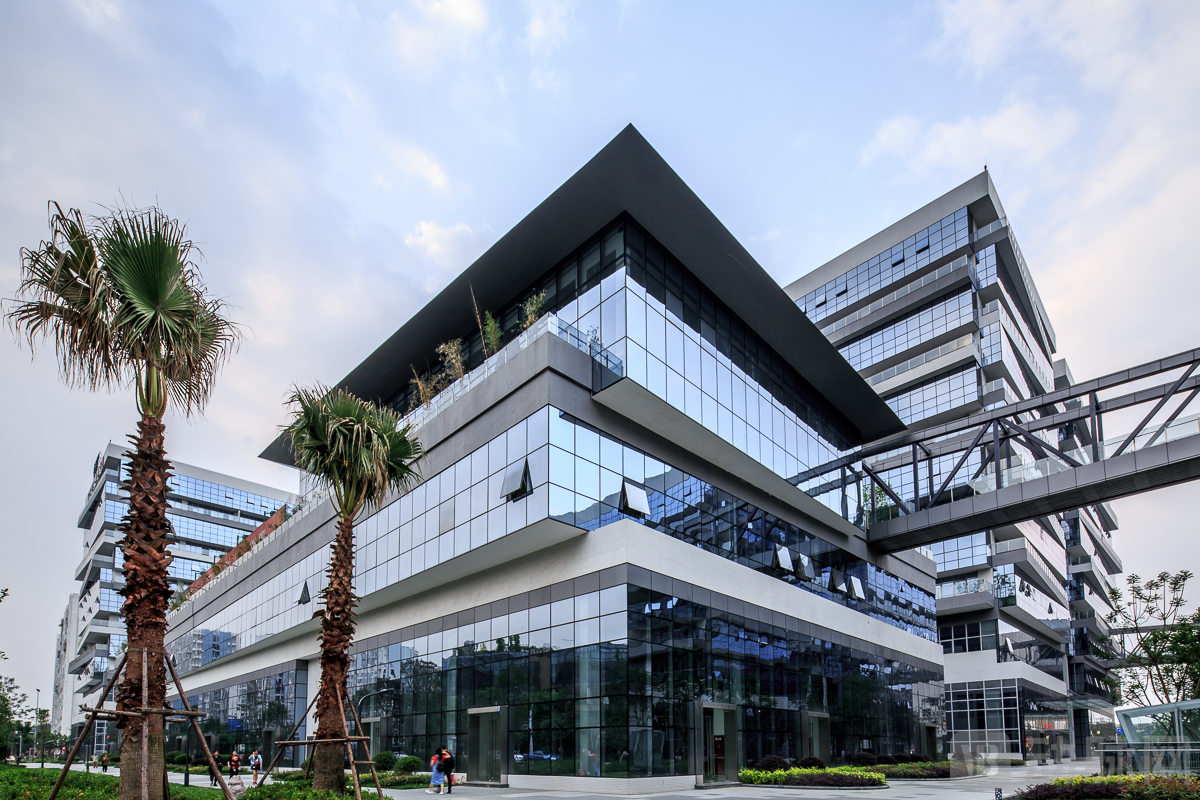
Future Project Implementation Site: Health Valley
Through the combined efforts of the three parties, a framework was ultimately established“One Platform (West China International Smart Medical Valley Proof-of-Concept Center) + Three Supporting Entities (Government, Hospitals, Investment Platforms) + Empowerment by N Innovative Translation Resource Partners”of“1+3+N” Operational System, providing support for allocating funds to the early-stage scientific and technological achievements of research teams and conducting technology and commercialization validation.
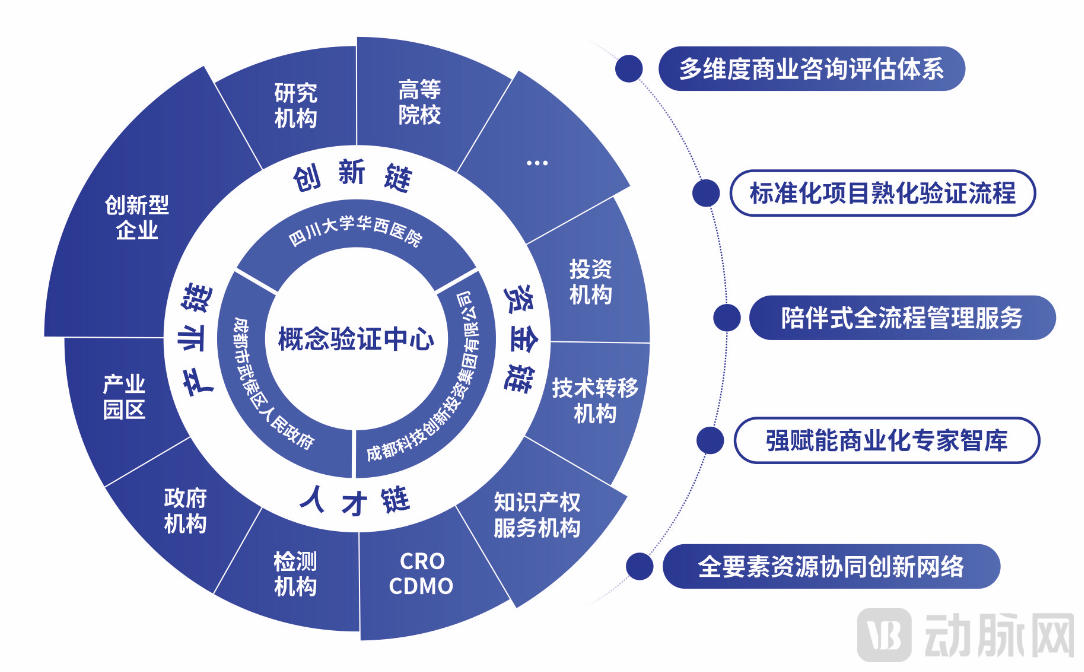
“1+3+N” Operational System
In addition to the provision of basic resources,, the “West China International Smart Medical Valley Proof-of-Concept Center” also leverages the advantages of West China Hospital’s R&D projects, innovative talents, and scientific and technological achievements to provide dedicated services for projects with commercialization potential, including end-to-end support by specialized technology transfer professionals, acceleration camp training for achievement transformation, diversified staged investment and financing services, customized expert consulting and empowerment services, precise project matchmaking and promotion services, and assistance in aligning with local industrial support policies.6 Major In-Depth Services, and fully establish a proof-of-concept framework comprising an "outcome screening and evaluation mechanism, project incubation and acceleration mechanism, investment and financing relay mechanism, and expert deep-empowerment mechanism"Four Major Validation Mechanisms, accelerating the formation of a comprehensive “6+4” validation system with complete elements and clear processes for proof-of-concept centers, will provide support for project selection by proof-of-concept centers.“Companion-Style, End-to-End” Professional Technology Transfer Services。
In Building End-to-End Resource Accompaniment Capabilities, the “West China International Smart Medical Valley Concept Verification Center” has established a strategic cooperation alliance with innovation service agencies, investment firms, technology transfer and commercialization service providers, and intellectual property institutions, integrating professional resources and services in outcome evaluation, industrial design, intellectual property, and marketing promotion, and jointly establishing with the Municipal Science and Technology Innovation Investment GroupA 1-billion-yuan technology transfer investment fund to address the plight of startup teams that have achievements but no funding, and products but no market.
After one year of preparation and trial operation, the “West China International Smart Medical Valley Proof-of-Concept Center” has achieved certain results in promoting the transformation of scientific and technological achievements.. In addition to hosting multiple resource-linking events and talent training programs, such as the “Rongpiao Cup” Meet at Huaxiba – Biopharmaceutical Industry Project Concept Verification Matchmaking Conference, the center also conducts feasibility studies for the transformation of scientific and technological achievements in fields including innovative drugs, medical devices, digital health, and nuclear medicine. Notably, the center has facilitated the investment and implementation of 11 major projects, including the National Major New Drug Development Special Project “Liqing No. 3” and the Rexiu Biological Cell Products R&D Center, with a total investment amounting to RMB 360 million.
At this unveiling ceremony,Wang Yanyan, Department of Science and Technology, West China HospitalIt was stated that multiple proof-of-concept (PoC) centers have been successively established in Beijing, Shenzhen, Shanghai, Hangzhou, and other regions across China to promote the commercialization of scientific and technological achievements from universities and research institutes. However, few such centers have focused on the biopharmaceutical sector to date. The “Huaxi International Smart Medical Valley Proof-of-Concept Center” leverages the high-quality clinical resources of West China Hospital, integrating a series of elements ranging from human subjects and research conditions to funding chains. It aims to accelerate and enhance the efficiency of achievement transformation, bridge the gap between high-value biomedical R&D outcomes and those ready for industrialization and marketization, and thus open up the “first mile” of biomedical technology transfer.
In the future, the “Proof-of-Concept Center of the Huaxi International Smart Medical Valley” will further promote innovation showcases, roadshows, and investment transactions within the Huaxi International Smart Medical Valley area. Leveraging the Huaxi Health Valley as its base, it will facilitate the incubation and development of innovative scientific and technological achievements in Wuhou District, ultimately establishing a major industrialization hub for “medical-engineering integration” projects, thereby supporting innovation and industrial growth in the healthcare sector.
The establishment of the “Huaxi International Smart Medical Valley Concept Verification Center” has undoubtedly provided support for accelerating the translation and implementation of scientific research achievements. Its ability to achieve significant accomplishments within just one year, while deeply linking innovation and translation resources, is inseparable from its inherent strengths.
This year, Wuhou District of Chengdu released“Ten Policy Measures of Wuhou District, Chengdu City on Focusing on Industrial Circle Building and Chain Strengthening to Support the High-Quality Development of the Real Economy”, the Administrative Committee of West China Medical Aesthetics and Health City, in conjunction with multiple departments, issued“Wuhou District Support Policies for Promoting the Development of a Robust Ecosystem and Strengthened Supply Chains in the Big Health Industry”Special Support Policies to Promote High-Quality Development in the Big Health Industry, Including the Commercialization of Scientific and Technological Achievements, Product R&D and Manufacturing, and Professional Service Platforms.
Chengdu has even issued"Chengdu Industrial Chain Building and Strengthening Optimization and Adjustment Plan"Designate the West China Medical Aesthetics Health City in Wuhou District as the primary hub for high-end diagnosis and treatment within the city’s key industrial chains, a collaborative development base for the innovative drug and high-end medical device industrial chains, and the main carrier for digital health within the district’s key industrial chains. It is noted that Wuhou District boasts significant innovation resource advantages and a vibrant health market, with a well-established industrial ecosystem already formed along the mid- and downstream segments of the pharmaceutical and health industry, thereby demonstrating strong feasibility for the local commercialization of innovative achievements in pharmaceuticals and healthcare.
Standing at this critical juncture, Wuhou District will forge even closer ties with the medical industry and the commercialization of its research achievements.
Across China,West China HospitalIt also stands as a benchmark in the translation of scientific research achievements. Since 2005, West China Hospital has been committed to building an integrated medical-research platform. In 2017, it began addressing the “Valley of Death” issue in the translation of technological achievements. As related explorations deepened, the hospital’s scientific and technological innovation management system was progressively refined, establishing an innovation framework encompassing policy support, platform infrastructure, management assurance, and service guarantees. In terms of the Hospital Science and Technology Evaluation Metric, West China Hospital has ranked first nationwide for ten consecutive years. Regarding patents, it tops the China Hospital Innovation and Translation Ranking List in both the number of granted patents and the number of granted PCT patents.
AndChengdu Sci-Tech Innovation InvestmentSince its establishment, the firm has focused on investing in deep-tech projects, major original technology commercialization initiatives from universities and research institutes, significant technological innovation platforms with innovative resources, and key enterprises along the industrial chain with high potential for scientific and technological achievement transformation. With extensive experience in sci-tech venture capital, it has invested in 345 projects, facilitated the public listing of 22 companies, and achieved exits from more than 50 portfolio companies.
The collaboration among the three major platforms has endowed the “West China International Smart Medical Valley Proof-of-Concept Center” with the foundational capabilities for innovation incubation, industrial application and commercial expansion, as well as full-lifecycle empowerment of scientific and technological innovation.
As Professor Huang Wen, a professor at Sichuan University and head of Sichuan Yi’asuo Pharmaceutical Technology Co., Ltd., noted during the conference, the transfer, translation, and practical application of scientific and technological innovations constitute a systematic engineering endeavor that cannot be accomplished by scientists alone. This is particularly true in the biopharmaceutical industry, where the journey from innovation inception to product market launch involves numerous highly specialized stages, including clinical trials, regulatory registration and filing, and market access. Although we have established a company, the path ahead remains fraught with uncertainties and challenges. We look to the Concept Verification Center to continue providing support in key areas such as building core teams, attracting high-quality capital, and linking commercial opportunities.
The “Huaxi International Smart Medical Valley Proof-of-Concept Center,” as a proof-of-concept center dedicated to the biopharmaceutical sector, holds undeniable value for industry development with its completion.