

Heng Mai Wei: Pioneering Diversified Industrial Applications of MEMS Micro Pumps with a Medical-Grade Wrist-Worn Blood Pressure Monitor
As people place increasing emphasis on health, a growing number of young individuals are adopting wearable health devices to monitor their well-being. Coupled with the affordable widespread availability of smartwatches, fitness trackers, and related sensors and algorithms, features such as sleep monitoring, heart rate monitoring, and activity tracking have become standard.
But—Why Has Blood Pressure Monitoring Still Not Become a Standard Feature on Smartwatches?
In fact, blood pressure monitoring has been continuously evolving toward greater comfort, convenience, and accuracy, progressing from mercury sphygmomanometers to electronic devices, and from auscultatory and oscillometric methods to later photoplethysmography (PPG) and pulse wave analysis techniques. However, integrating blood pressure measurement seamlessly with smart wearable devices presents certain challenges, primarily due to three factors.
First, sufficiently miniaturized actuators and sensors are required, and their manufacturing and packaging must employ more advanced and stable processes.
Second, algorithms. While the corresponding actuators and sensors serve merely as the hardware foundation, more precise algorithmic support is required to convert raw recorded signals into readable and displayable blood pressure values.
Third, the wristwatch-style measurement method requires the strap to also function as an inflatable cuff; therefore, factors such as material, size, and comfort must all be taken into consideration.
Taking the commonly available PPG measurement method on the market as an example, this approach is implemented using PPG optical sensors and calculates blood pressure values by acquiring pulse wave signals and analyzing their waveform characteristics. Since this method does not directly detect pressure signals but rather measures relative changes in blood pressure, it is highly dependent on absolute blood pressure values. Therefore, periodic calibration of the baseline blood pressure is required to obtain relatively accurate measurement results.
Furthermore, the accuracy of PPG sensors is susceptible to external interference; factors such as ambient light, acceleration, and skin color can all lead to numerical deviations. Therefore, the primary significance of these devices currently lies in alerting users to sudden changes in blood pressure, rather than providing accurate blood pressure readings.
“Wearable blood pressure monitoring based on ultra-micro integrated pump-valve MEMS devices is the only medical-grade solution.” Li Yilin, founder of Hengmai Micro, a company specializing in the R&D of integrated MEMS micro-pump devices, told VCBeat.
MEMS, short for Micro Electro-Mechanical System, is a miniature device that integrates mechanical and electronic technologies. Characterized by miniaturization, low power consumption, integration, and intelligence, it is widely used in sensing applications such as motion, sound, temperature, and pressure.
In recent years, MEMS technology has swept the globe with its remarkable potential for innovation, penetrating sectors such as consumer electronics, automotive manufacturing, industrial control, and healthcare, thereby triggering the “Second Silicon Revolution.” Taking the healthcare sector as an example, MEMS technology is employed in nearly all relevant applications, ranging from everyday wearable devices, blood pressure monitors, and ventilators, to intrauterine pressure monitoring in operating rooms, as well as blood analyzers and suction devices.
As medical devices become increasingly miniaturized, intelligent, and precise, MEMS technology has become the “new standard.”
Established in 2023,Hengmai Microelectronics (Nanjing) Co., Ltd. (hereinafter referred to as "Hengmai Micro"), dedicated to providing technically leading ultra-miniature integrated MEMS pump-valve devices and industrialization application solutions for users across various industries worldwide. Core team members have previously led multiple national-level scientific research projects and possess many years of R&D experience in MEMS micropumps. Leveraging its self-developed MEMS micropumps, Hengmai Micro can enhance the integration level of customer systems while reducing system size and power consumption, demonstrating unique leading advantages in the fields of medical positive and negative pressure applications and semiconductor micro-space thermal management.

Hengmai Micro boasts profound technical expertise and strong product commercialization capabilities. Although the company has been established for less than a year, it has successfully developed a wearable blood pressure monitoring solution based on ultra-miniature pump-valve integrated MEMS devices. In August 2023, the company independently developed its first piezoelectric pump-based wristwatch blood pressure monitor and filed for Class II medical device registration in China. Three months later, it secured tens of millions of RMB in angel financing, led by Zhibai Capital, with participation from Nanjing Innovation Investment Group and Nanjing Qilin Venture Capital.
Hengmai Micro’s self-developed MEMS piezoelectric pump is a revolutionary product in micropump manufacturing technology. It leverages the inverse piezoelectric effect of piezoelectric ceramics to induce deformation in the piezoelectric actuator, thereby causing volume changes within the pump chamber and achieving fluid delivery. Characterized by its compact size, high integration, low power consumption, high specific flow rate, and high specific back pressure, it offers unique advantages in fields such as microfluidics, high-end medical devices, and semiconductor thermal management, making it particularly suitable for microsystem integration applications.
Leveraging MEMS micropumps, Hengmai Micro has developed a MEMS piezoelectric pump wristwatch-style blood pressure monitor by integrating its proprietary patented technologies, including flexible tactile sensing airbags, high-modulus highly flexible fiber straps, and high-precision AI blood pressure algorithms with strong generalization capabilities.
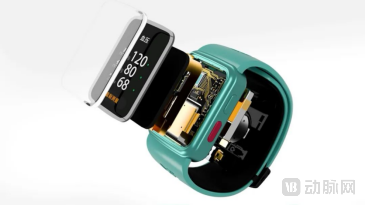
Hengmai Micro's Self-Developed Medical-Grade Piezoelectric Pump Wrist Blood Pressure Monitor
Unlike traditional air pumps, Hengmai Micro’s self-developed piezoelectric pump wristwatch-style blood pressure monitor utilizes the reciprocating vibration of piezoelectric materials under high-frequency excitation signals to achieve unidirectional fluid transport under specialized fluid-structure interaction design conditions. In simple terms, it employs a MEMS integrated piezoelectric pump-valve as both the inflation source and control valve to inflate the cuff bladder, thereby acquiring blood pressure signals and completing blood pressure measurement via the oscillometric method.
The highlights of this product areThe Ingenious Design of Integrated MEMS Pump-Valve Systems,This enables piezoelectric pumps to avoid complex mechanical movements (such as impeller rotation), offering the advantages of compact structure, ultra-low noise, and ultra-low power consumption;Pulse Wave Sampling Based on Multi-Layer Reed-Type Tactile Sensing Narrow Airbags, enabling dual-curve acquisition of pneumatic sensor data and contact pressure data, with multi-sensor data fusion to further enhance accuracy;Specificity for Narrow Airbag Sensor Components, employs AI algorithms to achieve nonlinear correction of narrow cuff pressure and intra-arterial blood pressure, offering superior population adaptability and generalizability, while supporting continuous algorithm upgrades.
It is reported that Hengmai Micro’s self-developed integrated MEMS piezoelectric pump-valve device achieves a minimum size of 7×7×1.5 mm, with current mass-production dimensions at 18×18×2.5 mm. The device delivers a maximum back pressure of 40 kPa and a maximum flow rate of approximately 200 mL/min, placing its core performance indicators at the global forefront. Its unique technical approach carries no patent risks and fully meets the key requirements for wearable medical monitoring devices.
“Although this balloon catheter looks like a simple, small tube, perfecting it is full of challenges.” Li Yilin shared some interesting anecdotes from the R&D process with VCBeat. For instance, during the continuous inflation and deflation of the balloon, the conductive traces experienced unstable resistance due to the expansion and contraction. Hengmai Microelectronics ultimately overcame this challenge through collaboration with the Ningbo Institute of Northwestern Polytechnical University. Additionally, the R&D team conducted more than 20 formula optimizations, five process design improvements, and over ten mold-making iterations to finally develop a high-modulus, highly flexible fiber strap, which exhibits a deformation of less than 1 mm under a tensile force of 350 N.
Meanwhile, Li Yilin also mentioned that Hengmai Micro’s products are not directly targeted at the general consumer market (C-end), but rather provide B-end users with integrated MEMS piezoelectric pump-valve devices and solutions, including OEM/ODM services for medical-grade piezoelectric pump wrist-worn blood pressure monitors.
“The start is the decisive battle, and the beginning is the sprint” seems to be a vivid portrayal of Hengmai Micro’s development in 2023.
This is reflected not only in the company’s technological prowess and execution capabilities, but also in the level of recognition it has garnered from investors. Meanwhile, this low-profile yet fast-rising newcomer is achieving continuous commercial breakthroughs—
The company not only withSmartwatch IntegratorCooperation, and also withMultiple well-known elderly care institutions in ChinaReached a partnership to develop blood pressure monitoring watches for them and establish a closed-loop health data ecosystem.
In addition to aiming to replace traditional blood pressure measurement with medical-grade wrist-worn sphygmomanometers, Hengmai Micro hopes to use the miniature pump as a key to unlock a wider range of medical scenarios. For instance, its fast response speed and high control precision enable it toFor continuous drug administration scenarios, including medications such as insulin or analgesics for cancer pain. In the field of negative pressure suction, such as in burn care, medical aesthetics, or obstetrics and gynecology treatments, micro-pumps can be used to create lightweight and thinElectronic Dressings, which adheres uniformly to the skin via gas adsorption principles to achieve drainage and promote wound healing. Additionally, the micro-pump can also enableNon-invasive Detection of Bladder Filling.
Looking to the future, Hengmai Micro is ambitious. Li Yilin pointed out that,“MEMS micropumps are also expected to find applications in ultra-thin integrated heat dissipation, fuel cells, chip-integrated cooling, microfluidic systems, micro-jetting systems, and aerodynamic drag reduction.”
Becoming a globally leading provider of diversified application solutions centered on MEMS micropumps is the original aspiration behind the founding of Hengmai Micro, as well as the guiding beacon for the company’s future development. Looking ahead, Hengmai Micro will continue to focus on the medical and thermal management sectors, leveraging MEMS micropump technology at its core to deliver more convenient, efficient, and user-friendly MEMS micropumps and application solutions to a broader customer base.