

Cobot Intelligence Enhances Hospital Service Capabilities with AI-Powered Ultrasound Robot Securing Class III Medical Device Certification
Cobot
Developer of Intelligent Robot Operating Systems
For Cobot, November 2023 was undoubtedly a month to remember.
This November, Cobot obtained its first Class III medical device registration certificate for an intelligent ultrasound robotic scanning and diagnostic system.This achievement marks Wuhan Cobot Technology Co., Ltd.’s formal entry into a new phase of high-end medical device development in the AI healthcare sector. It is reported that its next-generation ultrasound robot product is also under active research and development.
In fact, Cobot’s footprint in the healthcare sector is not limited to ultrasound diagnostics; it also targets the full-process digitalization and intelligent automation of hospital pharmaceutical distribution.
This strategic focus on the two aforementioned areas is attributable to Cobot’s possession of a core technical team proficient in “AI + Robotics.”
Unlike companies that enter hospitals through software and IT technologies, Cobot’s approach appears more “hardcore.” They have chosen to position themselves through an “AI + robotics” model.
This approach is closely tied to the unique team structure of Cobot.
In 2016, the AI fervor in academia had only just begun to spread to the industry. However, Cobot had already recognized the immense development opportunities AI would offer in the future and took the lead in strategically positioning itself in the “AI + Robotics” sector. As a startup, CobotWe have continuously assembled a professional team comprising robotics engineers, computer vision algorithm engineers, and clinicians.
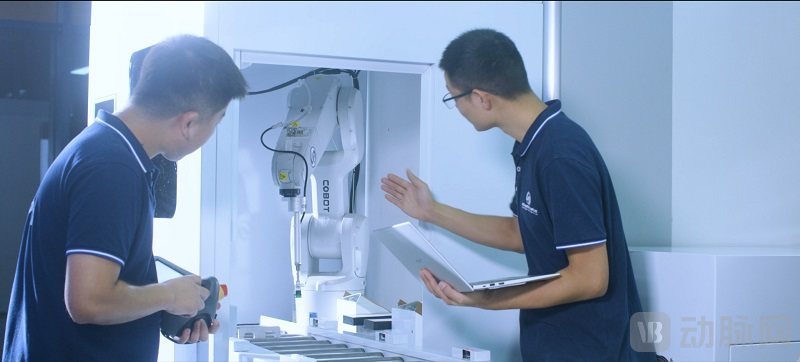
Dr. Zhang Shaohua, the current R&D Director at Cobot, also left his stable position at a scientific research institute in November 2016 to wholeheartedly join the wave of AI entrepreneurship. When discussing why he chose Cobot, Dr. Zhang, a graduate of Huazhong University of Science and Technology, mentioned that on one hand, his long-term dedication to image processing and deep learning within the School of Mechanical Science and Engineering made him “hopeful that his expertise could be put to practical use.” On the other hand, aligning with Cobot’s strategic direction, he anticipated the broad market potential for the future development of the AI-plus-robotics sector. More importantly, he observed that many startups in this field suffer from an “imbalanced focus,” either leaning purely toward IT or toward robotic body manufacturing.Cobot is one of the few companies that possess both AI + robotics technology and the capability to implement it.
Soon, Cobot transformed from a startup into a company with nearly 200 employees. With a team primarily composed of individuals holding master’s and doctoral degrees, over 60% of its members are engaged in research and development.
While boasting strong in-house technical capabilities, Cobot is also continuously integrating innovative achievements from external teams. Leveraging its geographical advantages, Cobot has established connections with Wuhan University and Huazhong University of Science and Technology, jointly setting up technology innovation centers. Recognizing the importance of integrating medicine and engineering, Cobot has also collaborated with renowned domestic hospitals such as Union Hospital and Tongji Hospital to establish ultrasound robotics laboratories.
Reflecting on the development of the past seven years, Zhang Shaohua stated, “It is a process of implementing technology, building products from scratch, and achieving product scalability.”
Among them, 2019 was another critical milestone for Cobot. Building on its earlier technological accumulation,Cobot has developed an independently researched and developed intelligent robot operating system platform, COBOTSYS.Leveraging the platform’s capabilities, Cobot has significantly enhanced the ease of product development, substantially improved development efficiency, and markedly reduced product maintenance costs. “Currently, 99% of our products are developed based on our independently developed intelligent robot operating system platform, COBOTSYS,” mentioned Zhang Shaohua. Built upon this platform, Cobot has achieved explosive growth in its business revenue since 2019.
Notably, in 2019, Cobot shifted its development focus to the healthcare sector and deepened its engagement in this field.
Equipped with core technologies, Cobot quickly identified application scenarios in the medical field where it could leverage its value.
One is the digitalization and intelligentization of pharmaceutical distribution.According to Zhang Shaohua, focusing on the digitalization and intelligence of the entire drug circulation process, Cobot has created a matrix of precision medicine products, including smart outpatient pharmacies, smart inpatient pharmacies, smart intravenous admixture centers, and AI-powered urban central pharmacies. This initiative establishes a new system for supply chain services both within and outside hospitals in the drug circulation sector, achieving an integrated approach to “storage, distribution, transportation, dispensing, and management.”
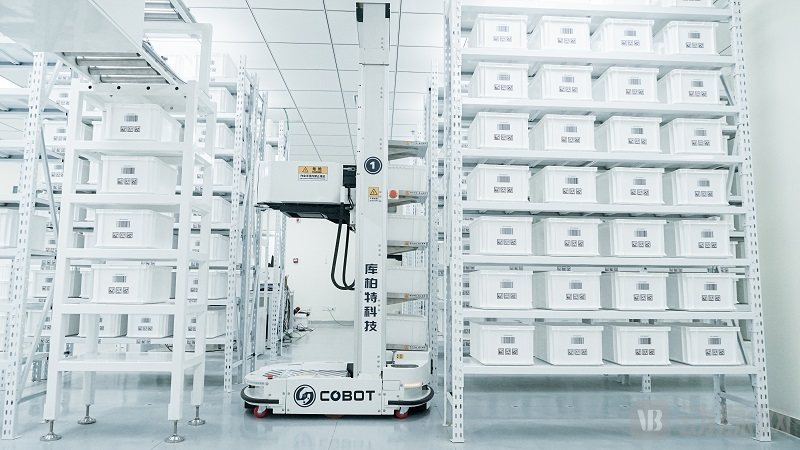
In the pharmaceutical distribution sector, which boasts a promising market outlook, pain points are evident. Within hospitals, pharmacists have traditionally relied on manual dispensing, retrieving required medications from shelves behind them. This process often leads to patient congestion when prescriptions involve numerous drug types or during peak hours. Moreover, it traps pharmacists in repetitive and tedious medication retrieval tasks, preventing them from fully leveraging their professional value. On the other hand, traditional medication shelving systems are constrained by the limited storage space available in medical institutions. To accommodate staff movement for medication retrieval, these facilities struggle to stock sufficient inventories to meet patients’ medication needs.
Based on Cobot’s smart pharmacy product solutions, on the one hand, medication dispensing efficiency is significantly improved. Data shows that it enhances pharmacists’ efficiency by 70%, with the dispensing time per prescription reduced to as low as 8 seconds, greatly boosting dispensing efficiency and shortening waiting times. It also transforms the traditional “patients waiting for medications” into “medications waiting for patients,” thereby improving the patient experience in medication collection. Meanwhile, by freeing up pharmacists’ hands, it allows them to devote more energy to providing professional pharmaceutical care services, such as answering patients’ medication-related questions and guiding rational drug use, thus delivering a better medical experience through enhanced pharmaceutical services. On the other hand, it maximizes the utilization of hospital space, addressing the storage and distribution needs for various drug formulations within the hospital and meeting patients’ medication requirements.
Zhang Shaohua mentioned that the company innovatively introduced robotic 3D grasping and AI intelligent recognition technologies to create an innovative model for warehouse replenishment, integrating information and physical flows in pharmacies, thereby achieving micro-innovation within the industry.Breaking Through the Bottleneck of Domestic Smart Pharmacies Being in a Semi-Automated Stage. Cobot’s smart pharmacy products leverage continuous deep learning based on their proprietary drug image database, significantly ensuring the speed, accuracy, and safety of medication dispensing. It is reported that Cobot’s solutions have become a benchmark for smart pharmacy construction in Hubei Province, guiding industry development as a leader in setting smart pharmacy standards.
The second is the intelligentization of ultrasound diagnosis.It was revealed that, in addition to its intelligent ultrasound robotic scanning and diagnostic system, which has already obtained a Class III medical device registration certificate, Cobot is vigorously advancing the research and development of innovative medical robot products, including fully autonomous ultrasound scanning and diagnostic robots, ultrasound-guided surgical robots, and non-invasive tumor ablation robots leveraging the ultrasonic cavitation effect.
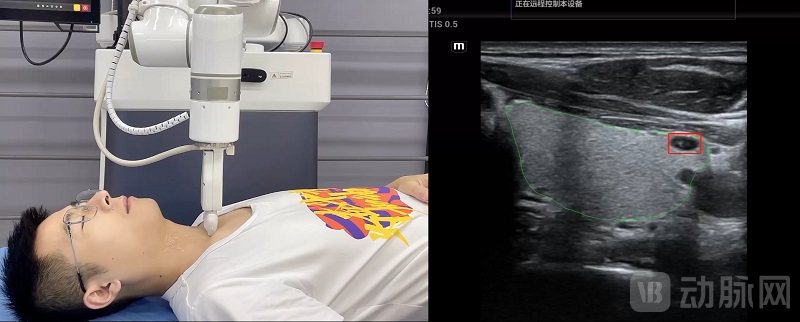
As the aging population intensifies and the incidence of various acute and chronic diseases rises, China’s healthcare burden has become increasingly severe. As an indispensable tool in clinical diagnosis, ultrasound examination plays an increasingly vital role. However, ultrasound diagnosis heavily relies on the operator’s technical skills. Currently, due to uneven distribution of medical resources, high-quality ultrasound specialists are predominantly concentrated in Grade A tertiary hospitals in first- and second-tier cities, while grassroots hospitals suffer from a scarcity of skilled professionals. Furthermore, there is a long-standing shortage of ultrasound physicians in China, with a deficit reaching as high as 200,000. The prolonged training cycle for ultrasound specialists further exacerbates the shortage of ultrasound medical resources.
Wuhan Cobot Technology Co., Ltd.'s newly certified intelligent ultrasound robotic scanning and diagnostic system, which has recently obtained the Class III medical device registration certificate,It provides “a key” to addressing the shortage of high-quality ultrasound physicians and their uneven geographic distribution.Leveraging its independently developed technologies in robotic teleoperation, multimodal data acquisition and processing, robotic imitation learning, and robotic force-position control, Cobot has transformed traditional ultrasound, enabling remote and autonomous ultrasound scanning and diagnosis. The system is applicable to a variety of scenarios, including primary-care imaging infrastructure development, collaborative construction within medical consortia/alliances, smart healthcare initiatives, intra-hospital resource sharing, and quality control for ultrasound services in health examination institutions. Notably, to better deliver consistent, high-quality services, Cobot has pioneered an innovative “product + platform + service” model. By leveraging a consortium of ultrasound experts, it achieves scalable ultrasound services, thereby addressing shortages of medical resources at the primary care level and facilitating tiered diagnosis and treatment.
The significance of this product is undeniably evident. On one hand, for primary care hospitals, it addresses the shortcomings in ultrasound diagnosis and facilitates the decentralization of high-quality medical resources. Furthermore, through clinical mentorship provided by experts from tertiary Grade A hospitals, it further promotes the enhancement of healthcare standards at the primary level. On the other hand, for patients, it enables local disease diagnosis, thereby significantly improving patient well-being.
For Cobot, the future roadmap is clear.
On the one hand, in terms of ultrasound diagnostic products, following the acquisition of Class III medical device registration certificates for intelligent ultrasound robots, innovative medical robots—including the aforementioned second-generation ultrasound robot products, ultrasound-guided surgical robots, and non-invasive tumor ablation robots leveraging ultrasound cavitation effects—are also accelerating their research and development.Ultimately, it will develop a comprehensive portfolio of ultrasound products covering disease screening, diagnosis, and treatment, thereby delivering more precise and holistic benefits to patients.From the product perspective, it will further undergo upgrades and iterations to enhance the accuracy of ultrasound diagnosis, among other improvements.
On the other hand, with products such as smart pharmacies, Cobot has anticipated the trends toward precision medication and regionalized pharmaceutical distribution.Amid the trend toward precision medication, unit-dose dispensing will significantly aid in controlling healthcare insurance fund expenditures, while enhancing patient medication adherence is key to ensuring therapeutic efficacy. Based on this insight, Cobot has pioneered the introduction of AI-based intelligent recognition technology into unit-dose repackaging. By combining unit-dose repackaging with precise verification, it enables on-demand dispensing and accurate dose splitting, with end-to-end traceability to ensure safety and improve medication adherence. Meanwhile, regionalized distribution undoubtedly helps reduce pharmaceutical circulation costs and minimize waste of medical resources; accordingly, Cobot is accelerating its layout for the construction of AI-enabled urban central pharmacies.
To accelerate the R&D of innovative products and market expansion, Cobot is currently also engaging with capital markets.
“As a manufacturer, we need to conduct trials and make strategic arrangements in advance, so as to be fully prepared before policies are ‘liberalized,’” mentioned Zhang Shaohua. “Only in this way can we better seize opportunities when the market trend emerges, achieving leapfrog development. And Cobot is already well-prepared.”