MaiKeding Medical Files IPO Prospectus Highlighting 5-Year Breakthrough in Dual-Sensor MEMS Packaging for Invasive Intracranial Pressure Monitoring
Data from the Global Burden of Disease Study indicate that stroke is the leading cause of death and disability among adults in China. As the largest developing country, with a population accounting for approximately one-fifth of the global total, China has the highest number of prevalent stroke cases worldwide. Among these, the number of patients experiencing elevated intracranial pressure due to cerebral edema following ischemic stroke is rising year by year.
Craniocerebral injury, brain tumors, and cerebrovascular diseases can all lead to displacement of brain tissue or secondary ischemic and hypoxic changes, thereby causing increased intracranial pressure. These conditions are generally acute and critical, requiring timely and accurate intracranial pressure monitoring; otherwise, they may result in more severe brain injury and a higher risk of mortality.
Intracranial Pressure Monitoring and Management: Core Components of Clinical Care for Neurocritical PatientsIntracranial pressure (ICP) monitoring and management constitute a core component of clinical care for patients with neurocritical conditions, with invasive ICP monitoring currently regarded as the gold standard. However, the development and design of sensor chips for invasive ICP monitoring devices, along with their packaging processes, present significant technical challenges involving precision machining and raw material supply, thereby establishing a high technological barrier. In this field, China relies heavily on imported products, with only a few domestically developed products currently under research and development.
Recognizing this substantial unmet need, Guangdong Medcodon Medical Technology Co., Ltd. (hereinafter referred to as “Medcodon Medical”) has entered the market. Established in March 2022, the company is dedicated to the research and development, manufacturing, sales, and service of minimally invasive medical device products.Medcodon has independently developed a dual-sensor MEMS packaging technology, with monitoring sensitivity far exceeding that of imported products. Medcodon is committed to achieving domestic substitution for invasive intracranial pressure monitoring systems and will continue to deepen its expertise in the field of ultra-micro pressure sensors.
Xie Zhiyuan, CEO of Medcodon, has a background in clinical medicine. He has successively served as a clinician, sales manager, and R&D director at public hospitals, foreign pharmaceutical companies, and medical device firms, accumulating extensive experience in the sales management and research and development of medical devices.
When discussing his motivation for entering the field of invasive intracranial pressure monitoring, Xie Zhiyuan stated that he had long been paying close attention to new technologies in cerebrovascular diseases due to his relatives’ history of hypertension and cerebral hemorrhage. During this process, Xie discovered a significant unmet medical need in the field of stroke.
“Currently, there are 3.5 million new stroke cases in China each year, with nearly 1 million being hemorrhagic strokes. However, the annual usage of intracranial pressure (ICP) sensors in China is only 150,000 to 200,000 units,” introduced Xie Zhiyuan. Due to the uneven distribution of medical resources in China, many secondary hospitals are unable to perform related surgical treatments. Furthermore, the high cost of imported ICP monitoring products, with consumable and surgical fees exceeding RMB 100,000, forces some patients to forgo treatment. Therefore, although ICP monitoring is directly linked to patient prognosis and even mortality risk, most patients do not receive adequate monitoring and treatment due to factors such as equipment shortages and high costs.
To fill the gap in the domestic market, the Medcodon medical team decided to enter the field of developing intracranial multi-parameter monitoring systems. However, a major challenge soon emerged: the semiconductor packaging processes and precision machining technologies involved in product R&D and manufacturing were areas rarely explored in China.
To achieve technological breakthroughs, Medcodon has collaborated with Professor Gui Xuchun of Sun Yat-sen University, appointing him as the company’s Chief Scientist. Professor Gui holds a Ph.D. in Materials Science from Tsinghua University and serves as a Professor and Doctoral Supervisor in Micro- and Nanomaterials at Sun Yat-sen University. He has long been engaged in research on micro- and nanomaterials and their applications in flexible sensing devices and optoelectronic devices. To date, he has published more than 100 SCI-indexed papers in prestigious international journals, accumulated over 5,000 SCI citations, and been granted more than 10 national invention patents.
In addition, the company’s core team includes members such as a Ph.D. in Neurology from Heidelberg University in Germany and a professor at Southern Medical University. The core R&D team consists of eight technical personnel, 50% of whom hold master’s or doctoral degrees. From product development to the machining and installation of key components, all work has been jointly explored and completed by the Medcodon team and experts.
Recalling the journey of the team’s product research and development, Xie Zhiyuan candidly admitted that they initially attempted to source imported chips. However, this approach proved unviable due to the high costs and long lead times associated with imported components, which failed to meet the team’s requirements. Turning to the domestic market, although there were numerous sensor suppliers, most catered primarily to industrial applications and did not comply with clinical standards. Furthermore, the team explored the use of fiber optic sensors but ultimately abandoned this option due to poor stability and significant signal drift.
After several failed attempts, Xie Zhiyuan gradually clarified the most effective approach to solving this challenging problem: pursuing a path of independent innovation.After five years of dedicated exploration and development, the Medcodon medical team has achieved significant breakthroughs in sensor packaging processes and signal conditioning, thereby realizing independent control over core technologies.“In recent years, in addition to our professional software and hardware engineers, other team members have also been engaged in interdisciplinary exploration and learning, continuously engaging with cutting-edge knowledge in materials science, electronic information, software, and sensors,” said Xie Zhiyuan. Faced with this innovative technology that integrates multiple disciplines, every team member has undertaken cross-disciplinary learning; the core team members can now be described as hybrids of clinicians and engineers.
Medcodon’s intracranial multi-parameter monitoring system consists of a combined probe, a signal processing module, a control and display module, and a remote monitoring terminal. The combined probe, with a diameter of 1 mm, is used to monitor intracranial pressure and intracranial temperature. The signal processing module converts intracranial pressure and temperature into digital signals for output. The control and display module provides real-time display of intracranial pressure and temperature information. The remote monitoring terminal enables dynamic monitoring of parameters such as intracranial pressure, intracranial temperature, and cerebral perfusion pressure.
According to CEO Xie Zhiyuan, Medcodon’s dual-sensor packaging technology is the first in China and globally to achieve simultaneous integration of ultra-micro pressure and temperature sensor chips on the same IC substrate, marking its inaugural application both domestically and internationally.This technology enables packaging processes for both full-bridge and half-bridge structures. Its advantages include reduced product size, as well as high sensitivity and accuracy in product monitoring data. Furthermore, this technology streamlines certain packaging steps, laying the foundation for the team’s development of automated packaging solutions.
Medcodon’s intracranial multi-parameter monitoring system features as many as 4–5 sensors, whereas other comparable devices typically have no more than two. Furthermore, the system enables real-time dynamic reference-based zeroing based on data from multiple sensors, ensuring accurate pressure measurement regardless of changes in altitude before or after surgery. Meanwhile,MaiMedcodon has achieved temperature drift calibration for pressure sensors and dynamic monitoring of five parameters, including ICP, ICT, CPP, IBP, and MAP, through the use of multiple sensors.
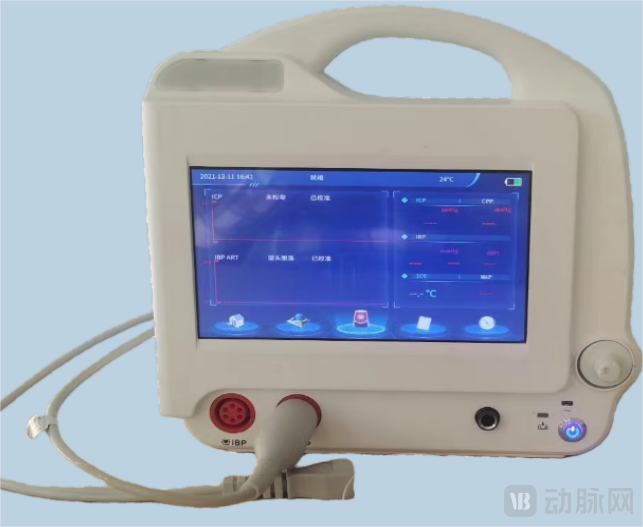
Five-Parameter Monitoring Host
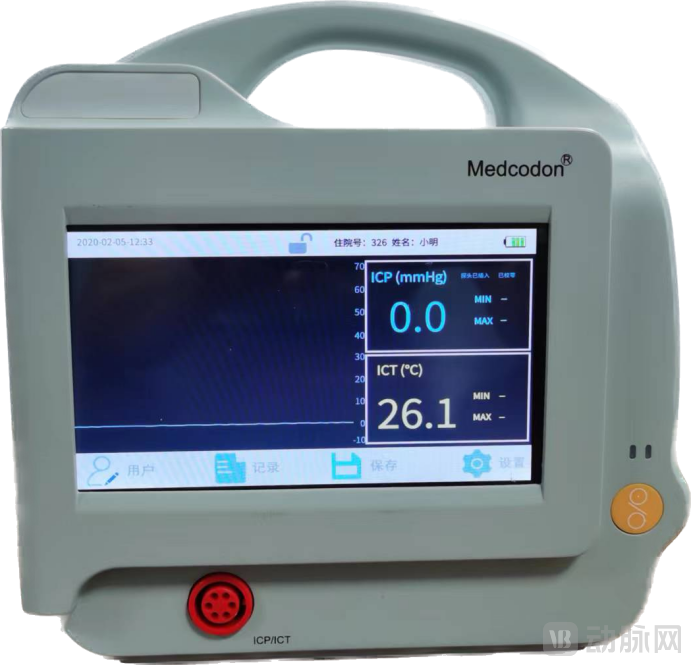
Dual-Parameter Monitoring Host
The system is available in two configurations: an intracranial multi-parameter sensor without a drainage catheter and an intracranial multi-parameter sensor with a drainage catheter. The latter can drain excess cerebrospinal fluid that causes elevated intracranial pressure, thereby reducing intracranial pressure. Furthermore,Medcodon’s intracranial multi-parameter monitoring system features a unique structural design that significantly enhances chip measurement accuracy, endowing the device with three key advantages: ultra-high sensitivity, compact size, and superior stability.
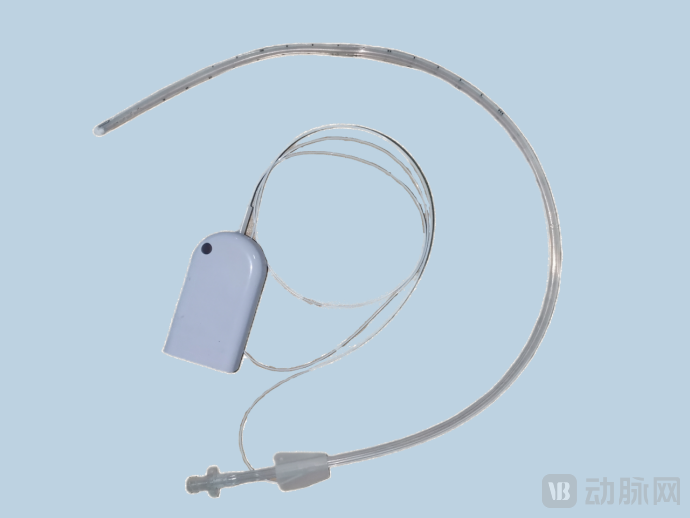
Intracranial Multiparameter Monitoring Sensor with Drainage Tube
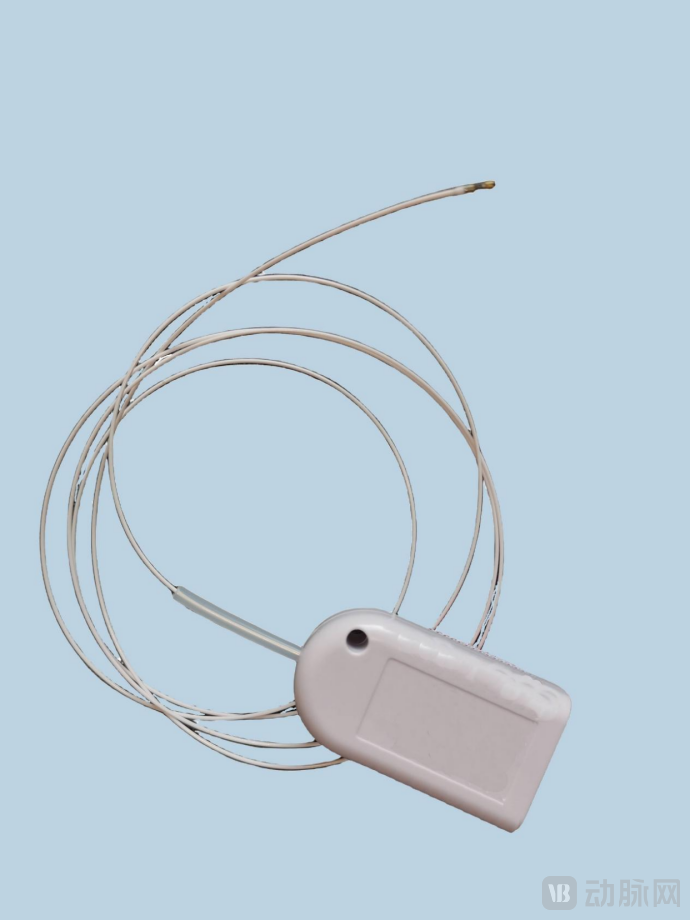
Dual-Parameter Monitoring Sensor
Currently, both animal experiments and commissioned testing have confirmed the superior performance of Medcodon’s intracranial multi-parameter monitoring system. Test reports issued by the Institute of Biomedical Engineering, Guangdong Academy of Sciences, and the Guangdong Provincial Quality Supervision and Inspection Station for Medical Healthcare Devices show that the system’s intracranial pressure measurement accuracy is 0.2 mmHg, far exceeding the clinical requirement of 1 mmHg; its intracranial temperature accuracy is 0.1°C, which also fully meets clinical standards. Xie Zhiyuan expressed great satisfaction with the test results, stating, “The product’s performance fully aligns with our initial design requirements, and all technical indicators meet our expectations.” The successful passage of all metrics has served as a significant confidence booster for the team.
Discussing the market for intracranial pressure (ICP) monitoring, Xie Zhiyuan stated that currently, most imported brands focus their product promotion strategies on large tertiary hospitals, which prevents many secondary hospitals, district hospitals, and county hospitals from accessing and implementing such monitoring. Furthermore, some clinicians lack sufficient awareness of the importance of ICP monitoring and do not prioritize it, leading to an apparently limited overall market demand. “In reality, the incremental market in this segment has the potential to at least double from its current base,” Xie added. Therefore, after commercializing its products, Medcodon plans not only to cover large tertiary hospitals but also to place greater emphasis on secondary hospitals—an incremental market segment currently underserved by imported brands.
Focusing on the cranial field to drive broader impact, with deep expertise in the R&D and manufacturing of ultra-micro pressure sensors
In the field of intracranial pressure monitoring, other domestic manufacturers often opt to purchase imported foreign chips for soldering. Foreign chips are relatively larger in size with bigger pads, making encapsulation simpler. Medcodon has chosen to use smaller-sized chips, which entails a more challenging encapsulation process. Relatively speaking, this is a more difficult path. Xie Zhiyuan candidly admits that this process has also been one of continuous growth for the team: “We may be moving more slowly along this path, but we are proceeding more steadily, laying the foundation for future product innovation.”
Next, Medcodon will continue to deepen its research and development of ultra-micro pressure sensors based on other clinical application scenarios. By leveraging the company’s self-developed sensor packaging technology,Medcodon will adopt a “point-to-area” business strategy, entering the market through neurosurgery, leveraging domestically developed high-performance components, and expanding into multi-clinical-application products., such as coronary pressure monitors, intraocular pressure monitors, and other pressure monitoring devices for the gastrointestinal tract, uterus, bladder, etc.
In the future, the company will also enhance product research and development in the field of high-value neurosurgical consumables, such as cerebrospinal fluid (CSF) management products (including internal and external CSF drainage systems) and neurosurgical vascular interventional products, while expanding into the OEM/ODM market for semi-finished and finished medical devices.
The company’s current pipeline of Class III medical devices includes an intracranial multi-parameter monitoring system and a coronary pressure monitoring system. Its Class II medical device projects encompass surgical instruments such as surgical dilation catheters and irrigated suction-ablation electrodes. Currently, the intracranial multi-parameter monitoring system is preparing for type testing, while prototypes and process designs for the other products have been completed.
Medcodon has obtained more than ten authorized patents. Meanwhile, the company has garnered numerous honors and awards, including the Class B Award for Innovation and Entrepreneurship Teams under the 2021 Foshan Blue Ocean Talent Program, third place in the national finals of the 2022 China High-End Medical Equipment Innovation and Entrepreneurship Competition, third prize in the 6th China Medical Device Innovation and Entrepreneurship Competition in 2023, a top-eight finish in the Foshan division of the 2023 HKUST Entrepreneurship Competition, and the silver award in the Manufacturing Pioneer Category of the 2023 Guangdong “Mass Entrepreneurship Cup” Innovation and Entrepreneurship Competition.
Currently, Medcodon is preparing for its angel round of financing. The funds raised will be primarily allocated to covering regulatory testing fees for medical devices, expanding the team, and investing in R&D and production equipment.
In the field of intracranial pressure sensors, overseas industry leaders dominate both domestic and international markets, leaving substantial room for import substitution with domestically produced alternatives. As national brands gradually rise and the state provides policy support for innovative medical devices, Medcodon will continue to exert strong efforts in this sector. By pursuing a path of independent innovation, Medcodon is committed to advancing the replacement of imported products with domestically manufactured ones in the field of precision medical devices.
About the 2023 Medical Technology Innovation Challenge
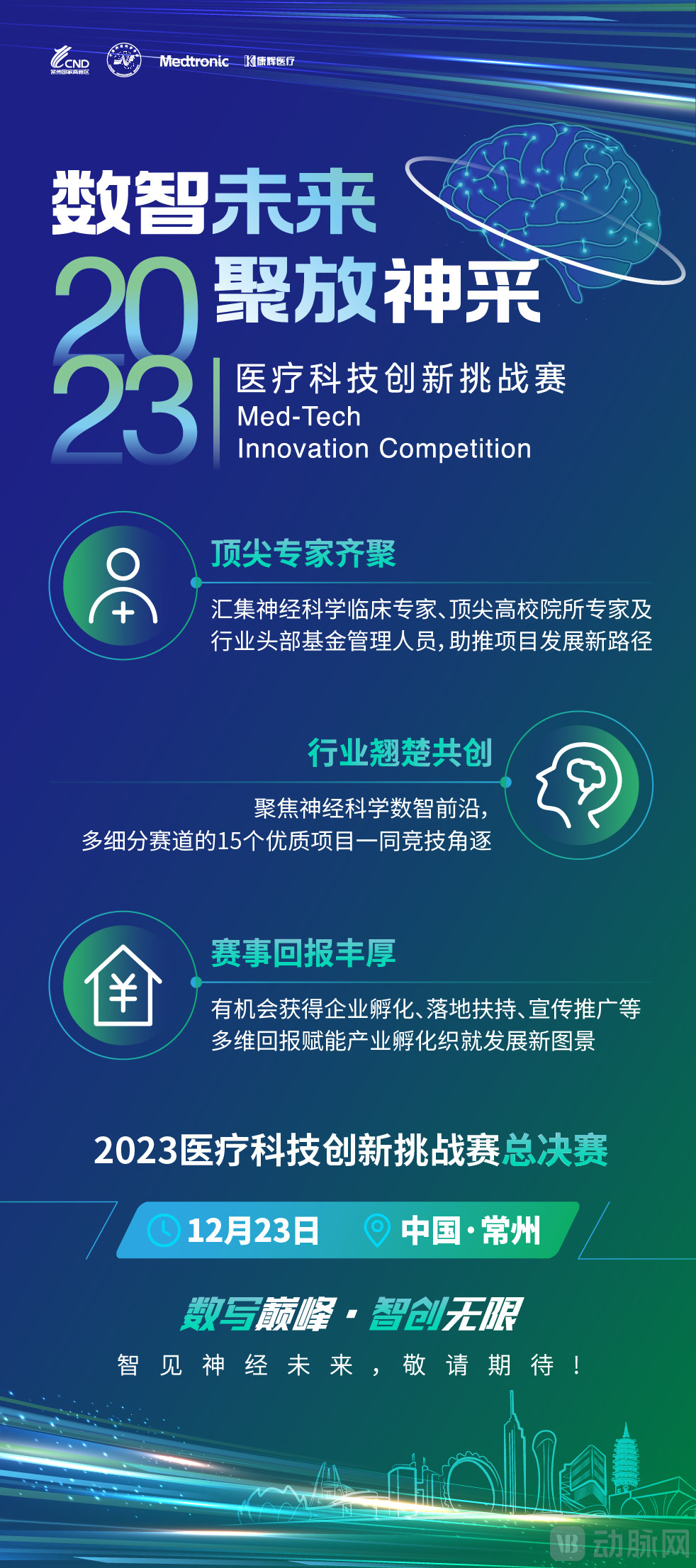
To gather more “high-end, precision, and advanced” sci-tech innovation talents to showcase their innovative achievements and empower innovation in the field of neuroscience, the “2023 Medical Technology Innovation Challenge,” co-hosted by the Administrative Committee of Changzhou National High-Tech District and Medtronic Kanghui, was officially launched on July 28. Guided by the Artificial Intelligence Professional Committee of the China Computer Federation, with academic guidance provided by the Basic and Clinical Neuroscience Branch of the Chinese Society for Neuroscience, the competition called for innovative projects in areas such as medical devices, intelligent equipment, smart healthcare platforms, and medical services within the fields of neuroscience and brain science. It has attracted widespread attention from the medical innovation community, with nearly 100 projects registered by the submission deadline on September 10.
After multiple rounds of evaluation and screening by the competition’s judging committee, 30 projects stood out and presented their pitches in the online semi-finals held on October 28. Following rigorous selection, 15 outstanding projects advanced to the finals.
The Grand Final of the 2023 Healthcare Technology Innovation Challenge will be officially held in Changzhou on December 23. As one of the 15 projects advancing to the finals, Medcodon will participate as scheduled. Your attention is welcome!