Alliance Pharma's First-in-Class Antibiotic Contezolid Successfully Re-enters National Reimbursement Drug List at Original Price Amid China's 'Antibiotic Restriction Policy'
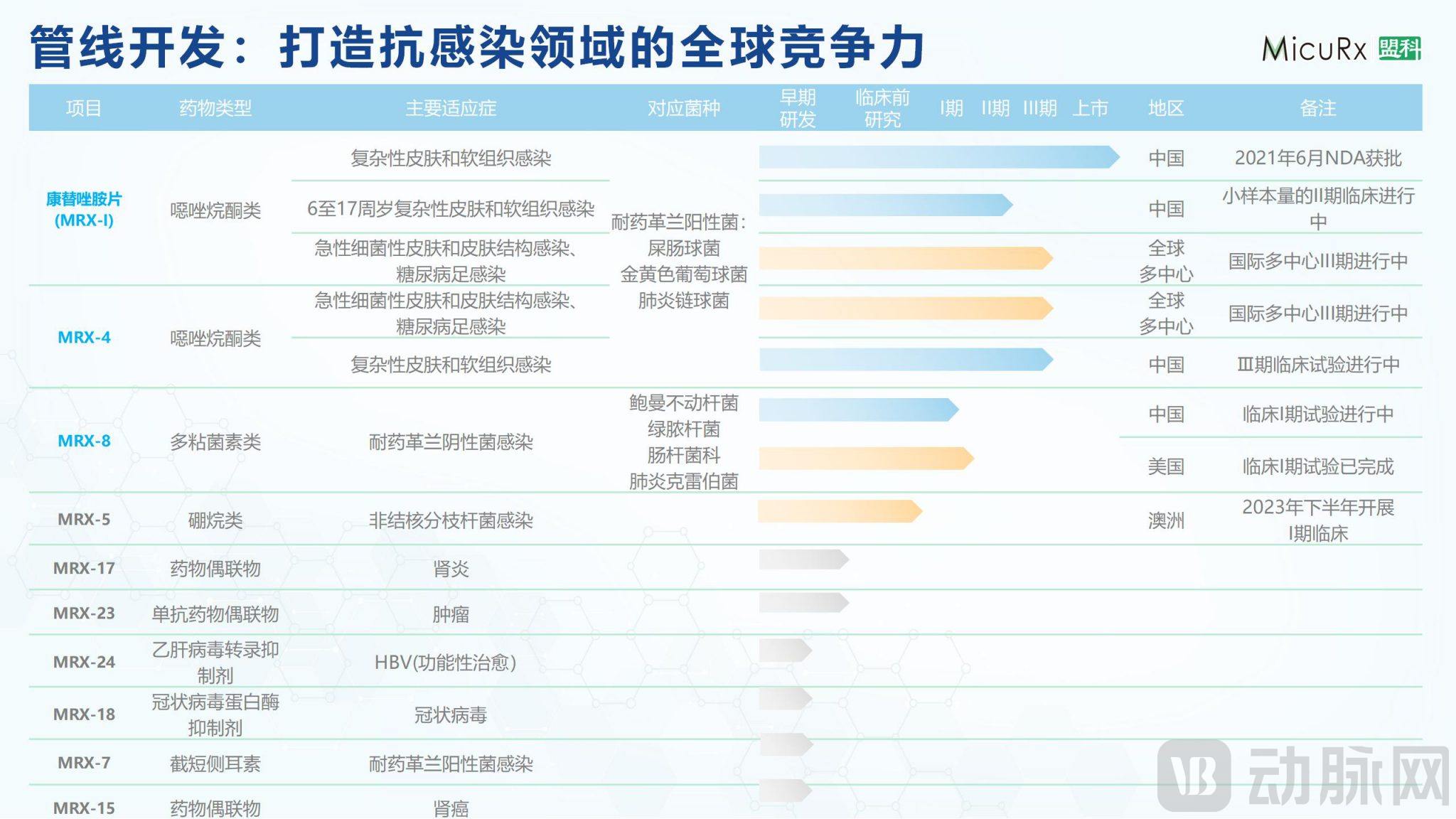
On the 13th, the National Healthcare Security Administration and the Ministry of Human Resources and Social Security issued the “National Drug Catalogue for Basic Medical Insurance, Work-Related Injury Insurance, and Maternity Insurance (2023).”Contezolid tablets (Uxitai®), independently developed by Shanghai MICURX Pharmaceutical Co., Ltd. (hereinafter referred to as “MICURX”), have successfully renewed their inclusion in the new edition of the National Reimbursement Drug List, with the price remaining unchanged for a two-year period.One year later, the multidrug-resistant antibacterial drug has been re-included in the updated National Reimbursement Drug List and is conducting global, multicenter Phase III clinical trials, continuing to capture the blue-ocean market in this niche sector.
Contezolid Tablets are oxazolidinone antibacterial agents and classified as Class 1 new drugs in China. They are indicated for the treatment of complicated skin and soft tissue infections caused by Contezolid-susceptible strains of Staphylococcus aureus (including methicillin-sensitive and methicillin-resistant strains), Streptococcus pyogenes, or Streptococcus agalactiae. Contezolid Tablets were approved for marketing in China in June 2021 and were included in the National Reimbursement Drug List in January 2022.In August of the same year, MICURX, the first listed company dubbed a “super antibiotic” stock, was listed on the STAR Market of the A-share market.
As a global public health issue, antibiotic resistance remains in a period of profound change and expansion. The World Health Organization (WHO) has identified antimicrobial resistance as one of the greatest threats to global health, food security, and development. Data indicate that deaths associated with antibiotic resistance rank as the third leading cause of death worldwide, directly causing 1.27 million deaths and contributing to 4.95 million deaths in 2019. It is projected that by 2030, resistance rates to commonly used antimicrobials may exceed 40%–60% in certain countries.
If no action is taken, antimicrobial resistance (AMR) will cause 10 million deaths by 2050, surpassing the number of cancer-related fatalities. On the other hand, no new antibiotics with novel mechanisms of action against drug-resistant bacteria have been developed globally for decades, as large pharmaceutical companies have shifted their R&D focus to other therapeutic areas. The mismatch between supply and demand in the treatment of drug-resistant bacterial infections has become increasingly pronounced.
China was once one of the countries with the most severe antibiotic abuse. According to statistical data published in the 2012 article “Antibiotic Abuse and Countermeasures,” the rate of antibiotic misuse in China reached as high as 80%, with 52% for veterinary use and 48% for human use. Data from the Chinese Academy of Sciences show that China’s daily antibiotic consumption per 1,000 people is 5.7 times that of the United Kingdom and 5.5 times that of the United States.
To address the severe challenge of bacterial antimicrobial resistance, China issued the Administrative Measures for the Clinical Application of Antimicrobial Drugs in 2012, implementing a tiered management system for antimicrobial agents. This initiative has been hailed as the strictest “antibiotic restriction order” in history. Subsequently, a series of policies were introduced, including the Notice on Further Strengthening the Clinical Application Management of Antimicrobial Drugs to Contain Bacterial Resistance, the National Action Plan to Contain Antimicrobial Resistance (2016–2020), and the Notice on Continuously Improving the Clinical Application Management of Antimicrobial Drugs. These policies have established requirements and restrictions on the selection and dosing regimens for various classes of antimicrobial agents.
“In the past, the misuse of low-end antibiotics led to their oversaturation in the market. Following the introduction of certain restrictive measures, the share of high-end antibiotics began to rise, overall favoring their capture of a larger market share.”At the winter media briefing held on the 15th, Yuan Zhengyu, Chairman and General Manager of MICURX, stated to VCBeat that with the implementation of policies, the use of general broad-spectrum antibiotics continues to be controlled, while patients with drug-resistant bacterial infections will gain more timely access to targeted therapies, leading to a structural adjustment in the use of antibacterial drugs in China.
Data also reflect this trend. According to Frost & Sullivan analysis,In China, the average number of treatment days per patient with antimicrobial agents for multidrug-resistant Gram-positive bacterial infections has shown an upward trend over the past five years.From 679 per 100,000 person-days in 2018 to 1,006 per 100,000 person-days. Behind the data, factors such as the use of immunosuppressive drugs, the widespread adoption of major surgeries, and population aging have also played a driving role. Objectively speaking, the increasing incidence of multidrug-resistant Gram-positive bacterial infections has made corresponding novel antimicrobial agents a long-term rigid demand, fostering a substantial drug market.
Yuan Zhengyu also noted that although structural adjustments in medication use are already underway, “the volume growth of products in the antibacterial drug segment will be slightly slower than that in other new drug areas.”This is primarily due to routine medication practices and the restrictions imposed by the “50-35” policy, which caps the number of antibiotics that can be used at 50 in tertiary hospitals and 35 in secondary hospitals. This means that “for a new product to be included in a hospital’s formulary, it must ‘displace’ an existing one,” creating certain barriers to the adoption of new drugs.
However, the challenges of hospital listing and the benefits that follow are two sides of the same coin. Once a new product is listed in hospitals and achieves economies of scale in usage, its sales will enter a period of stable growth.Yuan Zhengyu noted that, taking linezolid—an oxazolidinone antibiotic—as an example, its sales continued to grow within two years after its patent expired in 2015. This reflects the unique characteristics of antibacterial drugs and applies to antibiotic markets in multiple countries.
In addition, differences in medication habits have also affected the current sales growth of contezolid tablets. “In China, antibiotics are more commonly administered via injection, and patients tend to place greater trust in injectable formulations. In fact, in recent years, the National Medical Products Administration (NMPA) has been advocating the principle of ‘oral administration preferred over injection, and injection preferred over infusion.’ Therefore, MICURX initially launched contezolid in an oral tablet form, which offers greater convenience, a relatively higher safety profile, and posed greater R&D challenges,” said Yuan Zhengyu. He added that MICURX is also accelerating the development of the injectable formulation of contezolid, which is expected to drive a new wave of sales growth after its market launch.
In terms of market competition, the primary competitor to contezolid is linezolid. In 2006, linezolid was approved for marketing in China as the first oxazolidinone antibacterial agent. With the expiration of its patent, 16 generic versions of linezolid have currently been approved for marketing in China. According to the IMS database, global sales of linezolid tablets exceeded USD 267 million in 2019, with domestic market sales amounting to approximately USD 26.4793 million; in 2020, global sales reached approximately USD 276 million, with domestic market sales totaling around USD 32.4401 million.
“It is not difficult to find compounds that can kill superbugs; the challenge lies in not killing humans as well.”There is a paradox in drug development within the high-end antibiotic sector: combating more potent bacteria requires greater antibiotic activity, which in turn entails higher toxicity.
As early as the 1970s, scientists discovered the antibacterial efficacy of oxazolidinone structures, but development was repeatedly halted due to bone marrow toxicity. It was not until 2000 that linezolid received approval for market launch. However, subsequent large-scale clinical data still revealed incidences of bone marrow suppression, lactic acidosis, peripheral neurotoxicity, and serotonin syndrome associated with linezolid. Although tedizolid, launched in 2014, exhibits greater potency, its market potential has been constrained by significant toxicity concerns.
Through the innovative design of "trifluoro non-coplanarity," contezolid achieves a triple benefit of increased activity, reduced toxicity, and unique metabolism. Due to its excellent safety profile, contezolid is classified as a Category II "restricted-use" antibiotic, which imposes fewer restrictions compared to linezolid’s most stringent "special-use" classification. According to Li Zhile, CFO of MICURX,With its efficacy that balances safety and activity, contezolid offers the advantage of long-term safe administration for treating multidrug-resistant Gram-positive bacteria, filling a therapeutic gap in this area requiring prolonged treatment.
Furthermore, at the conference, Yuan Zhengyu addressed the ultimate challenge in antimicrobial therapy: antibiotic resistance. “The rate at which resistance develops varies among different classes of antibiotics, whereas oxazolidinones are less prone to inducing resistance. This is due to the more complex molecular structure of oxazolidinones, which requires mutations in six genes for resistance to emerge.” As a result, after 23 years on the market, linezolid still maintains a resistance rate of less than 1%. “Contezolid, a next-generation oxazolidinone antibiotic, is even less likely to induce resistance than linezolid.”
MICURX’s latest third-quarter financial report shows that contezolid generated Q3 revenue of RMB 26.16 million, a year-on-year increase of 80.76%;Revenue for the first nine months reached RMB 68.27 million, a year-on-year increase of 95.87%, surpassing the full-year revenue of 2022.It is evident that, driven by the expansion of sales channels and increased hospital coverage, the revenue from Contezolid tablets has entered a phase of rapid growth. Meanwhile, MICURX has submitted an application for a five-year patent term extension for the core patent of Contezolid; if approved, the protection period will be extended to 2033, thereby prolonging the high-growth period free from the risk of inclusion in volume-based procurement (VBP).
In terms of R&D fundamentals, contezolid tablets are currently undergoing international multicenter Phase III clinical trials, accelerating their global launch. Additionally, the self-developed pipeline candidates MRX-4 and MRX-8 have also entered clinical trials, becoming highly competitive antibiotic candidates for MICURX.