

Teal Omics Files IPO Prospectus: AI-Powered Platform to Predict Organ-Specific Aging and Enable Early Intervention

Teal Omics
Biotechnology Developer
According to the World Health Organization’s (WHO) *World Health Statistics 2022* report, global life expectancy at birth increased from 66.8 years in 2000 to 73.3 years in 2019, representing a gain of nearly six years. However, this increase in lifespan does not necessarily correspond to a proportional extension of healthy life expectancy.
Healthy life expectancy not only describes the length of healthy years but also the proportion of total lifespan spent without disease. Between 2000 and 2019, healthy life expectancy (HALE) increased from 58.3 to 63.7 years. Although HALE rose by 8%, this increase was driven by declining mortality rates rather than a reduction in years lived with disability.
The fact that life expectancy is growing faster than HALE indicates that the additional years of life are not all healthy years, but also includeSlight IncreaseofYears Lived with Illness.
The World Health Organization (WHO) states that, from a biological perspective, aging is the result of the gradual accumulation of various molecular and cellular damages over time. This leads to a progressive decline in an individual’s physical and mental capacities, an increasing risk of disease, and ultimately, death. Therefore, in the field of anti-aging, there is a strong desire to discover methods for extending lifespan, delaying aging, and prolonging healthspan. While this concept appears straightforward, our current understanding of how cells, organs, and organisms age remains incomplete.
Therefore, to gain a deeper understanding of aging, many elites in the scientific research and industrial sectors are seeking effective methods to quantify aging-related molecular damage and clinical functional decline. They aim to identify aging biomarkers that clearly reflect the aging process and its regulatory mechanisms, ultimately guiding the development of targeted anti-aging intervention strategies based on these biomarker assessments.
Teal Omics (hereinafter referred to as “Teal”) is a biotechnology company dedicated to developing novel technology platforms to deepen the understanding of aging. The company aims to develop new platform technologies to enhance insights into aging, with a mission to advance the measurement, monitoring, and treatment of age-related diseases through innovative approaches.
Teal leverages technologies such as proteomics, genomics, and AI to accelerate the discovery of novel aging biomarkers and the development of therapeutic interventions, thereby enabling the prevention and precision treatment of age-related diseases.
Teal’s co-founder is Dr. Tony Wyss-Coray, a Professor of Neurology at Stanford University. The company was founded based on the research conducted by Dr. Wyss-Coray’s team at the Wyss-Coray Lab at Stanford University, as published in their paper “Organ aging signatures in the plasma proteome track health and disease.”1They developed an AI algorithm based on the plasma proteome to measure human organ aging—LASSO—which can better predict individual risks of age-related diseases and mortality.
Wyss-Coray is the D. H. Chen Professor of Neurology and Neurosciences, Associate Director of the Paul F. Glenn Center for Biology of Aging, and Director of the Biomarker Core at the Stanford Alzheimer’s Disease Research Center.
For his outstanding research on aging and Alzheimer’s disease (AD), he has received the NIH Director’s Pioneer Award, the Alzheimer’s Association’s highest honor, and the NOMIS Foundation Award, and was named by Time magazine as one of the “50 Most Influential People in Health Care” in 2018.
Wyss-Coray’s story with aging began in 1992.
In 1992, Wyss-Coray earned his Ph.D. in immunology from the University of Bern in Switzerland and subsequently completed his postdoctoral research at the Scripps Research Institute and the Gladstone Institutes in San Francisco, California.
During this period, he focused on researching diagnostic methods for Alzheimer’s disease (AD). He discovered that, in addition to established AD biomarkers, human blood also contains aging biomarkers whose levels increase with the progression of AD. Following the publication of these findings, he gained increasing prominence in the field of anti-aging and was frequently invited to speak at conferences on aging.
In 2002, Stanford University neurology professor Thomas Rando recruited Wyss-Coray to join the faculty at Stanford. Rando is a prominent researcher in the field of anti-aging, specializing in “heterochronic parabiosis,” and serves as the lead investigator for Stanford’s Aging and Age-Related Diseases Research Program.
After joining Stanford, Wyss-Coray partnered with Rando to investigate the effects of heterochronic parabiosis on the brain and established the Wyss-Coray Laboratory, which is dedicated to researching brain aging and neurodegenerative diseases, with a particular focus on age-related cognitive decline and Alzheimer’s disease (AD).
In 2014, the Wyss-Coray laboratory published a paper in Nature Medicine, which posited that exposing an aged animal to young blood could counteract and reverse the established effects of brain aging.2In 2022, the Wyss-Coray team published another landmark study, demonstrating that injecting cerebrospinal fluid from young mice into the brains of aged mice could reverse memory decline and enhance memory function.3。
Since then, under the leadership of Wyss-Coray, the laboratory has achieved numerous breakthroughs in the field of aging over more than two decades of development. Notably, the research team discovered that circulating blood factors can regulate brain structure and function, and that factors derived from young organisms can rejuvenate the aging brain. These findings were ranked as the second-biggest breakthrough of 2014 by Science magazine, and Wyss-Coray has delivered related talks at global forums including TED, the Tencent WE Summit, the World Economic Forum, and Google Zeitgeist.
To translate laboratory research findings into productive forces within economic activities, Wyss-Coray has successively founded multiple companies, such as Alkahest and Teal Omics, which are engaged in the development of anti-aging drugs.
Teal’s team includes prominent investors Markus Okumus and Alex Boches. Markus Okumus is the co-founder of FORM Venture Fund, a venture capital firm whose portfolio spans hot sectors such as finance and healthcare. The team also includes AI engineer Paritosh Kulkarni, who brings 25 years of industry experience and has previously held technical engineering roles at technology companies including Yellowbrick Data, Intel Corporation, and SanDisk.
In addition, Teal’s advisory team includes Benoit Lehallier, Senior Director of Data Science at Alkahest; Jay Wohlgemuth, Chairman and Chief Executive Officer of SalioGen Therapeutics, a gene therapy development company; and Bharat Tewarie, Executive Vice President and Chief Marketing Officer of UCB, a new drug development enterprise.
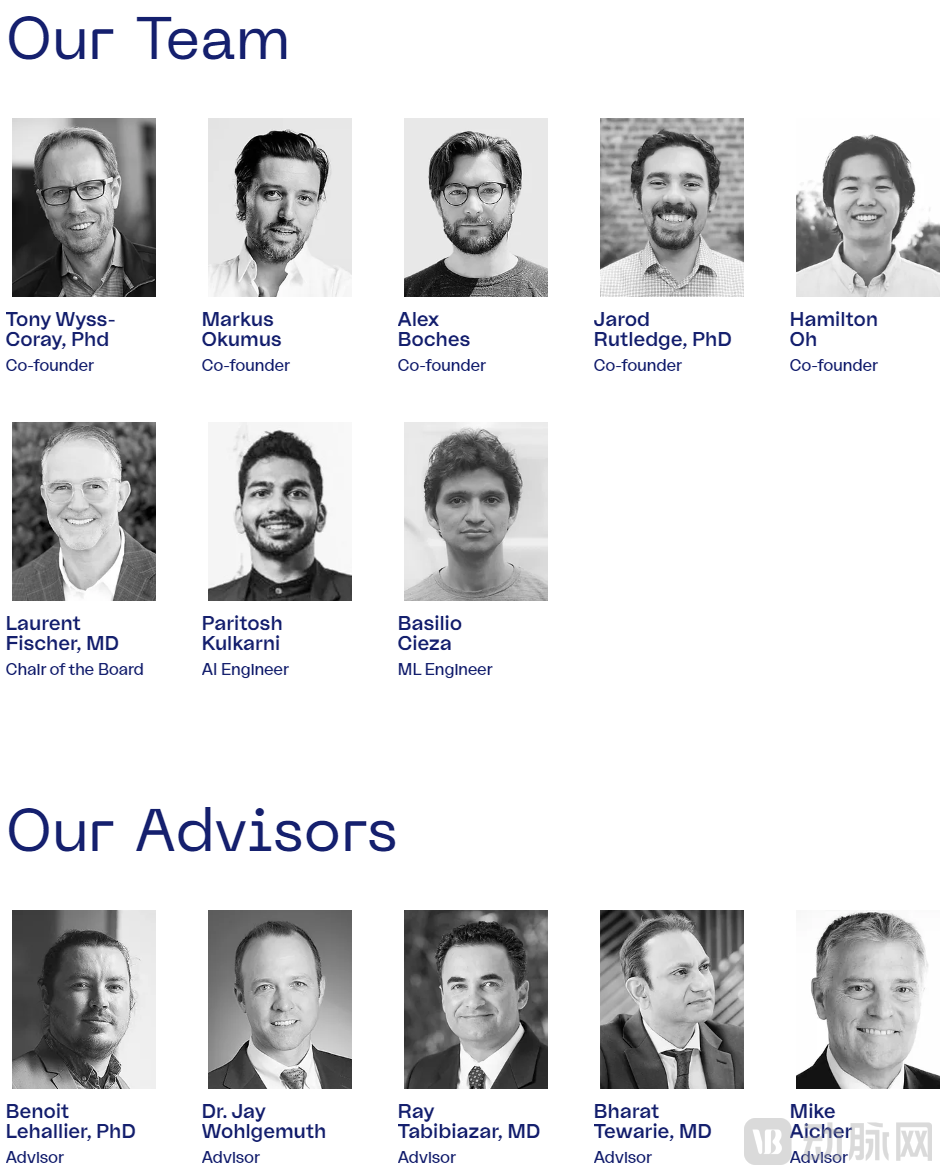 Teal Team Members
Image source: Teal official website
The Wyss-Coray team employed LASSO to evaluate human plasma protein levels derived from specific organs, thereby quantifying differences in aging across individuals and organs. In this study, the team analyzed the aging trajectories of 11 major organs throughout the lifespan in 5,676 adults. These major organs included the heart, adipose tissue, lungs, immune system, kidneys, liver, muscles, pancreas, brain, vascular system, and intestines.
The research team first assessed the levels of 4,979 proteins in the participants' blood, identified the specific organ of origin for nearly 1,000 of these proteins, and linked their abnormal levels to accelerated aging, as well as increased susceptibility to disease and death, in the corresponding organs.
The research team used SomaLogic’s SomaScan assay, a proteomics data provider, to measure the levels of nearly 1,000 proteins. Ultimately, they identified 893 organ-specific proteins, with the largest number derived from the brain. Subsequently, the team trained an AI algorithm—LASSO—to estimate individual organ age based on these specific proteins.
For the 11 selected organs, the research team proposed the concept of “age gap”—the difference between an organ’s chronological age and its LASSO-predicted biological age. They found that while there is moderate synchrony in aging across different organs within an individual, each organ largely ages independently. The study demonstrated that, except for the gut, the age gaps of the remaining organs were significantly associated with all-cause mortality risk within 15 years.
Data show that among adults aged 50 and older, nearly 18.4% of participants exhibited significantly accelerated aging in at least one organ compared to the average rate. These individuals face a higher risk of developing specific organ-related diseases over the next 15 years, with their mortality risk increased by 15%–50%. Furthermore, 1.7% of participants demonstrated accelerated aging across multiple organs, and their mortality rate was 6.5 times higher than that of individuals without any evident organ aging.
The research team also found that LASSO can be used to predict various chronic diseases. Individuals with accelerated cardiac aging have a 2.5-fold higher risk of heart failure compared to those with normally aging hearts; extreme cardiac aging, defined as a cardiac score exceeding two standard deviations above the normal range, is associated with atrial fibrillation and myocardial infarction; similarly, extreme renal aging, defined as a renal score exceeding two standard deviations above the normal range, is associated with hypertension and diabetes.
Notably, accelerated aging metrics for the brain and vasculature can be used to predict the progression of Alzheimer’s disease (AD). Individuals with accelerated brain aging are 1.8 times more likely to experience cognitive decline within five years compared to those with a “younger” brain, with predictive accuracy comparable to that of the best currently available clinical blood biomarkers for AD, such as phosphorylated tau protein. Furthermore, the findings suggest that vascular calcification and extracellular matrix alterations are major components of aging and underlie the early stages of cognitive decline and neurodegenerative diseases.
Wyss-Coray stated that, using LASSO, we can assess the rate of organ aging in individuals who appear healthy and predict their risk of developing organ-related diseases, thereby enabling therapeutic interventions before illness onset. These are precisely the two key advantages of LASSO:
1. Interpretability: The biological age of individual organs can be explained with specific data outputs. For example, a patient’s brain is biologically older than their chronological age, which suggests a high likelihood of brain-related diseases. While this does not rule out the presence of other age-related conditions, physicians will use organ age information to stratify the patient’s health risks and determine appropriate treatment strategies.
2. Operability: Physicians can take action to prevent or delay disease onset. In addition to providing patients with a range of interventions to address accelerated brain aging, Teal will also offer two dietary supplement options that have been proven to reduce brain age and help delay disease onset.
It is precisely for this reason that, although Teal has not publicly disclosed detailed product technical information, it has become a focal point in the field of aging biomarkers alongside the research achievement of “Multidimensional Organ Aging Assessment.”
Currently, proteomic measurements have become one of the primary methods for assessing biological aging, with numerous companies entering this field, including biotechnology firms BioAge Labs/Age Labs, genetic testing service provider TruDiagnostic, and UK-based startup AgeCurve.
In August 2022, BioAge Labs entered into a collaboration agreement with Age Labs. Under this partnership, BioAge will leverage artificial intelligence (AI) technologies to conduct multi-omics analyses of healthy sample data from the Nord-Trøndelag Health Study (HUNT) biobank, aiming to identify protein and metabolite biomarkers associated with age-related pathologies, thereby facilitating the identification and development of drug targets for aging-related diseases.
In October 2023, genetic testing service provider TruDiagnostic announced the launch of a new multi-omics biological aging clock, OMICm Age. Developed jointly by TruDiagnostic and Harvard University, OMICm Age draws on a multi-omics aging database that includes patients’ proteomic, metabolomic, and clinical history data. It can predict how changes in age affect an individual’s total lifespan and highlight which organ systems may be experiencing accelerated aging or dysfunction, thereby providing guidance for early intervention or strategies to improve individual aging trajectories.
Furthermore, numerous academic studies have focused on proteomic aging. For instance, Luigi Ferrucci’s research team at the U.S. National Institutes of Health identified 232 proteins associated with aging and, through enrichment analysis, validated previously reported metabolic pathways linked to aging in both animal models and humans.4。
However, conducting high-throughput aging-related research on proteins and translating the findings into practical applications remains a challenge, with most companies currently still at the experimental stage. Nevertheless, as research advances and technologies evolve, this measurement approach is poised for further development.
References:
1. Oh, H.SH., Rutledge, J., Nachun, D. et al. Organ aging signatures in the plasma proteome track health and disease. Nature 624, 164–172 (2023). https://doi.org/10.1038/s41586-023-06802-1
2. Villeda, S., Plambeck, K., Middeldorp, J. et al. Young blood reverses age-related impairments in cognitive function and synaptic plasticity in mice. Nat Med 20, 659–663 (2014). https://doi.org/10.1038/nm.3569
3. Iram, T., Kern, F., Kaur, A. et al. Young CSF restores oligodendrogenesis and memory in aged mice via Fgf17. Nature (2022). https://doi.org/10.1038/s41586-022-04722-0
4. Moaddel R, Ubaida‐Mohien C, Tanaka T, et al. Proteomics in aging research: A roadmap to clinical, translational research[J]. Aging Cell, 2021, 20(4): e13325.