

Zaiji Pharma Advances First-in-Class Oral PD-L1 Inhibitor MAX-10181 in Fully Oral Combination Regimens with Chemotherapy for Glioma and Solid Tumors
In December 2023, Guangzhou Repolarization Medical Technology Co., Ltd. (hereinafter referred to as “Repolarization Pharma”) announced that the preclinical efficacy data of MAX-10181, an oral PD-L1 inhibitor developed jointly by Repolarization Pharma and Wenzhou Medical University for the treatment of glioma, had been accepted for presentation at the 2024 American Association for Cancer Research (AACR) Annual Meeting, marking aTreatment of GliomasWorld’s First Oral Tumor Immune Checkpoint Inhibitor and Oral Chemotherapy DrugofCombination Therapy。 MAX-10181Repolarization MedicalNumberOne of the “first-in-class” clinical pipelines, it was approved by the NMPA to enter Phase II clinical trials this October.
Two months ago, Repolarization Pharma presented the first clinical data on MAX-40279, another “first-in-class” pipeline for the treatment of acute myeloid leukemia (AML), at the 8th China Pharmaceutical Innovation and Investment Conference. Encouragingly, patients with relapsed or refractory AML have achieved renewed survival following treatment with MAX-40279.MAX-40279 received U.S. FDA Orphan Drug Designation in 2018.,andAt 2019Annual RevenueNational Major Special Project for New Drug Innovation, currentlyApproved by the NMPAPhase II Clinical TrialIn Trial。
Founded in 2016, the innovative pharmaceutical company Repolarization Pharma has completed multiple rounds of financing amounting to hundreds of millions of yuan, with investors including Focus Capital, Longpan Capital, and Morningside Venture Capital. The company focuses on targeted therapy and immunotherapy, developing first-in-class/best-in-class small-molecule drugs.Product pipeline includes acute myeloid leukemia (AML), various solid tumors, and autoimmune diseasesSkindiseases, etc., encompassing oral and topical administration of small-molecule drugs,NuclideThree Major Applicationsapproach. Currently, Repolarization Medical has six publicly disclosed pipeline candidates, with two in Phase II clinical trials and three in Phase I clinical trials.
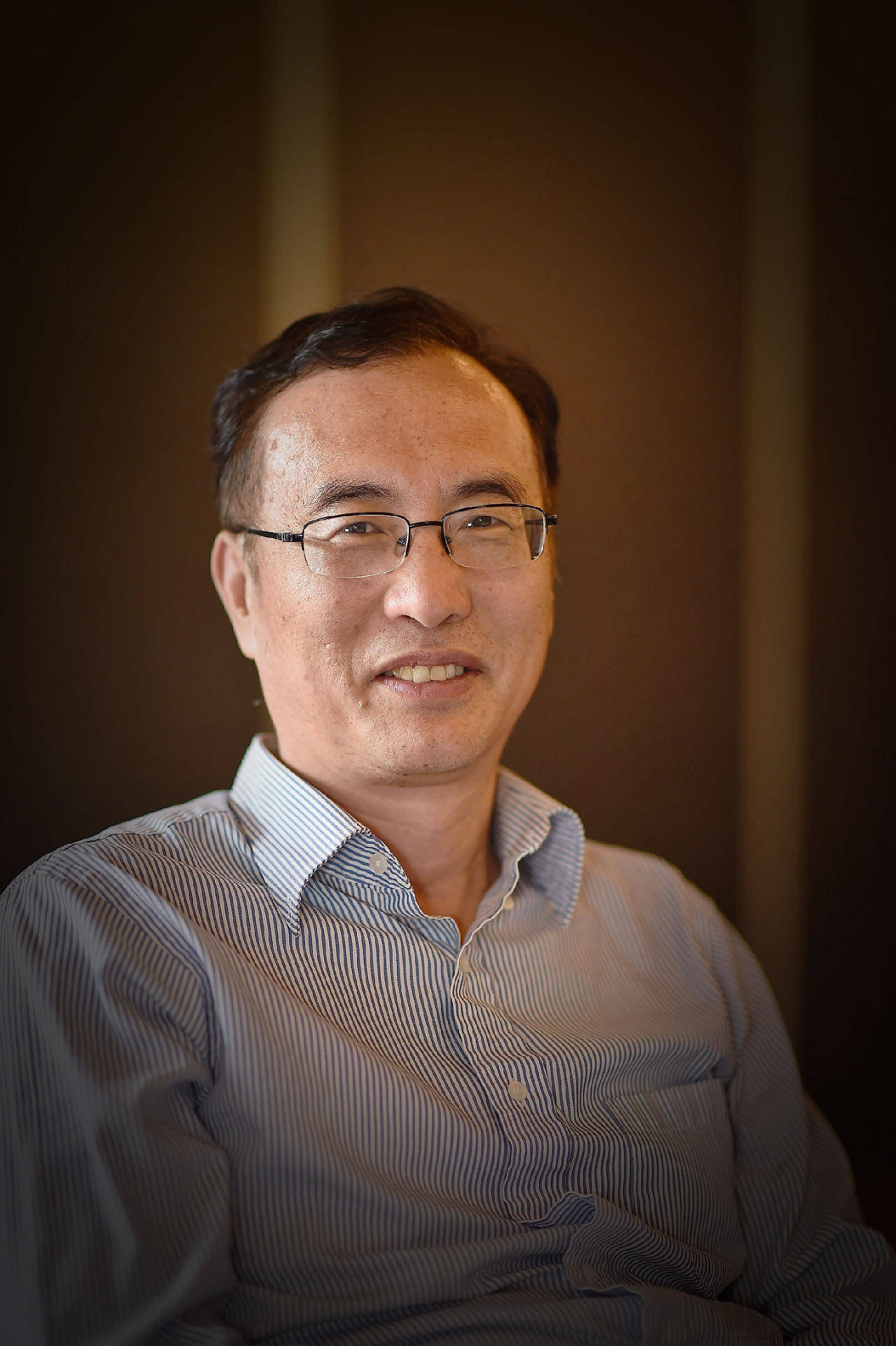
Dr. Wang Yuguang, Founder of Repolarization Medical
Dr. Wang Yuguang, Founder of Repolarization Pharma, began his undergraduate and master’s studies in pharmacy at Shandong Medical University (now the School of Medicine, Shandong University) in 1978. In 1986, he furthered his education at the University of Kansas in the United States, where he earned a Ph.D. in Medicinal Chemistry and Drug Design. After graduation, Dr. Wang joined the multinational pharmaceutical company (MNC) Schering-Plough and later the Chinese CRO firm ChemPartner, accumulating extensive experience spanning R&D, management, and business development within MNCs, as well as comprehensive services offered by CROs. He contributed to the invention of the novel drug Vorapaxar while at an MNC and successfully assisted four companies in achieving NASDAQ listings during his tenure at a CRO. Dr. Wang has published nearly 30 academic papers and holds seven international patents and twelve U.S. patents.
Seizing the momentum from a series of positive developments at Repolarization Medicine, VCBeat had the privilege of interviewing Dr. Wang Yuguang, who shared insights from his nearly 30-year journey specializing in drug molecule design and recounted the full story behind the founding of Repolarization Medicine.
With nearly 30 years of experience in drug molecule design, I participated in the development of the world’s first oral small-molecule PAR-1 inhibitor.
In 1986, influenced by his mentor, Professor Wang Huicai, who pioneered the industrialization of the anticancer drug carboplatin, Wang Yuguang traveled to the School of Pharmacy at the University of Kansas in the United States to study medicinal chemistry and drug design, driven by a simple aspiration to master advanced technologies and serve his country.
After graduation, Dr. Yuguang Wang was invited to join the multinational pharmaceutical company Schering-Plough, marking the beginning of his 19-year career. During his first decade at Schering-Plough, Dr. Wang primarily served as a research and development scientist, responsible for advancing innovative projects into clinical trials, with a main focus on central nervous system and cardiovascular diseases.
Stroke and cerebral thrombosis are highly challenging conditions within central nervous system disorders, characterized by a limited arsenal of available medications and significant bleeding risks. In the late 20th century, numerous multinational corporations (MNCs) and innovative pharmaceutical companies embarked on research in this field, with Schering-Plough also entering the “battlefield” to develop novel agents that inhibit thrombosis without affecting coagulation—namely, the laterVorapaxar, the World’s First Oral Small-Molecule PAR-1 Inhibitor Approved by the FDA and EMA—One of the Drivers Behind Merck’s $4.11 Billion Acquisition of Schering-PloughIn 1996, after the first two generations of compounds designed by Schering-Plough failed due to toxicity-related issues, the company sought assistance from scientists across the organization.
“All scientists were racking their brains, each striving to design novel compounds,” Dr. Wang Yuguang remarked with a smile. As a highly adventurous scientist, Dr. Wang joined the third-generation compound research and development effort, where he designed and developed a new compound—Vorapaxar. For this achievement, Dr. Wang received the Schering-Plough Research President’s Award in 1996 and the U.S. Edison Patent Award in 2008.
During his tenure at Schering-Plough, Dr. Wang Yuguang received the Schering-Plough President’s R&D Award three times. After 2002, in recognition of his outstanding performance in research and development, Dr. Wang assumed the role of Director of Scientific Research, embarking on a new set of challenges. “In this position, I was primarily responsible for business development (BD) projects and collaborations with outsourced service providers, aiming to reduce pharmaceutical R&D costs for the company from multiple dimensions,” said Dr. Wang.
Since 2003, Dr. Wang Yuguang has been frequently traveling between China and the United States for work, collaborating with domestic pharmaceutical companies, particularly contract research organizations (CROs) such as WuXi AppTec and ChemPartner/Shanghai Pharma Group.
In 2009, on the eve of Schering-Plough’s acquisition by Merck & Co., Dr. Wang Yuguang joined WuXi AppTec (formerly Pharmaron) as Senior Vice President at the invitation of the Chinese CRO firm ChemPartner. He oversaw more than 50 new drug development projects annually and successfully facilitated the NASDAQ listings of four pharmaceutical companies. Within less than two years of joining ChemPartner, he played a key role in driving its successful listing on the New York Stock Exchange.
Speaking of the genesis of his entrepreneurial idea, Dr. Wang Yuguang candidly admitted, “Entrepreneurship was never my primary intention,For our generation, developing new drugs is our mission and our historical responsibility.“Therefore, for me, since there are few platforms or pharmaceutical companies in China that can fully realize my vision and afford me the maximum freedom to innovate, entrepreneurship has become the most direct path for me to fulfill my mission. I am not starting a business for its own sake; all my efforts are dedicated to the research and development of innovative drugs, addressing unmet clinical needs, and bringing hope to patients through life-saving therapies. This is the goal I have set for Repolarization Pharma.”
In 2015, the issuance of the pivotal “Document No. 44,” officially titled the Opinions of the State Council on Reforming the Review and Approval System for Drugs and Medical Devices, galvanized countless scientists in China. Seizing the opportunity presented by the convergence of favorable policies, talent, and market conditions, and leveraging nearly three decades of experience in frontline R&D and scientific project management, Dr. Wang Yuguang founded Repolarization Pharma in 2016.
3 Major Platforms, 6 Pipelines in Development
Since the inception of the company, Dr. Wang Yuguang has focused on malignant tumors, driving innovation in both drug target selection and drug application models to develop products with differentiated clinical therapeutic value. To this end, Repolarization Pharma has progressively established three major technology platforms:Oral Drug Platform, Topical Drug Platform, and Radiopharmaceutical Platform, leveraging its strengths in small-molecule drug design to break through the boundaries of mature targets and pursue differentiated competition.
In the oral drug platform, Repolarization Pharma has primarily developed its blockbuster pipeline candidates MAX-40279 and MAX-10181, which are currently the company’s most advanced programs.、Two Key Pipelines Under Priority Development.
Acute myeloid leukemia (AML) is a malignant hematologic neoplasm characterized by high rates of relapse, refractoriness, and mortality. FLT3 is a driver gene in AML; it is overexpressed in more than 90% of AML cases, with the wild-type form accounting for 70%.
Currently, there are three FLT3 inhibitors approved globally, all of which selectively inhibit the FLT3 target and lead to drug resistance due to bypass activation of FGFR1. To address this challenge, Repolarization Pharma has developed MAX-40279, a dual FLT3/FGFR1 inhibitor. Professor Wang Jianxiang from the Institute of Hematology & Blood Diseases Hospital in Tianjin serves as the principal investigator leading the Phase Ib/II clinical trial of MAX-40279 in combination with azacitidine (AZA) for the treatment of relapsed/refractory acute myeloid leukemia (R/R AML).
Clinical data presented by Dr. Feng Zhenhua, Senior Vice President of Science and Operations at Repolarization Medical, at the global premiere session of the 8th China Pharmaceutical Innovation and Investment Conference, indicated thatIn the Phase Ib dose-escalation trial of MAX-40279 in combination with azacitidine (AZA),Achieved a stringent complete remission (CR) rate of 22% and a disease control rate (DCR) of 89% in relapsed/refractory FLT3 wild-type AML.。According to the 2022 Clinical Practice Guidelines, there remains a global unmet need in the treatment of relapsed/refractory FLT3-wild-type acute myeloid leukemia (AML).
Dr. Wang Yuguang also revealed that in the clinical trial of MAX-40279 combined with AZA, one patient achieved complete remission (CR) after three months of treatment, successfully underwent bone marrow transplantation, and was discharged upon recovery. “It can be said that MAX-40279 has already demonstrated the characteristics of a life-saving drug.”
“From the perspectives of therapeutic scope, compliance, accessibility, and safety, small-molecule PD-L1 inhibitors exhibit distinct advantages over antibody drugs,” said Dr. Yu Guangwang. PD-1/L1 antibody therapies have achieved remarkable clinical success and become standard first-line treatments for many indications. However, more than 70% of patients develop resistance to these antibodies, necessitating second-line, third-line, or later lines of therapy. Phase I clinical data show that over 60% of patients previously treated with antibody therapies continue to derive sustained benefit from MAX-10181. Thus, MAX-10181 and antibody drugs form a complementary treatment continuum in oncology, addressing patient needs across different lines of therapy.
MAX-10181 not only forms a synergistic combination with antibody drugs but also treats tumors that are refractory to antibody therapy. Due to the physicochemical properties of antibody proteins, which hinder their penetration across the blood-brain barrier and result in low delivery efficiency, no PD-1/L1 antibody drug has been approved for the clinical treatment of glioma to date.
MAX-10181 demonstrates blood-brain barrier penetration capability and has achieved excellent results in animal studies involving combination therapy with temozolomide, a commonly used chemotherapeutic agent for the clinical treatment of glioma.Compared with temozolomide monotherapy, the combination with MAX-10181 improved survival by 50%, a statistically significant difference.Guangzhou Repolarization Medical Technology Co., Ltd. has initiated a collaboration with Professor Li Wenbin, a renowned expert in glioma treatment at Beijing Tiantan Hospital, Capital Medical University, to explore the clinical efficacy of MAX-10181 combined with temozolomide in the treatment of gliomas.
Preclinical animal combination therapy data and Phase I clinical trial results indicate that MAX-10181 is a cornerstone drug capable of being combined with various agents to treat tumors resistant or intolerant to PD-1/L1 antibodies, as well as untreatable cancers, thereby addressing the limitations of antibody-based therapies. Currently, MAX-10181 is in Phase II clinical trials, exploring combination regimens for the treatment of multiple solid tumors.
Regarding Guangzhou Repolarization Medical Technology Co., Ltd.'sTopical Drug PlatformIn terms of topical JAK inhibitor MAX-40070, it is currently in Phase I clinical trials. InRadionuclide Drug PlatformGuangzhou Repolarization Medical Technology Co., Ltd. has advanced the PD-L1 radionuclide diagnostic project MAX-20492 into clinical investigator-initiated trial (IIT) studies. No further information has been disclosed at this time.
Navigating the Capital Winter: Achieving Key Breakthroughs in Leading Pipelines
The “Double Ten Law” of new drug development remains unbroken to this day. However, both time and capital are running short for biotech companies. Since the beginning of this year, investment and financing enthusiasm in the biotech market has waned, plunging the entire industry into a capital winter.
According to statistics from VCBeat, the pace of investment and financing in the global and Chinese biopharmaceutical sectors slowed significantly during the first three quarters of 2023. In terms of the number of financing events, there were a total of 400 globally, representing a 3% year-on-year increase; in China, there were 128 events, marking a 24% year-on-year decrease. Regarding financing amounts, the global total reached RMB 258.798 billion, a 40% year-on-year decline; in China, the total amounted to RMB 36.174 billion, down 54% year-on-year. Furthermore, numerous biotech companies worldwide have exited the market; to date, the number of U.S.-listed biotech firms that have gone bankrupt this year has exceeded 30.
Amid the biopharma capital winter, “we must stay true to our original mission, focusing on developing new drugs and treating patients. Going forward, we will shift from a ‘fast and broad’ pipeline strategy to a ‘lean and focused’ one, prioritizing pipeline assets that demonstrate life-saving potential, particularlyMAX-40279andMAX-10181,“Always serving patients,” said Dr. Wang Yuguang.
“Just as there are scorching summers, there are also frigid winters, but the harsh winter will always pass,” Dr. Wang Yuguang added at the end of the interview. To borrow a line from the British poet Shelley: “If Winter comes, can Spring be far behind?” VCBeat and Repolarization Pharma look forward to the arrival of spring for the biopharmaceutical industry.
Currently, Guangzhou Repolarization Medical Technology Co., Ltd. has launched a new round of financing.