

Pioneering the Future of Healthcare Data: Jiangsu Health Big Data Innovation Application Contest as a Catalyst for 'Data Elements × Healthcare' Implementation
Over the past year, as data has become one of the most critical factors of production in the digital economy, its market-oriented circulation has received substantial policy support. On December 15, the newly established National Data Administration officially released the “Three-Year Action Plan for ‘Data Element ×’ (2024–2026) (Draft for Comments)” (hereinafter referred to as the “Three-Year Action Plan”). The plan proposes implementing the “Data Element ×” initiative across 12 key sectors, including healthcare, to promote the integration of data elements with other factors of production, thereby fostering new industries, new business formats, new models, new applications, and new governance approaches.
Local governments are also rapidly following suit through various approaches. For instance, Zhejiang Province released the Guidelines for Data Asset Confirmation, the first provincial-level local standard in China specifically developed for data asset confirmation. Meanwhile, Hainan Province’s Detailed Implementation Rules (Interim) for the Confirmation and Registration of Data Products in the Hainan Data Product Supermarket pioneered the concept of “data product ownership” confirmation and registration nationwide.
These successive pieces of good news seem to indicate that the realization of health and medical data circulation is drawing nearer.
However, the market-oriented circulation of data elements still faces numerous hurdles in transitioning from policy formulation to practical implementation, requiring pioneers to “cross the river by feeling the stones” through exploratory trials. In Jiangsu Province, a health and medical data application competition has been exploring this path for two years. This is the Jiangsu Provincial Health and Medical Big Data Innovative Application Competition, with registration now open for its second edition. The most distinctive feature of this year’s competition is that it provides participating teams with millions of records of fully dimensional, de-identified medical and health insurance data for application development. Through this process, the competition aims to explore the circulation and application of health and medical data, offering valuable reference experience for the concrete implementation of the “Data Element ×” initiative.
Undoubtedly, healthcare data holds immense value. However, the pain points in its application are all too familiar: the lack of unified standards, the inability to share data across departments and hospitals, and significant bottlenecks in data flow. These challenges have turned healthcare data into isolated “silos,” leaving the much-anticipated digital healthcare economy unsustainable—much like daily economic activities would be without oil, gas, and electricity.
In 2017, the digital economy was mentioned for the first time in the Government Work Report, elevating its development to the level of national strategy. As an essential factor of production in the digital economy, data has subsequently received significant attention. Starting from 2020, a series of major policies and plans related to data have been introduced one after another, marking the beginning of breakthroughs in addressing the pain points associated with the application of health and medical data.
In April 2020, the “Opinions on Building a More Complete System and Mechanism for Market-Based Allocation of Production Factors” listed “data” as the fifth major factor of production, alongside labor, land, and capital. The document explicitly called for accelerating the development of the data factor market, promoting the open sharing of government data, enhancing the value of social data resources, strengthening data resource integration and security protection, and formulating and issuing a new batch of data-sharing responsibility lists.
The introduction of this policy also provides endorsement for the industrialization of health and medical data, effectively boosting the confidence of medical institutions and the health and medical industry in the marketization of data elements.
In December 2022, the “Opinions of the Central Committee of the Communist Party of China and the State Council on Building a Basic Data System to Better Leverage the Role of Data as a Factor of Production” (hereinafter referred to as the “Twenty Measures on Data”) aimed at establishing foundational institutions, comprehensively deployed the formulation of basic data systems across four aspects: data property rights, circulation and trading, income distribution, and security governance. It also sought to establish a system whereby data factors participate in distribution according to their contributions, achieving unity between fairness and efficiency.
The “Twenty Data Measures,” also known as the four beams and eight pillars of China’s foundational data system, mark that the Chinese government has formulated a clear and actionable plan for its data strategy.
In March 2023, the National Data Administration was established. The National Data Administration is jointly managed by the Office of the Central Cyberspace Affairs Commission and the National Development and Reform Commission, with responsibilities for data management previously held by these two agencies transferred to the National Data Administration.
The establishment of the National Data Administration represents a significant exploration to enhance China’s data governance capabilities. It is widely regarded as a move that will greatly accelerate the development of China’s digital economy, facilitate the nationwide circulation of data resources, safeguard big data security, achieve integrated sharing and secure, controllable management of data resources, and support the building of a leading digital power.
Within just one month of its official establishment in November, the National Data Administration released the Three-Year Action Plan, demonstrating impressive efficiency. The plan specifically designates “Data Element × Healthcare” as a key focus area, aiming to unlock the potential of data elements and fully leverage their amplifying, superimposing, and multiplicative effects. It sets forth goals in four directions: enhancing the convenience of medical care for the public, streamlining medical insurance claims and settlement processes, orderly releasing the value of personal health and medical data, and advancing the development of Traditional Chinese Medicine.
Clearly, the circulation and application of healthcare data as a factor of production are imminent.
Despite the successive introduction of multiple policies at the national level and the establishment of the National Data Administration to guide the development direction and collaborative promotion models for health and medical data, and although awareness of breaking down health and medical “data silos” has long been deeply ingrained, significant constraints remain in practical implementation.
At the 2023 Two Sessions, Zhao Hong, a member of the National Committee of the Chinese People's Political Consultative Conference and Deputy Director of the Department of Hepatobiliary Surgery at the Cancer Hospital of the Chinese Academy of Medical Sciences, summarized the various challenges facing health and medical data with the eight-character phrase: “dare not share, unwilling to share.”
Overcoming the “reluctance” and “unwillingness” is no simple task. Standing between institutions—including pharmaceutical companies, commercial insurers, and other non-medical entities—are formidable barriers such as top-level design, infrastructure development, value assessment, and distribution mechanisms. Every link in this chain represents a significant hurdle that makes the sharing of health and medical data difficult to achieve.
The array of issues arising in the marketization of health and medical data as a factor of production cannot be resolved through theoretical discussion alone. Jiangsu Province, at the forefront of reform exploration, has once again become a pioneer—“the first to try.” In 2021, Changzhou, Jiangsu, hosted the “2021 China·Changzhou Health and Medical Data Open Innovation Application Competition,” providing participating entities with nearly 4.5 billion records of deeply governed healthcare and health insurance data from Changzhou City over the previous five years.
In 2022, the event was upgraded to a provincial-level competition—the “2022 Jiangsu Province Health and Medical Big Data Innovation Application Competition.” The organizers included multiple departments of Jiangsu Province, such as the Department of Industry and Information Technology, the Health Commission, the Healthcare Security Administration, and the Big Data Center, fully demonstrating the determination of the digital government and the digital industry to collaboratively empower industrial development.
In addition to consistently providing participants with governed healthcare data, it is worth noting that the competition has also launched a specially designed and developed Competition Management Service Platform. Built within a secure intranet environment, this platform allows participating teams to request access permissions for specific datasets based on the available data catalog. Upon online approval by the platform operator, the corresponding data access rights are automatically granted to the applicants. The entire process—including application, review, access, and usage—is fully logged online, ensuring that data remains within its designated domain (“data available but not extractable”) and safeguarding the security of data access permissions.
Leveraging the competition management service platform, the contest also provides finalist teams with an out-of-the-box online data development environment equipped with a rich suite of data development components. This supports participating teams in conducting rapid data analysis and AI development, thereby accelerating the R&D process and enhancing competition efficiency.
It is not difficult to observe that the data application process in this competition closely mirrors the real-world flow and utilization of health and medical data, with a pronounced emphasis on exploring practical implementation.
As a key co-organizer of the competition, Wang Bing, head of the National Health and Medical Big Data (Eastern) Center, stated that although it takes the form of a contest, the entire operational process serves as a prototype for the future actual operation of the data factor circulation market. This includes how to aggregate and link data from diverse sources such as the healthcare system and the medical insurance system; how to process the data and make it available to participating teams as a public resource; how to implement tiered and classified data security measures; and how to configure corresponding security policies on the platform while deploying specialized teams tailored to specific analytical scenarios.
At the top-level architecture, a joint governance framework has been established by the Provincial Department of Industry and Information Technology, the Health Commission, the Healthcare Security Administration, and the Big Data Administration, aiming to streamline the approval process for the digital use of health and medical data and achieve process monitoring within the context of the competition.
Furthermore, the competition aims to promote the development of the industrial ecosystem. In the future, service carriers for health and medical data resources will be opened up to the industrial ecosystem, enabling it to further reduce technical and resource costs, thereby better facilitating the large-scale market adoption of data products.
“Marketization of data elements is a vast system; ‘though small in size, it contains all vital organs,’ meaning that progress cannot be made if any aspect is missing. We must make thorough preparations in the early stages by establishing co-governance mechanisms, management rules, hierarchical classification systems, technical standards, and professional teams. Although currently conducted within the framework of the competition, if these processes are retained independently of the event, the basic framework for a public service system will essentially be in place,” stated Wang Bing.
The 2022 competition generated significant repercussions within the industry. It attracted registrations from over 200 medical institutions, renowned enterprises, and higher education institutions across China. The submitted works covered multiple fields, including assisted diagnosis and treatment, digital health management, health insurance administration, pharmaceutical R&D, data security, and data services. The competition facilitated the implementation of several innovative application projects, such as “Precision Diagnosis and Treatment Based on Medical Imaging Visualization,” which have officially been launched to serve market users.
Wang Bing told VCBeat that, in addition to explorations into practical workflows and application development, the previous two editions of the competition also sparked considerable reflection. These insights will help facilitate the future marketization of data as a factor of production.
First, data quality needs to be improved during use. In the process of data governance, event organizers have found that the quality of data from various sources varies significantly. Standardizing and publicly sharing data through external services is a highly effective approach to continuously enhance data quality.
Secondly, technology is closely tied to application scenarios. Without such scenarios, many technologies have no practical outlet. The most typical examples are privacy-preserving computation and blockchain, which were previously promoted as advanced technological concepts. In fact, with the ongoing marketization of data as a factor of production, the importance of privacy-preserving computation and blockchain has become increasingly evident. The former ensures data usability while safeguarding privacy, while the latter serves as a crucial tool for tracing data lineage and verifying revenue attribution.
“After two editions of the competition, we have come to deeply realize that when sufficient demand-side and resource-side elements converge, it becomes possible to allocate different public technologies based on the supply and demand of data resources, integrating them into the value chain rather than treating them as fragmented projects. In fact, this can be seen as a significant driver for the advancement of these technologies.”
Finally, the successful hosting of the two editions of the event has given industry players a new understanding of the marketization of data elements. As mechanisms and ecosystems gradually mature, it will no longer be difficult to obtain data through professional public data services in the future; enterprises need only focus on what they do best. This is highly beneficial for the planning and design of business models across the entire industrial ecosystem, and has instilled great confidence in the industry.
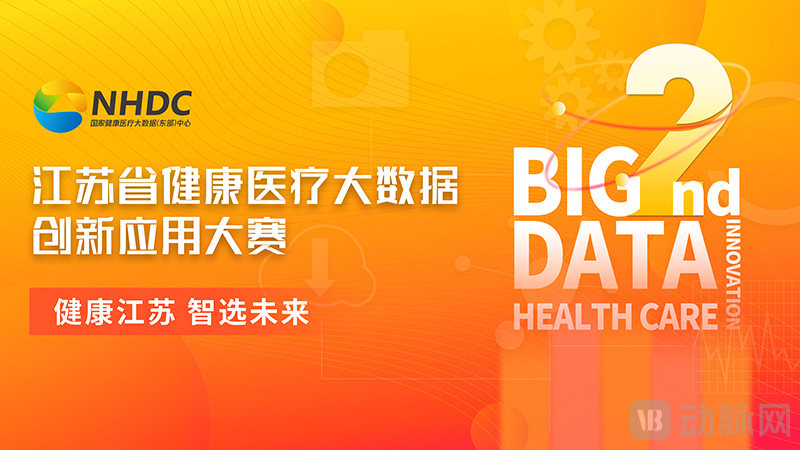
Registration Has Opened for the 2nd Jiangsu Province Health and Medical Big Data Innovation Application Competition (datadriver.nhdc.cn)
Based on the above summary, the 2nd Jiangsu Provincial Health and Medical Big Data Innovation Application Competition has recently kicked off. Compared with previous editions, this year’s competition has made progress in several aspects: First, there are more participating supervisory authorities, and the event is held at a higher level. Second, the data resources provided are greater in volume and dimensionality, with improved data quality. Third, the competition is equipped with more data tools and algorithmic capabilities, such as privacy-preserving computation, resulting in a higher level of intelligence in public service delivery. Fourth, the competition tracks are divided into medical care and medical insurance, offering greater specificity, while special zones for information technology application innovation (Xinchuang) and universities have been established to encourage domestic, autonomous, and controllable solutions.
In addition,The total prize pool for the competition has also been upgraded, with a proposed total of 840,000 yuan. Of this amount, 660,000 yuan is allocated to the two main tracks, and 180,000 yuan to the two special zones. Winning teams will be given priority inclusion in the “Cloud Ecosystem Partner Pool,” qualify for talent programs such as the “Longcheng Elite Plan,” and receive preferential recommendations for settlement and development at entrepreneurial hubs like the Changzhou Digital Economy Industrial Park. They will also enjoy startup support funds, office rent subsidies, cloud computing resource rewards, and professional incubation services., continuously optimizing the new ecosystem of symbiosis and interconnectivity in the health and medical big data industry.
The marketization of healthcare data elements is accelerating. Rather than fighting alone in this wave of industrial transformation, it is more advisable to seize the opportunity, follow the lead of pioneers, and join the vanguard of healthcare data element marketization. By gaining early insights and securing a strategic position through practical competition experience, you can prepare for the imminent arrival of the data element market era.
Registration for the competition is currently open and will close on January 31. We welcome everyone to visit the official registration website (datadriver.nhdc.cn) to participate in the registration.
References:
Hu Wen, Shanghai Academy of Social Sciences’ Institute of Information and Postdoctoral Research Station in Applied Economics; People’s Daily Online – Theory Channel: “Review and Outlook of China’s Digital Economy Development”
Qiao Yeqiong, People’s Daily Online: “CPPCC Member Zhao Hong: Proposes Encouraging Multi-Stakeholder Participation to Advance Health and Medical Data Sharing”