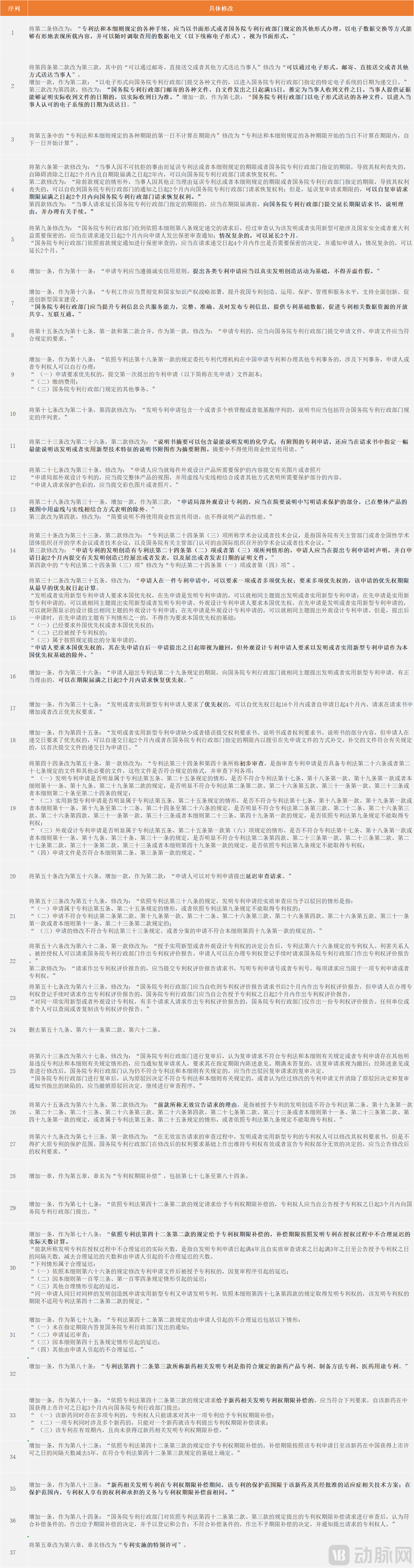
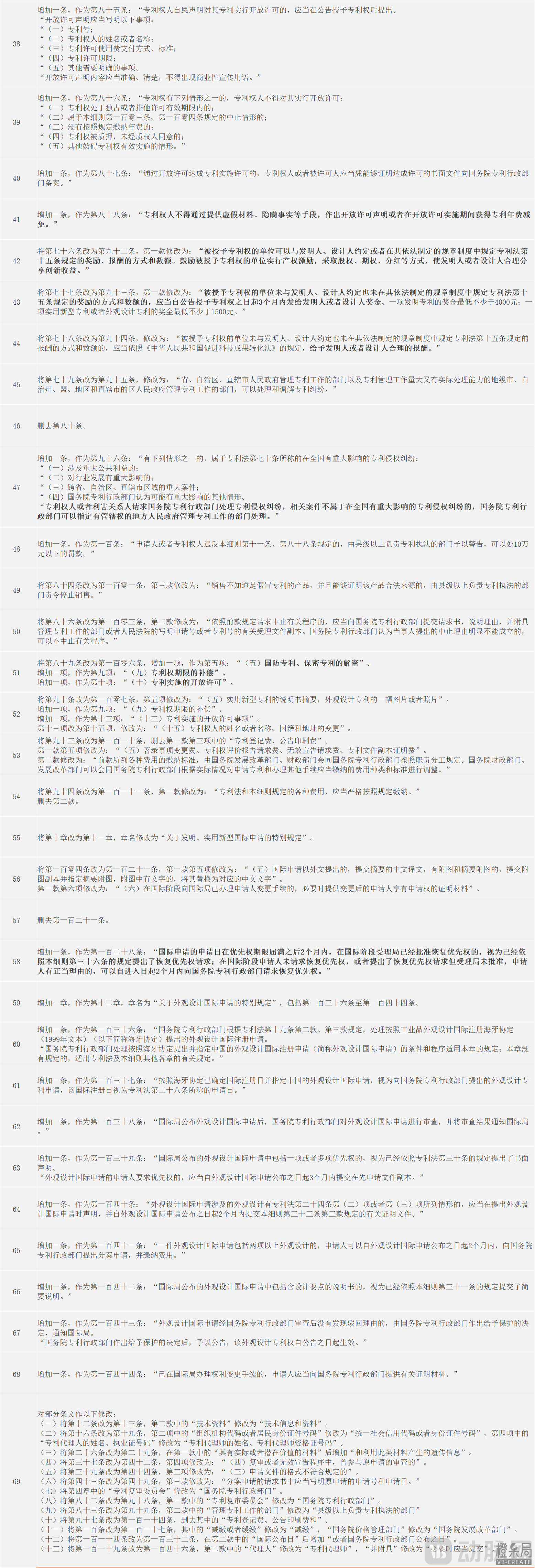
69 Key Amendments in China's Revised Patent Law Implementing Regulations Signal Strong Support for Innovation and Commercialization
On the evening of December 21,"Implementing Regulations of the Patent Law of the People's Republic of China (Revised in 2023)"(hereinafter referred to as the “Detailed Rules”) has flooded WeChat Moments. Beyond mere reposts, various sectors have also remarked, “This is a major move.”
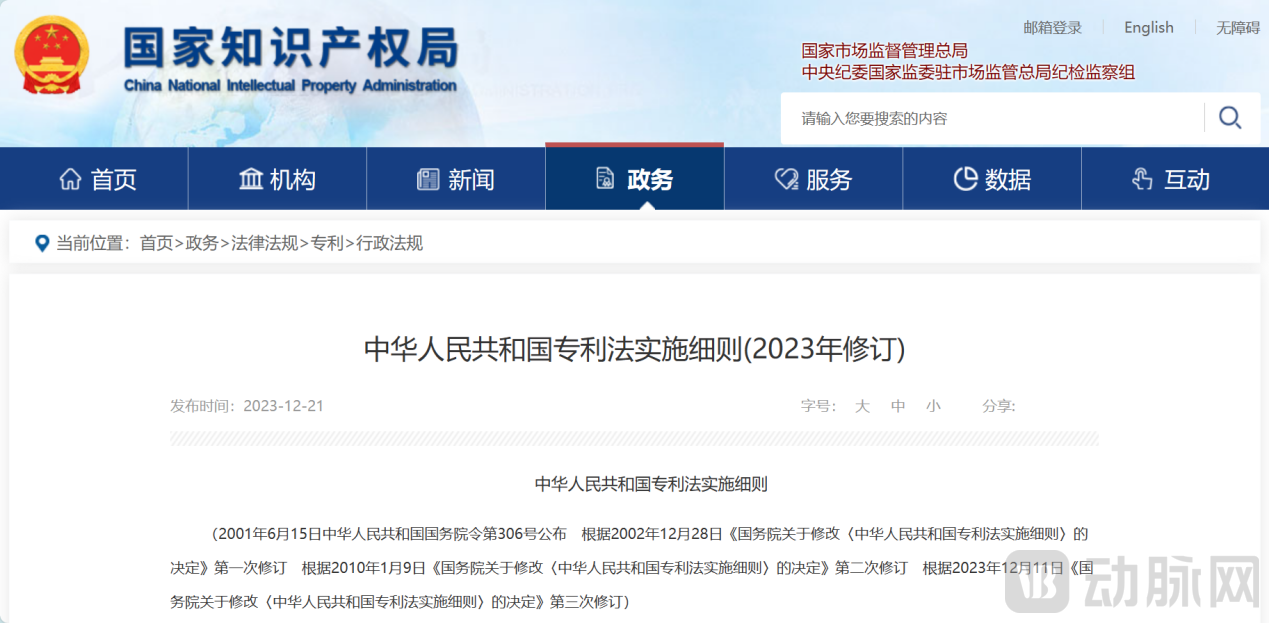
This marks the third revision of the Detailed Rules (with the previous three revisions occurring on December 28, 2002; January 9, 2010; and December 11, 2023), which primarily involves partial adjustments to the rules concerning five aspects: patent application, examination, protection, and services. This revision sends a clear signal encouraging patent creation, commercialization, and practical application. Beyond the spotlight of public opinion, what new opportunities are eagerly awaiting discovery?
69 Revisions, 3 Major Signals
As of 2023, China’s Patent Law has been amended four times, with each revision addressing deficiencies identified in prior practical implementation. As an interpretation and supplement to the Patent Law, the Implementing Regulations have followed a consistent evolutionary trajectory aligned with the Patent Law.
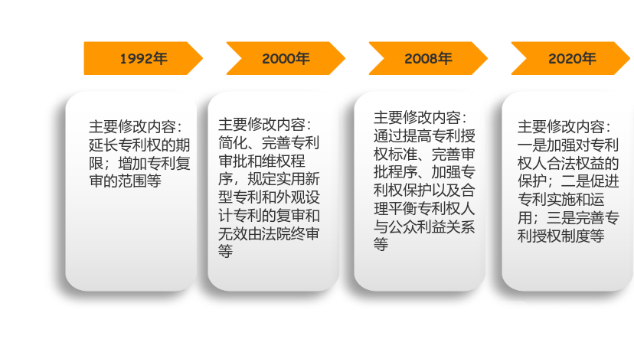
“Patent Law” Amendment Timeline and Major Changes
In the newly released Detailed Rules, Chengguo Bureau identified a total of 69 revisions, marking the most substantial round of changes among the three amendments. Meanwhile, the new Patent Implementation Regulations have sent three major signals to the outside world:Patent applications have become more convenient, examination has become more rigorous, and rewards have been increased.。
1Optimize the Patent Application Process to Facilitate Patent Acquisition for Applicants
The Detailed Rules emphasize the format of application materials and the method of submission.“Convenience”Among these provisions, the Detailed Rules regard “data messages that can tangibly represent their contained content through electronic data interchange or other means and can be retrieved and consulted at any time” as being in written form, thereby relieving applicants of the burden of submitting paper documents. Regarding the method of submission, applicants may “submit materials via electronic means, by mail, by direct delivery, or through other methods.”
In addition, the Detailed Rules repeatedly mention“Priority”, for example, “An applicant may claim one or more priorities in a single patent application,” and “If an applicant exceeds the time limit prescribed in Article 29 of the Patent Law... but has justifiable reasons, they may request restoration of the right of priority within two months from the date of expiration of the time limit,” thereby refining the system related to the right of priority.
2Improve the Patent Examination System and Enhance the Quality of Patent Examination
The Detailed Rules require patent applications and examinations to “Based on genuine invention and creation activities; falsification is strictly prohibited.”. The scope of examination includes, in addition to the request for reexamination, other circumstances where the patent application clearly violates the relevant provisions of the Patent Law and its Implementing Regulations. Meanwhile, the time limit for confidentiality examination is further adjusted, wherein “The applicant may request deferred examination of the patent application.demand.”
3Strengthen Incentives for Patent Creation to Promote the Generation, Conversion, and Application of Patents
“Detailed Rules” “Encourage entities granted patent rightsImplement property rights incentives through mechanisms such as equity, stock options, and profit-sharing., enabling inventors or designers to reasonably share in the benefits of innovation,” with various reward mechanisms further stimulating inventors’ enthusiasm. As patents emphasize practical application, the Implementing Regulations refine the open licensing system, explicitly specifying requirements for declarations of open license, circumstances under which open licensing may not be implemented, and adding “Special License for Patent Implementation“relevant rules and regulations, etc.” It also emphasizes “making an open license declaration or obtaining reductions in patent annual fees during the implementation period of the open license,” thereby encouraging inventors to commercialize their patents.
Market Implementation: The Detailed Rules Address Urgent Needs
It is undeniable that the revision of the “Detailed Rules” will bring more opportunities for the translation of scientific and technological achievements. However, the transformation of such achievements is a complex and long-term process involving numerous stakeholders. From different perspectives, what are their differing insights?
Shen Yun (a pseudonym), a technology transfer professional specializing in biomedicine, stated that his primary focus in this revision of the detailed rules is patent term extension: “Future new drug R&D and commercialization will have more ample time.”
It is well known that new drugs undergo a very lengthy process from technological research and development to market launch. Leaving aside the technological development process from scratch, even after patent authorization, various approvals and trials must still be completed; marketing applications may not be filed until ten or even twenty years later.
Therefore, the 20-year patent protection period is far from sufficient for new drug development. For some newly launched drugs, the remaining patent protection period may be less than 10 years, with some having only 7 to 8 years left. This outcome is unfair to pharmaceutical companies that have incurred substantial costs, and the inadequate level of protection fails to effectively incentivize subsequent innovators.
In the latest revised detailed rules, a new concept of patent term compensation has been specifically introduced, defined as the number of days between the patent application date and the date when the new drug receives marketing approval in China, minus five years. This can be simply understood as follows:Patent protection for innovative drugs can be extended by up to five years.
This measure not only extends the market lifecycle of new drugs but also encourages and supports the development of domestic pharmaceutical companies rooted in original research and development (R&D) technologies. In the pharmaceutical sector, conflicts between originator drugs and generic drugs have long persisted, alongside disputes over patent term extensions for newly launched drugs. As China’s biopharmaceutical industry enters a critical period of transition toward localization, it has become imperative to encourage the filing and commercialization of patents based on original R&D technologies.
In addition, Li Xiao (a pseudonym), who is engaged in the commercialization of scientific and technological achievements from universities, has paid close attention to special licenses for patent implementation. This concept was specially introduced in the fourth amendment to the Patent Law in 2020, and these Implementing Regulations specify the detailed procedures and conditions for such special licenses.
Prior to the introduction of special licenses for patent implementation, patent holders who possess patents but do not wish to start their own businesses can achieve the commercialization of their achievements through patent assignment or by contributing the patent as equity at a valued price. However, due to the change in ownership, this approach may affect researchers’ further development of the patent and even subsequent project research.
Therefore, many patent holders also choose to commercialize their patents through licensing. However, non-exclusive licenses require one-on-one negotiations between the patent holder and each enterprise or project team seeking access, with joint applications filed to finalize the arrangements. This process must be repeated for different enterprises. Such cumbersome procedures not only waste time for both parties but also delay the market launch and development of patented products, further exacerbating the difficulties researchers face in commercializing their innovations and the challenges enterprises encounter in acquiring these technologies.
The newly introduced special licensing provisions stipulate that researchers (patent holders) may publicly issue open licensing declarations, specifying details such as the patent number, name of the patent holder, royalty rates and payment methods, and license term. Enterprises seeking to obtain the patent may submit an application upon meeting the specified conditions.
Overall, patent holders are no longer required to engage in repetitive “patent licensing cycles,” and licensing negotiations have shifted from a “one-on-one” to a “one-to-many” model. This measure removes barriers to patent licensing, reduces transaction costs for both licensors and licensees, not only revitalizes the stockpile of patents held by universities and research institutions, but also further accelerates the commercialization of scientific and technological achievements.
Conclusion
As 2023 drew to a close, the release of the Detailed Rules injected new vitality into the translation market and sparked a sense of anticipation among all market participants.
Policies serve as a bellwether for market development. The revisions to the Detailed Rules signal that the industry has entered a golden age, with measures such as streamlining patent application processes, improving mechanisms for handling and mediating patent disputes, and strengthening patent services all sending a clear message of encouragement for patent creation, commercialization, and application.
But this is only the beginning. How to maximize the protection of intellectual property rights and promote the practical application of scientific research achievements remains one of the important issues in the development of China's intellectual property sector. As 2023 draws to a close and 2024 approaches, let us go all out with high hopes.