

MGI's αLab and Proprietary Solutions Gain Competitive Edge in the Emerging Smart Laboratory Market, as Highlighted in the 2023 Smart Laboratory Industry Report

MGI
Gene Sequencing Instruments and Related Reagent & Consumables R&D Manufacturer
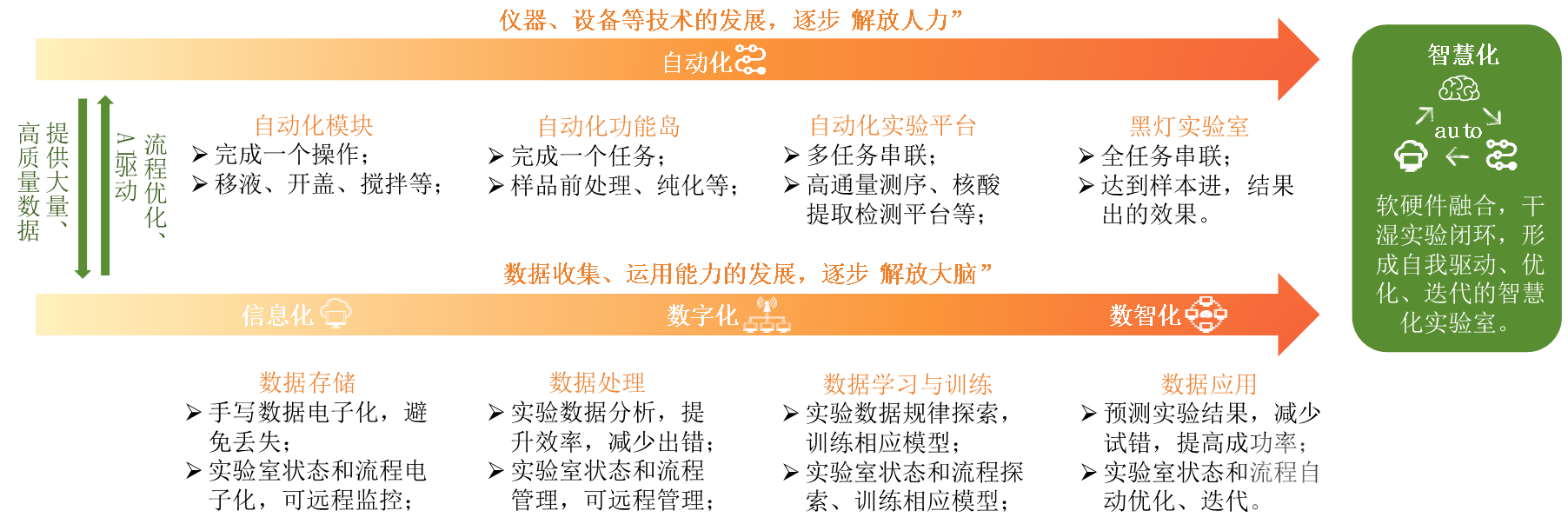
In the post-pandemic era, following a widespread “education” on the rapid intelligent transformation of clinical laboratories, confidence in and latent demand for laboratory intelligence within the life sciences sector have been galvanized. This has driven market expansion and attracted numerous participants to the field. As the sector rapidly expands, the industry has developed a clearer understanding and consensus on laboratory intelligence—evolving from automation of isolated processes to truly liberating both manpower and cognitive load, with intelligent solutions continuously raising the ceiling for cost reduction and efficiency enhancement in laboratories.
According to VCBeat’s “2023 Smart Laboratory Industry Report,” Series A financing currently accounts for the largest proportion (40%) among smart laboratory service providers, indicating that the smart laboratory sector remains in its early stages. A more detailed breakdown reveals that companies focused on the intelligent development of clinical testing laboratories have generally reached later financing rounds, with market maturity rising rapidly in the post-pandemic era and initial signs of intense competition emerging. As a leader in the intelligent development of clinical testing laboratories, how can MGI stand out in this saturated market?
According to the "2023 Smart Laboratory Industry Report," China currently has over 3,000 installed laboratory automation lines, with a penetration rate exceeding 80% in tertiary hospitals; some hospitals have even deployed multiple lines. Given the current trend, the remaining market share for automation lines is less than 50%. At an annual installation rate of more than 500 lines, the domestic clinical laboratory testing automation market is expected to approach saturation within the next 3–5 years.In the face of overcapacity, enterprises have adjusted their product strategies, with mainstream approaches focusing on deep AI integration and the development of open-platform products.
 Source: VCBeat, “2023 Smart Laboratory Industry Report”
In the past, many automation products were rapidly assembled from components sourced from various suppliers in a bid to capture market share. However, in the future, independently developed products featuring core technologies will demonstrate increasingly strong competitiveness. On one hand, proprietary technology maximizes product flexibility and iteration speed, enabling companies to keep pace with clinical demands and deliver high-quality services, thereby building a strong product reputation and enhancing brand influence. On the other hand, independently developed products offer controllable costs and greater scope for customization and extended services.
MGI Has Built a Robust Foundation of Technology and Patents. As of September 30, 2023, MGI held 736 valid patents domestically and internationally in the fields of gene sequencing and digital technology. Leveraging its independently developed and controllable core foundational technologies, MGI has established three core business lines: a comprehensive portfolio of sequencers covering all throughput levels, a laboratory automation product line, and an emerging business line that includes mobile laboratories and remote ultrasound robots.
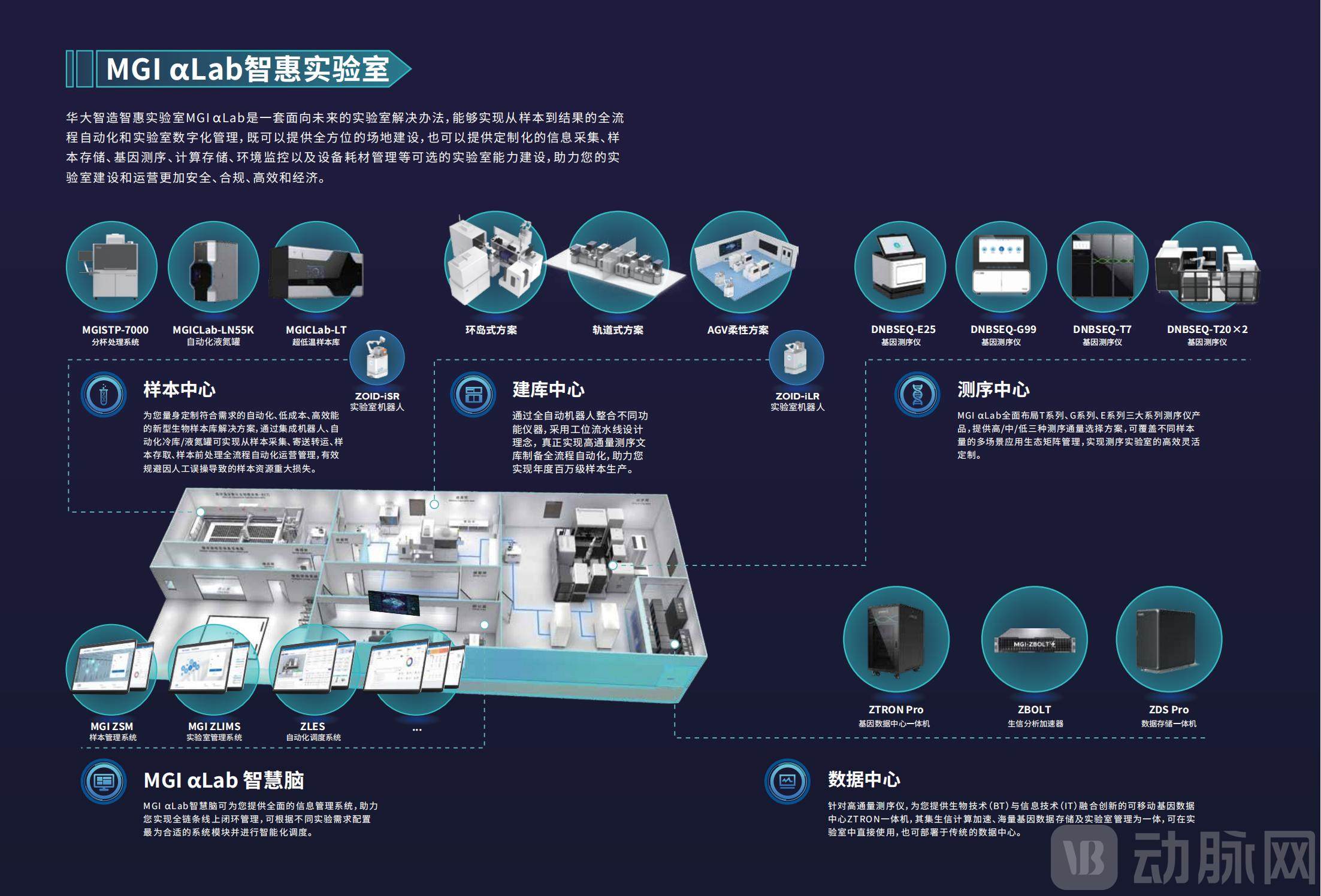
In the field of smart laboratories, MGI has successfully created the self-driven unmanned laboratory “ɑ Lab” by leveraging its independently developed automation platforms—including sample pre-processing, automated nucleic acid extraction, automated sample preparation, and integrated library preparation and sequencing systems—combined with digital management systems and artificial intelligence technologies.
Highly integrated and stable automation products serve as the robust physical foundation, while the accompanying high-intelligence software acts as their soul. An open-ecosystem automation product must not only be compatible with third-party hardware but also ensure seamless hardware operation through unified scheduling software. Developing a control and scheduling system that optimally orchestrates each operational stage, monitors status in real time, logs operational data, and makes dynamic adjustments will significantly expand the applicability of automation products and enhance their ease of use and user experience.
Building on the foundation of paperless and unmanned operations achieved through automated products, flexible robotics, and Laboratory Information Management Systems (LIMS), MGI has integrated AI algorithms into laboratory workflows. Leveraging modules such as natural language processing, machine learning, computer vision, and data processing and analysis, αLab can autonomously evaluate optimal operational configurations and optimize experimental schedules based on throughput and output requirements. It comprehensively manages the core elements of the laboratory—personnel, equipment, materials, methods, environment, and measurement—to create a self-driven “lights-out laboratory.”
At the data and device levels, α Lab can achieve comprehensive informatization:
At the automation level, αLab can achieve a high degree of unmanned operation:
This September, αLab successfully established its presence at the Hong Kong Science Park. As the first laboratory deployed with integrated AI capabilities, αLab is tasked with advancing MGI’s focus on cutting-edge AI technology and application research and development. Through AI algorithm R&D, data analysis, and machine learning model development, MGI will continue to drive the integration of AI into its related products and services.
As previously mentioned, the automated assembly lines in clinical testing laboratories are currently approaching saturation, with some hospitals even operating more than one line, most of which are deeply tied to leading multinational corporations. Therefore, apart from passively waiting for the opportunity to replace existing systems in tertiary medical institutions with domestically produced alternatives upon their expiration,Product Penetration into Lower-Tier Markets: A More Proactive Market-Oriented Strategy for Smart Laboratory Manufacturers. It is reported that many county-level people's hospitals and secondary hospitals in China are actively introducing automation lines after expansion and renovation, and hospital renovation or new construction presents the best opportunity for domestic smart laboratory manufacturers to enter the incremental market.
However, this opportunity also imposes higher demands on manufacturers’ comprehensive capabilities. Hospitals are increasingly seeking partners that can deliver holistic solutions for smart clinical laboratories, rather than merely providing individual automated products. These comprehensive solutions encompass instruments, equipment, consumables, materials, automated workflow lines, and corresponding digital management systems. Consequently, enterprises possessing the capability to fully develop smart laboratory ecosystems, built upon a foundation of automation expertise, will demonstrate stronger competitiveness in hospital renovation and new construction projects.
For highly flexible research laboratories, automation is entering the second half of its competitive landscape.The core competitiveness of the enterprise lies in building foundational modules that cover all laboratory operations, thereby facilitating seamless integration and high-quality fulfillment of complex and dynamic experimental needs, and providing customers with customized laboratory services.
Leveraging its comprehensive product portfolio and extensive experience in digital laboratory infrastructure, MGI rapidly deployed numerous laboratories during the pandemic, including various forms of mobile laboratories—such as container-based, bus-style, and air-supported membrane structures—as well as fixed-building laboratories. Furthermore, MGI’s “ɑ Lab Smart Laboratory” integrates intelligent building systems, smart equipment, digital quality management software, and laboratory application apps to achieve end-to-end automation from sample to result and enable comprehensive digital laboratory management.
ɑ Lab provides comprehensive laboratory infrastructure construction, as well as customizable capabilities in data acquisition, sample storage, gene sequencing, computational storage, environmental monitoring, and equipment and consumables management. These solutions help make laboratory construction and operations safer, more compliant, efficient, and cost-effective. As a result, ɑ Lab stands out in differentiated application scenarios that require building smart laboratories “from scratch,” such as in universities, research institutes, newly established hospitals, disease control and prevention centers, and customs authorities.
In the field of smart laboratories, MGI will continue to enhance the intelligence level of its products through automation and standardization, accelerate data-driven decision-making, and improve overall industry efficiency via data analysis and pattern recognition. In the future, building on its three core business lines, MGI will continue to empower scientific research, drive advancements in cohort genomics, cytomics, and spatial omics, and adapt to diverse industrial applications through new solutions such as the “Smart Lab.” By fostering collaborative innovation and development partnerships, MGI aims to build a win-win industrial ecosystem.