

Zhongtian Medical: A Pioneer in Pan-Vascular Interventions Expanding into Peripheral Markets with Focus on Three Key Segments

Zenith Vascular
Cerebrovascular Device R&D and Manufacturer
Peripheral Intervention: An Untapped Blue Ocean Market Emerging as a Hotspot for Global Medical Device CompaniesPeripheral intervention represents an untapped blue ocean market and is rapidly becoming a competitive focal point for medical device companies both in China and abroad. China alone has over 100 million patients suffering from peripheral vascular diseases. Historically, the penetration rate of peripheral interventional procedures remained low due to the low mortality associated with peripheral vascular diseases and a lack of available clinical treatment devices. However, with continuous improvements in living standards and the promotion of tiered diagnosis and treatment systems, peripheral interventional procedures are increasingly being adopted at grassroots healthcare levels. This shift has driven rapid growth in clinical treatment demand, thereby expanding the medical device market.
Global medical device giants are increasingly investing in the peripheral intervention sector. Boston Scientific has successively acquired Devoro, Obsidio, and Acotec (Xianruida) in the peripheral field, with its peripheral intervention business generating $538 million in revenue in the third quarter of 2023. Abbott acquired Cardiovascular Systems, a leader in peripheral rotational atherectomy, for $890 million. Domestic and international companies specializing in vascular interventions are also entering the market and expanding their peripheral intervention product portfolios. Leveraging the shared underlying technologies of vascular intervention therapies, these new entrants possess a solid foundation for growth and are emerging as a significant force in the peripheral intervention market.
In the United States, Penumbra, a dark horse with a market capitalization of tens of billions, first entered the neurointerventional field and later expanded into peripheral interventions. Thrombectomy aspiration is its core business, and currently, the company's peripheral segment has become the main driver of its revenue growth. In China, Zenith Vascular, which started with neurointerventional products, is accelerating its layout in the peripheral intervention field and has made significant progress this year.Zenith Vascular™ Pro Peripheral Thrombectomy Aspiration Catheter, Zenith Vascular™ Peripheral Embolus Removal Device, and Negative Pressure Aspiration Device have all received approval, forming an innovative solution for peripheral thrombus aspiration.; recently entered into a strategic partnership with Inflow Medical,Become the exclusive general distributor of its Inno-Xmart venous stent system in mainland China。
The peripheral intervention market is experiencing rapid growth, as evidenced by the year-over-year revenue increases of relevant publicly listed companies; however, the current rate of domestic substitution remains low. International giants such as Boston Scientific and BD (Becton, Dickinson and Company) hold first-mover advantages and dominate the major market segments. These companies typically adopt platform-based strategies and possess substantial financial strength, enabling rapid product commercialization through a combination of in-house R&D and mergers and acquisitions. In contrast, China’s peripheral intervention market developed later, with most market entrants being start-up enterprises.
Zenith Vascular believes: “The advantage of multinational giants lies in their platform-based operations, but like aircraft carriers, they are difficult to maneuver; thus, they may not be as agile as innovative startups in initiating the R&D of novel technologies. Meanwhile, by focusing their business on the domestic market and addressing clinical needs, Chinese manufacturers can collaborate more efficiently with local experts in medical-engineering partnerships to develop products better suited to the vascular anatomy of the Chinese population.”
As a company that frequently innovates in the field of neurointervention, Zenith Vascular has extensive experience in addressing issues such as vascular stenosis and thrombosis.We have established eight major technology platforms centered on multi-layer braided catheters, laser cutting, precision braiding, and drug coating, and have launched multiple neurointerventional devices that are widely used in clinical practice.Compared with peripheral vessels, neurovascular vessels are more delicate and tortuous, making interventional procedures more challenging and requiring more sophisticated and precise devices. Leveraging its foundational technology platform and product commercialization experience, Zenith Vascular can rapidly launch products tailored to clinical needs in China. The Zhongtian Tianhang™ Pro Peripheral Thrombectomy Catheter is a successful example of such product translation, completed within two years.
Peripheral interventional surgical devices encompass a wide variety of products and numerous niche segments, granting greater competitiveness to enterprises that offer more comprehensive solutions. By addressing clinical pain points and leveraging their own technological advantages,Zenith Vascular focuses on three key segments—peripheral thrombectomy, interventional treatment for venous stenosis, and aneurysm embolization—providing comprehensive solutions.“The company’s focus is on developing small yet elegant products, achieving deep expertise and comprehensive coverage in its therapeutic areas.”
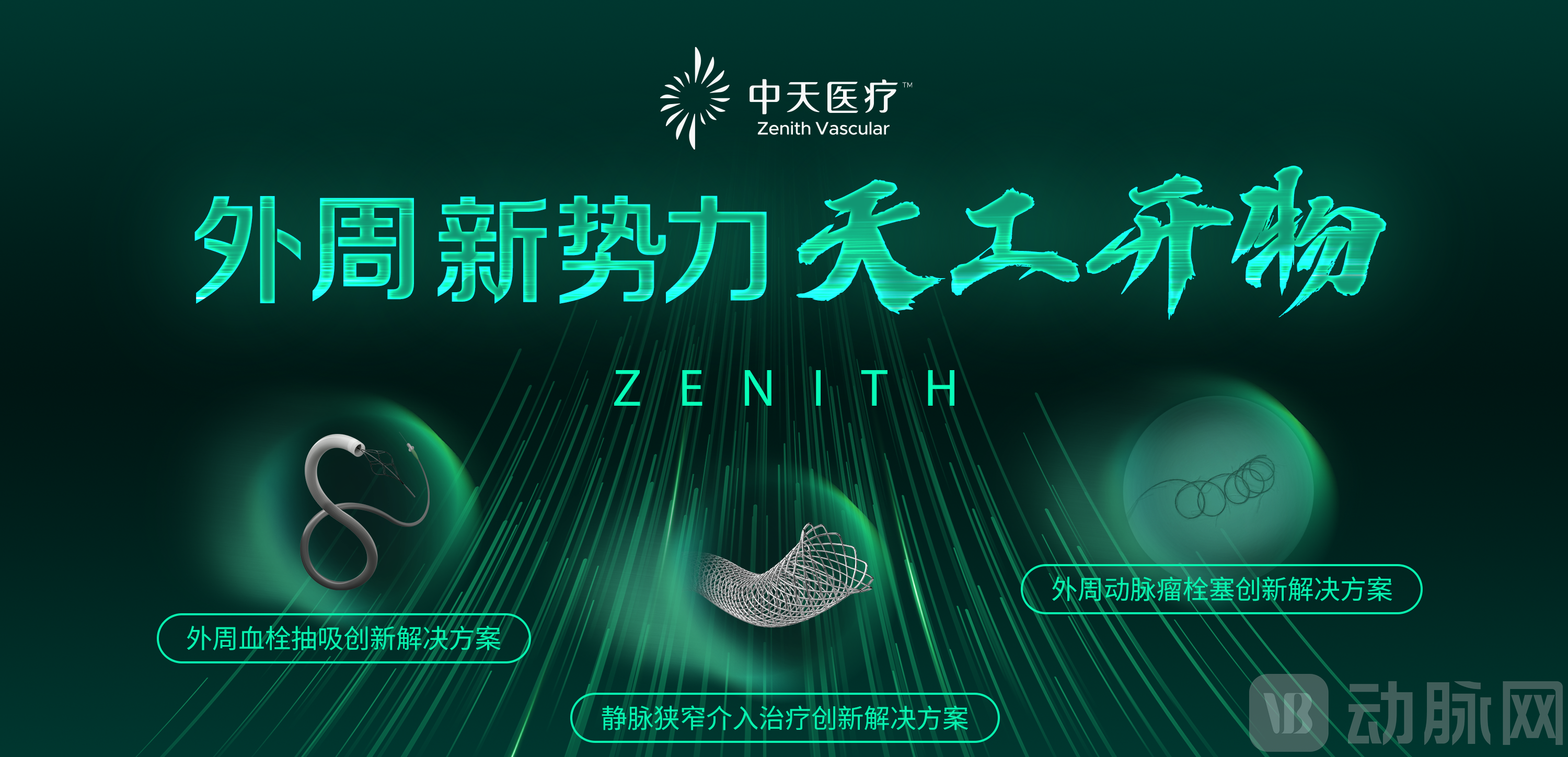
Innovation is the key for Zenith Vascular to unlock the peripheral intervention market. Centered on peripheral thrombus aspiration, Zenith Vascular offers an innovative “aspiration + fragmentation” solution.
With the rising incidence of conditions such as deep vein thrombosis, pulmonary embolism, and acute lower limb ischemia, the clinical demand for peripheral thrombus aspiration has grown rapidly. Deep vein thrombosis commonly occurs in the lower extremities, and dislodged thrombi can lead to pulmonary embolism, which carries high rates of mortality and disability. Pulmonary embolism is insidious and life-threatening; its case fatality rate ranks third after acute myocardial infarction and cancer, with mortality exceeding 50% in severe cases. According to research published by Academician Wang Chen in the journal CHEST,From 2007 to 2016, the number of cases of deep vein thrombosis and pulmonary embolism in China continued to rise, with the overall number increasing by more than fivefold.。
Acute Lower Limb Ischemia refers to a rapid reduction in limb perfusion, predominantly associated with occlusion of the lower extremity arteries. As a common critical condition in vascular surgery, acute lower limb ischemia is characterized by sudden onset, severe ischemia, and rapid progression, resulting in high rates of mortality and disability. With the intensifying aging of the population and the increasing prevalence of risk factors such as hypertension and hyperlipidemia, the incidence of acute lower limb ischemia in China is also rising rapidly.
For peripheral arterial and venous thrombosis, common clinical treatment modalities include catheter-directed thrombolysis and mechanical thrombectomy. The former requires prolonged catheterization and is associated with an increased incidence of postoperative bleeding complications, whereas the latter can rapidly remove thrombi within a short period and can be combined with thrombolytic therapy to enhance thrombolytic efficacy. Due to its minimally invasive and highly efficient advantages, the clinical adoption rate of mechanical thrombectomy is gradually increasing, and it has been recommended by both domestic and international clinical guidelines.
As recommended in the “Guidelines for the Diagnosis and Treatment of Deep Vein Thrombosis (Third Edition),” thrombolysis is the preferred initial treatment for patients with acute-stage central or mixed deep vein thrombosis who are in good general condition, have an expected survival of ≥1 year, and present a low risk of bleeding. Where conditions permit, mechanical thrombectomy may be combined with thrombolysis for thrombus removal.
As an important branch of mechanical thrombectomy, thrombus aspiration has also achieved rapid development in recent years, with domestically produced peripheral thrombus aspiration systems being successively approved. However, the current penetration rate of peripheral thrombus aspiration remains far from sufficient. In the management of fresh thrombi and free-floating old thrombi, simple thrombus aspiration can achieve favorable therapeutic outcomes, butFor large, organized thrombi and mural thrombi, the thrombus aspiration system may encounter issues such as catheter occlusion and thrombus embolization during processing, which can compromise procedural outcomes.。
Zenith Vascular pioneered the innovative "aspiration + fragmentation" solution in China. During clinical procedures, the Zenith Tianhang™ Pro Peripheral Thrombus Aspiration Catheter, with its large lumen and high aspiration force, can rapidly remove large, organized thrombi. Meanwhile, the Zenith Tianji™ Peripheral Embolus Removal Device advances and retracts at the proximal edge of the main occlusion using catheters of varying sizes to fragment thrombi that may obstruct the catheter, thereby further enhancing thrombectomy efficiency.
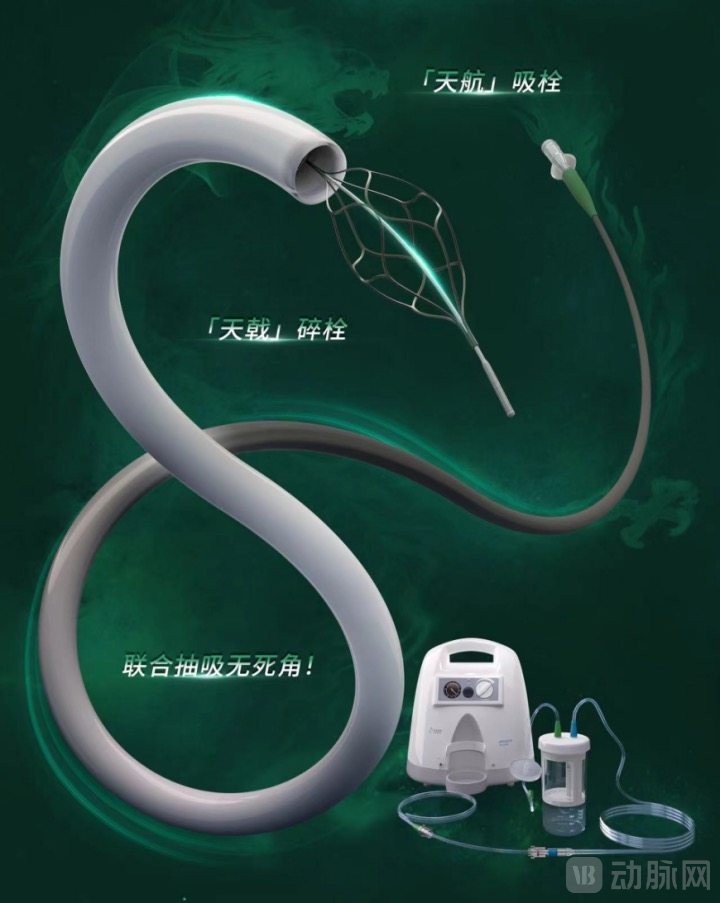
Zenith Vascular’s Innovative Solution for Peripheral Thrombus Aspiration
Zenith Vascular™ Pro Peripheral Thrombectomy Catheter adoptsSoft, Non-Traumatic Short Tip, reducing the risk of vascular intimal and valvular injury, and the designMultiple Aspiration Angles, with a straight tip and a 45° pre-shaped tip at the distal end, allowing adjustment of the thrombus aspiration direction to achieve 360° circumferential aspiration for easier removal of mural thrombi;The maximum inner lumen of the catheter can reach 0.139 inches., to accommodate a larger thrombus contact area and suction force; adoptMulti-segment Gradual Hardness Design and Ultra-slippery Patented Coating, smoother delivery; the entire catheter body adoptsDouble-Layer Braided Coil Structure, featuring excellent deliverability, support, and resistance to kinking and torsion.
Meanwhile, the catheter is available in various sizes ranging from 4F to 12F and lengths from 50 cm to 145 cm, meeting the thrombus aspiration needs at different anatomical sites. The accompanying negative pressure suction pump can continuously and stably deliver a vacuum pressure of -95 kPa, satisfying the requirements for high-volume thrombectomy. In addition, the Zenith Tianji™ Peripheral Embolus Removal DeviceAdopting a distal-closed nitinol self-expanding stent design, it can longitudinally cut thrombi, separate mural thrombi, and reduce catheter occlusion.。
Overall, Zenith Vascular’s innovative thrombectomy aspiration solution not only achieves technological breakthroughs and performance enhancements in the aspiration catheter itself but also improves thrombectomy efficacy and patient prognosis by adjusting the system design to incorporate a thrombus removal device, all without altering clinical operational procedures.This system is designed for a broader patient population and, in addition to deep vein thrombosis, acute lower limb ischemia, and pulmonary embolism, can also manage thrombi in other locations such as the upper extremity arteries and pulmonary arteries.。
The Zhongtian Tianhang™ Pro Peripheral Thrombectomy Catheter was approved in September this year, and the Zhongtian Tianji™ Peripheral Embolus Removal Device was approved in November. Peripheral interventional procedures are characterized by lower difficulty and risk, with an emphasis on local treatment and tiered diagnosis and treatment; thus, the vast primary care market remains to be tapped. Zenith Vascular will collaborate with clinical experts to promote innovative solutions for peripheral thrombectomy, extensively conduct clinical education, enhance the level of peripheral intervention at the primary care level, and achieve rapid market penetration through domestic distributor channels.
Currently, Zenith Vascular is rapidly advancing its three major innovative solutions in peripheral interventions.
For the embolization treatment of peripheral aneurysms, existing coil products achieve local controllability, whereasZenith Vascular is developing fully controllable peripheral detachable coils that utilize a mechanical detachment mechanism. These coils can be repeatedly advanced into and withdrawn from microcatheters, and are available in various models and shapes to suit the treatment of different types of aneurysms.. The product is expected to be approved for market launch next year.
For interventional treatment of peripheral venous stenosis, Zenith Vascular serves as the exclusive distributor for Inno-Xmart Venous Stents from Inflow Medical. As the first nickel-titanium alloy braided venous stent approved in China, both parties will jointly promote the commercialization of this product.
Furthermore, Zenith Vascular is developing a one-stop innovative solution for pulmonary embolism, with the thrombectomy aspiration system being a key component.
As clinical demands in peripheral interventions become increasingly diverse and centralized procurement of high-value consumables approaches, the advantages of domestic innovation are becoming more prominent. A comprehensive device solution is more conducive to building a corporate brand, and on this basis, efficient product commercialization is also key. With domestic breakthroughs being achieved successively in multiple sub-segments of the peripheral intervention market, companies that obtain regulatory approval first will gain a greater competitive advantage.
Based on eight major technology platforms and abundant industrial resources,Zenith Vascular Rapidly Enhances Its Industrial Layout Through “In-House R&D + External Collaboration,” with Product Lines Possessing Sustainable Development Advantages。
In the future, Zenith Vascular will continue to deepen its presence in the peripheral intervention market, refine comprehensive solutions for specialized segments, launch innovative products such as catheters, guidewires, and balloons, and conduct extensive clinical education programs. The peripheral intervention business is poised to become Zenith Vascular’s second growth curve, driving the company to establish a hallmark of innovation in the field of vascular intervention.
Reference: “Trends in Hospitalization and In-Hospital Mortality From VTE, 2007 to 2016, in China”—CHEST
“Guidelines for the Diagnosis and Treatment of Deep Vein Thrombosis (Third Edition)”