

BayShadow Tech Files IPO Prospectus: Pioneering High-Resolution, Brain-Dedicated PET/CT Imaging with Proprietary "Spectral-Splitting" Detector Technology
Positron Emission Tomography (PET), as a highly sensitive nuclear medicine molecular imaging technique, operates on the principle that radionuclide-labeled agents injected into the body redistribute through metabolic processes and emit positrons during radioactive decay. The annihilation of positrons and electrons produces two gamma rays traveling in opposite directions, which are detected by high-resolution PET detector systems. Computer-based image reconstruction generates PET images that reflect the metabolic activity and distribution of the radionuclide-labeled agents in various tissues within the body.
Nowadays, PET has become an indispensable imaging modality in clinical practice. This technology plays a crucial role in the early detection and precise diagnosis and treatment of diseases such as cancer, cardiovascular diseases, and neurological disorders.
To detect metabolic abnormalities in specific human tissues at an early stage while meeting clinical diagnostic requirements, PET systems must simultaneously possess high spatial resolution and sensitivity. Traditional detectors can only provide the two-dimensional coordinates of gamma photons and cannot output the depth-of-interaction information within the detector, resulting in limited spatial resolution and suboptimal image quality.
As a key enterprise incubated by the Shenzhen Brain Science and Technology Industry Center, Baying Technology (Shenzhen) Co., Ltd. (hereinafter referred to as “Baying Technology”) has leveraged its nearly 20 years of technical accumulation in the field of molecular imaging to overcome core technological challenges in this area. The team has completed the design of a novel detector with high depth-of-interaction (DOI) measurement capability—a key indicator of image clarity—achieving sub-millimeter spatial resolution. This advancement effectively eliminates image artifacts and enhances image quality. For both clinical applications and basic scientific research, this technology not only significantly improves imaging accuracy but also enhances system sensitivity. Consequently, it reduces the required dosage of injected tracers for imaging, thereby lowering clinical detection costs and alleviating the disease burden on patients.
PET/CT is a medical imaging technology that synergistically integrates anatomical and functional information, enhancing the accuracy of lesion localization while reducing examination time, thereby improving clinical capability for qualitative diagnosis of lesions. Due to its synergistic effect, often described as “1 + 1 > 2,” PET/CT, although not commercially launched until late 2000, had already captured 65% of the entire PET market share by 2003.
After solidifying its core technological foundation, WanYing Technology has pursued a dual strategy of “research + clinical” development, focusing its technology on the specialized tracks of brain-dedicated PET/CT and small-animal PET/CT. Currently, WanYing Technology has successfully commercialized a range of research-oriented products, including the high-resolution small-animal PET system (Bit series), the high-resolution small-animal PET/CT system (Super series), laboratory anesthesia machines, and injection platforms.
The high-resolution small-animal PET/CT system (Super Series) is a concrete embodiment of Wanying Technology’s core technologies. This system features five key characteristics: sub-millimeter image resolution, ultra-high sensitivity, ultra-fast full-field-of-view imaging, dynamic imaging with precise quantification, and integrated real-time monitoring with coordinated anesthesia and temperature maintenance.
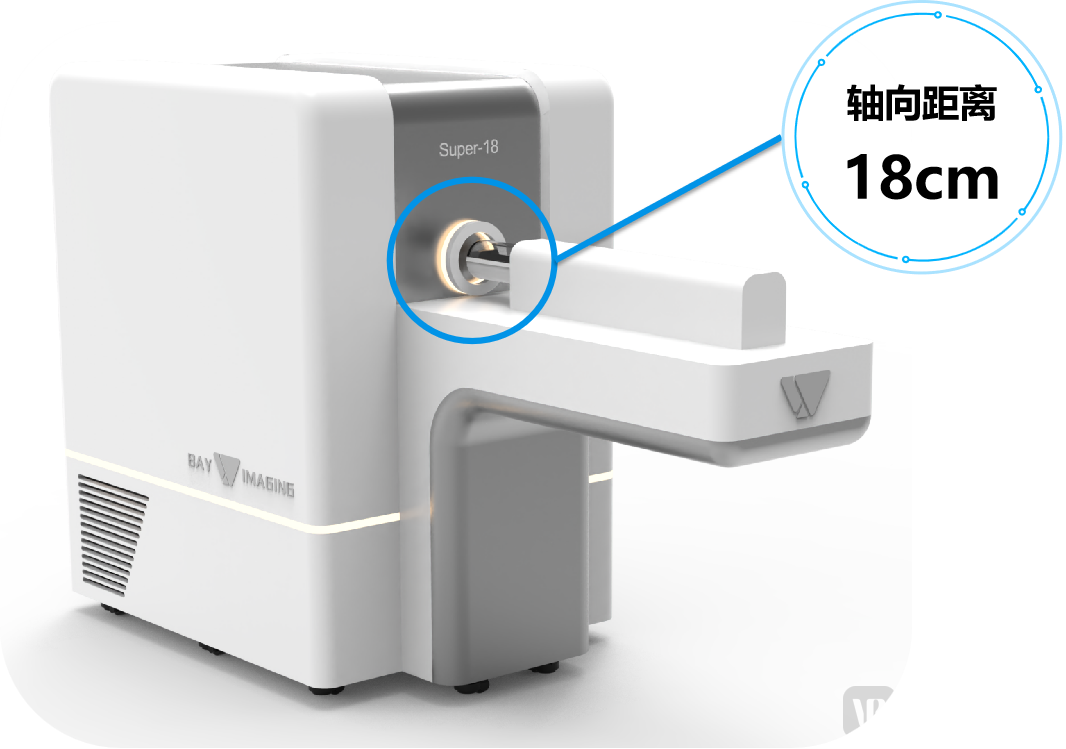
Super-18 Micro PET/CT
This system has achieved sub-millimeter spatial resolution across the entire field of view for the first time.
Equipped with advanced detectors and an optoelectronic coupling system, the platform enhances system sensitivity by more than 10%, enabling the observation and quantification of subtle metabolic differences under low-dose imaging conditions. This allows for accurate assessment of drug biodistribution in small animals, providing richer image details for key medical fields such as cancer, cardiovascular diseases, and neurological disorders in both research and clinical settings.
18-cm axial field-of-view single-bed scanning enables simultaneous acquisition of high-quality whole-body images for up to eight mice or a single rat in one scan. The software employs a dual-system configuration to synchronize data acquisition and image reconstruction, thereby streamlining the workflow.
Through software and hardware optimization, real-time monitoring of the entire dynamic process of tracer distribution in animals—from injection to absorption, metabolism, and clearance—is achieved based on imaging (1 frame per second) and time-activity curves, providing a quantitative basis for the advancement of pharmacokinetics, drug development, and treatment regimen optimization.
Furthermore, WanYing integrates imaging probes, anesthesia, and thermal regulation systems within the scanning chamber, enabling researchers to monitor and record the physiological status of animals in real time. The rapid induction and stable maintenance of anesthesia by isoflurane, combined with the controlled environment of the temperature-regulated chamber, not only minimize animal distress but also provide a comfortable setting, thereby enhancing the reliability and accuracy of experimental results.
Currently, the product’s application areas include clinical medicine, scientific research, and new drug development.
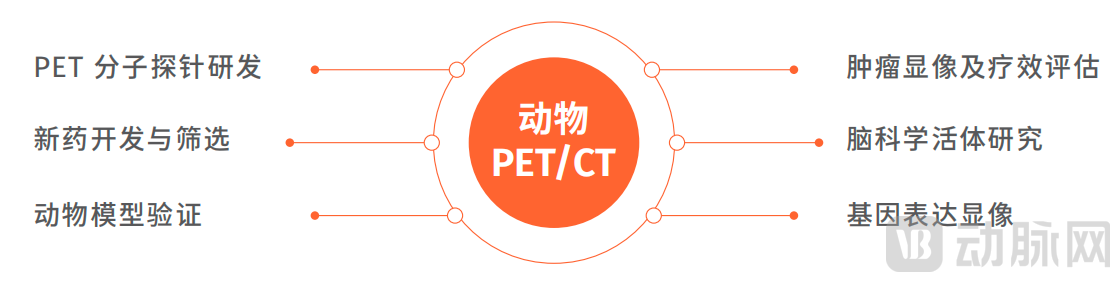
Application Areas of Bit/Super Series Products by Wanying Technology
In July 2020, the National Health Commission released the “Adjusted Table of Planned Quantity Distribution for the Allocation of Large-Scale Medical Equipment (2018–2020),” which planned to allocate 884 PET/CT scanners before the start of the 14th Five-Year Plan period, including 551 newly added units. In May 2021, eight ministries and commissions, including the China Atomic Energy Authority, jointly issued the “Medium- and Long-Term Development Plan for Medical Radioisotopes (2021–2035).” The plan aims to achieve full coverage of nuclear medicine departments in all tertiary general hospitals by 2025, and to establish “one nuclear medicine department per county” nationwide by 2035.
Supported by favorable policies, domestically produced PET/CT technology in China has rapidly advanced. According to relevant statistics, the average annual growth rate of PET/CT installations in China over the past decade has reached as high as 15.3%, with domestic brands now accounting for more than half of the PET/CT systems installed across medical institutions at all levels. Despite this remarkable growth, domestically developed brain-dedicated PET/CT systems remain scarce.
Xie Siwei, founder of Wanying Technology, conducted advanced studies at Lawrence Berkeley National Laboratory in the United States. With nearly a decade of experience in PET technology R&D and seven years in the medical device industry, he possesses both a strong technical background and industrial acumen. To date, Mr. Xie has filed one U.S. patent as the primary inventor (granted), along with 34 Chinese invention patents, of which 17 have been granted.
As relevant technologies have accumulated and matured, Xie Siwei decided to enter this blue-ocean market by assembling a founding team with experience in scientific research and industrial commercialization from universities such as Huazhong University of Science and Technology, Nanjing Medical University, and Jilin University. In 2022, he co-founded Baying Technology with Shenzhen Bay Laboratory to translate scientific achievements into industrial applications. Within less than a year of its establishment, Baying Technology completed an angel financing round led by BGI Songhe, achieved point-source imaging with its brain PET prototype, and commenced sales of its Bit series desktop small-animal PET systems.
Currently, China has approximately 147 million individuals in the preclinical stage of Alzheimer’s disease, 5 million patients with diagnosed Alzheimer’s disease, and tens of millions of patients with Parkinson’s disease and epilepsy. The onset of cerebral metabolic disorders is often insidious, resulting in low diagnostic efficacy for clinical symptom-based frameworks in practical settings. While CT and MRI are limited to structural imaging and cannot perform metabolic functional imaging, PET/CT holds significant value in the early differential diagnosis, disease staging, and treatment efficacy evaluation of brain tumors, neurological disorders, and psychiatric conditions, owing to its unique metabolic imaging capabilities.
Compared with conventional PET/CT systems, the brain-dedicated PET/CT developed by Baying Technology achieves a spatial resolution of 2 mm, enabling clinicians to visualize finer cerebral structures. Leveraging enhanced photon capture capability, its sensitivity is up to four times that of whole-body PET systems, allowing for faster scan speeds while reducing radiation dose. Moreover, its procurement, maintenance, and operational costs are only one-third of those associated with whole-body PET systems. Additionally, this specialized brain PET/CT system features a more compact design, requiring minimal floor space and facilitating easy installation and mobility. Its lower price point will lay the foundation for large-scale screening of brain diseases in the future.
Currently, Wanying Technology is accelerating the research and development of high-performance, brain-dedicated PET equipment and has entered the phase of full-system assembly. The product is expected to enter clinical trials next year. As one of the few companies south of the Yangtze River specializing in PET/CT, Wanying Technology is committed to the industrialization of domestically developed, brain-dedicated PET/CT systems. Through its efforts, the company aims to enable early screening and diagnosis of brain diseases, primarily Alzheimer’s disease, and ultimately contribute to the comprehensive realization of precise diagnosis and treatment for neurological disorders.
Shenzhen Brain Science and Technology Industry Innovation Center (hereinafter referred to as the “Brain Innovation Center”) is a specialized incubation platform established with strong support from the Shenzhen Municipal Government and the Guangming District Government, with technical support and operational management provided by the Shenzhen-Hong Kong Institute of Brain Science Innovation. The Brain Innovation Center is committed to building China’s first “plug-and-play” specialized incubation and empowerment platform, striving to become a demonstration hub for brain science and technology industry innovation that serves China and has a global reach. Since commencing trial operations in October 2022, the Center has developed over 220,000 square meters of phased incubation facilities and industrial space. It has attracted nearly 50 enterprises to settle in its incubator and industrial park, with both the incubator and the China Merchants Group Brain and Brain-like Intelligence Industrial Park fully leased. The cumulative historical financing amount of resident enterprises exceeds RMB 1 billion, with valuations surpassing RMB 10 billion. The Center has facilitated additional financing of over RMB 200 million for resident enterprises and established China’s first venture capital fund in the field of brain science and brain-like intelligence entirely funded by social capital, with a scale of RMB 100 million, focusing on investing in high-quality early-stage projects at the Brain Innovation Center.
Reference Article:
1. "Advances in High-Resolution and High-Sensitivity Small Animal PET Research"
2. “Research on Methods for Detecting the Depth of Interaction of Gamma Photons”
3. “Current Status and Prospects of PET-CT Technology Development”