

D2M Biotherapeutics Files for IPO: Leveraging Human Genetics to Unlock Next-Generation Blockbuster Therapeutics
In December 2023, Dr. Bing Nan led Danma Biologics to secure IND approval for its first pipeline candidate—DM919, a checkpoint inhibitor monoclonal antibody for pan-tumor indications. The FDA granted the IND application, enabling multi-center clinical trials in China and the United States to evaluate the safety and clinical activity of monotherapy and combination therapy with anti-PD-1 monoclonal antibodies in patients with advanced solid tumors.
In the first half of 2023, multiple blockbuster deals targeting a single therapeutic target drew significant industry attention.
In April, Merck & Co. acquired Prometheus Biosciences for $10.8 billion, with its core asset being a TL1A antibody in Phase II clinical trials. Subsequently, in October, Sanofi secured the rights to co-develop a TL1A antibody with Teva, paying an upfront fee of $500 million. Shortly thereafter, Roivant and Pfizer transferred their jointly owned novel TL1A antibody, designed for the treatment of inflammatory bowel disease, to Roche for $7.2 billion. These significant investments by major multinational corporations have rapidly reignited interest in the TL1A target and the previously sluggish autoimmune market.
These news items reminded Dr. Bing Nan of his days working at Pfizer, andThe Original Intention Behind Establishing Danma Biologics: Leveraging Genetics to Discover the Next Blockbuster Drug.
Around 2015, the therapeutic potential of TL1A was far from being fully recognized. As the first company globally to initiate a TL1A development program, Pfizer lacked sufficient internal confidence. Due to the absence of effective animal models related to TL1A and concerns regarding certain properties of TL1A antibodies, Pfizer internally re-evaluated its TL1A program and even considered discontinuing its development.
At that time, Dr. Bing Nan, as the head of Pfizer’s genetics team, presented strong support for TL1A as a therapeutic target in inflammatory bowel disease (IBD) based on genetic data: TL1A and its receptor DcR3 showed strong genome-wide association with IBD. It is rare for both a receptor and its ligand to demonstrate significant genome-wide associations with the same disease.
Similar findings (e.g., IL2B/IL23A/IL23R in psoriasis, and IL13/IL4/IL4R in asthma and atopic dermatitis) have all become targets for blockbuster drugs in autoimmune diseases. Meanwhile, a genetic sequencing study conducted in Japan among pediatric patients with inflammatory bowel disease identified variants associated with DcR3. Based on this accumulating evidence, Dr. Bing Nan strongly advocated for Pfizer to advance this pipeline into clinical development. This led to Pfizer’s continued commitment to the TL1A program, which yielded the first Phase II clinical trial data demonstrating the efficacy of TL1A inhibition, and ultimately resulted in the $7.2 billion divestiture of the asset to Roche.
Dr. Bing Nan’s career has been dedicated to leveraging genetic data to identify novel targets for innovative drug development. After earning his Ph.D. in Genetics and Bioinformatics from Virginia Tech in 2004, he joined the Human Genetics team at GSK. This period coincided with the post-Human Genome Project downturn, when confidence in using genetics to drive drug discovery was marked by disappointment and uncertainty. Nevertheless, GSK remained committed to this strategic direction. Dr. Nan diligently pursued his research at GSK for eight years, accumulating extensive theoretical insights and rich practical experience, which solidified his conviction in applying genetics to advance drug discovery.
Around 2012, genome-wide association studies (GWAS) technology matured, leading to a surge in disease-related genetic discoveries. Notably, genetic findings centered on PCSK9 drove the successful discovery and market launch of antibodies by Amgen and Regeneron. This rekindled industry enthusiasm for the role of genetics in drug target identification: Amgen acquired Iceland’s deCODE Genetics, and Regeneron established the Regeneron Genetic Center, both aiming to identify the next PCSK9-like target and translate it into leading drug candidates. In the same year, Pfizer began to emphasize the importance of genetics in drug discovery. Dr. Bing Nan joined Pfizer at this time and gradually built a genetics team to support target identification for innovative therapies in autoimmune diseases.
At the time Dr. Bing Nan joined, Pfizer’s interleukin-6 (IL-6) antibody was already in Phase II clinical trials. Based on biological and commercial considerations, Pfizer selected systemic lupus erythematosus as the indication. In contrast, Roche’s IL-6 receptor antibody targeted rheumatoid arthritis and had advanced to Phase III clinical trials.
By the end of 2013, a genome-wide association study (GWAS) on rheumatoid arthritis was published in Nature. The data revealed that genetic variants in the IL-6 receptor were strongly associated with rheumatoid arthritis. These genetic variants cause the IL-6 receptor to shed from the cell membrane surface, thereby blocking the receptor signaling pathway. Consequently, individuals carrying these genetic variants are less susceptible to developing rheumatoid arthritis. Inspired by this finding, Dr. Bing Nan led his team in conducting a series of analyses based on these genetic variants and discovered that there was no correlation between IL-6 receptor genetic variants and systemic lupus erythematosus.
Subsequent clinical data also validated Dr. Bing Nan’s genetic assessments: Pfizer failed to meet the primary efficacy endpoints in its Phase II clinical trial for systemic lupus erythematosus, whereas Roche succeeded in its Phase III trial for rheumatoid arthritis and ultimately secured regulatory approval. Reflecting on this matter, Dr. Bing Nan remarked with emotion,“At that time, I had already been conducting genetic research in the pharmaceutical industry for nearly a decade. Previously, I always felt as though I was merely completing tasks; however, this was the first time I personally experienced how genetic data could be truly valuable in accurately predicting the success or failure of drug development. Importantly, these genetic data can support many biologists and clinical experts in making sound judgments.”
Following this event, the genetics team received further attention from Pfizer. Dr. Bing Nan participated in the development of nearly all preclinical drug projects for autoimmune diseases, leveraging genetic data to assess the rationale for project initiation and to inform the selection of clinical indications. This included the aforementioned TL1A program, as well as several other projects that have advanced into clinical stages.
Through hands-on engagement with multiple projects, Dr. Bing Nan has come to view project success or failure as increasingly predictable, grounded in genetic data analysis: “After that initial breakthrough in thinking, regardless of outcome, my team and I from the autoimmune disease drug R&D group conduct in-depth reviews of each project. With this feedback, I have gradually learned to discern which genetically supported targets are most likely to yield viable drugs, and what level of genetic evidence can reliably predict a project’s success or failure.”
From 2012 to 2020, Dr. Bing Nan gradually charted a course for the application of genetic data. Concurrently, these eight years witnessed growing emphasis on genetic research and the continuous accumulation of multi-omics data, thereby bringing this path into increasingly sharp focus.
For example, the UK Biobank and the Finnish Genome Project each cover genetic data from nearly 500,000 individuals and their associations with thousands of diseases or biological traits.With the integration of large-scale multi-omics data, including human genomics, proteomics, and transcriptomics, hundreds of thousands of human genetic information entries are awaiting in-depth application and mining.“Vast amounts of individual genetic data and information on thousands of diseases harbor underlying associations, yet these relationships remain poorly understood by humans. I began to systematize this approach, transforming it into a reproducible and standardized methodology.”
At this pivotal moment, marked by the continuous accumulation of data and technology, and driven by Dr. Bing Nan’s insights into the patterns of leveraging applied genetic data to identify novel targets, Dr. Bing Nan co-founded D2M Biotherapeutics (Danma Bio) in 2020 with his fellow co-founder, Dr. Zhang Dong. Previously serving as the Director of Oncology Immunology at Merck Germany, Dr. Zhang Dong brings 15 years of experience in immuno-oncology drug R&D at Merck Serono and nine years of academic experience at Harvard Medical School. He has led the development of more than 10 novel antibody drugs, including Avelumab, the fourth anti-PD(L)-1 antibody approved globally.
“D2M stands for Data to Medicine.” Since its inception, Danma Biomedicine has had a clear mission: to discover the next blockbuster drug by leveraging genetic data.
In layman’s terms, innate genetic factors modulate disease risk in complex disorders by regulating and altering gene and protein functions. In the pharmaceutical industry, genetic data are leveraged to determine whether specific genetic factors predispose certain populations to particular diseases—that is, to establish causal relationships between target proteins and diseases—thereby enabling the identification of innovative drug targets with higher clinical success rates.
Methodologically, Danma Biomedical proposed"Virtual Medication" and "Virtual Clinical Trials"The concept—individuals with certain genetic variants are akin to having "innately" used a specific drug, thereby modulating the expression or function of a particular gene or protein. Those without such genetic variants serve as the untreated control group, analogous to participants in a randomized controlled clinical trial. Statistical analysis can then determine whether there are differences in disease risk between these two groups.
Specifically, Danma BiotechEstablished the INGENUITI® target discovery platform and developed its proprietary big data computational methodology system to deeply mine and systematically organize massive amounts of public genetic data, thereby creating a proprietary database. By integrating these genetic data to assess their impact on protein and transcript expression, function, and disease, we employed methodologies such as Mendelian randomization and colocalization analysis to determine and cross-validate the causal relationships between targets and diseases, ultimately selecting targets with strong causal associations for drug development.
“For drug development, genetic data analysis serves as a compass, guiding us on the right path to successfully develop a drug,” said Dr. Bing Nan.By leveraging this target discovery platform, it is possible toOvercoming the Bottleneck of Traditional Drug Development—High Failure Rates in Human Clinical Trials.
Leveraging advances in genetics and accumulated industry expertise, D2M Biotherapeutics (Danma Bio) established teams in Boston and Suzhou, China, following its founding in 2020. The team has attracted top-tier talent in genetic information from institutions such as Harvard University and the Massachusetts Institute of Technology (MIT), as well as seasoned pharmaceutical professionals with extensive experience at leading global pharmaceutical companies. Today, Danma Bio boasts not only bioinformatics specialists with robust capabilities in big data mining, cleaning, organization, and computation, but also drug development experts who can translate genetic insights into practice by integrating comprehensive pharmaceutical industry knowledge.
INGENUITI® Target Discovery Platform Continuously Generates Novel Target Pipelines."Identifying and developing novel targets with high credibility is a crucial strategy to overcome the current lack of differentiation in international drug targets and the crowded landscape of drug development, which also represents Danma Biologics' R&D advantage."Meanwhile, building on the discovery of novel targets, Danma Biologics is advancing the preclinical and clinical development of its drug target pipeline—“Successfully developing drugs serves as the strongest validation of genetic approaches.” In terms of pipeline strategy, Danma Biologics is initially focusing on oncology and autoimmune disease indications.
Dr. Bing Nan stated, “In autoimmune diseases, the logic of using genetic approaches to identify targets and invest in drug development has been widely accepted by the industry. Retrospectively, most blockbuster drugs have strong genetic association data supporting the link between their targets and autoimmune diseases. However, it is very rare to use germline genetic methods to identify targets in oncology drug development. This oversight is mainly because tumors are often viewed as diseases driven by acquired environmental factors, while the role of various innate genetic factors is neglected. In fact, tumors are also subject to surveillance and regulation by the host immune system. In genome-wide association studies (GWAS), CTLA4 is strongly associated with both autoimmune diseases (such as rheumatoid arthritis) and cancers (such as skin cancer). This opens up a new, and potentially the most effective, avenue for identifying tumor immunotherapy targets.”
Danma Biotech’s core assets, DM919 and DM926, are both checkpoint inhibitors with pan-tumor indications; DM919 received FDA IND approval in late 2023.
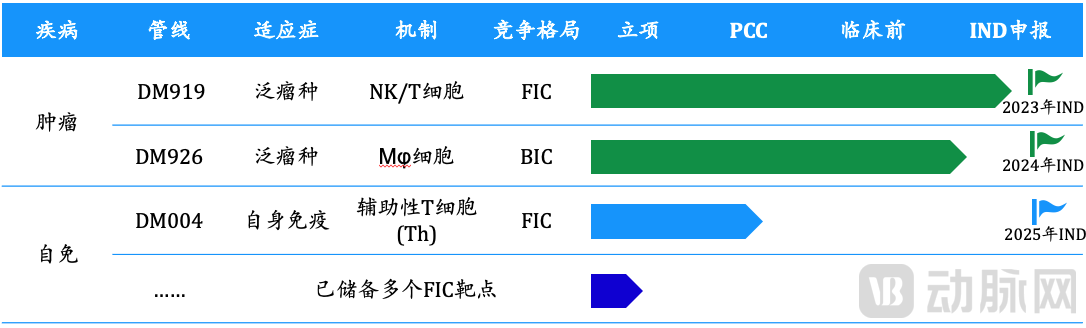
Danma Biologics’ Pipeline in Development
DM919
DM919 is a humanized monoclonal antibody targeting MICA/B proteins, with the potential to become the first-in-class (FIC) drug among global NK/T cell checkpoint inhibitors.The INGENUITI® Target Discovery Platform identified a significant causal relationship between plasma MICA/B proteins and the development of various tumors through genome-wide association genetic analyses of approximately 7,000 proteins across ~300 tumor diseases. MICA/B is expressed at low levels in normal tissues but is significantly upregulated during stress responses such as carcinogenesis, infection, and DNA damage, thereby activating NKG2D-expressing NK cells and CD8+ T cells to eliminate MICA/B-expressing cells.
In addition to the well-known role of NK cells in tumor killing via the NKG2D/MICA/B axis, Lerner et al. recently reported a significant finding: CD8+ T cells can eliminate tumor cells with absent or low MHC class I expression through the interaction between NKG2D and its ligands (MICA/B). However, proteases within the tumor microenvironment can cleave MICA/B proteins from the surface of tumor cells, causing their shedding. This enables tumor cells to evade NKG2D-mediated immune surveillance.By targeting the MICA/B and hydrolase binding sites, DM919 is designed to prevent MICA/B shedding, effectively bind both membrane-bound and soluble target proteins, and restore the tumor-killing activity of NK and T cells.
In preclinical data, DM919 demonstrated significant antitumor efficacy in mice and exhibited synergistic effects when combined with anti-PD-1.DM919 targets a novel mechanism complementary to PD-1, demonstrating promising monotherapy efficacy in tumors with low MHC-I expression that typically respond poorly to anti-PD-1 therapy, and further enhancing the efficacy of tumor immunotherapy when combined with anti-PD-1 agents.
DM004
Through INGENUITI®, D2M has identified that multiple genes within a specific pathway are strongly associated with various immune-mediated diseases that currently lack effective treatments. DM004 is an innovative first-in-class (FIC) molecule targeting this pathway. D2M has high expectations for DM004, anticipating that it will rival other blockbuster drugs in autoimmune diseases and address the significant unmet clinical needs in this therapeutic area.
Furthermore, D2M has built a pipeline of multiple first-in-class global targets, which will be advanced through both internal development and external collaborations.
As large-scale human genetics and multi-omics data continue to emerge, genetics-driven drug development companies are rising globally. Traditional pharmaceutical giants such as Pfizer, GSK, Genentech, Amgen, and Regeneron are significantly increasing their investments, while emerging biotechnology firms like Alnalym, Denali, and MAZE Therapeutics are building their pipelines based on these advancements. In recent years, the sector has attracted several rounds of financing:
In September 2023, Magnet Biomedicine, led by a Nobel laureate, completed a $50 million Series A financing round to develop the TrueGlues platform. By integrating advanced screening technologies with diverse chemical libraries and human genetics-driven targets, the platform enables the rational selection and design of clinically effective molecular glues to induce biological synergies and target previously undruggable proteins.
In November, Flagship spun out Quotient Therapeutics with $50 million in funding. Quotient has pioneered somatic genomics—the study of genetic variation at the cellular level—to uncover novel links between genes and diseases and to identify drug pipelines across a broad range of therapeutic areas. In the same month, Triveni Bio completed a $92 million Series A financing round to develop functional antibodies for treating immunology and inflammation (I&I) diseases, such as atopic dermatitis, using a precision medicine approach based on genetics.
From the launch and completion of the Human Genome Project to the rise of multi-omics applications, such as proteomics and metabolomics, over the past two decades, there has been a continuous deepening of our understanding of human life activities at the molecular level. This trend also reflects the increasingly close integration of genetics with medical practice. Now, the wave of precision medicine has finally reached innovative drug development. We await future developments with keen interest.
Reviewing the history of innovative drug development in China, we have rapidly progressed from fast-following individual products to fast-following new modalities, and are now gradually entering the first-in-class stage. An increasing number of R&D enterprises and investment institutions have begun exploring the first-in-class space. However, due to the high uncertainty surrounding targets and biological mechanisms, as well as the high failure rates, significant concerns remain regarding first-in-class products.Investing in first-in-class drugs by identifying scientific support beyond biological mechanisms, thereby systematically reducing the risk of developing new targets into drugs, has always been one of the investment themes actively explored and researched by Delian Capital.D2M’s human genetics target discovery platform is a key investment target for us in this field.
The human genetics data-driven target discovery platform has two key features. These features also serve as the basis for why the INGENUITI® target discovery platform can assess the likelihood of clinical development success during the target discovery phase:
First, the target discovery platform focuses on human subjects. Human genetics data observes the relationship between SNPs and diseases in the human body, thereby effectively overcoming the issue of animal models having limited predictive power for clinical trial outcomes;
Second, the computational principles underlying target discovery platforms. Computational methods in human genetics, such as Mendelian randomization, are highly analogous to the gold standard of drug clinical trials—randomized controlled trials—and with sufficiently large sample sizes, they can effectively balance biases.
The development of RVT-3101, a TL1A-targeting antibody, serves as yet another validation of the human genetics-based target discovery platform. From Dr. Bing Nan’s computational analysis of human genetic data years ago, to Pfizer’s vigorous push to advance TL1A antibodies into clinical trials, and further to the sequential disclosure of positive Phase II data for multiple TL1A antibodies by late 2022, culminating in the acquisition of TL1A product rights by several multinational corporations (MNCs) for billions of dollars this year, the trajectory fully demonstrates the immense value and appeal of first-in-class drugs. It also further underscores the significant potential and power of human genetic data in the development of first-in-class therapeutics.