

InferVision Secures World's First NMPA Class III Approval for AI-Powered Lung Surgery Planning System, Paving the Way for IPO

Infervision
Artificial Intelligence Product Developer
On December 27, Infervision announced that its lung surgery planning product had received Class III medical device approval from the National Medical Products Administration (NMPA).
This product is used for pulmonary surgery planning, and isThe first AI application for cancer surgical treatment to receive a Class III medical device certification from the NMPA worldwide, and the first and only lung surgery planning product approved with an NMPA Class III certification, providing reference support for thoracic surgeons in formulating lung surgery plans.
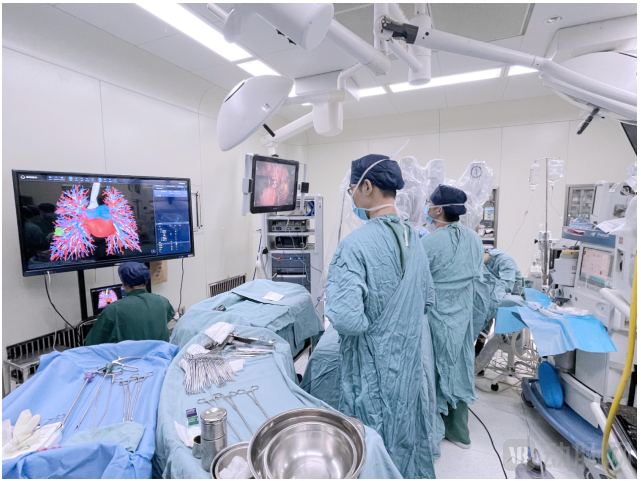
It is reported that the AI clinical trial in thoracic surgery was validated by Peking University People's Hospital, Shanghai Pulmonary Hospital affiliated with Tongji University, and the Second Xiangya Hospital of Central South University, employing a multi-center, multi-reader, multi-case study design to verify the product's efficacy and safety.
Clinical trial results demonstrate that the product can fully automatically perform three-dimensional reconstruction of pulmonary vessels and bronchi within an extremely short time, delineating the spatial relationship between target lesions and surrounding vasculature and adjacent tissues. The trials have proven a substantial improvement in the accuracy of identifying and reconstructing both normal and variant anatomical structures. Furthermore, regarding assistance with preoperative surgical planning, the trials have shown significant improvements in accuracy metrics for the appropriate selection of surgical procedures and the precise determination of resection margins for target lesions.
In other words, AI for pulmonary surgical planning can effectively improve the time efficiency, accuracy, and consistency of preoperative planning, offering significant advantages in facilitating precision surgery for lung cancer.
As AI gradually integrates into scenarios such as assisted diagnosis and new drug development, the minimally invasive surgery market—with an annual volume of over ten million procedures—has undoubtedly become the next ideal arena for medical AI deployment. Infervision’s first Class III medical device certification for AI-assisted cancer surgery has paved a new path for breakthroughs in this field.
Medical AI, long dormant, is once again facing a market worth tens of billions.
With the continuous advancement of laboratory medicine, deepening understanding of pulmonary segmental anatomy, ongoing innovation in surgical equipment, and improvement in preoperative planning, the current status and overall therapeutic framework of lung cancer surgery have been gradually established. Surgical approaches have evolved from early lobectomy to segmentectomy and subsegmentectomy, effectively achieving oncologic resection while maximizing the preservation of healthy lung tissue, thereby improving patients' quality of life.
The results of the JCOG 0802 study, published in The Lancet in 2022, showed that segmentectomy offers better prognosis for patients with eligible tumors.
However, precision resection surgeries for various types of lung cancer also have their pain points. To ensure complete removal of the lesion, doctors must rely on preoperative modeling based on patients' pulmonary imaging. Traditional preoperative planning depends on manual processing, which demands high reconstruction skills from physicians and is easily influenced by individual experience and subjective prior knowledge. This approach is slow and inefficient, significantly reducing surgical efficiency in hospitals. More importantly, traditional preoperative planning relies on contrast-enhanced chest CT scans. The incidence rate of allergic reactions to contrast agents is approximately 3.8–12.7%. Once an allergic reaction occurs, it may even lead to anaphylactic shock, thereby invisibly increasing the risks for patients during the examination process.
On the other hand, there is a high probability of anatomical variations in the vessels, organs, and bronchi within the sublobar regions of lung cancer patients. Surgeons can only determine the precise resection strategy upon opening the thoracic cavity, which heavily tests their surgical experience and decision-making capabilities.
Therefore, Infervision’s newly approved AI for lung surgery planning is designed to address the two core challenges in lung cancer surgery mentioned above. Relevant data indicates that this AI can complete 3D reconstruction of CT images within minutes and provide analytical results based on the imaging. Furthermore, the product can perform lobe and segment extraction and precise reconstruction using non-contrast CT scans, thereby broadening its applicability to a wider patient population. Additionally, the AI can generate multiple surgical pathways to guide surgeons, taking into account individual variations in patient anatomy, thus minimizing the risk of inadvertent injury and complications associated with time-constrained decision-making.
According to Chen Kuan, Founder and Chairman of Infervision: A surgeon’s most valuable time should be dedicated to surgery. Infervision aims to leverage AI to help physicians efficiently automate time-consuming preoperative tasks, such as manual image annotation, that support surgical procedures.
From the perspective of surgeons, AI-driven pulmonary surgery planning offers not only improved efficiency but also enhanced control over costs and compliance. In practice, relying on external institutions for 3D reconstruction poses compliance risks and typically requires 1–2 days to obtain results. With AI empowerment, surgeons can now perform reconstructions in-house, keeping data secure and standardized within the hospital. This approach significantly boosts efficiency while substantially reducing reconstruction costs. Furthermore, it supports physicians in conducting scientific research and publishing papers using cases involving 3D reconstruction.
According to Infervision, the company has worked closely with top-tier hospitals and clinical experts both in China and abroad since the inception of product development. This collaboration aimed to gain a deep understanding of surgical clinical challenges and pain points, thereby defining the direction for product development. During the development process, Infervision trained its artificial intelligence algorithms using extensive clinical data while maintaining in-depth communication with clinical experts to integrate their expertise into the AI algorithms, ensuring continuous iteration and upgrades.
For Infervision, expanding the application of artificial intelligence from assisted diagnosis to assisted treatment is both unexpected and yet entirely logical.
Unexpectedly, Infervision boasts profound technical expertise in the surgical field. The failure of most AI companies to achieve breakthroughs in surgical procedures is not due to a lack of awareness of the demand, but rather the difficulty in overcoming the technical challenges involved. To provide effective assistance in the most complex surgeries, AI cannot merely offer a general overview; it must clearly delineate individual blood vessels within a specified timeframe, precisely identify the margins of lesions, and analyze every type of variation in the surrounding tissues.
Chen Kuan believes that the successful development of AI for lung surgery planning hinges on two key factors. First, long-term technological accumulation has enabled precise and efficient analysis and processing of medical images. As early as last year, Infervision won championships in two major competitions—"Pulmonary Artery Segmentation" and "Tracheal and Bronchial Segmentation"—at MICCAI, a top international conference on medical image computing. In this field, Infervision has already achieved a leading international position and is well-positioned to shape the future development of this technology. Second, deep collaboration with hospitals allows for accurate identification and fulfillment of clinical needs, along with continuous improvement through practical application.
It is only logical to infer Infervision’s product matrix expansion strategy. In the past, medical AI favored horizontal expansion, excelling at continuously empowering new disease types to achieve multi-application coverage within a single department. However, to leap from a single department to all departments, medical AI must adopt vertical extension, enabling end-to-end empowerment of the entire screening, diagnosis, and treatment workflow for a single disease type.
Furthermore, the AI-assisted diagnostics sector has become a highly competitive "red ocean." To explore new market spaces and break through its own growth ceiling, Infervision must achieve self-driven breakthroughs. Given Infervision’s already substantial barriers to entry and robust technical reserves in imaging for pulmonary diseases, along with the validation of commercial viability in the AI oncology sector through its intelligent radiotherapy planning software, AI-enabled lung surgical planning naturally emerged as Infervision’s next strategic choice.
In the past, Infervision, like most medical AI companies, adopted a dual horizontal and vertical strategy: horizontally expanding the range of diseases covered and vertically integrating the entire diagnosis and treatment workflow. In practice, however, medical AI companies have only scratched the surface of the “treatment” phase within this end-to-end workflow, failing to achieve true integration.
With the recent regulatory approval of Infervision’s AI-powered pulmonary surgical planning solution, Infervision’s “One Horizontal, One Vertical” strategy has finally been fully realized, with the vertical integration of “screening, diagnosis, treatment, management, and research” successfully implemented and pioneered. As an innovative tool for precision therapy in lung cancer, the pulmonary surgical planning product represents a critical component across the entire clinical lifecycle of “screening, diagnosis, treatment, management, and research.” Furthermore, Infervision has become the world’s first AI healthcare technology company to hold regulatory approvals for all three categories—lung cancer screening, diagnosis, and treatment. Leveraging its comprehensive three-category solutions covering the entire lung cancer care continuum, Infervision AI fully empowers integrated precision diagnosis and treatment throughout the patient journey. This successful approval marks the evolution from the 1.0 era of large-scale early screening and the 2.0 era of precision diagnosis to the 3.0 era of precision diagnosis and treatment for pulmonary nodules.
In response, Chen Kuan stated,The recent approval of Infervision’s lung surgery planning product reinforces our commitment to leveraging China’s AI innovation capabilities to lead global advancements, while providing thoracic surgeons and patients with a new, more efficient, precise, and safe option for the diagnosis and treatment of lung cancer. The AI healthcare industry is striving to translate some of the most promising scientific breakthroughs into high-value therapeutic solutions to address the most urgent and challenging medical issues, such as lung, hepatobiliary, and urologic cancers. Infervision will firmly adhere to its “one horizontal, one vertical” strategy, with a deep vertical integration into treatment workflows, to support the advancement of medical technologies for major diseases and contribute to improving global health.
Approximately two years ago, Infervision introduced the concept of the AI-4D Intelligent Surgical Planning System, aiming to establish InferOperate, an imaging artificial intelligence-based ecosystem for tumor treatment. This system enables fully automated reconstruction and surgical planning for organs and tissues such as the lungs, liver, kidneys, and bones, based on CT imaging data.
In other words,The AI-powered lung surgery planning system, which has just received regulatory approval, is merely Infervision’s “first shot” in the surgical field, with a broader pipeline of AI-driven oncology treatment products set to “follow closely.” According to Infervision, some of these products are still in the R&D phase, while others have advanced to clinical trials, and more InferOperate AI-4D products are on the horizon.
In the field of oncology treatment, Infervision has made in-depth strategic investments, and the full scope of its “Precision Cancer Treatment Puzzle” is gradually being revealed, encompassing products for surgical planning, AI-powered surgical robots, and follow-up management for patients with early-stage lung cancer. In July this year, Infervision achieved a major breakthrough in the development of its AI-powered surgical robot, the “Longdianjing® Puncture Surgical Robot,” marking its entry into precision therapy and representing a significant step forward into clinical treatment domains.
Clinically, this percutaneous puncture surgical robot is designed to assist in percutaneous radiofrequency ablation procedures for patients with poor cardiopulmonary function, advanced age, or those who are not candidates for endoscopic surgery. Meanwhile, Infervision has also made significant strides in patient follow-up care. Its comprehensive solution for pulmonary nodule management enables the identification and management of more early-stage lung cancer patients, providing continuous monitoring and comparison throughout the treatment process, as well as effective health education and reminders after discharge.
From a strategic layout perspective, Infervision’s entire AI pipeline for surgical procedures meets both market and policy requirements. On one hand, the volume of interventional surgical procedures involved exceeds one million cases, indicating substantial demand. On the other hand, policies promoting precision medicine have cascaded from the national level to local jurisdictions, continuously driving the precision and intelligent transformation of surgical procedures.
So, against a favorable market backdrop, can Infervision’s breakthroughs be replicated? The answer is likely not so straightforward.
Following the first-ever regulatory approval of an AI system for oncologic surgery, the medical AI market is poised to see an influx of similar AI applications in the coming years. However, the commercial advantages conferred by first-mover status should not be underestimated, nor can the unconventional decision-making paradigms, innovative thinking, and innovation capabilities that enabled this breakthrough be easily replicated.
Looking back on Infervision’s seven-year entrepreneurial journey, from securing the industry’s first Class III medical device certification for AI-based pulmonary nodule detection to obtaining the first Class III certification for AI-based lung surgical planning, Infervision has succeeded by combining a deep understanding of healthcare with pioneering innovation. This may well be the key factor behind Infervision’s success to date.