

Yangtze River Delta Region Mobilizes Massive Investment, Talent Recruitment, and Enterprise Competition to Capture the Synthetic Biology Market

ADDOR
Venture Capital Institution

Cathay
R&D and Manufacturing of Bio-based Materials

Bota
Synthetic Biology Technology Platform Provider

Huaheng Biotech
Developer, Producer, and Seller of Biobased Products such as Amino Acids
MPCi
Venture Capital Institutions in High-Tech Startup Fields
"In recent months, the tacit understanding within the Yangtze River Delta has once again become prominently evident."
Let’s start with Shanghai. At the end of September this year,Shanghai Zhangjiang Synthetic Biology Innovation CenterOfficially unveiled, the center is led by technical services and has jointly established one bio-foundry, one specialized incubator, and one angel investment fund. A few days later,“Action Plan for Shanghai to Accelerate the Development of Synthetic Biology as a Source of Innovation and Build a High-End Biomanufacturing Industry Cluster (2023–2025)”released, highlighting the “one core, two wings” spatial layout, with Pudong’s innovative breakthroughs as the core and Baoshan and Jinshan as the two wings for manufacturing capacity. Subsequently, in November,The Shanghai Municipal Science and Technology Commission has approved 12 key synthetic biology projects, providing a one-time grant of RMB 28 million.。
However, Shanghai is not the only city making heavy bets on synthetic biology; neighboring Hangzhou is doing the same. Also in September of this year, the “Several Measures to Support the High-Quality Development of the Synthetic Biology Industry” was officially released.This is China’s first city-level special policy supporting the synthetic biology industry, with maximum funding of up to RMB 100 million for key technological breakthrough projects.。
As a representative of Jiangsu, Changzhou has implemented more forceful measures.Three synthetic biology industrial parks were established in October alone., namely the Jintan Synthetic Biology Industrial Park, the Yangtze River Delta Synthetic Biology Industry Innovation Park, and the West Taihu Lake Synthetic Biology Innovation Industrial Park. Concurrently, a RMB 2 billion synthetic biology industry fund was established. In November, Changzhou released the Implementation Opinions on High-Quality Development of the Synthetic Biology Industry and Several Measures, becoming the first prefecture-level city in Jiangsu Province to issue special policies promoting the development of the synthetic biology industry. Additionally, the Chinese Academy of Sciences Changzhou Joint Research Center for Synthetic Biological Chemistry (Preparatory) and the Changzhou University Institute of Synthetic Biology Innovation were officially unveiled and established in November.
However, this is just the tip of the iceberg. In fact, in addition to these three regions,Nanjing, Suzhou, Wuxi, Ningbo, JiaxingCities in the Yangtze River Delta have also ramped up their support for synthetic biology from various dimensions this year. So, what key information lies behind this collective “mobilization”?
The Yangtze River Delta’s Push for “Real Progress”: No Bandwagon-Jumping, Just Genuine Action
According to incomplete statistics from the VBInsight database,As of press time, China’s synthetic biology sector has completed 61 financing rounds this year, with total funding exceeding RMB 10 billion., among which as many as 30 cases were related to the Yangtze River Delta, accounting for nearly half. Amid the capital winter, this financing data also well reflects the Yangtze River Delta’s current “preference” for synthetic biology.
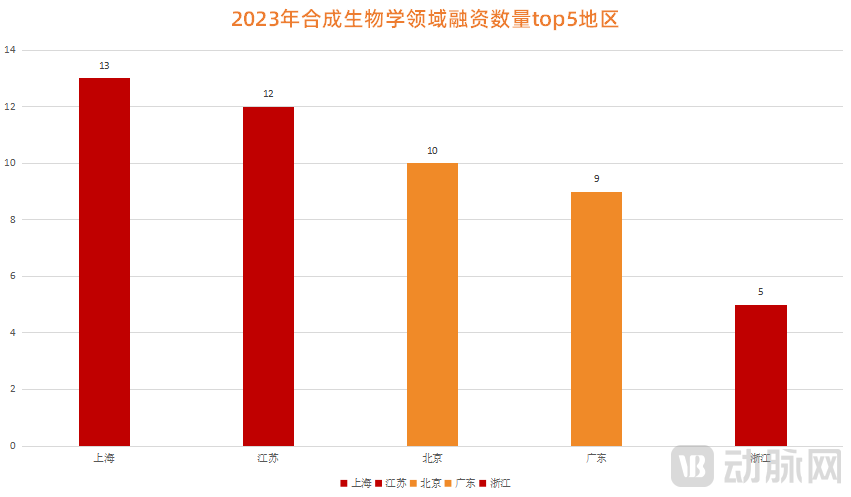 Figure 1. Top 5 Regions by Number of Financing Deals in the Synthetic Biology Sector in 2023 (Data Source: VCBeat)
So, what exactly is the underlying logic?
From an industrial perspective, the focus is clear. On one hand, as a sunrise industry leading the "Third Biological Science Revolution," synthetic biology itself represents innovation and breakthroughs, which aligns perfectly with the current market trend of focusing on hard-tech investments. Moreover, it boasts significant market potential,According to CB Insights, the global synthetic biology market size is projected to reach $18.885 billion in 2024., which is highly attractive to local governments across China that are urgently seeking economic growth.
On the other hand, it stems from synthetic biology itself. As a platform technology, it has extremely wide-ranging applications, with implementation scenarios not only in healthcare but also in specialized sectors such as chemicals, food, consumer goods, energy, and agriculture.This means that it can drive the horizontal development of multiple industries “on its own.”. Furthermore, synthetic biology is still in its early stages, and there is no significant gap between domestic technologies and global counterparts; therefore, substantial potential remains to be tapped in the future.
In response, a representative from a state-owned enterprise in Changzhou remarked, “Diversified clinical demands and the gradual maturation of multiple frontier technologies are currently driving the replacement and reshaping of the entire healthcare sector. In this process, synthetic biology, as an emerging technology characterized by the interdisciplinary integration of multiple fields,”Driving the Healthcare Sector from 'Investigating Things to Acquire Knowledge' to 'Creating Things to Acquire Knowledge', which naturally harbors a wealth of industrial opportunities,And those who “plunge into the sea” earlier are more likely to “reach the shore” ahead of time in the future.”
Thus, various “iconic moments” are unfolding in rotation across the Yangtze River Delta.
For instance, on the policy front. According to incomplete statistics from VCBeat,In this year alone, the Yangtze River Delta region has successively released 28 industrial policies directly related to synthetic biology., with its efforts primarily focused on three key areas: first, designating synthetic biology as a strategic priority and clearly defining development goals; second, providing substantial subsidies for scientific research and innovation projects; and third, streamlining approval processes to promote the standardization and efficient development of projects.
Secondly, on the infrastructure front. It is reported that in the past year, carriers such as research institutes, innovation centers, incubators, accelerators, and industrial parks related to synthetic biology have been "emerging in large numbers" in the Yangtze River Delta region. Taking Changzhou, mentioned at the beginning, as an example, it established three synthetic biology industrial parks within a single month.Meanwhile, beneath the surface of this rapid “scale-up” process, a battle for resources is unfolding in parallel., according to local government officials, the hundreds of business trips made this year were all aimed at attracting external resources inward, with targets primarily including scientific talent, leading enterprises, and market-oriented investment institutions in the field of synthetic biology.
And this is indeed borne out by the final “transaction results.” Taking the enterprise side as an example, includingCathay Biotech, Huaheng Biotech, Weigou Workshop, Trautec Medical, Synbio UniverseRepresentative enterprises in the field of synthetic biology, among others, have engaged in multi-dimensional collaborations with various regions in the Yangtze River Delta this year. For instance, Weigou Workshop has formally signed a strategic cooperation agreement with the Baoshan District Government to jointly promote the effective establishment and development of the synthetic biology industry in Baoshan.
Certainly, the fierce competition for key talent is also intensifying. Taking Hangzhou as an example, it currently possesses in the field of synthetic biologyAcademician Zheng Yuguo、Professor Yang Lirong、Professor Yongquan Liand other top-tier experts, while also introducingAcademician Zeng Anping、Prof. Wang Baojunand other talents from the “Kunpeng Program,” gradually forming leading research teams represented by Zhejiang University and Westlake University.
Finally, at the fund level, a large number of synthetic biology-focused funds have been established over the past year and have already begun to “make their mark” in the capital markets. According to incomplete statistics from the VCBeat Orange Database, among the 30 financing rounds completed in the synthetic biology sector in the Yangtze River Delta region,As many as 11 deals involved direct participation by local state-owned assets.。
Therefore, it is evident that the Yangtze River Delta region’s collective push into synthetic biology is a serious endeavor; however, driving the development of an emerging industry is far more complex in practice than commonly imagined.
Amidst Hype and Bubbles, How Can the Yangtze River Delta Achieve “Resonance” with Its Industries?
In fact, since 2021, synthetic biology has remained at the industry’s forefront; even during the capital winter, sector enthusiasm has stayed high. According to incomplete statistics from the VCBeat Orange Database,Over the past two years, China’s synthetic biology sector has completed more than 100 financing rounds., virtually all well-known investment firms have participated. This trend is also evident globally; according to data from Synbiobeta,In 2021, global financing in the field of synthetic biology totaled approximately $18 billion, equivalent to the sum of the previous 12 years.。
However, as of 2023, like most innovative technologies,Synthetic Biology Also Seems to Be Facing a Downturn, is facing numerous industry bottlenecks.
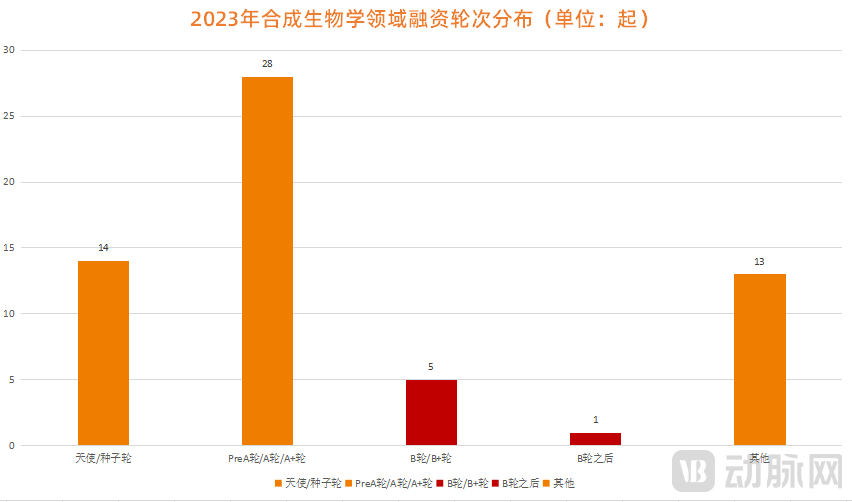 Figure 2. Distribution of Financing Rounds in the Synthetic Biology Sector in 2023 (Data Source: VCBeat)
Take the capital market as an example. Although synthetic biology has seen frequent financing activities in recent years, these have been largely concentrated in rounds prior to Series A, with very few occurring after Series B. This year alone,Of the 61 financing rounds, only six occurred at Series B or later.. Additionally, the situation in the secondary market is even more “dismal,”On one hand, multiple high-profile companies have announced the failure of their IPO attempts; on the other, most already-listed companies have experienced varying degrees of stock price declines this year.。
AndThe “trigger” for all this stems from the generally weak “monetization capability” of the sector; put bluntly, synthetic biology is still struggling to generate profits at its current stage.. This is currently a very thorny issue. This is because as market enthusiasm wanes, the industry trend has shifted in another direction, namelyRarely consider startups that have yet to generate revenue or lack commercialization capabilities. In this regard, a frontline investor remarked, “In the current market environment, a company’s profitability has become a critical metric, even for those with innovative technologies. Moreover, as time goes on, the market will place greater emphasis on their commercialization capabilities.”
When it comes to commercialization, one cannot avoid mentioning the two major challenges in synthetic biology,One is product selection, and the other is mass production.. Let’s start with product selection. Dr. Zhang Haoqian, Co-founder and CEO of Bluepha, has noted that the lifecycle of consumer products is typically three to four years, whereas the end-to-end development of new synthetic biology products takes approximately five years and requires an investment of around $50 million. If the wrong product is chosen—for instance, one with strong cyclicality or one that falls out of market demand after a three- to four-year trend—the resulting losses can be substantial.
So, how can risks be mitigated? Professor Tao Yong, Director of the Key Laboratory of Microbial Physiology and Metabolic Engineering at the Institute of Microbiology, Chinese Academy of Sciences, stated, “For startups or newly established laboratories,I believe priority should be given to high-value-added fine chemicals.“Such products do not impose particularly high requirements on raw material conversion efficiency or industrialization capabilities. Even if the conversion rate is slightly lower and mass-production cost control is somewhat weaker, profitability can still be ensured, allowing the product to at least enter the market. In contrast, starting with bulk chemicals demands stringent cost control and robust industrialization capabilities.”
From a corporate perspective, Dr. Lin Qiubin, Founder and CEO of Delonix Bioworks, also offered his recommendations, namelyTackling challenges that are unfeasible or difficult to address with traditional biomedical approaches. Cheryl Cui, Co-founder and CEO of Bota, shares the same view, believing thatStartups can prioritize selecting product categories that are better suited for biotechnology applications.。
Compared to strain selection, mass production—namely, scaled-up manufacturing—is a more complex challenge. It is regarded as the area with the least accumulated experience across the synthetic biology industry and currently constitutes the primary barrier to entry for the sector., primarily because there are hardly any off-the-shelf templates available for reference in manufacturing. In this regard, experts have noted, “In small-scale laboratory culture environments, the modification and design of microorganisms are not particularly challenging. However, once industrialization is attempted—scaling up to fermentation facilities with capacities of hundreds of tons—the environment faced by the microorganisms becomes exceptionally complex, making it much more difficult to ensure stability.” It is precisely for this reason that few companies are currently capable of scaling synthetic biology processes from bench-scale trials through pilot-scale expansion to large-scale production.
From the perspective of synthetic biology companies with proven track records, breakthroughs in scaling up production essentially hinge on two aspects:1. Significantly enhance fermentation efficiency, by establishing a high-throughput fermentation platform, to achieve the organic integration and alignment of strain screening and process development;Second, recruit professional talent., This is because when the technology is not yet fully mature, talents with rich fermentation production experience can reduce the repetition of early-stage R&D work.
Of course,In addition to product selection and mass production, identifying the right market positioning is also crucial for synthetic biology.. From a current perspective, the boundaries between midstream and downstream enterprises in synthetic biology are gradually blurring,Platform-based enterprises and product-based enterprises are also converging toward the hybrid “platform + pipeline” model., namely, multiple platform-based enterprises have begun to build their own product pipelines to validate their capabilities in strain R&D and commercial implementation; meanwhile, product-focused enterprises, in addition to scaling up their core pipelines for mass production, are actively establishing biosynthesis technology platforms through either in-house R&D or acquisitions, while also undertaking R&D collaborations or providing customized solutions for pharmaceutical and cosmetics companies.
This is not a bad choice.After all, the survival strategy for the entire medical industry today is to first select products capable of mass production to help companies better “survive,” and then seek new breakthroughs.. These “strategies for survival” are not only relevant to enterprises and investors in this field, but also to the Yangtze River Delta region, which is currently collectively rushing into the synthetic biology industry.
Specifically, for instance, in terms of "product selection,"While fully understanding the characteristics of the industry, the Yangtze River Delta region is also combining its own strengths and weaknesses in the existing industrial chain to find targeted points of exertion.. For instance, Shanghai has clearly promoted the industrial translation and application of synthetic biology technology in five major sectors: biopharmaceuticals, advanced materials, consumer goods, energy, and environmental protection; Changzhou has proposed accelerating the application of synthetic biology technology in areas such as agricultural production, life and health, green energy, and material development; while Hangzhou plans to focus on developing future tracks including biopharmaceuticals, biomaterials, medical aesthetics, and cosmetics.
In the "mass production" stage, for various regions in the Yangtze River Delta,“Mass production” is essentially about how to amplify industrial effects., namely, by providing targeted support through policies, funding, talent development, and infrastructure, to address the practical challenges currently faced by practitioners, thereby concentrating efforts on empowering the local synthetic biology industry and driving it to unlock greater industrial value.
Beijing, Shanghai, Tianjin, and Shenzhen Form a “Four-Pillar” Dominance: How Can the Yangtze River Delta Break Through in Adversity?
In fact, every emerging technology has its development cycle, and synthetic biology is no exception to this rule. Behind its glamorous facade lie many “hardships,” such as Amyris’s cash flow shortage caused by failures in scaling up biofuel production, Zymergen’s failure due to overly optimistic market demand forecasts for its optical film products, and KiOR’s bankruptcy resulting from cost issues in biodiesel production.
The situation is similar in China, where many startups are currently stuck at the Series B stage, and those aiming for an IPO have successively hit the pause button. Listed companies are faring no better; for instance, Cathay Biotech saw its revenue drop by 20.05% year-on-year in the first half of this year, with its net profit after deducting non-recurring items falling by 39.46%.
However, this is not a bad thing. As one investor remarked, “"When the industry enters a phase of stock optimization or structural upgrading, it actually presents a significant opportunity.". Professional investors tend to shy away from frenzy, as it fails to create differentiation and instead impairs judgment. When everyone perceives an industry as attractive and risk tolerance is low, professional investing loses its meaning.Rather, it is during industry downturns that we believe the true value of assets emerges..” Therefore, the synthetic biology industry, which is at a turning point, may present an unprecedented opportunity for various regions in the Yangtze River Delta.
However, the flip side of opportunity is competition. In fact, China’s synthetic biology sector has currently formed a landscape dominated byBeijing, Shanghai, Tianjin, ShenzhenIndustrial hubs centered in four regions.
WithBeijingas an example, as a national scientific research center, it boasts multiple synthetic biology institutes and laboratories and has made significant achievements in basic research; whereasTianjinIt serves as a talent incubator in the field of synthetic biology and is the first city in China to establish undergraduate, master’s, and doctoral degree programs in synthetic biology.ShenzhenAs a rising star, Shenzhen has witnessed particularly rapid development in recent years. It is home to China’s first Innovation Institute for Synthetic Biology, the world’s first major scientific and technological infrastructure facility dedicated to synthetic biology, and the world’s first College of Synthetic Biology. The city has already attracted a large pool of young talent and a cluster of synthetic biology startups.
The Yangtze River Delta, of course, also has its representatives, namelyShanghaiIn fact, Shanghai is the birthplace of synthetic biology in China. The world’s first synthesis of crystalline bovine insulin and the creation of the world’s first synthetic single-chromosome eukaryotic cell both took place in Shanghai. The city is also home to China’s first synthetic biology laboratory—the CAS Key Laboratory of Synthetic Biology. Furthermore, on the industrial front, the headquarters of many leading enterprises are established in Shanghai.
However, unlike Shanghai, other cities in the Yangtze River Delta currently have relatively weak foundations in the field of synthetic biology and are basically in a stage of catching up. Under the current competitive landscape, how can the Yangtze River Delta, as a late mover, stand out?
The answer is, in fact, quite simple. The aforementioned strategies—such as gaining a comprehensive understanding of the industry, focusing on addressing real industry pain points, emphasizing basic research and innovation, strengthening specialized talent development, formulating tailored industrial development strategies, establishing unique advantages, and maintaining core competitiveness—are all pathways to breaking through.
In addition,For the Yangtze River Delta region, there is another significant advantage to leverage in advancing synthetic biology: its unique geographical location, which should be utilized to maximize the cluster effect of the industry.. In fact, synthetic biology itself is characterized by long and complex value chains. Close collaboration between different regions can effectively facilitate complementarity and synergy, potentially sparking greater innovation in the field of synthetic biology.
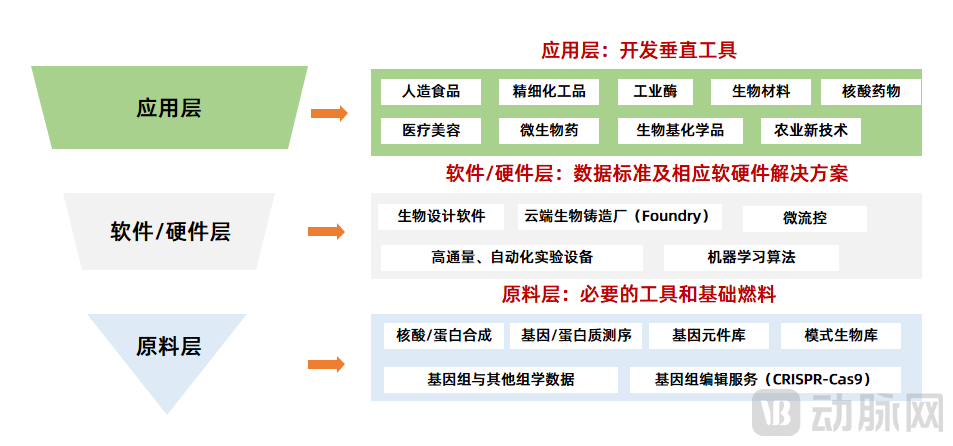 Figure 3. Schematic diagram of the upstream and downstream distribution of synthetic biology (Graphic by VCBeat)
In this regard, Academician Deng Zixin of the Chinese Academy of Sciences has stated that synthetic biology is interconnected, convergent, and integrated; while leveraging its own advantages, it must also focus on industrial applications.Only through the integrated and coordinated development of the entire industry can more opportunities and possibilities be created.. Whether it is a “purpose”-oriented engineering design approach or product development aimed at “application,” the emphasis is on the “alignment” between upstream and downstream sectors.
Therefore, in retrospect, the allure of synthetic biology lies in the fact that there are currently few definitive answers, industry consensus has yet to take shape, and numerous variables and possibilities remain for the future. At this pivotal juncture, it presents a most opportune moment for local governments to enter the field; however, to go further,The key to success lies in seizing the more certain opportunities within the industry.. Clearly, in this long-distance race, the Yangtze River Delta has already taken the lead.
1. “Synthetic Biology Must Emerge from Mass Production and Enter the Market” — Sinoway Capital;
2. “Professor Tao Yong of the Chinese Academy of Sciences: R&D and Entrepreneurship in Synthetic Biology Should Dive into the Market to Identify Needs” – 36Kr;
3. “The Ephemeral Rise and Fall of a Trend: Synthetic Biology’s Trillion-Dollar Journey” — Amin Observation.