

SuperVista Completes Tens of Millions of Yuan Series A2 Financing and Unveils World’s First Miniaturized Three-Photon Microscope Enabling Deep-Brain Imaging

TRANSCEND VIVOSCOPE
TRANSCEND VIVOSCOPE

CCMC
Private Equity Investment Firm
VCBeat has learned that Beijing Chaoweijing Biological Technology Co., Ltd. (hereinafter referred to as “TRANSCEND VIVOSCOPE”) has completed its A2 round of financing, raising tens of millions of yuan. The investment was led by China Capital Management Co., Ltd., Guangzhou Tongxin Sci-Tech Innovation Fund, Shouzheng Zefu Innovation Investment (Beijing) Co., Ltd., and existing shareholders Beijing Collaborative Innovation Holdings Co., Ltd., Guangdong Collaborative Holdings, and Stellar River Capital Management. The funds raised in this round will be primarily used for the research and development of multiphoton microscopes and multiphoton medical devices, as well as for expanding into overseas markets.
TRANSCEND VIVOSCOPE is a national high-tech enterprise dedicated to the research and development, manufacturing, and sales of high-end biomedical imaging equipment. Following the successful completion of its Series A2 financing round, TRANSCEND VIVOSCOPE has secured cumulative funding exceeding RMB 100 million, with its research team’s achievements having been published multiple times in top-tier international journals.
In 2017, the core team at TRANSCEND VIVOSCOPE successfully developed an ultra-compact two-photon microscope with ultrahigh spatiotemporal resolution, weighing only 2.2 g. This achievement enabled the first-ever acquisition of dynamic images of neuronal and synaptic activities in the cerebral cortex of mice during free behavior. It was recognized as one of the “Top Ten Scientific Advances in China in 2017” and named “Method of the Year 2018” by *Nature Methods* (for imaging in unrestrained animals). In 2021, the team’s second-generation miniaturized two-photon microscope expanded the field of view by 7.8-fold while achieving three-dimensional imaging capability for functional signals from over a thousand neurons in the cerebral cortex. The original research paper was published in *Nature Methods*. In 2023, the team successfully developed a miniaturized three-photon microscope weighing merely 2.17 g, which broke through the previous depth limit of miniaturized multiphoton microscopy. This innovation achieved, for the first time, functional imaging of neurons across the entire cerebral cortex and hippocampus in freely behaving mice, opening a new research paradigm for revealing neural mechanisms within deep brain structures.
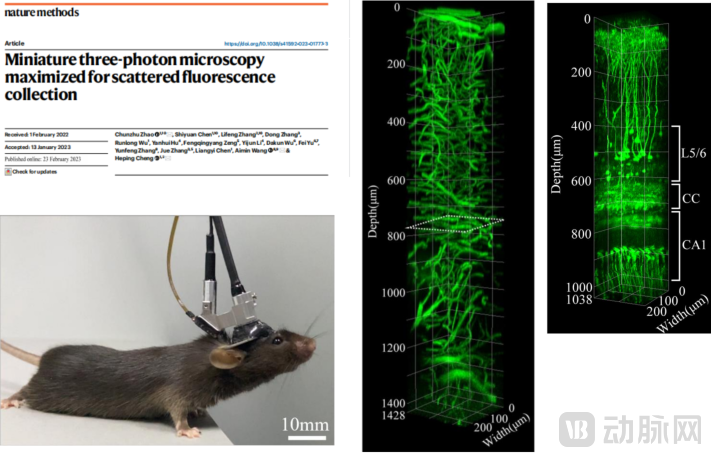
In Vivo Setup of a Mouse Wearing a Miniaturized Three-Photon Microscope and Imaging of Brain Neurons and Vasculature
In December 2023, the in vivo two-photon microscopy imaging system independently developed by TRANSCEND VIVOSCOPE received approval for market launch as a Class II innovative medical device from Jiangsu Province, marking it as China’s first medical device based on the principle of two-photon microscopy.
Since its establishment, TRANSCEND VIVOSCOPE has successfully completed several rounds of financing. Why has the company continued to gain favor from capital markets and investors? What is a three-photon microscope? What breakthrough innovations and advantages of this microscope led to its publication in Nature Methods? After successfully developing the world’s only miniaturized three-photon imaging technology, in which areas will TRANSCEND VIVOSCOPE focus its efforts in the next stage?
Self-Reinvention: Achieving Three “World Firsts” in Multiphoton Microscopy
Before delving into three-photon microscopy, Wang Aimin, co-founder of TRANSCEND VIVOSCOPE, first introduced single-photon and multi-photon imaging technologies to VCBeat.
In life sciences and medical research, innovative breakthroughs in imaging technology have always been the core driving force behind the advancement of life sciences, as well as the primary impetus for the discovery and development of new biological insights. Multiphoton imaging technology works by emitting lasers that interact with molecules and atoms within biological tissues, causing the release of fluorescent photons. This fluorescence-based imaging approach enables non-invasive, direct visualization of internal tissue structures.
Biological tissues exhibit good light transmittance but also strong scattering. Under normal circumstances, the “soft limit” of penetration depth for high-resolution imaging of biological tissue cells is approximately 1 mm. However, lasers with longer wavelengths experience less scattering and demonstrate greater penetration capability when passing through biological tissues.
Multiphoton absorption is a nonlinear excitation mechanism for fluorescent materials, wherein the excitation wavelength for two-photon absorption is twice that of single-photon absorption, and three times for three-photon absorption. Compared with single-photon excitation, it enables an nearly tenfold increase in imaging depth. This nonlinear excitation mechanism also endows multiphoton microscopy with superior signal-to-background ratio and optical sectioning capability. These imaging advantages make multiphoton microscopy particularly suitable for complex in vivo imaging applications, establishing it as a powerful tool for live-animal imaging.
In 1990, Winfried Denk of Cornell University developed the world’s first two-photon laser scanning microscope. Since the turn of the 21st century, with technological breakthroughs and commercialization of ultrafast lasers, two-photon microscopic imaging has rapidly become the most widely used technique for in vivo animal imaging. Notably, Academician Cheng Heping, founder of TRANSCEND VIVOSCOPE, first engaged with two-photon microscopy in 1992, becoming one of the earliest participants and promoters of this technology.
After nearly three decades of development, two-photon microscopy has become an indispensable tool for brain science research. However, traditional two-photon microscopes are not only bulky and heavy but also limited to imaging animals that are either anesthetized or head-fixed. This clearly fails to meet the need in brain science for real-time observation of neuronal signals in the brains of freely behaving animals.
Against this backdrop, after years of technological breakthroughs, Academician Cheng Heping’s team overcame multiple core technologies that had previously remained unsolved in the field. In 2017, they successfully developed a miniaturized two-photon microscope with ultra-high spatiotemporal resolution, featuring a probe weighing only 2.2 grams. Using this device, they captured, for the first time internationally, dynamic images of neuronal and synaptic activities in the cerebral cortex of mice during free behavior. This revolutionary new technology was consequently selected as one of the “Top Ten Scientific Advances in China” in 2017 and was named “Method of the Year 2018” by Nature Methods.
It was also in the year preceding the debut of this miniaturized two-photon microscope that, with multifaceted support from Peking University, government policies, and capital, Academician Cheng Heping’s team established TRANSCEND VIVOSCOPE to promote the commercialization and industrialization of this imaging equipment.
“It is undeniable that neuroscience, regarded as the ‘final frontier,’ still harbors a myriad of ‘secrets’ that remain beyond our ‘sight,’ and our continued exploration of the deep brain relies on ever-advancing technological tools. ‘The birth of TRANSCEND VIVOSCOPE stems from innovation, which is also the core value of its existence,’ said Wang Aimin.”
Consequently, following the widespread adoption of the first-generation miniaturized two-photon microscope, Academician Cheng Heping’s team released the second-generation miniaturized two-photon microscope in 2021. Compared with the first generation, the second-generation device features a 7.8-fold increase in field of view and supports three-dimensional scanning as well as rapid multi-plane switching, thereby enabling the visualization of tens of times more neurons.
As mentioned at the beginning of the article, in 2023, the TRANSCEND VIVOSCOPE team further expanded the depth of brain imaging in freely behaving animals by integrating the respective advantages of previously developed miniaturized two-photon and benchtop three-photon microscopy. The excitation light can penetrate through the entire mouse cerebral cortex and corpus callosum, enabling direct observation and recording of the CA1 subregion of the mouse hippocampus. The maximum imaging depth for neuronal calcium signals reaches 1.2 mm, while vascular imaging can achieve a depth of up to 1.4 mm.
Deep Brain Imaging: Tenfold Increase in Photon Imaging Depth Enables Hippocampal Visualization
In 2021, the “China Brain Project,” which had been in the planning stages for over six years, was finally finalized and officially launched.
In 2016, China officially released the "Outline of the 13th Five-Year Plan," listing "Brain Science and Brain-Inspired Research" as a "National Major Scientific and Technological Innovation Project." The "China Brain Project" adopts a structure of "one body with two wings," which is based on researching the neural principles of brain cognition to develop treatments for major brain disorders and promote the development of next-generation artificial intelligence. In September 2021, the Ministry of Science and Technology officially published the notice on the 2021 project application guidelines for the major project "Brain Science and Brain-Inspired Research" under the Science and Technology Innovation 2030 initiative, covering 59 research fields and directions.
Neurons are among the fundamental structural and functional units of the nervous system. The human brain’s neural network is composed of hundreds of billions of neurons, encompassing more than a hundred distinct types, interconnected by hundreds of trillions of synapses, thereby enabling functions such as perception, motor control, and cognition through specialized neural circuits. A critical challenge urgently requiring resolution in this field is how to overcome scale barriers and integrate microscopic neuronal and synaptic activities with macroscopic information processing at the whole-brain level and individual behavioral data.
TRANSCEND VIVOSCOPE has established a product portfolio of miniaturized multiphoton imaging systems and successfully achieved industrialization for multiple products, including the SUPERNOVA-100 all-in-one miniaturized two-photon microscope, the SUPERNOVA-600 integrated miniaturized two-photon microscope, and the SUPERNOVA-3000 miniaturized three-photon microscope.
“Miniaturization” refers to shrinking microscopes to the size of a thumb, allowing them to be mounted on the heads of mice without restricting their free movement. This enables the observation of genuine neuronal activity and functional connectivity in the brain while mice engage in spontaneous behaviors such as foraging, socializing, and sleeping. TRANSCEND VIVOSCOPE’s miniaturized microscope is so compact that mice can “run while wearing it,” achieving clear and stable imaging in freely behaving animals. It can be used to monitor dynamic changes in synapses, neurons, and neural networks under natural behavioral conditions—such as foraging, platform jumping, fighting, playing, and sleeping—or during pre-learning, learning, and post-learning phases, thereby capturing dynamic images of neuronal and synaptic activity in the brains of freely behaving mice.
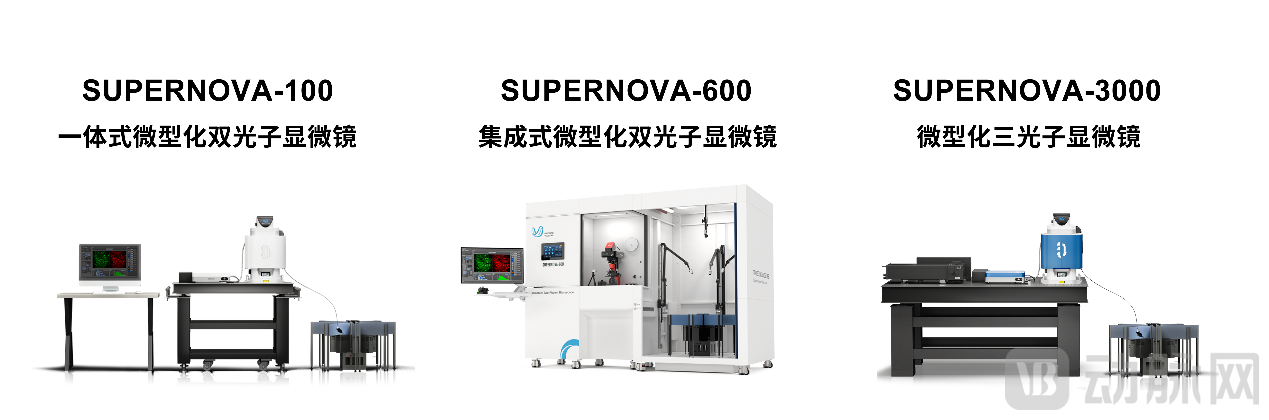 SUPERNOVA Series Miniaturized Multiphoton Microscopy Imaging System
In terms of specific applications, the miniaturized two-photon product series enables real-time, dynamic, high-resolution imaging of live cells, facilitating long-term observation of multi-scale and multi-level dynamic changes in neural synapses, neurons, neural networks, and remotely connected brain regions. Furthermore, this product supports multi-channel, in vivo imaging across multiple brain regions in various model animals. It is capable of dual-color and three-dimensional imaging and can be integrated with optogenetic devices.
As a breakthrough innovation, the miniaturized two-photon product series has ushered in a new paradigm for brain science research and has helped numerous domestic and international research teams achieve significant findings since its market launch. For instance, the team specializing in Brain Science and Brain Medicine at Zhejiang University utilized this system to observe neuronal firing at the single-neuron level in the brains of awake, behaving mice while exploring how neurons influence activity in the lateral prefrontal cortex. These research findings were subsequently published in the prestigious international journal *Neuron*.
The SUPERNOVA-100/600 can be equipped with a variety of miniaturized two-photon endoscopes, enabling imaging of individual dendritic spines, simultaneous imaging of thousands of neurons, and imaging across various cortical layers of the mouse brain.
The SUPERNOVA-3000 miniaturized three-photon system is equipped with a novel miniaturized three-photon probe featuring an optimized optical configuration. This design effectively enhances the collection efficiency of scattered fluorescence, reaching the depth limits of benchtop three-photon imaging and significantly extending the imaging depth to 1.4 mm. This capability allows penetration through the entire mouse cerebral cortex and the corpus callosum, enabling hippocampal imaging. Modern neuroscience research has confirmed that neurological disorders such as Parkinson’s disease, Alzheimer’s disease, depression, and obsessive-compulsive disorder are closely associated with structural and functional abnormalities in deep brain regions.
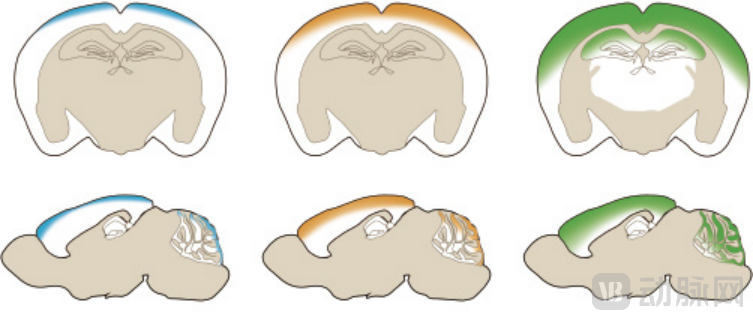
Comparison of Imaging Depths in Mouse Brains Using Single-Photon, Two-Photon, and Three-Photon Optics
The SUPERNOVA-3000 product from TRANSCEND VIVOSCOPE enables neuroscience researchers to conduct in-depth studies of neural networks between the cerebral cortex and subcortical brain regions, such as those involving the hippocampus or striatum, while preserving the intact structural projections of the cerebral cortex.
According to Wang Aimin, TRANSCEND VIVOSCOPE showcased its self-developed products, including the SUPERNOVA-100, at the Society for Neuroscience Annual Meeting (SfN 2023)—the world’s largest neuroscience conference—this November. The company presented China’s cutting-edge technology and original innovation capabilities to scientists from around the globe, earning high recognition from numerous top international research institutions and scientists.
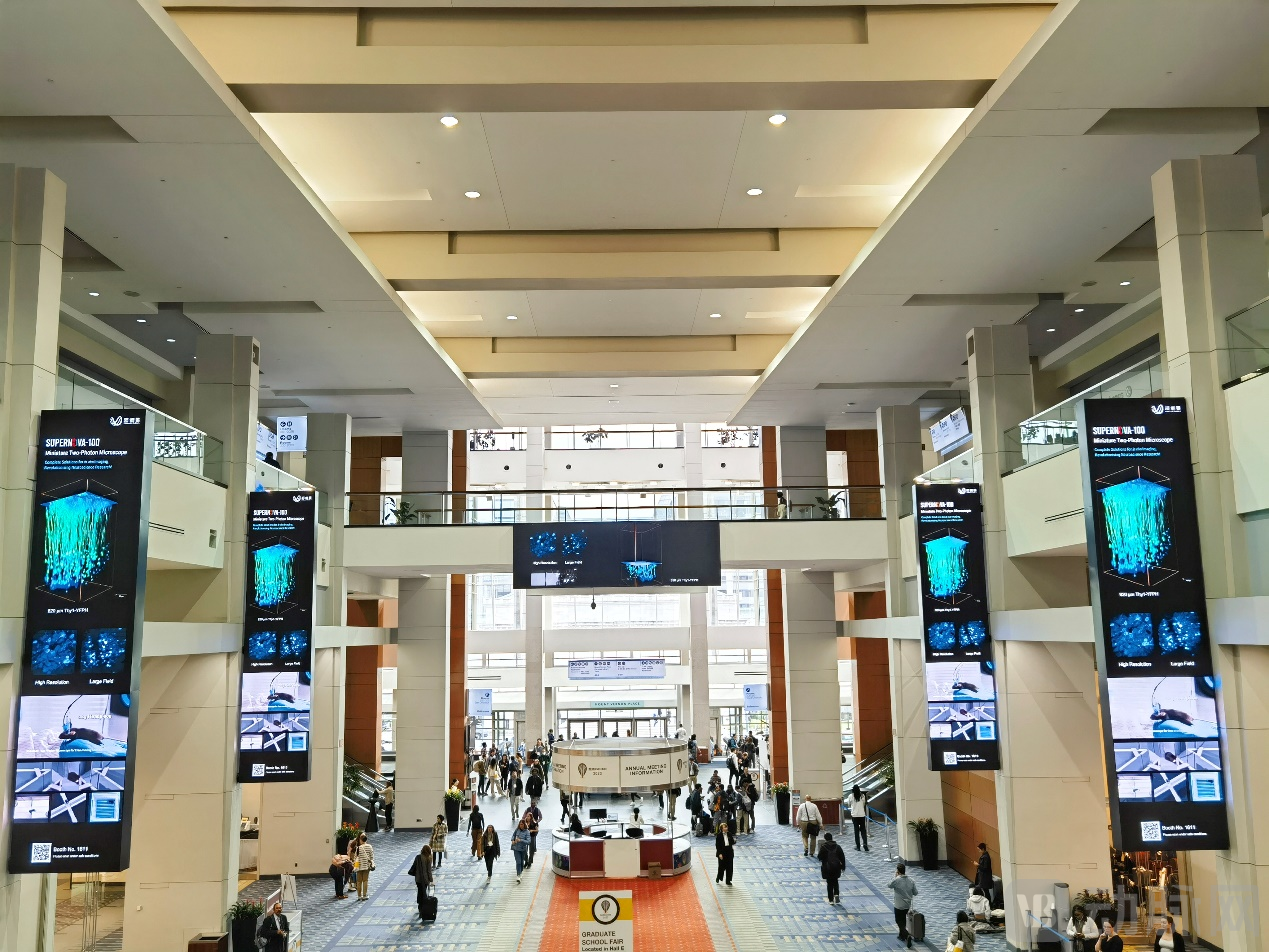 On-site at the Annual Meeting of the Society for Neuroscience
Research Sector Alone Secures Over 100 Million Yuan in Orders, Making a Strong Entry into Medical Microscopic Imaging
“Beyond the continuous pursuit of innovation, TRANSCEND VIVOSCOPE is also committed to translating cutting-edge technologies into industrial applications, thereby forging a new path for development and innovation,” Wang Aimin continued.
It is reported that TRANSCEND VIVOSCOPE has successfully commercialized its microscopes, overcoming bottlenecks in the domestic production of core technical components—including probes, specialty optical fibers, femtosecond lasers, and miniaturized objective lenses. The company has achieved independent manufacturing of miniaturized multiphoton microscopy imaging systems, which are now widely used by brain science research institutes worldwide.
In terms of commercial value, miniaturized multiphoton imaging systems have secured orders worth over RMB 100 million in China and tens of millions of yuan abroad.
Domestic users include Peking University, the Shanghai Institute for Biological Sciences of the Chinese Academy of Sciences (CAS), the Shenzhen Institutes of Advanced Technology of CAS, Fudan University, Shanghai Jiao Tong University, Westlake University, Sun Yat-sen University, South China University of Technology, and Nanjing Brain Observatory. International users include the California Institute of Technology, New York University, the Max Planck Institute for Neurobiology in Germany, the University of Bonn in Germany, and the Max Planck Institute for Ornithology in Germany.
To date, TRANSCEND VIVOSCOPE has filed over 100 patent applications, including 54 invention patents, with seven invention patents granted. In 2021, the company was recognized as a National High-Tech Enterprise.
“‘The only constant is change itself.’ Pursuing change is the means by which TRANSCEND VIVOSCOPE seeks success, while its goals and direction remain the unchanging ‘core.’” TRANSCEND VIVOSCOPE has further elevated and expanded the application scenarios of multiphoton microscopy technology, making outstanding contributions to the rapid development of in vivo imaging for global life sciences and clinical medicine. Currently, this technology has been applied to the in vivo detection of human skin cells.
SV780The in vivo two-photon microscopy imaging system was approved for market launch in December 2023, becoming China’s first medical device based on the principle of two-photon microscopy. This product assists physicians in obtaining detailed information on cellular structures and their physiological microenvironment within seconds, offering real-time, non-invasive, and dynamic diagnostic support, thereby bringing unprecedented convenience to both patients and clinicians.
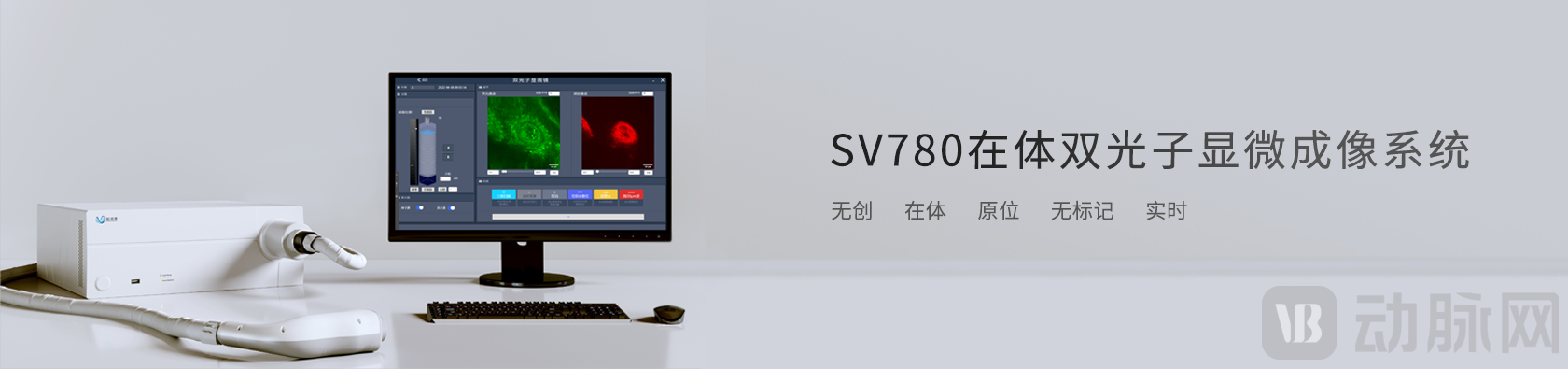
SV780 In Vivo Two-Photon Microscopy Imaging System
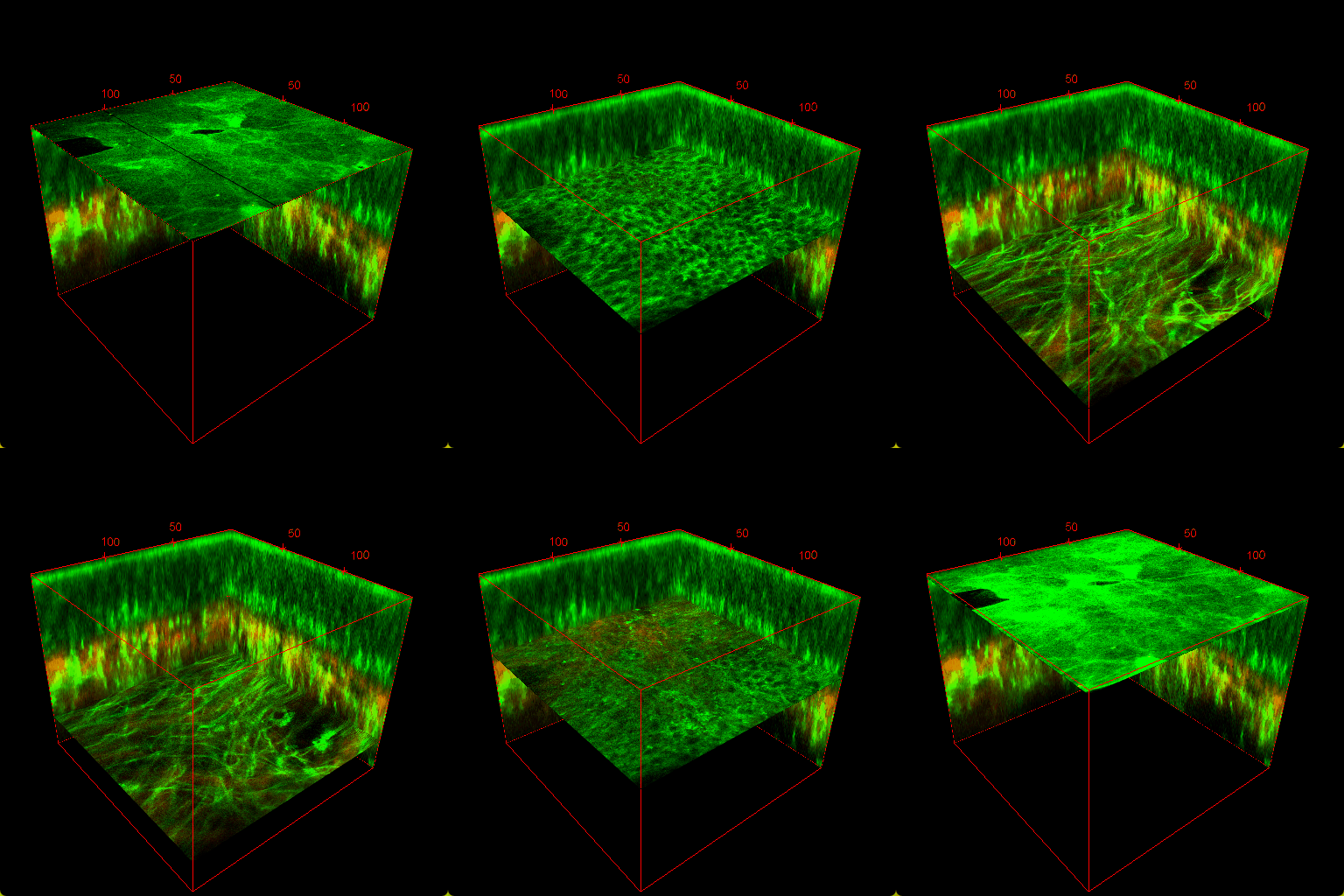
In the future, TRANSCEND VIVOSCOPE also plans to integrate its technology with traditional endoscopes to further enhance cellular imaging capabilities, creating a multimodal endoscopic diagnostic system and entering the clinical medical testing and diagnostics market. Anticipated application scenarios include early screening and detection of in vivo live-cell pathology for gastrointestinal and respiratory tract tumors, cervical cancer, and other conditions.
Conclusion
As previously introduced, the core strength of TRANSCEND VIVOSCOPE stems from the multidisciplinary team founded and led by Academician Cheng Heping of Peking University. This concentration of multidisciplinary advantages is also directly reflected in Academician Cheng Heping himself.
In 1987, Cheng Heping graduated from the Department of Mechanics at Peking University, earning a Bachelor’s degree in Mechanics and a Master’s degree in Bioengineering. Meanwhile, he completed a second major in Physiology at the Department of Biology, obtaining a second bachelor’s degree. After completing his master’s studies, Cheng remained at Peking University as a faculty member in the Department of Radio Electronics. In 1990, he chose to pursue further studies abroad in the Department of Physiology at the University of Maryland School of Medicine (Baltimore), where he successfully earned his Ph.D. in 1995.
Academician Cheng Heping has set a leading example by spearheading the interdisciplinary team at TRANSCEND VIVOSCOPE, which integrates biology, medicine, physics, and physiology. The team has repeatedly addressed major cross-disciplinary scientific challenges, contributing to the rapid advancement of in vivo imaging in global life sciences and clinical healthcare.
At the conclusion of the interview, Wang Aimin also discussed TRANSCEND VIVOSCOPE’s future development plans: “For many years, TRANSCEND VIVOSCOPE has been committed to becoming a global leader in the field of biomedical imaging, providing high-quality, systematic solutions to advance research and development in the life sciences, and jointly promoting high-quality progress in global brain science research. The company will officially launch its Series B financing round to comprehensively accelerate its international expansion, enabling this ‘national flagship technology’ to assist more scientists worldwide.”
CCMC
China Capital Management Co., Ltd. was wholly established by China Securities Co., Ltd. and founded on July 31, 2009, as one of the first pilot institutions for direct investment business by securities companies. China Capital has invested in over 290 enterprises in the field of equity investment, with a cumulative fund management scale registered with the Association exceeding RMB 80 billion. China Capital focuses on incubating and strategically laying out emerging industries, aiding in the creation of frontier positions for technological innovation. It consistently implements the investment strategy of “entering laboratories and embracing scientists,” continuously strengthening coverage and support for key areas facing “chokehold” challenges.
Guangzhou Tongxin Sci-Tech Innovation Fund
Guangzhou Tongxin Sci-Tech Innovation Equity Investment Fund Partnership (Limited Partnership) (Fund Abbreviation: Tongxin Disruptive Technology Innovation Fund) focuses on investing in and providing services to enterprises with disruptive innovative technologies. The fund’s shareholders possess strong financial backing, as it was jointly established by several well-known state-owned investment institutions in Guangzhou.
Beijing-Tianjin-Hebei National Center for Technology Innovation
The National Technology Innovation Center for the Beijing-Tianjin-Hebei Region (hereinafter referred to as the “Beijing-Tianjin-Hebei Center”) is China’s first comprehensive national technology innovation center. Adhering to its strategic positioning as an engine for scientific and technological innovation-driven growth, the Center is committed to achieving its strategic goals of becoming a strategic node in the national innovation system, a strategic hub for the collaborative innovation community of the Beijing-Tianjin-Hebei region, and a major driver of high-quality development. It has established a global collaborative innovation system integrating R&D, industry incubation, and talent development, accelerating the industrialization of major basic research achievements and fostering frontier innovations. The Center serves national strategies such as “National Disruptive Technology Innovation,” the “National Excellent Engineer Plan,” and “Coordinated Development of the Beijing-Tianjin-Hebei Region,” striving to rapidly form a “core-without-borders” collaborative innovation pattern characterized by universities “breeding seeds,” the Center “nurturing seedlings,” enterprises “cultivating timber,” and regions “forming forests.”
Stellar River Capital Management
Stellar River Capital Management, established in 2015 and headquartered in Shenzhen, specializes in equity investment and high-quality industrial M&A. The firm has invested in numerous industry leaders and well-known unicorns, and has co-established several industrial funds with provincial (and municipality directly under the Central Government) government guidance funds and listed companies. As of the end of June 2023, its assets under management exceeded RMB 3 billion. Stellar River Capital Management boasts an investment team that combines strong theoretical expertise with practical market experience. Its core members consist of seasoned financial professionals and fund managers from both domestic and overseas backgrounds, covering a wide range of research fields. Adhering to the core values of “Integrity and Win-Win Cooperation, Professionalism and Pragmatism, Creating Optimal Returns,” we remain customer-centric, strive to maximize shareholder value for portfolio companies, and jointly create a brighter future.
* References:
1. “Exploring the ‘Final Frontier’ of Life Sciences: Miniaturized Multiphoton Microscopes Illuminate the Brain,” VCBeat
2. “Visible Life and Health: Insights from a Peking University Academician,” Peking University
3. “A First! Congratulations to Chinese Scientists,” Xinhua News Agency