

Cochlear Implants Enter China's National Health Insurance and Centralized Procurement: Who Meets the Needs of Millions of Hearing-Impaired Patients?
The advent of cochlear implants has enabled hearing-impaired patients to begin “listening” to the world. However, the high cost and maintenance challenges of these devices have forced a significant portion of this population into silence.
According to the "Global Burden of Disease 2019" study, there were 1.57 billion people worldwide with hearing loss in 2019. This number is projected to reach 2.45 billion by 2050, representing a 56.1% increase from 2019. In the United States, where medical resources are well-developed, approximately 1.4 million to 4 million patients with hearing loss require cochlear implant treatment, yet only 5% of these patients receive cochlear implants.
In China, according to the Second National Sample Survey on Disability conducted in 2006, there were approximately 27.8 million individuals with hearing impairment, including about 8 million with severe to profound hearing loss; however, only 100,000 of these individuals had received cochlear implants. According to Li Chu, General Manager of Nurotron,Currently, there are over 10 million hearing-impaired patients in China who require cochlear implantation, yet the actual number of recipients remains extremely low, with only nearly 20,000 surgeries performed domestically in 2022.。
With advancements in clinical techniques and the development of clinical education, cochlear implant surgery is being gradually promoted. Currently, more than 300 hospitals across China are capable of performing cochlear implant procedures, including many prefecture-level city hospitals. Meanwhile,Cochlear implants have been included in the scope of medical insurance coverage in provinces and municipalities such as Shanghai, Anhui, Shandong, and Zhejiang., thereby reducing patient expenses. Furthermore, in 2018, China officially launched the “13th Five-Year Plan” Cochlear Implant Assistance Program, which provides free cochlear implantation for eligible children with hearing impairment, along with subsidies for surgical and rehabilitation training costs, thus alleviating the financial burden on patients.
The cochlear implant market will also be unlocked accordingly. Currently, China's cochlear implant market is still dominated by imported brands, butThe emergence of domestic brands has driven down the average price of cochlear implants, leveraged localization advantages to develop products better suited to the Chinese context, and vigorously promoted training and market education.. In this high-barrier field concerning the hearing of tens of millions, domestic brands have been diligently cultivating the market and are gradually gaining the initiative. In Hangzhou, Nurotron has remained steadfast for 17 years.
Nurotron’s mission is to help more people with hearing loss regain their hearing and lower the barriers to cochlear implantation.
As one of Wenzhou’s “Eight Kings,” Li Fangping has been immersed in the business world for many years, adept at seizing emerging opportunities. He successively engaged in the low-voltage electrical appliances and real estate businesses. Although his ventures in the real estate market progressed smoothly, Li Fangping and his son, Li Chu, had been continuously exploring potential sectors for strategic transformation. In 2005, Li Chu, who was studying abroad, introduced a new direction—cochlear implants. After extensive consultations with experts, the two recognized the substantial clinical demand among patients with hearing impairment and the lack of domestic alternatives in the market. Consequently, they decided to pivot toward developing domestically produced cochlear implants.
For post-lingually deaf patients of all ages, as well as those with severe to profound bilateral sensorineural hearing loss who derive minimal benefit from hearing aids, cochlear implants are key to restoring hearing. Cochlear implants replace the function of hair cells in the cochlea by using electrodes to stimulate auditory cells; these cells then transmit electrical impulses via auditory nerve fibers to the brain, thereby generating auditory perception. However, the high cost of imported cochlear implants, with a single device system priced as high as RMB 300,000, imposes a significant financial burden on patients with hearing impairment.
This transformation is driven more by a sense of social responsibility than by commercial considerations.
In 2006, Nurotron established its headquarters in Hangzhou and founded a research institute in the United States in the same year. At that time, the domestic cochlear implant market was still in its early stages. Li Chu recalled, “Due to the extremely high technical and translational barriers associated with cochlear implants, nearly all researchers and experts were pessimistic about this project. Domestic universities made successive attempts to tackle the challenge but ultimately failed. The reasoning was: if state-backed teams couldn’t succeed, why should private enterprises waste their money?” Moreover, the environment for medical device R&D and manufacturing in China was immature, lacking upstream suppliers. Therefore, Nurotron chose to establish its research institute in the U.S., collaborating with experienced professors to translate cochlear implant technology from the laboratory into clinical application.
The development of cochlear implants has been a protracted endeavor. Nurotron began its research and development of cochlear implants in 2005, and by 2011, the product obtained registration certification from the China National Medical Products Administration (NMPA), with investments exceeding RMB 100 million during this period. AndTo make cochlear implants more affordable and accessible to a larger number of hearing-impaired patients, Nurotron priced its first-generation device at only RMB 70,000, while the average market price for imported cochlear implants exceeded RMB 200,000 at that time.。
Cochlear implants have high technical barriers, involving multiple disciplines such as microelectronics, precision mechanics, otology, bionics, psychology, and linguistics.
According to Li Chu, the barriers to entry for cochlear implants mainly consist of three aspects: first,Exclusive Chip, must meetSmaller circuit area, more channels, higher stimulation safety, and stronger anti-static capabilityCurrently, only overseas biomedical stimulation chips are available on the market. However, these imported chips undergo frequent upgrades and iterations, and the instability of the international trade environment poses risks of supply disruptions or shortages. Nurotron’s U.S. R&D team spent nearly two and a half years independently developing its own chip. This proprietary chip not only ensures a stable supply but also allows for optimization of power consumption based on the circuit design of cochlear implants, thereby delivering a safer and more effective specialized solution.
Second,AlgorithmCochlear implants require noise reduction, signal capture, and enhancement, which directly impact sound transmission. Due to the differences between Chinese and English pronunciation—English being an intonation language and Chinese a tonal language, with key characteristics of disyllabification and quadrisyllabification—Nurotron has been continuously refining its algorithms and introducing new technologies such as artificial intelligence since its inception, in order to better convey Chinese pronunciation and achieve the core objective of “reducing noise and enhancing target speech.”
Third,ProcessCochlear implants are characterized by their compact size, stringent safety requirements, and highly refined manufacturing processes. The implantable component includes a receiving coil, stimulator, and electrodes; each implant contains multiple electrodes, with each electrode measuring only 0.02 mm in diameter—equivalent to one-third the diameter of a human hair—and arranged in a predetermined sequence. Meanwhile, the external processor must be compact and lightweight while maintaining water resistance and impact durability. After years of development, Nurotron has gradually overcome three major technological barriers, achieving independent research, development, and production.
Nurotron's latest generation ofThe Voyager cochlear implant system consists of the new-generation CS-20A slim electrode implant and the Voyager speech processor.。
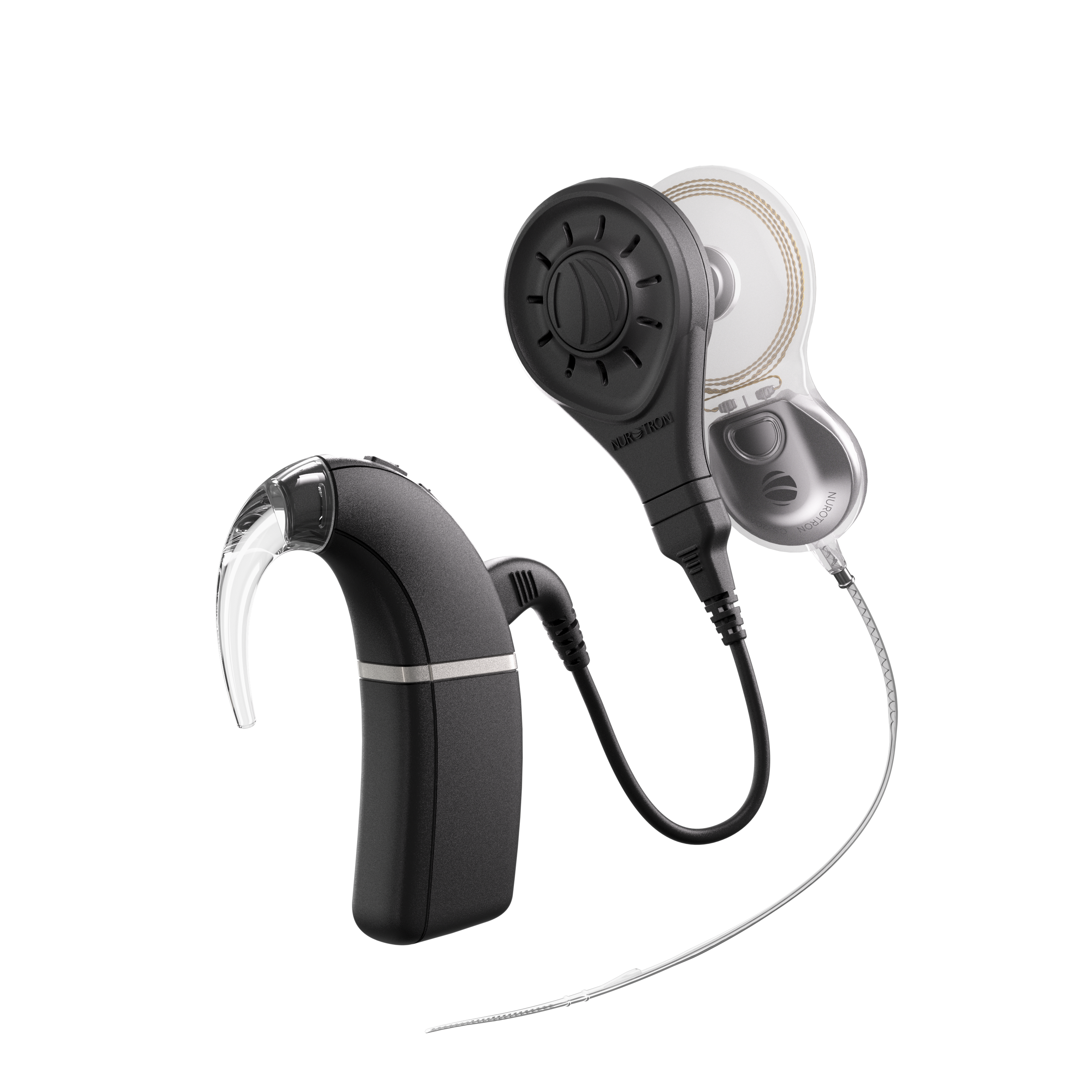
The CS-20A implant breaks through neural telemetry technology, accurately detecting microvolt-level neural signals, while its overall volume is reduced by 20% compared to the previous generation of implants, resulting in smaller surgical incisions. Meanwhile,The CS-20A implant features 26 electrodes., with 24 intracochlear and 2 extracochlear electrodes. The greater the number of channels in a cochlear implant, the more extensive and refined the cochlear stimulation coverage, resulting in more detailed representation of sound frequencies.
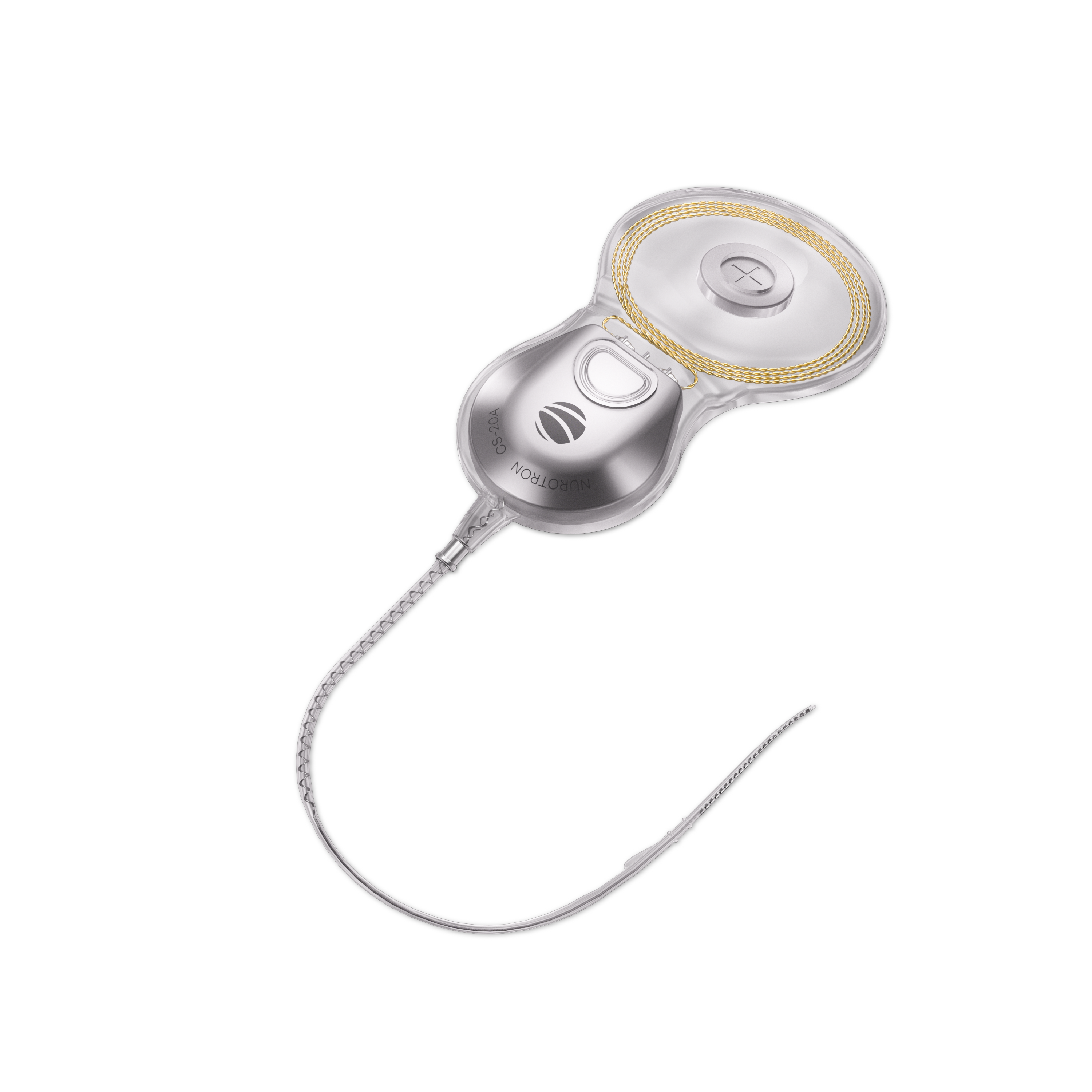
CS-20A Implant
Li Chu offered a simple analogy: “The human cochlea is shaped like a snail shell, with low frequencies represented at the top and high frequencies at the bottom; stimulating different regions allows one to perceive different sounds. The electrodes are akin to piano keys—the more keys there are, the richer the sound produced. However, increasing the number of electrodes also makes the manufacturing process more complex.”
Furthermore, the CS-20A features a slender electrode tip with a diameter of only 0.3 mm, offering flexibility and elasticity. With a variety of electrode specifications available, physicians can select the most appropriate option based on the patient’s cochlear anatomy and pathological condition, thereby preserving the delicate structures of the cochlea. Additionally, the CS-20A implant incorporates an anti-collision membrane design with an impact resistance exceeding 2.5 joules, surpassing international standards and significantly reducing the risk of cochlear damage.
The Yuanhang speech processor adopts a new digital signal processing chip, effectively enhancing the strength of target signals and suppressing noise signals, with a 17.5% improvement in speech recognition rate. Moreover, Yuanhang features intelligent scene recognition, enabling automatic switching among four scenarios—quiet, noisy, conversation, and music—to effectively extract sound and preserve details.
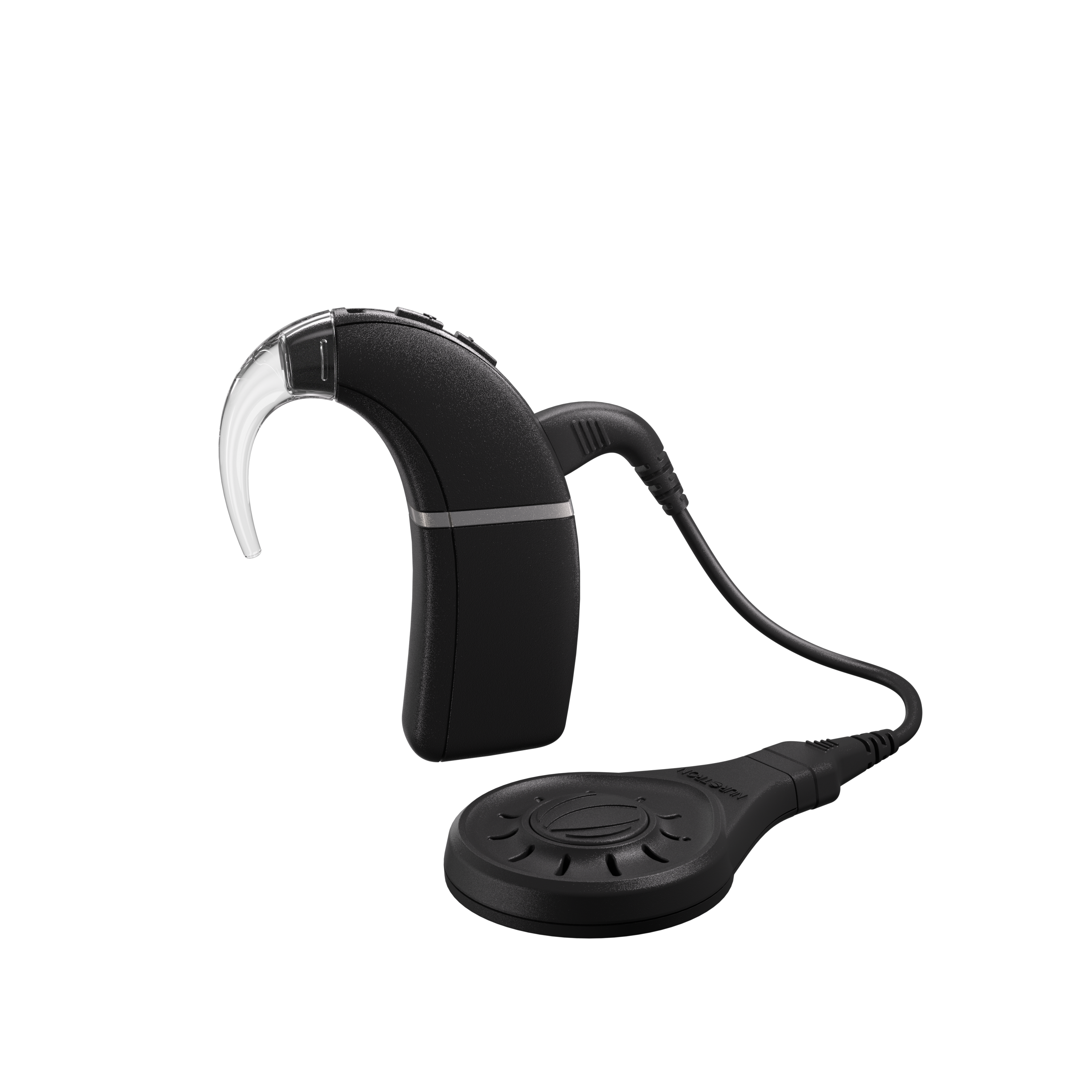
Voyager Speech Processor
Meanwhile, Bluetooth is directly embedded into the signal processing unit, enabling Yuanhang to connect directly with various mobile phone models without the need for external devices.The accompanying Nuoyin app is compatible with iOS, Android, and HarmonyOS, supporting operations such as program switching, function selection, volume adjustment, and battery level checking, and features positioning capabilities., can locate the last used location of the cochlear implant with an accuracy within 3 meters, reducing the risk of losing the external processor.
At the production level, Nurotron has built its own manufacturing facility,Annual production capacity of cochlear implants can reach 5,000 units, and has established a relatively stable supply chain. The company plans to achieve full localization of all core raw materials for cochlear implants by next year. In terms of marketization, Nurotron vigorously conducts clinical education and physician training, while providing 24/7 customer service to respond to client needs anytime, anywhere. Furthermore, Nurotron actively initiates or participates in public welfare activities, offering medical assistance to patients from financially disadvantaged families.
Nurotron's cochlear implant products have received NMPA approval,The products are exported to Russia, Spain, Romania, India, and other regions.. To date, Nurotron has served over 20,000 patients worldwide, with approximately 3,000 to 4,000 new implants annually.
Currently, the global cochlear implant market is dominated by three overseas companies. The domestic market in China was once characterized by a monopoly, but Chinese manufacturers such as Nurotron are gradually capturing market share with products that are better suited to Chinese patients and offer greater cost-effectiveness. The inter-provincial alliance led by Henan Province has included cochlear implants in its centralized volume-based procurement (VBP) program. In the long term, this VBP model, which reduces profits in distribution channels and exchanges price for volume, will promote the adoption of cochlear implants. Furthermore, with the implementation of cross-regional medical treatment policies and the reduction in the unit price of cochlear implants, the number of implantation surgeries is expected to increase. Domestic brands are poised to accelerate their market penetration through centralized procurement.
Leveraging its foundational neural electrical stimulation technology and independent software and hardware development capabilities, Nurotron is not limited to the cochlear implant sector; the company currently has four major product pipelines,Covering auditory reconstruction products, visual reconstruction products, urinary system modulation products, and brain system modulation products, with all pipelines advancing rapidly.
Chengnuo Medical, a subsidiary of Nurotron, is dedicated to the development of neuroelectrical stimulation products. In the field of urology, Chengnuo Medical is among the first domestic companies to develop a sacral nerve stimulation system, featuring the industry’s first 6-contact electrode. The product has been recognized as an innovative medical device by the National Medical Products Administration (NMPA) and received its registration certificate this June. Meanwhile, Chengnuo Medical has launched China’s first wearable percutaneous tibial nerve stimulation system, which obtained Class II medical device certification from the NMPA in June.
Approximately 20% of the global population suffers from urinary incontinence to varying degrees. In China, the consultation rate among patients with urinary incontinence is low, and neuromodulation is emerging as a novel approach to improve treatment rates. The sacral nerve stimulation system market is currently in its early development stage;Percutaneous tibial nerve stimulation systems, with advantages such as being non-invasive and implant-free, better align with the treatment preferences of Chinese patients and are expected to see further growth in clinical adoption., and Commitment Healthcare enjoys a certain first-mover advantage.
For neurological disorders, Chengnuo Medical is developing a Deep Brain Stimulation (DBS) system that implants electrodes into patient-specific deep brain regions to deliver microelectrode stimulation. Chengnuo Medical has pioneered multi-current source synchronous/asynchronous stimulation technology in China. This technology features up to eight electrodes, with multiple independent current source channels allowing for the separate configuration of stimulation currents at different amplitudes, thereby achieving more precise targeting of electrical stimulation effects. Furthermore, the company has independently developed a dedicated ASIC chip for DBS, integrating current stimulation, voltage stimulation, and multi-channel independent current source output. Additionally, the company’s DBS system supports remote programming, simplifying surgical procedures by eliminating the need to implant debugging patches into the patient’s body, thus enhancing safety.
Furthermore, Nurotron has successfully developedThe World’s First Artificial Retina System Based on Biomedical Engineering Principles, marking a breakthrough from “zero.” The company is currently collaborating with leading ophthalmology experts in China to jointly refine the product design.
Leveraging its neuroelectrical stimulation technology platform and extensive industrial resources, Nurotron boasts a sustainable product portfolio and efficient product commercialization capabilities. Rather than operating in isolation, the company is continuously strengthening external collaborations. Li Chu stated, “We aim to collaborate with more professors and department heads to translate technologies and products into clinical solutions. By leveraging Nurotron’s technical expertise and industrialization experience in the field of neuroelectrical stimulation, we strive to launch products that truly meet clinical needs. The company offers diverse forms of cooperation, such as joint ventures and patent licensing. The Percutaneous Tibial Nerve Stimulation (PTNS) system is an example of a successful translation of academic research into a commercial product.”
Currently, Nurotron has grown into a team of over 400 employees, with one-quarter dedicated to R&D and another quarter to marketing. The company places significant emphasis on technological investment and product services. Its team includes numerous experts with extensive technical experience in fields such as neural stimulation, mechanical engineering, and medicine. Furthermore, the company has established broad collaborations with external technical specialists and renowned clinical otology experts. Looking ahead, the company will continue to deepen its expertise in the field of neural electrical stimulation, strengthen the strategic layout of its core product, the cochlear implant, continuously iterate and develop new products, and accelerate the growth of its four major product lines to expand the application of neural electrical stimulation technology into more areas.