

WeDoctor Named Founding Council Member of Digital China Forum in Shanghai
From December 26 to 28, the Inaugural Conference of the Digital China Forum and the Digital Development Forum were grandly held in Shanghai. More than 500 attendees, including leading enterprises from the digital economy and related sectors across China, representatives from governmental departments of provinces and municipalities in the Yangtze River Delta region, as well as experts, scholars, entrepreneurs, and media representatives from mainstream academic, research, business, and financial institutions, gathered together to engage in in-depth discussions on the new future of digital development and new pathways for building a Digital China.
The Digital China Forum aims to bring together diverse stakeholders in China’s digital development to create an efficient platform that drives comprehensive digitalization. The forum held its inauguration ceremony and convened the first meeting of its inaugural Council. More than 20 institutions and enterprises, including the Shanghai Yangtze River Delta Business Innovation Research Institute, the Yangtze River Delta Digital Alliance, the School of Management at Fudan University, the International Innovation Institute of Zhejiang University, the Artificial Intelligence Institute of Shanghai Jiao Tong University, Tencent, WeDoctor, Ping An Group, and AstraZeneca, were selected as members of the Expert Committee and the Council, representing research institutions, digital platforms, and pharmaceutical companies. The Council meeting clarified the mission, charter, and organizational structure of the Digital China Forum, and outlined its future development direction.
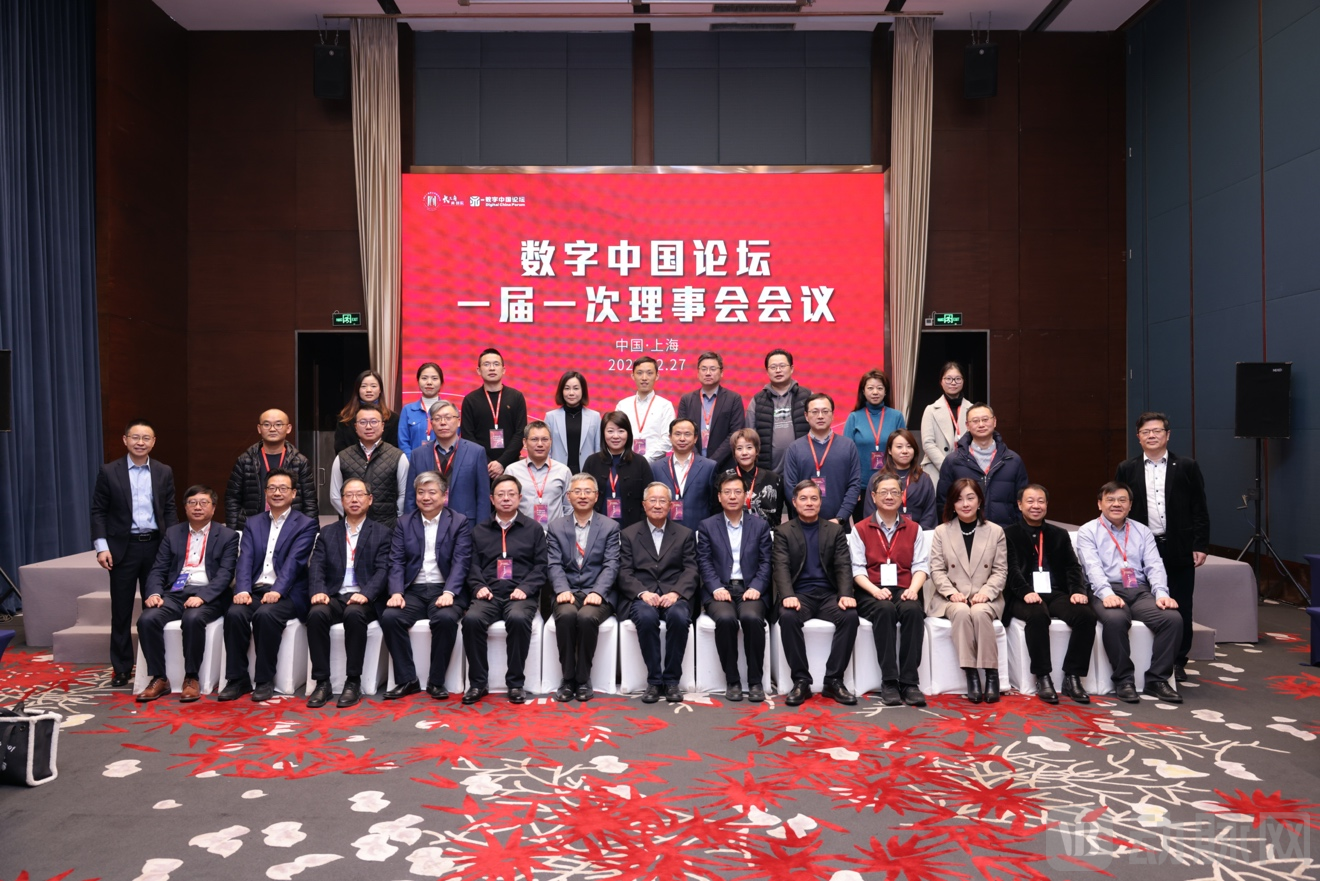
Figure | Establishment of the Digital China Forum and Convening of the First Session of the First Council Meeting
WeDoctor is a leading digital healthcare service platform in China and a pioneer in the field of digital medicine. As the “Chinese model” for digital healthcare services, WeDoctor was invited to deliver a keynote speech at the main forum of the founding conference. Qiu Kai, Senior Vice President of WeDoctor, shared the company’s innovative practices in applying medical AI within the “Digital Health Community” model, an innovation that has become a powerful driver for the intelligent upgrading of China’s healthcare service industry.
The Digital Health Consortium is an integrated healthcare service system that is user-health-centric, leverages health insurance payment as a strategic lever, utilizes digitalization as its primary means, and is driven by a health accountability mechanism. Coordinated by the Tianjin Municipal Government and built and operated by WeDoctor, the Tianjin Digital Health Consortium has achieved the “two increases and one decrease” outcome—namely, improvements in residents’ health indicators and primary care hospitals’ diagnostic and treatment capabilities, alongside a reduction in health insurance expenditures—after more than three years of exploratory practice. Due to its remarkable construction achievements and demonstrative effects, the Tianjin Digital Health Consortium model has been repeatedly highlighted and promoted by national authorities, including the National Health Commission.
For a long time, bottlenecks such as the uneven distribution of medical resources and weak primary healthcare capabilities have hindered the in-depth advancement of healthcare reform. Qiu Kai introduced that WeDoctor, leveraging its digital advantages, has fully utilized the powerful digital intelligence capabilities of RealDoctor, its open AI medical platform, along with cutting-edge expert experience, in the construction of Tianjin’s Digital Health Community, with a focus on empowering the enhancement of primary healthcare service capabilities.
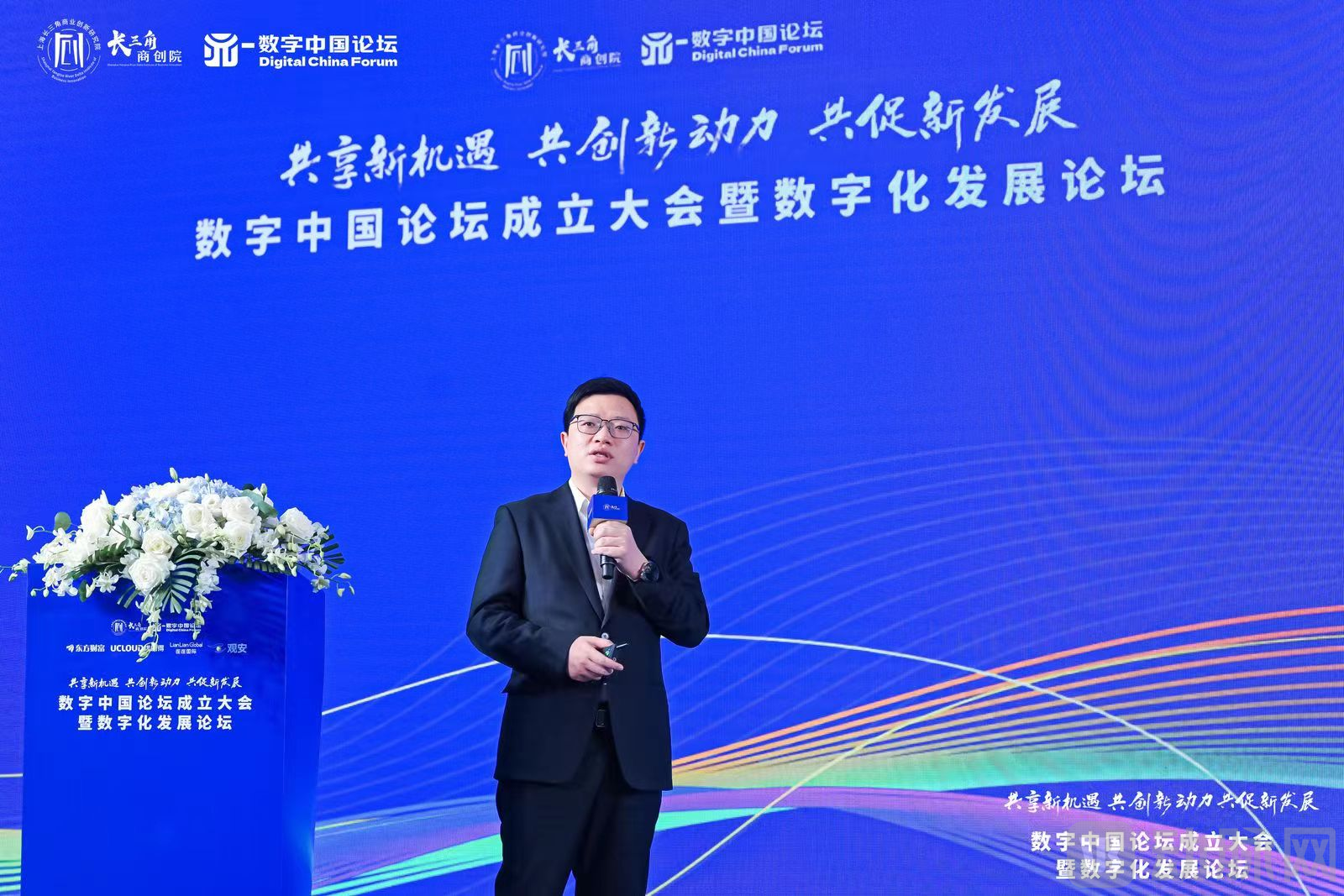
Figure | Qiu Kai, Senior Vice President of WeDoctor, Delivers Keynote Speech
Leveraging the Ruiyi Platform as its technological foundation, WeDoctor has established a Digital-Intelligent General Hospital and formed a Digital Health Community with 266 primary healthcare institutions in Tianjin. By creating five core hubs—the Digital-Intelligent Medical Center, Digital-Intelligent Pharmaceutical Center, Digital-Intelligent Cloud Testing Center, Digital-Intelligent Health Management Center, and Digital-Intelligent Supervision Center—it centrally empowers primary healthcare institutions with digital-intelligent capabilities in “medical care, pharmaceuticals, testing, health management, and administration.” This initiative reshapes service delivery processes at the grassroots level, comprehensively enhancing service quality and efficiency.
“The integration of institutional innovation and technological innovation is the key to enabling medical AI to effectively strengthen primary healthcare,” pointed out Qiu Kai. He noted that institutional innovation must be led and coordinated by the government, including policy support for establishing digital health communities, advancing payment reforms based on disease types and capitation, and promoting data interoperability. By improving operational mechanisms, it is possible to systematically implement specific scenarios, data utilization, and business models, gradually break down data silos among various stakeholders, and accelerate the training, application, and iteration of AI. Meanwhile, technological innovation requires a digital-intelligent platform covering five core capabilities—medical care, pharmaceuticals, diagnostics, health management, and regulation—to ensure efficiency gains through digital and intelligent empowerment for each disease type and every stage of care.
WeDoctor’s practice of empowering “grassroots strengthening” through medical AI has provided a new pathway to address the “inverted triangle” challenge in China’s healthcare system. The Ruiyi Platform, jointly developed by WeDoctor and the Ruiyi Medical Artificial Intelligence Research Center at Zhejiang University, leverages expert knowledge from tertiary hospitals and dynamic data from integrated healthcare communities as training sources. With large language models combined with Reinforcement Learning from Human Feedback (RLHF) as its core algorithm, the platform can rapidly enhance the service capabilities of primary healthcare institutions. Taking Tianjin’s Digital Integrated Healthcare Community as an example, the application of specialty-specific AI diagnosis and treatment systems and AI-assisted examinations based on the Ruiyi Platform has improved the quality of primary care treatment plans by 22% and increased the annual screening rate for relevant tests at the primary care level by 28%.
Amid the sweeping global wave of digitalization, the deeper application of medical AI will propel the high-quality development of digital health in China. The forum pointed out that after more than a decade of rapid growth, the digital economy has taken on the form of an “elephant in the room”—a colossal presence representing an era-defining opportunity that everyone must confront yet finds difficult to fully harness. As the construction of “Digital China” enters a phase of comprehensive acceleration, the need for sharing and collaboration has become even more urgent.
Digital China Forum Established in Shanghai to Leverage Yangtze River Delta’s Economic, Policy, Platform, and Industrial Advantages for Greater SynergyThe Digital China Forum was established in Shanghai, aiming to effectively pool the economic, policy, platform, and industrial resources of the Yangtze River Delta region to better harness synergistic effects. Data shows that in 2019, the total scale of the digital economy in the Yangtze River Delta exceeded RMB 4 trillion, accounting for one-quarter of the national total. Shanghai is actively exploring major initiatives to build itself into an international digital hub, with a clear target to raise the share of value-added from core digital economy industries in its gross regional product to 18% over the next five years.
According to Qiu Kai, the Digital Health Community model is being gradually implemented in Shanghai, driving the development of related platforms. Recently, WeDoctor signed a cooperation agreement with the Shanghai Digital Medicine Innovation Center and Ruijin Hospital, Shanghai Jiao Tong University School of Medicine. The three parties will jointly establish a National Intelligent Triage Center for Complex and Rare Diseases and a Lifecycle Comprehensive Management Center for Six Major Chronic Diseases. Based in Shanghai and serving the entire country, they aim to promote the construction of China’s triage and referral system for complex and rare diseases and the comprehensive prevention and control of major chronic diseases through digitalization. Next, WeDoctor will establish its Digital Intelligence Healthcare Headquarters in Shanghai. Leveraging the resource advantages of the Yangtze River Delta region, it will collaborate with government bodies and industry-academia-research partners to build an integrated highland for the R&D, application, and industrialization of medical AI across China, contributing to the realization of the “Digital China” strategic goal.