

15-Year Biomedical Materials Veteran Founds Boya Mate to Advance High-End Biomaterials Industrialization
The Current State of Application and Industrialization of Biomaterials in China Is Disheartening.
As early as 2009, the number of biomaterials papers published by Chinese scholars in international journals such as *Journal of Medical Devices*, as well as the number of SCI citations, had already ranked among the highest globally. Regrettably, however, China’s industrialization of biomaterials lags behind that of the United States, Japan, and certain European countries, with approximately 70% of high-end products relying on imports; domestic enterprises’ industrial applications are predominantly focused on mid- to low-end products.
Therefore, advancing the industrialization of biomaterials in the field of high-end medical products has become the lifelong ambition of many biomaterials researchers and the original entrepreneurial vision of BOYA MATERIALS’ three founders.
“From the very beginning, BOYA MATERIALS was founded with the mission of promoting the industrialization of high-end biomedical materials,” said Ye Yu, founder and chairman of BOYA MATERIALS.
In 2020, Ye Yu, then Chairman of Tus New Materials Group, returned to Beijing. During a meeting with his former academic mentor, Professor Zheng Yufeng, a remark by Professor Zheng foreshadowed the founding of BOYA MATERIALS: “Xiao Ye, after all these years of navigating this industry, have you found what you truly want to do?”
A single remark from his mentor struck a chord with Ye Yu, whose heart had long been eager to act: “Professor, I want to pursue the industrialization of biomedical materials.” As expected, Ye Yu’s answer aligned perfectly with Professor Zheng Yufeng’s aspirations.
As her heartfelt aspiration slipped out, the first major challenge confronted Ye Yu: how to truly drive the industrialization of high-end biomedical materials? Or, more concretely, whether to launch her own startup or become an investor became the primary question on Ye Yu’s mind. This was because “in the early stages of industrializing high-end biomaterials, funding is secondary; the key priority lies with talent.”
After careful consideration, Ye Yu decided to co-found a startup with Professor Zheng Yufeng and Cheng Baozhong, then President of Tus-New Materials Group. There is no need to elaborate on Professor Zheng Yufeng’s impressive credentials: he is a professor at Peking University, a Chang Jiang Scholar Distinguished Professor, a doctoral supervisor, a Fellow of the International Union of Societies for Biomaterials Science and Engineering, and Vice Chairman of the Chinese Society for Biomaterials. The journal he editsBioactive MaterialsThe journal was consecutively selected for the TOP Journal list by the National Science Library, Chinese Academy of Sciences in 2020, 2021, and 2022.

Professor Zheng Yufeng’s Speech at the BOYA MATERIALS Launch Ceremony
Co-founder Cheng Baozhong is a graduate of Tsinghua University and formerly served as Deputy General Manager of Anhui TusStar and President of Tus New Materials Group. Ye Yu himself brings 15 years of experience in the equipment manufacturing, technology services, and industrial investment sectors, and previously served as Chairman of Tus New Materials Group.
Through the joint efforts of the three founders, BOYA MATERIALS was established. Once the team was fully assembled, another challenge confronted them: how to overcome the low success rate in industrializing high-end products and their limited market positioning? On a December afternoon, Ye Yu shared with VCBeat the strategic initiatives undertaken by BOYA MATERIALS in the industrialization of biomaterials, along with the underlying rationale.
“Identify material requirements based on specific scenarios, then seek out and develop materials according to those needs, rather than trying to find applications for existing materials. This is the proper development logic for (biomaterials),” said Ye Yu.
Therefore, the selection of “application scenarios” is crucial for the development of a biomaterial. In this regard, BOYA MATERIALS has established its own set of principles, which comprise two key elements: clear market demand and a sufficiently high level of commercialization.
In the context of interviews with BOYA MATERIALS, "clear market demand" refers to clinical needs and their associated pain points being well-defined and relatively uniform. For instance, in the consumer market, customer demands for products can be highly diverse, thereby increasing the difficulty of product development. In contrast, within the serious healthcare market, there is only one fundamental objective: disease treatment. The management of diseases follows established protocols and evidence-based guidelines, which provides clear direction for product development. Thus, incorporating "clear market demand" as a factor in scenario selection aims to facilitate product research and development.
The higher degree of marketization is driven by considerations for product commercialization. Many niche sectors within serious healthcare have relatively low levels of marketization, which to some extent limits the commercialization pathways for products. Therefore, the founding team of BOYA MATERIALS raised a question: Is there a “scenario” that possesses certain characteristics of serious healthcare while also exhibiting a high degree of marketization?
To date, BOYA MATERIALS has made its answer public—it was the first to enter the tracks of dental implants and sports medicine.
Let us first examine the dental implant sector. On one hand, China’s private dental care service market offers vast potential; according to Southwest Securities, its market size exceeded RMB 100 billion in 2021. Undoubtedly, private dental institutions hold a dominant position in China’s dental healthcare industry. According to VCBeat’s 2022 White Paper on Dental Healthcare, there are approximately 100,000 dental institutions nationwide, with private dental institutions accounting for about 80%, aligning with the second element of BOYA MATERIALS’ “scenario” selection criteria.
On the other hand, in this vast and relatively highly marketized market, dental implants possess stronger medical attributes compared to care services such as teeth cleaning and teeth whitening. Therefore, it aligns with the key element of “clear market demand” in BOYA MATERIALS’ “scenario” selection criteria.
The sports medicine sector has undoubtedly emerged as a new hotspot in the healthcare industry in recent years. According to Yunhu Consulting, the global sports medicine market was valued at approximately USD 7 billion in 2021. Although China’s sports medicine market is currently smaller, standing at around RMB 4 billion, it boasts a compound annual growth rate (CAGR) exceeding 23%. Furthermore, within the sports medicine sector, excluding certain sports rehabilitation services with wellness-oriented attributes, core offerings such as sports medicine consumables and surgical procedures retain their status as serious medical interventions.
Therefore, at this stage, dental implants and sports medicine have become the two key “scenarios” selected by BOYA MATERIALS. With these “scenarios” defined, the next step, in line with BOYA MATERIALS’ product development logic, is to distill the product requirements arising from each scenario. What insights has BOYA MATERIALS gained in this process? And what products have been developed based on these insights?
Taking dental implants as an example, the first step in understanding patient needs is to understand the precise biological and clinical processes that occur following implant placement.
According to Ye Yu, after implantation, dental implants undergo three stages: inflammatory response, osteoclastic response, and osteogenic response, each imposing different requirements on the implants. Nevertheless, despite these varying requirements, they are all evaluated based on the three major dimensions of biomaterial assessment.
VCBeat has learned that the evaluation criteria for biomaterials have undergone several major stages of development, evolving from initial assessments of biosafety and biocompatibility to the concept of “bio-adaptation” proposed in 2011. The concept of bio-adaptation refers to the ability of implanted materials, on the basis of meeting biosafety and biocompatibility requirements, to proactively adapt to and interact with the physiological environments (including histological, mechanical, and chemical conditions) of various tissues, organs, and anatomical sites in the human body, thereby promoting effective repair of damaged tissues and organs and restoring their physiological functions.
Subsequently, building upon the concept of bio-adaptation, Professor Zheng Yufeng and Academician Wang Yingjun proposed the concept of “precision bio-adaptation” in 2021, adding temporal adaptation and spatial adaptation to the existing dimensions of mechanical adaptation, tissue adaptation, and degradation adaptation. “This essentially adds rulers of time and space to the concept of bio-adaptation, making it more precise,” said Ye Yu.
What distinct biological compatibility requirements are imposed on dental implants at each specific stage of the implantation process?
Specifically, the primary mechanical requirement for dental implants is a higher strength per unit area; in simpler terms, this means that the implant must be compact in size while maintaining sufficient structural integrity.
The reason lies in the limited volume of human alveolar bone, with most “patients” requiring dental implants belonging to the elderly population, among whom alveolar bone atrophy is common. Due to the inherent strength limitations of conventional materials, manufacturers often increase implant dimensions to ensure sufficient mechanical strength, thereby necessitating bone augmentation surgery for most patients prior to formal implantation. In response, BOYA MATERIALS has “identified” a material that better meets market expectations for the mechanical strength of dental implants.
This material is nanocrystalline pure titanium. By leveraging grain refinement strengthening, BOYA MATERIALS has achieved a strength of 1200 MPa for pure titanium, representing an increase over the 590 MPa of conventional pure titanium implants and the 1000 MPa of Ti-Zr implants. Meanwhile, the diameter of BOYA MATERIALS’ nanocrystalline pure titanium implants is less than 2.5 mm, compared to the typical 4 mm diameter of pure titanium implants and the 3.3 mm diameter of Ti-Zr implants. According to Ye Yu, this reduction in implant size can also enable more than 60% of patients to avoid bone augmentation surgery.
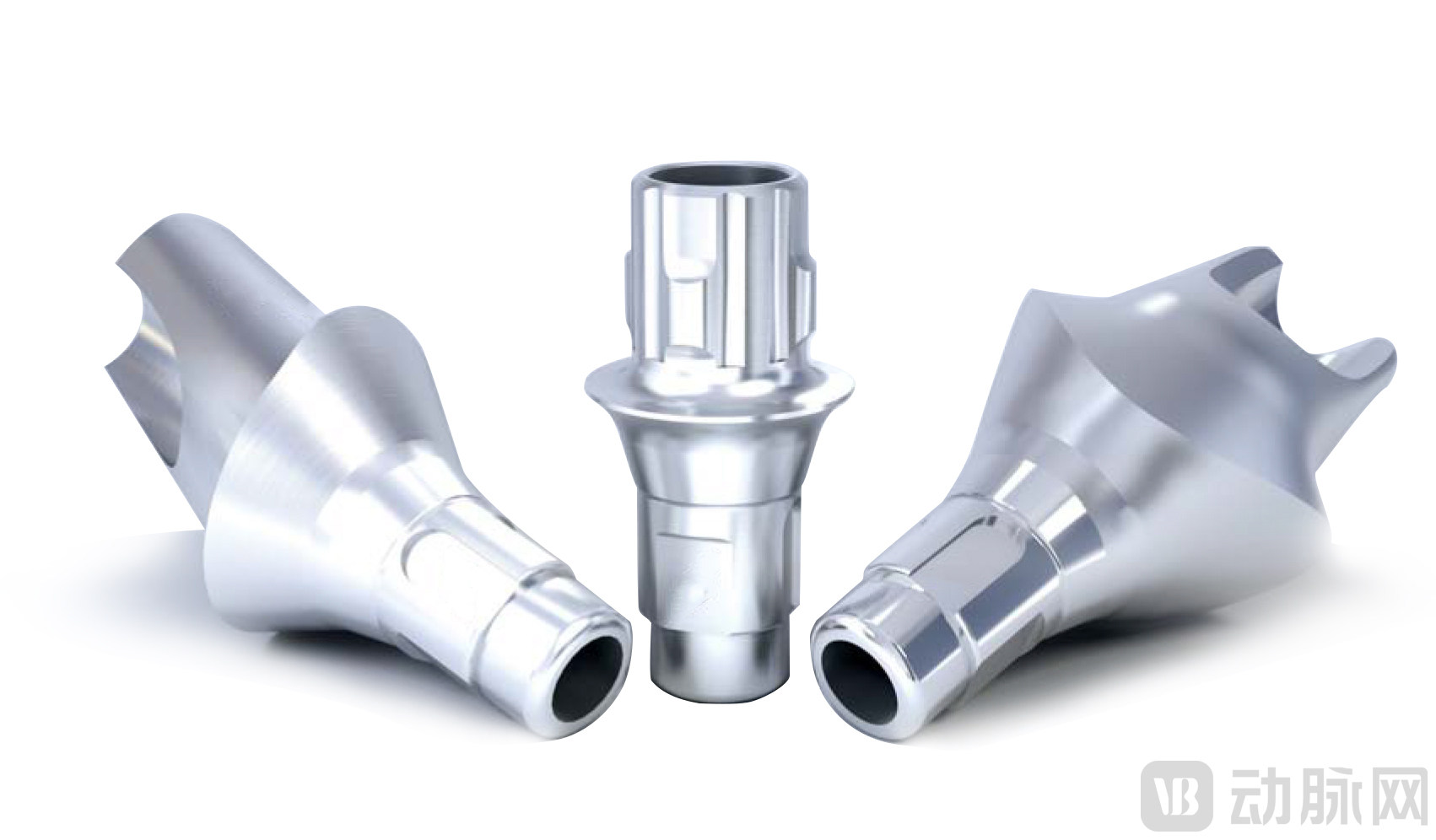
BOYA MATERIALS Nanocrystalline Pure Titanium Dental Implant
Secondly, according to Ye Yu, during the early and middle stages of implantation, specifically the inflammatory and osteoclastic phases, the bone integration capacity at the wound site declines, which may lead to implant failure. Therefore, before entering the osteogenic phase, manufacturers should enhance primary stability by slowing the rate of decline in bone integration capacity and shortening the duration of the inflammatory and osteoclastic responses.
For implant manufacturers, the primary approach to enhancing initial stability is to increase the surface activity of the implant. However, “implant surfaces are not uniformly active; their surface activity stems from the proportion of grain boundaries in the material—the greater the number of grain boundaries, the higher the activity.”
By refining the grain size of nanocrystalline materials, BOYA MATERIALS has reduced the grain size from tens of micrometers to 100–200 nanometers. This represents a two-order-of-magnitude increase in grain boundary density, which significantly enhances bioactivity. The increased surface bioactivity of the implants also accelerates osteogenesis. According to Ye Yu, the osteogenesis cycle for implants made from BOYA MATERIALS’ nanocrystalline pure titanium is approximately three months, compared to six months for conventional pure titanium and four to five months for Ti-Zr alloys.
This is merely one of BOYA MATERIALS’ efforts to enhance the initial stability of dental implants. Regarding the long-term stability of dental implants, Ye Yu told VCBeat that it is related to the assembly precision and osseointegration strength of the implant system (including abutments, crowns, implants, etc.): the higher the assembly precision, the lower the probability of micromotion; conversely, the lower the assembly precision, the higher the probability of micromotion. Micromotion may lead to bone resorption, thereby reducing osseointegration strength and potentially resulting in implant failure after 5–10 years. Similarly, greater osseointegration strength enhances resistance to bone resorption and reduces the risk of implant failure. “Whether a patient’s physical condition will still permit re-implantation after 5–10 years is truly uncertain,” Ye Yu stated.
According to Ye Yu, the key to enhancing long-term stability lies in the machining precision and surface roughness of the implant system. Both factors are invariably correlated with the surface hardness of the material: higher surface hardness yields better machinability and more uniform sandblasted pores, whereas lower hardness predisposes the material to tool burn during machining and results in less uniform pore distribution. Evidently, the increased hardness conferred by nanocrystalline materials improves both machining precision and surface roughness, thereby naturally enhancing long-term stability.
Regarding degradation adaptability, VCBeat has learned that the chemical composition of nanocrystalline pure titanium is identical to that of pure titanium, containing only trace impurities such as carbon and hydrogen, thereby fundamentally eliminating the risk of toxic metal ion leaching.
Furthermore, it is worth noting that in addition to dental implants, BOYA MATERIALS has also laid out guided bone regeneration (GBR) membranes in the dental implant sector. In terms of mechanical compatibility, BOYA MATERIALS’ GBR membrane utilizes degradable metals, offering superior strength and toughness compared to traditional materials. Regarding tissue compatibility, the membrane employs materials with excellent ductility, combined with high-precision calendering technology, reducing membrane thickness by an order of magnitude compared to existing products. Additionally, high-precision metal laser processing technology has been developed in tandem, resulting in precisely engineered pores that effectively prevent tissue adhesion. In terms of degradation compatibility, the degradation products of BOYA MATERIALS’ GBR membrane can induce new bone formation, and its degradation rate is well-matched with the rate of new bone generation.
Currently, BOYA MATERIALS’ GBR membrane has completed product trial production and initiated animal studies, with the innovative medical device registration certificate expected to be obtained in 2026. In the sports medicine sector, BOYA MATERIALS’ first sports medicine product—the meniscus suturing device—entered the trial production phase this September and is projected to obtain regulatory approval and commence mass production in 2026.
Notably, in addition to BOYA MATERIALS’ first-generation dental implant products, its subsequent iterative implant products, GBR membranes, and sports medicine products are all targeting approval through the Innovative Medical Device Review Pathway to obtain medical device registration certificates. This underscores BOYA MATERIALS’ confidence in the innovativeness of its self-developed products.
“Promoting the Industrialization of Biomaterials”: In addition to adhering to sound product development principles, BOYA MATERIALS has also made “adjustments” to its business model. The most significant of these “adjustments” is the provision of technological enablement to other industry peers.
“We will certainly develop our own products, but as I outlined at the beginning of this interview, our fundamental goal is to drive the industrialization of biomaterials. This is an endeavor that requires support from a wide range of stakeholders. Therefore, we are committed to collaborating with all parties across the industry, whether through market channel partnerships for our proprietary products or technical collaborations with other industry peers,” summarized Ye Yu. “This is the raison d'être of BOYA MATERIALS, and it will remain our core mission moving forward.”