

FDA Releases New Draft Guidance on Potency Assurance for Cellular and Gene Therapy Products
In 2011, the U.S. Food and Drug Administration (FDA) issued the guidance document “Potency Tests for Cellular and Gene Therapy Products,” which primarily focused on potency testing methods. Since 2011, the field of cell and gene therapy (CGT) has made significant advances. Recognizing this progress, the FDA released a draft guidance titled “Assuring Potency for Cellular and Gene Therapy Products” in December 2023. This new document goes beyond a sole focus on potency testing, adopting a more comprehensive approach to ensuring potency throughout the entire product lifecycle.
The following are some key differences between the 2011 guidance document and the 2023 draft guidance:
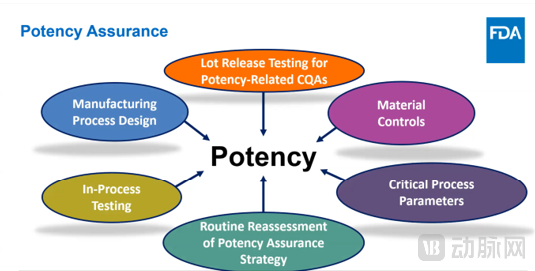
• Broader Approach vs. Potency Testing Alone: The new guidelines emphasize a multifaceted approach, including manufacturing process design and control, material control, in-process testing, lot-release potency assays, and traditional potency testing.
• Phased Implementation: The new guidelines recognize that potency assurance strategies should be progressively developed and implemented throughout the product development process, rather than being initiated only in later stages.
• Considerations for Expedited Clinical Development: The new guidelines acknowledge the growing trend toward expedited clinical development of cell and gene therapy (CGT) products and provide specific recommendations to ensure efficacy in such scenarios.
Some key distinctions are as follows:
• Develop Quality Target Product Profiles (QTPP) based on your understanding of the product's mechanism of action, intended clinical indications, and route of administration.
• Identify potency-related critical quality attributes (CQAs) that are important for achieving the intended therapeutic effect.
• Conduct risk assessment for each CQA related to potency:
Identify risks to product efficacy and assess their significance by analyzing their likelihood and severity.
• Design manufacturing processes to consistently produce batches of high-potency products.
• Control critical material attributes and manufacturing process parameters that may affect product potency.
• Conduct potency testing with appropriate acceptance criteria for in-process sample testing and batch release testing.
• May include physicochemical or bioanalytical testing;
• It should have appropriate precision, accuracy, specificity, and robustness;
• Minimize redundant analysis;
• Minimize the use of animals in potency analysis;
• Critical quality attributes (CQAs) related to efficacy that are at risk should be quantitatively analyzed.
Potency assurance strategies should typically include multiple release tests, including at least one bioanalytical method for determining the relative biological activity of the product.
Efficacy assurance strategies may not yet be fully mature, but a clear strategy should still be developed, including:
• Identify the CQAs initially associated with product potency
• Assess CQA risks related to efficacy and take measures to mitigate these risks
Include the following information in the initial IND submission:
• The product’s mechanism of action and QTPP, the initial list of CQAs related to potency, and the methods for identifying these CQAs.
• Description and rationale for the potency assurance strategy.
• Further strengthen the overall plan for potency assurance strategies during product development (e.g., product characterization analysis and development of potency assay methods).
Comprehensive efficacy assurance strategies should have been established:
• Manufacturing processes and control strategies should provide appropriate assurance, commensurate with the stage of development, to ensure consistent product potency.
• The control strategy shall include at least one assay to measure potency-related CQAs with appropriate acceptance criteria.
• The analytical procedures used to measure potency-related CQAs have been validated, demonstrating that their performance is adequate to confirm that the CQAs are within acceptable limits.
• Ensure the stability of potency-related critical quality attributes (CQAs) during product preparation, storage, and administration.
Prior to BLA submission, the potency assurance strategy should be re-evaluated and refined using all available product quality and clinical data.
• For clinical studies involving the risk of serious disease or injury, if the product’s efficacy is not adequately assured, subjects may be unreasonably exposed to such risks.
• If adequate statistical power is not ensured in Phase II or Phase III clinical trials, the study may be considered to have design flaws due to the following reasons:
If not all batches possess the capacity to achieve the intended therapeutic effect, statistical power will be reduced.
Studies using batches with unknown potency or inadequate control may fail to provide sufficient product data to justify specifications for commercial products.
• How to seek FDA advice on potency assurance strategies.
• Identify potency-related CQAs throughout the product development lifecycle and provide recommendations for developing a potency assurance strategy.
• Detailed recommendations on the development and use of potency analysis and acceptance criteria.
• Examples of recommended potency assay selection and design for certain CGT product categories.
• Recommendations on analytical control, validation/verification, reference materials, and change management.
• Potency testing is a critical aspect of potency assurance; however, ensuring potency requires a more comprehensive, full-lifecycle approach.
• Strategies for ensuring the potency of CGT products include:
Define the product's QTPP and identify CQAs related to potency;
Conduct risk assessment for each CQA related to potency;
Adopt a multifaceted approach to mitigate the risks associated with potency-related critical quality attributes (CQAs), including testing for potency-related CQAs that are at risk;
Adopt a lifecycle approach to efficacy assurance—reassess and refine the efficacy assurance strategy as product knowledge is acquired during development.
What are the key differences between the newly released CGT product efficacy assurance draft by the FDA and the 2011 document(Swipe up or down to view more)
·Implement potency tests with appropriate acceptance criteria for in process and lot release testing.
3.Reassess and refine your potency assurance strategy as you increase your understanding of your product and manufacturing process.
Potency Assurance and acceptance criteria
1.Potency release assays and their acceptance criteria are essential elements of a potency assurance strategy.
·May include physiochemical assays and bioassays.
·Should have suitable precision, accuracy, specificity, and robustness.
·Minimize assay redundancy.
·Minimize the use of animals in potency assays.
·Should quantitate a potency-related CQA that is at-risk.
2.Potency assurance strategies should typically include multiple release assays, including at least one bioassay that measures a relevant biological activity of the product.
Progressive implementations of a potency assurance strategy
1.Your potency assurance strategy may not be fully mature during early development stages, but you should still have a defined potency assurance strategy that includes:
·Identification of initial potency-related CQAs for your product.
·An assessment of risks to potency-related CQAs and measures to mitigate these risks.
2.Include the following information in your initial IND submission:
·Your product’s mechanism of action and QTPP, a list of initial potency-related CQAs and an explanation of how potency-related CQAs were identified.
·A description and justification of your potency assurance strategy.
·General descriptions of your plans for further strengthening your potency assurance strategy during product development (e.g. plan for product characterization and potency assay development.
3.By later stages of clinical development, you should have developed a comprehensive potency assurance strategy:
·Manufacturing process and control strategy should provide phase-appropriate assurance of consistent product potency.
·Control strategy includes at least one assay measuring a potency-related CQA with appropriate acceptance criteria.
·Assays measuring potency-related CQAs are qualified to demonstrate they have adequate performance to confirm that CQAs are within acceptable limits.
·Potency-related CQAs are stable during storage and preparation of the product for administration.
4.Before submitting a BLA, you should use al available product quality and clinical data to reassess and refine your potency assurance strategy.
5.Inadequate potency assurance may lead to a clinical hold:
·For clinical investigations involving significant risk of illness or injury, if the potency of the product is not adequately assured it may be unreasonable to expose subjects to these risks.
·If potency is not adequately assured in a PII or III investigation, the investigation may be considered deficient in design for the following reasons:
oReduced statistical power to detect an effect of the product if not all lots have the capacity to achieve the intended therapeutic effect.
oinvestigations using lots with unknown or indadequately-controleed potency may not provide sufficient product data to justify spefications of the commercial product.
Other topics
Recommendations for requesting advice from FDA regarding your potency assurance strategy.
General advice for identifying potency-related CQAs and developing a potency assurance strategy throughout the product development lifecycle.
Detailed recommendations on the use and development of potency assays and acceptance criteria.
Examples of recommended approaches to potency assay selection and design for some CGT product classes.
Advice on assay control, qualification/validation, reference materials, and change management.
Key points
Potency tests are important aspect of potency assurance, but assuring potency requires a broader approach.
Develop a potency assurance strategy for your CGT product:
·Define your product’s QTPP and identify potency-related CQAs
·Conduct a risk assessment for each potency-related CQA
·Use a multi-faceted approach to reduce risks to potency-related CQAs, including tests for at-risk potency-related CQAs.
·Take a lifecycle approach to potency assurance-reassess and refine your potency assurance strategy as you gain product knowledge during development.