

Strategizing Medical Device Sales in the U.S. Ambulatory Surgery Center Market
Currently, the settings for surgical procedures in the United States have shifted. In this context, medical device companies must refine their marketing and sales strategies to adapt to the expanding non-hospital market. According to data provided by Clarivate,People's healthcare preferences are shifting from traditional inpatient care to outpatient services.. For example, from 2020 to 2022, the number of major joint replacement surgeries performed in Ambulatory Surgery Centers (ASCs) increased by 30%, and 60% of ASC directors and surgeons expect this trend to continue.
“The medical device industry should adopt a data-driven approach to obtain comprehensive, up-to-date information and conduct refined analyses of complex real-world data. By contextualizing complex data science within the broader landscape of the medical device sector and integrating it with real-world data analytics, we can clearly understand the current distribution of various treatment modalities, thereby accurately seizing opportunities.”
— Andrew Lee, Vice President of Healthcare and Life Sciences at Clarivate
We canDeliver customized strategies to clients by timely acquiring precise data and conducting appropriate analytical insights.,Including the provision of the following information:
● Differences in Surgical Volume Across Various Service Settings
● Preferences and Procurement Behavior of Ambulatory Surgery Centers (ASCs)
● Growth Trends and Competitive Dynamics in Specific Markets
Understanding Variations in Surgical Volume Across Different Service Settings
Drivers behind the continued growth of non-hospital surgeries include permanent operational changes resulting from the COVID-19 pandemic, as well as the Centers for Medicare & Medicaid Services’ (CMS) plan to phase out the Inpatient Only (IPO) list over the next three years and continually add surgical procedures to the Ambulatory Surgical Center (ASC) Covered Procedures List (CPL). As a result, patients gain access to more treatment options while also benefiting from reduced surgical costs.
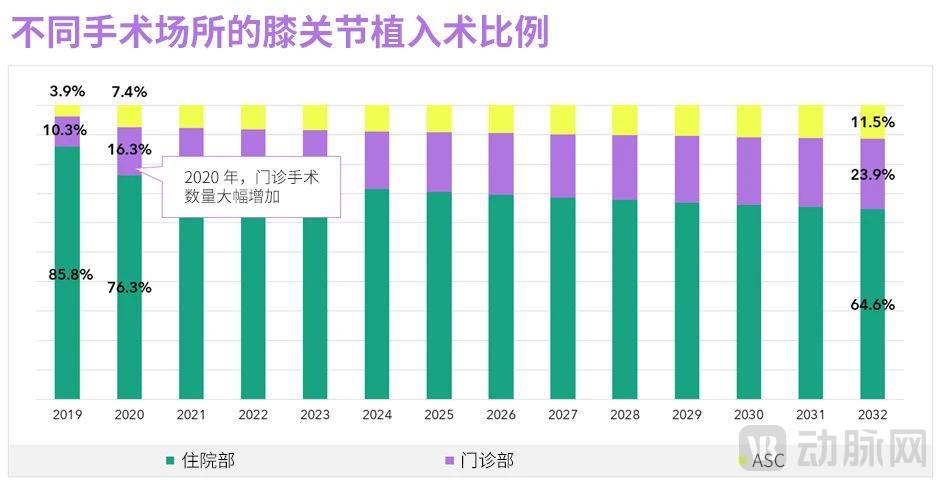
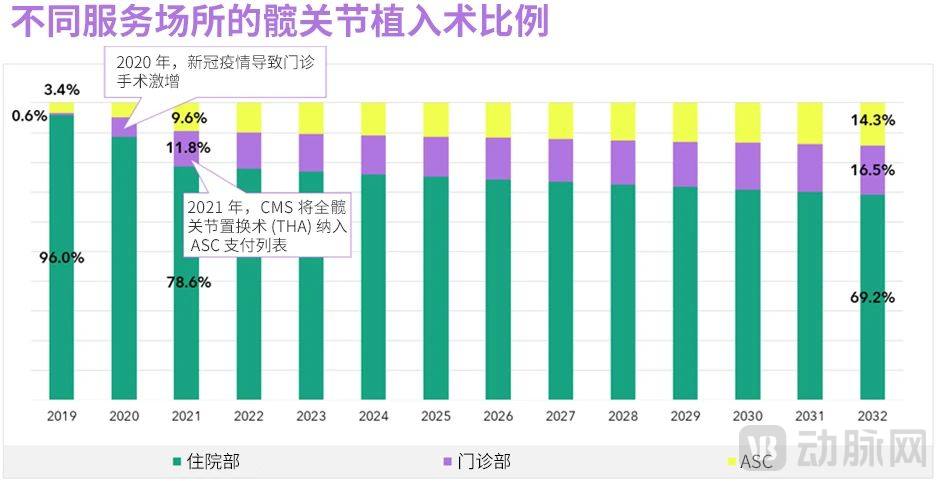
To better illustrate the shifting trends in surgical settings (both within and outside hospitals), Clarivate, through its U.S. Procedure Finder and Medtech 360 reports, demonstrates the impact of the COVID-19 pandemic and changes implemented by the Centers for Medicare & Medicaid Services (CMS) to the Inpatient Only (IPO) and Ambulatory Surgical Center Covered Procedures List (ASC CPL).The Surge in the Number of Total Knee Arthroplasty (TKA) and Total Hip Arthroplasty (THA) Procedures Performed in Non-Hospital Settings.
Source: Clarivate Medech 360 Report
Source: Clarivate Medtech 360 Report
According to data from the U.S. Procedure Finder, during the COVID-19 pandemic,Ambulatory Surgery Centers (ASCs) are also witnessing a rapid increase in sports medicine and spine-related procedures, such as rotator cuff repair, knee ligament reconstruction, and cervical fusion.As the Centers for Medicare & Medicaid Services (CMS) continues to remove procedures from the Inpatient Only (IPO) list and add them to the Ambulatory Surgical Center Covered Procedures List (ASC CPL), it is anticipated that total knee arthroplasty (TKA) and total hip arthroplasty (THA) will undergo the same transition.
By conducting a more granular analysis of surgical data at the level of healthcare institutions and physicians, medtech companies can identify which institutions and regions are experiencing the fastest growth in surgical volume, thereby uncovering the greatest sales opportunities.

Assessing Preferences and Procurement Behaviors of Ambulatory Surgery Centers (ASCs)
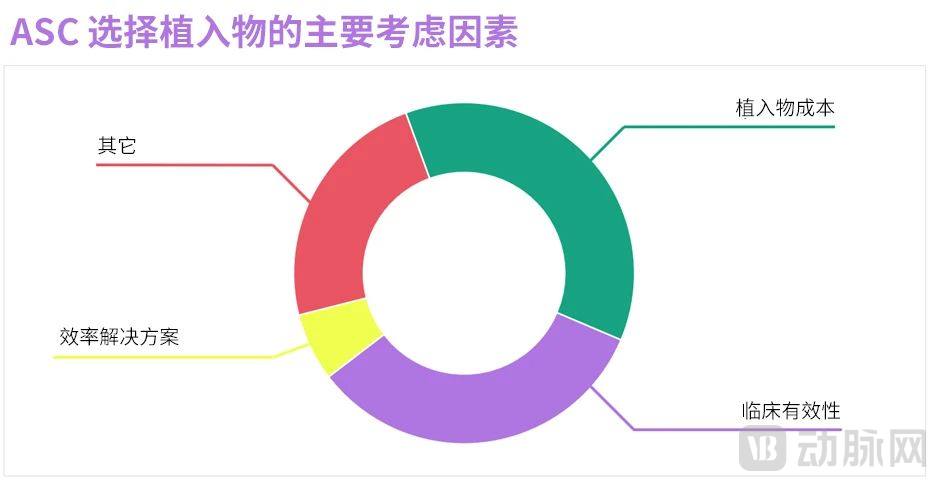
Generally, the requirements, procurement plans, and budgeting schemes of Ambulatory Surgery Centers (ASCs) differ from those of hospitals. Therefore, to develop a reasonable and effective sales strategy tailored to the highly competitive ASC market,Medical device companies need to understand the primary factors that ASCs consider when making procurement and partnership decisions.Survey data serves as a powerful tool to help companies gain insights into the following aspects of ASCs:
Changes in ownership and structure have enabled it to accommodate a larger patient population and drive revenue growth;
● Commonly used medical technologies;
● Willingness to adopt robot-assisted surgery or devices;
● Preferences for brands and suppliers, along with the rationale behind these preferences;
● Key factors ASCs consider when selecting medical device partners, such as product cost, short- and long-term clinical outcome data, patient communication methods, quality of consulting services, types of training, contract terms, and reimbursement support.
Source: Clarivate Marketrack™
Track the growth and competitive dynamics of specific markets
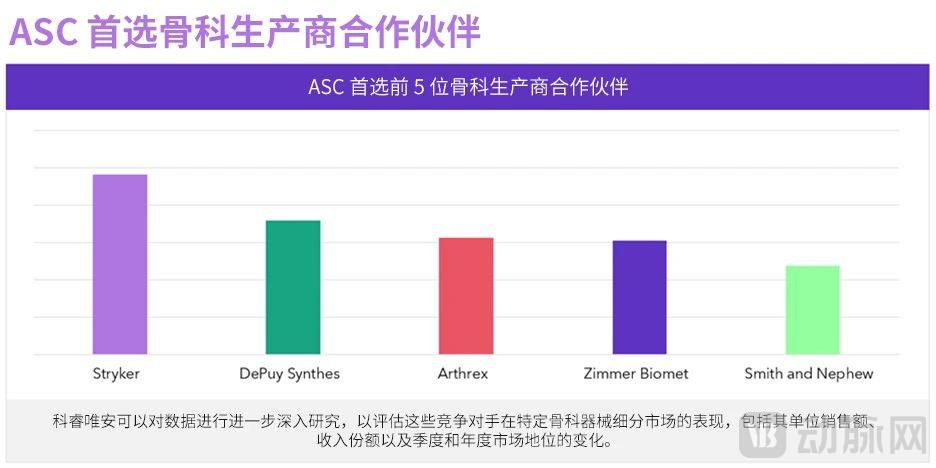
Single-instance data fails to capture the dynamic growth of the Ambulatory Surgery Center (ASC) market. To track competitors and overall market conditions, medical device companies canTimely access to key trends in brand market share, product launches, the most widely accepted companies and devices, and the drivers of success or failure through regularly updated data.
Source: Clarivate Marketrack™
For example, to gain real-time insights into the adoption of robotic systems and robot-assisted surgery by Ambulatory Surgery Centers (ASCs), Clarivate provides survey-based data to track quarterly and annual trends in this field.
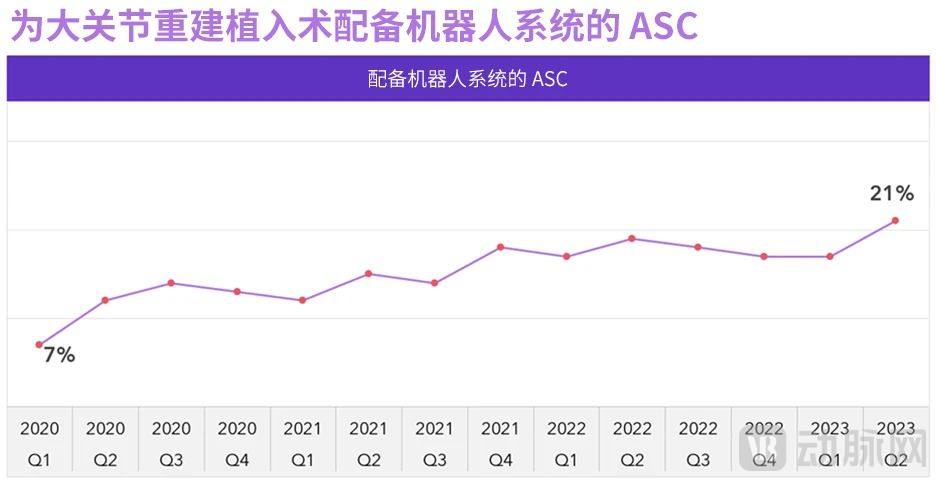
Source: Clarivate Marketrack™
To fulfill their commitment to improving patient health and enhancing patient well-being through innovation, medical device companies need to acquire precise information and conduct appropriate analytical insights to seize opportunities and penetrate the rapidly growing ASC market. In addition to the business considerations discussed in this article, success in the non-hospital market also requires appropriate medical affairs and healthcare provider engagement strategies.
Learn more about how Clarivate helps medical device companies develop the ASC market and refine their sales strategies through its MedTech Intelligence products, including Procedure Finder, MarketTrack, and MedTech 360.
This article was written by April Chan-Tsui, Director of Product Operations Content; Valentina Lim, Manager of Healthcare Research and Data Analytics; and Rahul Paul, Senior Healthcare Research and Data Analyst.
Product Introduction
Medtech 360
Medtech 360 helps you understand the market landscape and 10-year forecast outlook for specific MedTech segments and regions, enabling MedTech companies to make informed strategic decisions and respond to evolving market dynamics.
Product Inquiry
Lulice.zhao@Clarivate.com
+86 21 2026 8063