

Chinese Pharma Companies Officially Enter the 'Second Battlefield': PharmaGend Launches CDMO Platform in Singapore to Accelerate Global Expansion
CMS
Professional Drug Developer

PharmaGend Global Medical Services
Contract Development and Manufacturing Organization

Rxilient Health
Professional Pharmaceutical Manufacturer
On December 29, 2023, CMS announced that it had completed the acquisition of a Singapore-based manufacturing facility through its wholly-owned subsidiary, CMS MEDICAL VENTURE PTE. LTD., and its non-wholly-owned subsidiaries, Rxilient Health (Kanglianda Health) and PharmaGend Global Medical Services Pte. Ltd. (“PharmaGend”), in which Pharmaron Holdings Co., Ltd. and Legend Capital are also shareholders. The acquisition aims to launch contract development and manufacturing organization (CDMO) services for formulations in Southeast Asia. Located in the Tuas Biomedical Park in Singapore, the facility covers an area of approximately 60,000 square meters, with nearly 30,000 square meters of developed production space.
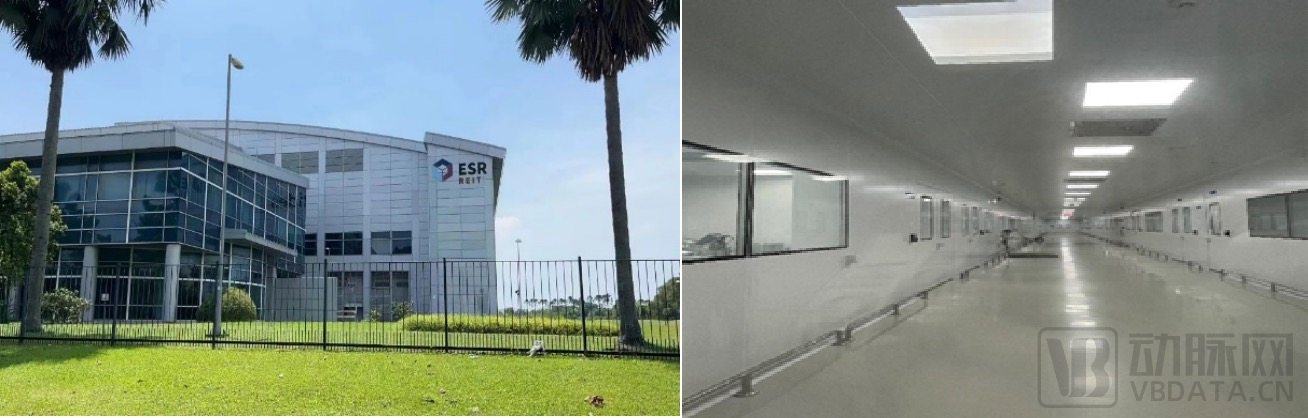
PharmaGend’s Singapore factory. Photo provided by the interviewee.
Singapore boasts leading medical standards, efficient management, abundant talent resources, a comprehensive pharmaceutical regulatory system, and well-developed infrastructure and logistics networks,High-quality biologics, including pembrolizumab, ranibizumab, adalimumab, and rituximab, are manufactured in Singapore. With more than 15 renowned multinational pharmaceutical companies establishing production facilities there, Singapore has become a global hub for MNCs.
As the globalization of China’s innovative drugs deepens, establishing a “second front” in Singapore has become an imperative.Leveraging its role as a hub where East meets West and its geographic proximity to Southeast Asian markets, Singapore can provide ideal industrial support and internationalization assistance for Chinese pharmaceutical companies expanding into Southeast Asia.
Over the past year, Chinese pharmaceutical companies have intensified their commercial activities in the Southeast Asian market. Notably, last March, Junshi Biosciences and Rxilient established a joint venture, Excellmab, with plans to introduce toripalimab and other pipeline products into Southeast Asia, swiftly igniting significant interest in the capital markets. This collaboration is built upon Rxilient’s systematic open-platform framework for emerging markets. Currently, Rxilient has largely completed regulatory registration, market development, and sales channel construction across major Southeast Asian countries, and is rapidly advancing the comprehensive layout of core operational segments for pharmaceutical products.
Now, PharmaGend can leverage Rxilient’s commercialization capabilities to provide new options for Chinese companies’ overseas supply chains and production capacities. This acquired facility is equipped with advanced manufacturing machinery and equipment, as well as a top-tier management system, and has been certified by the Health Sciences Authority (HSA) of Singapore, the U.S. Food and Drug Administration (FDA), and the Therapeutic Goods Administration (TGA) of Australia. This means that pharmaceuticals produced by PharmaGend will be able to access the world’s most important innovative drug markets in the future, while also covering emerging markets.
From Rxilient to PharmaGend, the “new globalization” overseas closed-loop of a Chinese pharmaceutical company is gradually becoming clear: new drugs developed in China are formulated and manufactured in Singapore, then sold to global markets.
Recently, VCBeat conducted an exclusive interview regarding this investment.Dr. Li Keying, CEO of Rxilient and Vice Chairman of PharmaGendandHong Tan, Managing Director at Legend Capital, and explored opportunities in emerging pharmaceutical markets, as well as the “new globalization” future of China’s pharmaceutical industry.
VCBeat: What was the original intention behind the establishment of PharmaGend?
Li Keying:PharmaGend was established with the initial aim of building a CDMO platform for drug formulations, enabling Chinese innovative drugs to be manufactured in Singapore through this platform. This initiative seeks to address supply chain security concerns, establish an overseas production brand, and facilitate global sales.PharmaGend, a formulation CDMO company jointly established by CMS, Rxilient Health, Pharmaron, and Legend Capital, fully leverages Pharmaron’s extensive global R&D capabilities and international CDMO operational expertise. This synergy enables the company to rapidly provide professional formulation CDMO services to Chinese pharmaceutical enterprises expanding into overseas markets.
VCBeat: Why did PharmaGend choose acquisition over building in-house?
Li Keying:The entire process of site selection, design, construction, and certification for a new factory takes at least five years. As Singapore is a high-cost location, our assessment indicates that acquisition offers a faster and more cost-effective route to establishing production capacity.
VCBeat: What is the general production plan for PharmaGend?
Li Keying:Initially, we will continue producing oral solid dosage forms and capsules that have already received approvals from regulatory authorities such as the FDA, utilizing our existing first-floor workshop to maintain current operations. Subsequently, we will expand by constructing second- and third-floor workshops, adding large-volume parenteral production lines and other manufacturing facilities for formulations such as creams and eye drops, thereby meeting the production demands for a wider variety of pharmaceutical products. We will actively seek contract manufacturing opportunities with more Chinese innovative pharmaceutical companies, focusing on the production of high-value medicines.
VCBeat: What are the advantages of establishing a manufacturing facility in Singapore?
Li Keying:Singapore is Asia’s healthcare hub, boasting a strategic location, efficient government administration, and a favorable business environment. With well-developed infrastructure, the country has hosted multinational corporations (MNCs) for many years, cultivating a robust pool of manufacturing talent. Its competitive tax regime, coupled with a comprehensive pharmaceutical regulatory framework, ensures that drugs manufactured in Singapore enjoy high global acceptance and trust.
VCBeat: What other benefits might Chinese enterprises gain from establishing factories in Singapore?
Li Keying:Singapore-based manufacturing can help Chinese pharmaceuticals secure supply chain safety.and enhance product acceptance and influence, thereby facilitating better entry into the pharmaceutical markets of Southeast Asia and other overseas regions.Furthermore, given the large number of countries in Southeast Asia and their complex and diverse packaging requirements, it is more convenient to provide repackaging services in Singapore.
VCBeat: How do PharmaGend and Rxilient collaborate?
Li Keying:Founded in late 2021, Rxilient Health has positioned itself from the outset as a “bridgehead” linking China’s pharmaceutical industry with emerging markets along the Belt and Road Initiative (BRI), providing innovative drug products that are highly cost-effective and affordable for local populations. As a systematic platform company connecting China’s pharmaceutical industry with emerging markets, Rxilient Health has established strong commercialization capabilities and resources. PharmaGend Global Medical Services is an international formulation CDMO company linking China’s pharmaceutical industry with overseas markets. Both are open third-party platforms committed to collaborating with more Chinese pharmaceutical companies to help them expand into global and emerging markets.
VCBeat: In which emerging markets is Rxilient currently establishing its presence? What are the key elements for expanding into emerging markets?
Li Keying:To date, Rxilient has largely completed product registrations and established market and sales channels in major Southeast Asian countries, including Singapore, Indonesia, Malaysia, Thailand, the Philippines, and Vietnam. Meanwhile, it is expanding into the Middle East and North Africa (MENA) region, with a particular focus on the Gulf Cooperation Council (GCC) countries. This market holds immense potential, with a total population exceeding 1 billion and a pharmaceutical market size of approximately USD 65 billion—equivalent to 40% of China’s market. The compound annual growth rate (CAGR) from 2022 to 2026 is projected at around 7%, nearly twice the growth rate of China’s market. Therefore, emerging markets, including Southeast Asia, present significant development opportunities, which also constitute key growth prospects for Rxilient.
The pharmaceutical products in these regions primarily come from two types of enterprises. The first type is MNCs,Our primary sales consist of patented innovative pharmaceutical products. However, due to global pricing strategies, many of these innovative drugs are unable to achieve significant market penetration in emerging markets with lower per capita GDPs, as their high prices render them unaffordable for the local population.The second category comprises local and Indian generic drug manufacturers.Therefore, if cost-effective innovative drugs from China enter these markets, rapid registration, academic promotion, and sales channels will become key success factors.Therefore, a commercialization platform with capabilities in registration, marketing, and sales will be the most critical foundational element for tapping into emerging markets.
VCBeat: What types of Chinese products are suitable for market expansion in emerging markets?
Li Keying:In Southeast Asia, products from Europe, the United States, and Japan are widely recognized by the market, as the region’s healthcare systems are heavily influenced by these countries.For Chinese pharmaceuticals to enter this market, they must first be cost-effective and of high quality. If they have also obtained dual regulatory submissions in Europe and the United States, they will more easily gain approval from regulatory authorities and acceptance by the market.For example, Junshi Biosciences’ anti-PD-1 monoclonal antibody, toripalimab, has received approval from the U.S. FDA. Another category comprises “me-better” and “fast-follow” innovative products, which can enter the market more easily since the originator drugs have already established market presence.
VCBeat: Considering affordability, is Southeast Asia a good market for innovative pharmaceutical companies?
Li Keying:Southeast Asia should be viewed as China was two decades ago. Although the current pharmaceutical market size in Southeast Asia is relatively small, its political stability and rapid economic development offer substantial growth potential. Innovative drugs and biosimilars from China can capture a share of the high-end medication market from multinational corporations (MNCs) by first building brand recognition and enhancing physician awareness through academic promotion, and then leveraging pricing advantages.Exporting finished products requires substantial investment in manpower and resources, making it more challenging than selling technologies or raw materials; however, this is also key to enhancing corporate value. In the process of globalization for Chinese pharmaceutical companies, the Southeast Asian market represents a strategic opportunity that cannot be overlooked.
VCBeat: How does Legend Capital view the future “new globalization” of China’s pharmaceutical industry?
Hong Tan:2023 was a landmark year for China’s pharmaceutical industry, which could be described as “a tale of two extremes.” On one hand, the number and value of transactions involving biotech companies in both primary and secondary markets declined significantly, subjecting the sector to an unprecedented “winter.” On the other hand, the total value of license-out deals in business development (BD) transactions by Chinese pharmaceutical enterprises exceeded USD 40 billion, demonstrating that amid the capital downturn, industrial collaboration is the fundamental cornerstone for biotech firms, and that the pharmaceutical industry can only transition from “large to strong” through globalization. In 2023, several portfolio companies of Legend Capital also achieved license-out deals. Nevertheless, entering European and American markets remains an accomplishment attainable by only a select few innovative drug companies. We hope to see more innovative pharmaceutical companies seize opportunities to expand overseas.Therefore, we have consistently maintained clear investment strategies of “In Global for Global” and “In China for B&R,” placing significant emphasis on both expansion into European and American markets and emerging markets along the “Belt and Road.”Legend Capital has successively invested in Rxilient and PharmaGend, with the aim of collaborating with more players in China’s pharmaceutical industry to jointly witness the advent of the “new globalization” era for the sector.