

In 2023, These Sectors 'Fiercely Competed' Their Way into Massive Fortunes

lncTAC
Nucleic Acid Drug Developer
2023 was an extraordinary year. Faced with a constantly shifting market, the most common refrain among venture capitalists (VCs) was likely: “We don’t know how to invest in 2023.” Yet challenges always coexist with opportunities. No matter how unpredictable the market proved to be, some VCs still made substantial investments, seizing the initiative to get ahead.
Orange Bureau compiled the top 50 largest early-stage financing deals of 2023, revealing that large-scale funding was primarily concentrated inInnovative Drugs, Synthetic Biology, Nutrition and HealthDirection, additionallyAesthetic Medicine, Brain ScienceandInternet Healthis also exerting efforts behind the scenes.

Top 50 Early-Stage Financing Amounts in the Healthcare Sector in 2023 (Source: VCBeat)
Innovative drugs in 2023, especiallyOncology Treatment, remains the area of greatest interest to venture capitalists. Among the top 50 deals, there were six financing rounds for innovative oncology drugs, with a total funding amount approaching RMB 700 million. Meanwhile, synthetic biology has demonstrated strong momentum, with four companies in the top 50 beingSynthetic Biologyas the underlying technology, with three of these companies each securing over RMB 100 million in financing.
In addition to the “traditional” direction,The nutritional health sector has emerged as the industry’s “new darling” in 2023.. Among the top 50, five companies are from the nutrition sector, with four of them securing financing amounts exceeding RMB 100 million. In contrast, prior to and including 2022, it was rare for companies in the nutrition and health supplement sector to secure large-scale financing in concentrated early-stage rounds.
In addition, emerging sectors such as brain science, medical aesthetics, and internet healthcare are gradually gaining momentum, each completing one to two early-stage financing rounds exceeding RMB 100 million in 2023.
In 2023, a year overshadowed by terms like “market cooling” and “contraction,” how did these sectors engage in fierce competition to generate extraordinary wealth?
I. Diversification Intensifies in Drug Development
Undoubtedly, drug development remains a hot investment choice for venture capitalists (VCs). Among the 50 companies that secured substantial early-stage financing, 16 were engaged in drug development-related activities. Meanwhile, despite the general tightening of USD-denominated funds, four drug development companies still obtained significant USD financing—a rarity in other sectors.
This is actually not difficult to understand. Innovative drugs, as a traditional form of “hard technology,” have maintained strong momentum. In recent years, with the introduction of multiple supportive policies and the gradual improvement of incubation and commercialization ecosystems for innovative drugs, the growth environment and foundation for China’s innovative pharmaceutical companies have reached maturity, leading to an explosive surge in 2023.
Turning to the pharmaceutical companies themselves, we can see that while their focus remains squarely on oncology, the spectrum of emerging technologies is continuously expanding, with “diversification” emerging as the keyword in this field.
First, “diversity” lies in types.In addition to traditional small-molecule drugs, companies are also exploring monoclonal antibody therapies, antibody-drug conjugates (ADCs), and cell and gene therapies. The ultimate goal of all innovative pharmaceutical companies is to discover entirely novel therapeutic pathways that have not been previously elucidated.
Not only that, there are also pharmaceutical companies that “serve” other pharmaceutical companies. KangaBio, which secured RMB 100 million in Pre-A financing in June 2023, is an innovative enterprise developing prodrug molecules for immune agonists and multispecific antibodies. Although it is also an innovative drug company, its target audience is not clinical patients but researchers in laboratories. The company’s mission is to meet clinical needs by researching and developing innovative prodrug molecules that reduce drug toxicity and enhance therapeutic efficacy.
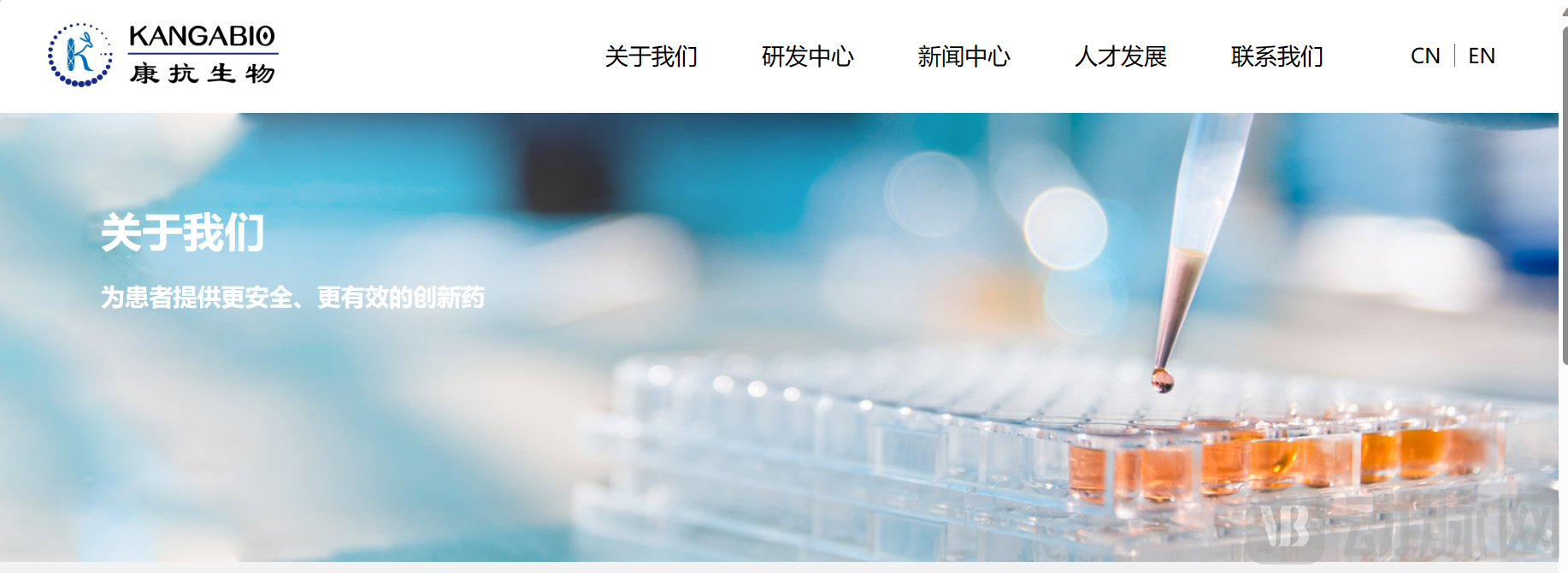
KangaBio: Providing Patients with Safer and More Effective Innovative Drugs (Image source: KangaBio official website)
Second, “diversity” lies in technology.Even “mainstream options” such as nucleic acid therapeutics are being reimagined by some companies. Take lncTAC, which secured RMB 100 million in Pre-A financing in October 2023, as an example. On the surface, lncTAC appears to be a nucleic acid drug developer focused on oncology; however, a deeper look reveals that it has placed its bets on the long non-coding RNA (lncRNA) direction.
lncTAC leverages lncRNA-mediated targeted chimera technology (lncTAC®), and with UNAST®Constitutes a unique technological platform. This platform enables the innovative development of nucleic acid therapeutics targeting a range of traditionally "undruggable" targets, thereby establishing a distinct technological barrier.
Finally, “diversity” lies in the therapeutic areas.Although oncology treatment is showing a trend toward consolidation, some companies are attempting to “break out” of this niche. For instance, Xingyao Kunze Biopharmaceuticals has focused its attention on the field of liver disease, while Kaisikaidi places greater emphasis on metabolic disorders and inflammation.
II. Nutritional Supplements “Race” to Adopt New Technologies
In 2023, the performance of the nutritional supplements sector was undoubtedly surprising. Although capital’s emphasis on nutrition has been gradually increasing in response to shifts in market demand, it remains quite rare to see a concentrated surge of large-scale early-stage financing in the nutrition sector as occurred in 2023.
From the perspective of enterprise types, companies in the nutritional health sector that have secured substantial financing can be broadly categorized into three groups, namelyDietary Supplements、Intestinal Microbial PreparationsandNutritional Products Designed Through Genetic Technology.
In a sector characterized by severe product homogenization and low entry barriers, “competing on technology” has become the key for companies to break through.
Taijitang, which secured a $20 million angel round, was spun out of the Shandong Institute of Life Sciences and Technology, with its technological barriers built upon the institute’s proprietary R&D.Enzymatic Engineering Technology for Traditional Chinese Medicine. In addition, Suzhou Yixi Biotechnology, which focuses on providing solutions in the field of gut microbiota, leveragesSynthetic Biologyas the underlying technology, based on independently developedGut Microbiota Genetic Modification Platform, established data, strains, and drugs“EVIDENCE-BASE”R&D pathway, with collaborations established with multiple medical institutions.
Suzhou Yixi Biotechnology (Image source: Official website of Suzhou Yixi Biotechnology)
Furthermore, applying genetic technology to the nutrition sector represents an innovative endeavor. Zaizai Regenerative Health has independently developed, through genetic technology,IGF-1(Growth-promoting factors) have also attracted the favor of capital.
In addition to technological innovation, we can also see thatSome nutritional health companies are attempting to move from the “second tier” to the “first tier.”
Among the three categories of enterprises, those focusing on gut microbiota preparations account for the largest proportion. They share a common goal: to provide solutions for clinical conditions, including metabolic diseases, cancer, inflammatory bowel disease, and autoimmune diseases, through research on the gut microbiome.
Research on the gut microbiota primarily relies on the concept of the “gut-brain axis.” Numerous studies have demonstrated associations between the gut microbiota and cardiovascular and cerebrovascular diseases, obesity, diabetes, malignant tumors, immune system disorders, and mental illnesses, thereby creating new opportunities in the nutritional health and wellness sector.
III. The Fierce Competition in Consumer Healthcare for Aesthetic Enhancement
Overall, the top 50 companies in 2023 exhibited greater diversity in enterprise types.An Increasing Number of Consumer Healthcare Companies Are Securing Substantial Early-Stage Financing, which may also be a new signal released by the market.
The so-called consumer healthcare here is not defined by technological type or complexity, but rather refers to medical services that meet high-level demands, such as medical aesthetics and internet health. From the TOP 50, we can see that in 2023The demands of consumer healthcare are primarily focused on "becoming more beautiful."。
Medical aesthetics remains a major sub-sector within consumer healthcare. For instance, Meiyang Innovation Technology, which secured nearly RMB 100 million in Pre-A financing, has built an AI-powered platform for anti-aging treatments in medical aesthetics by leveraging artificial intelligence and deep learning technologies to provide clinical guidance for aesthetic practitioners.
The medical aesthetics sector has also evolved to focus onMale Aestheticsniche segments. According to data from the "2022-2027 Analysis Report on Production, Sales, Demand, and Investment Forecast for China's Skincare Industry" released by Qianzhan Industry Research Institute, the market size of men's skincare products in China exceeded RMB 10 billion for the first time in 2022, with a compound annual growth rate (CAGR) of 16.26% projected over the next five years. In response, venture capitalists are rapidly deploying capital; for instance, Gaozhi Biology, a company specializing in men's skincare, secured an angel round financing of RMB 50 million.
Beyond medical aesthetics, internet health is also closely linked to “beauty.” As awareness of the severity of obesity deepens, the weight loss sector has garnered significant attention. Young people, as the primary target audience, are often constrained by lifestyle habits and scheduling conflicts, which has prompted internet health platforms to enter the weight loss market. Benefiting from this trend, Letu Technology, a provider of digital fitness services, has secured a substantial early-stage financing round.
IV. Summary
Looking back at 2023, drug R&D remained the most fiercely competitive sector, yet we must not overlook that the window of opportunity in nutritional supplements and consumer healthcare has already opened.
Overall, hard technology remained the foundational theme of the market in 2023. Whether in serious medicine or consumer healthcare, securing capital favor depends not only on choosing the right track but, more critically, on possessing robust technology and professional expertise.
If “uncertainty” was the keyword for 2023, then 2024 is bound to bring change. Although the financing winter will not vanish overnight, the fog will eventually clear.