

GelSana Therapeutics Files IPO Prospectus for Cleragel Hydrogel Platform That Accelerates Diabetic Ulcer Healing by 1.5x

GelSana Therapeutics
Wound Care Product Developer

Mines Venture Fund
Venture Capital Firms

Innosphere Ventures
Venture Capital Fund
On November 20, 2023, wound care provider GelSana Therapeutics (“GelSana”) raised $2.5 million in a new round of financing, led by Innosphere Ventures Fund with participation from Mines Venture Fund. With this achievement, GelSana, founded just three years ago, has attracted the attention of numerous investment institutions thanks to its newly developed hydrogel product, completing a total of three funding rounds to date.
In the Red Ocean of the Diabetes Market, Why Is GelSana Still Favored by So Many Investment Institutions? VCBeat Analyzes Its Unique Advantages.
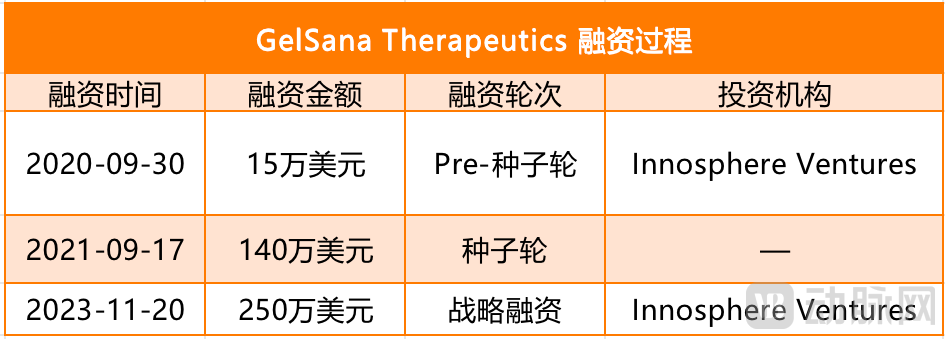
GelSana Therapeutics Funding Process | Produced by VCBeat
Diabetic ulcers represent a challenging clinical issue for patients with diabetes. Management typically requires a comprehensive approach, including glycemic control, wound care, administration of antimicrobial agents, and maintenance of fluid and electrolyte balance. In cases of severe infection, hospitalization is often necessary for urgent surgical consultation and antimicrobial therapy to stabilize the patient’s condition.
GelSana’s newly developed hydrogel addresses this issue by enhancing the healing of diabetic ulcers and other wounds while reducing patients’ inflammatory responses. The product was created by Melissa Krebs, CEO and founder of GelSana.
Melissa Krebs serves as an Associate Professor of Chemical and Biological Engineering at the Colorado School of Mines, with her research focusing on biopolymer systems related to tissue regeneration and therapy. During her time in the laboratory at the Colorado School of Mines, Dr. Krebs’ research group was dedicated to developing polymeric materials that provide sustained drug delivery and promote diabetic wound healing. In this field, Dr. Krebs has published more than 45 papers.
Building on this foundation of research achievements, Melissa Krebs was determined to translate them into commercial applications and founded GelSana in September 2020.
Statistically speaking, female founders typically receive less venture capital funding. According to data from PitchBook Data, female-founded startups secured only 2% of venture capital investment in 2022. In Europe, this figure was even lower, at 0.9%. Nevertheless, leveraging her in-depth understanding of biopolymer systems and breakthroughs in core related technologies, Melissa Krebs successfully translated scientific research into commercial applications. With the joint support of investors, mentors, and her family, she successfully founded GelSana Therapeutics.
Following the company’s establishment, Melissa Krebs recruited a team of key members. The GelSana board of directors includes Jim Kasic, an executive with over 30 years of experience in the biomedical industry, and David Armstrong, a specialist in diabetic ulcers and clinical consulting. This has provided sustained momentum for the company’s subsequent development.

Team Members Image source: GelSana Therapeutics
As one of the most prevalent diseases in modern society, diabetes affects nearly one in ten people worldwide.《American Journal of Lifestyle Medicine” speculates in an article[1]: By 2050, approximately one-third of Americans will have diabetes.
As a highly prevalent immune-mediated disease, diabetes has posed a significant threat to human health. Patients with diabetes exhibit compromised immune function, characterized by reduced chemotactic and phagocytic capabilities of leukocytes, rendering wounds susceptible to infection. As the wound condition further deteriorates, excessive exudate accumulates at the wound site, accompanied by overproduction of reactive oxygen species (ROS), activation of pro-inflammatory factors, impaired angiogenesis, peripheral nerve damage, loss of hair follicles, and severe impairment of physiological functions at the wound site.
This has become a significant clinical issue in diabetes. Millions of people develop new diabetic ulcers each year. According to survey data from GelSana, the annual cost of treating diabetic lower-extremity ulcers in the United States alone is estimated at $78 billion. Eighty-four percent of patients with diabetes-related amputations had lower-extremity ulcers, and every 20 seconds, someone loses a limb due to non-healing diabetic ulcers.
Despite the significant impact of this disease on patients, there is still a lack of effective treatments available on the market. For instance, currently available wound dressings do not address inflammation and cannot provide sustained therapy. This underscores the urgent need for new solutions for diabetic ulcers.
Therefore, the development of wound dressing systems with excellent antibacterial, antioxidant, and anti-inflammatory properties, as well as the ability to effectively promote wound angiogenesis, is currently a key focus of research.
Cleragel, the first commercial hydrogel launched by GelSana Therapeutics, represents a novel technology for improving diabetic ulcers and promoting the healing of other wounds. Its hydrogel technology effectively mitigates risks such as cross-infection and redundant medication during wound care and dressing changes by creating an anti-inflammatory environment and enabling sustained drug delivery, thereby making wound care safer, more efficient, and more cost-effective.
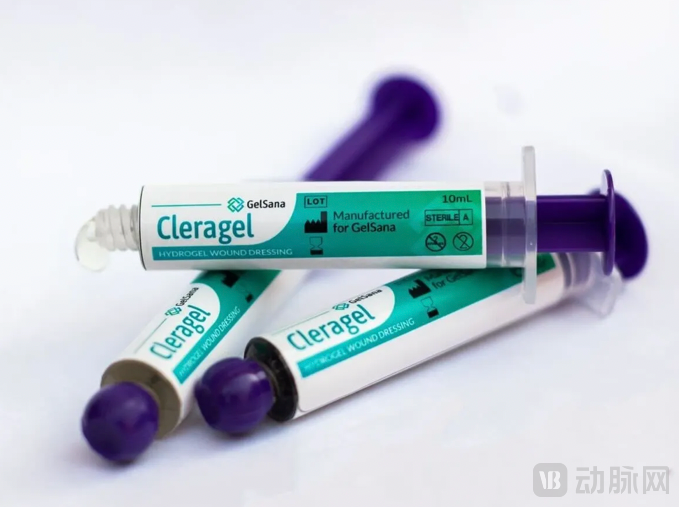
Cleragel Hydrogel. Image source: GelSana Therapeutics
In preliminary tests on diabetic wounds in mice conducted by GelSana Therapeutics, treatment with Cleragel hydrogel demonstrated significant efficacy. According to official data from GelSana Therapeutics, Cleragel hydrogel accelerated diabetic wound healing by 1.5 times compared to no treatment, while the combination of hydrogel and medication accelerated healing by 2 times compared to no treatment. The mice not only experienced shortened wound healing times but also exhibited increased strength of the healed tissue and a reduced risk of wound recurrence.
Specifically, for cases where severe inflammation prevents inherent wound healing, Cleragel provides a dressing with anti-inflammatory and bacterial adhesion-preventing properties that can sustainably release therapeutic and antimicrobial agents. The hydrogel can be customized to cover wounds of any size, eliminating the need for dressing changes during the healing process and resolving the issue of repeatedly removing dressings to reapply ointments. This accelerates wound healing and reduces the risk of infection and amputation associated with chronic open wounds.
Furthermore, while protecting the wound, the hydrogel injected by Cleragel adheres to the surrounding healthy tissue, reducing inflammation and continuously delivering medication to the wound bed. The epidermal layer formed after healing can also control the delivery of therapeutic drugs, which will facilitate subsequent wound recovery.
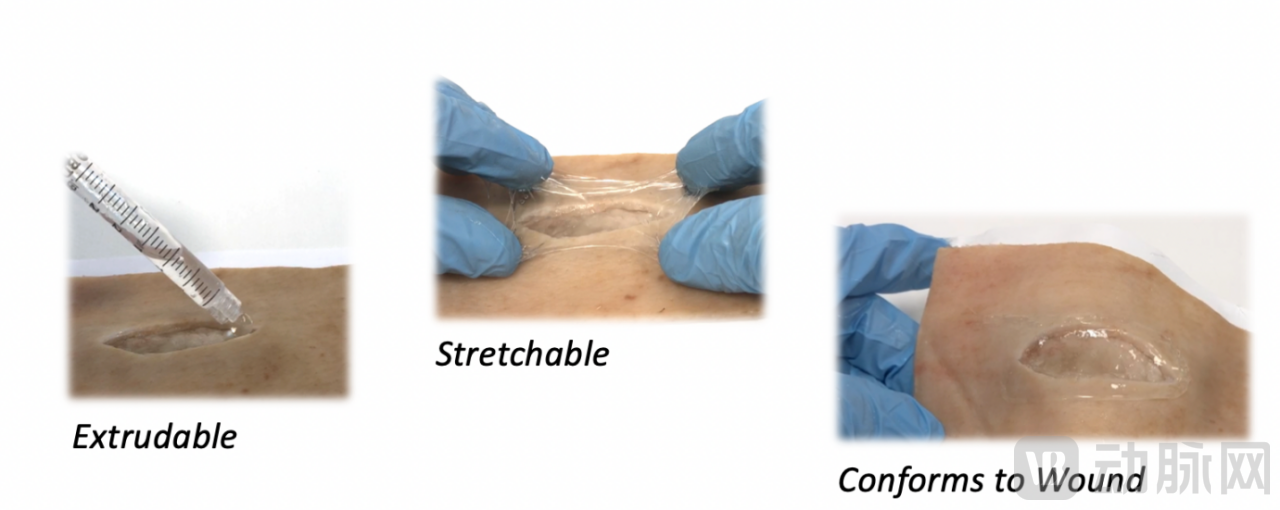
Cleragel Hydrogel Application Process Image Source: GelSana Therapeutics
Moving forward, GelSana will continue to deepen its research in hydrogel technology, explore methods by which biopolymer systems can improve the wound healing process, develop more innovative and practical products, further enhance therapeutic benefits for patients, and bring greater innovation and breakthroughs to the healthcare sector.
References:
[1] Rosenfeld RM, Kelly JH, Agarwal M, et al. Dietary Interventions to Treat Type 2 Diabetes in Adults with a Goal of Remission: An Expert Consensus Statement from the American College of Lifestyle Medicine. American Journal of Lifestyle Medicine. May 2022. doi:10.1177/15598276221087624