

Dyne Therapeutics: A Rapid IPO Success Driven by Its FORCE™ Platform Targeting Rare Muscle Diseases
Dyne Therapeutics
Developer of Targeted Therapies for Muscle Diseases
Dyne Therapeutics (hereinafter referred to as “Dyne”), headquartered in Massachusetts, was founded in 2018 and is a biopharmaceutical company focused on the treatment of muscle diseases.
Following its establishment, Dyne entered a phase of “explosive growth.” After completing a $50 million Series A financing round in 2019, the company swiftly secured $115 million in equity investment led by Vida Ventures and Surveyor Capital in August of the following year. Just one month later, Dyne successfully completed its initial public offering (IPO).
Joshua Brumm, President and Chief Executive Officer of Dyne Therapeutics, holds a Bachelor of Business Administration degree from the University of Notre Dame and possesses extensive experience in financing. He previously served as Chief Financial Officer at Kaleido Biosciences (a microbiome company), Versartis (a biotechnology company), and ZELTIQ Aesthetics (a medical aesthetics device company), where he led corporate financial strategies and successfully completed initial public offerings (IPOs). He has also held key positions at Amphista Therapeutics (a biopharmaceutical company), Pharmacyclics (an oncology-focused biotechnology company), and Citigroup (a financial services group). Throughout his career to date, he has raised nearly $2 billion in capital.
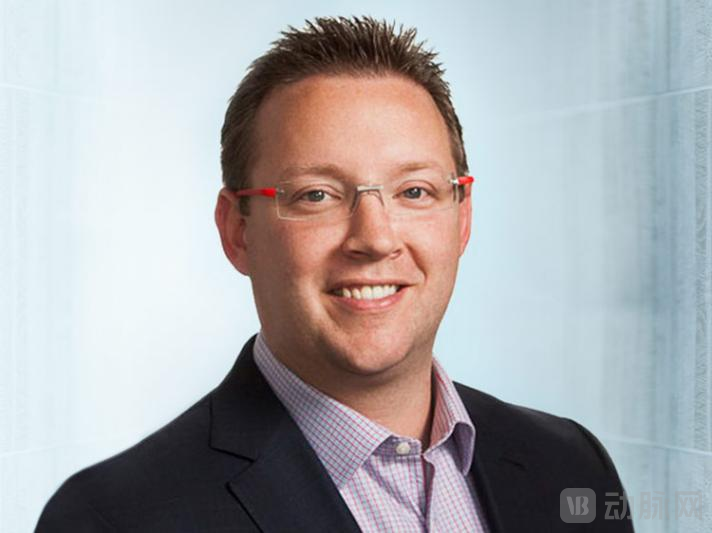
Joshua Brumm (Image source: Dyne official website)
Sudhir Agrawal, a member of the Scientific Advisory Board, holds a Ph.D. in Chemistry and has previouslyMRC Laboratory of Molecular Biology, Cambridge, UKConducting postdoctoral research. He is a Visiting Professor in the Department of Medicine at the University of Massachusetts Medical School andMember of the Advisory Board, RNA Medicine Initiative, Harvard Medical SchoolHe is also the founder of Arnay Sciences LLC and Idera Pharmaceuticals. He has published more than 300 research papers, authored four books on oligonucleotides and antisense technology, and holds over 400 global patents.

Sudhir Agrawal(Image source: Official website of the Dan Lewis Brain Regeneration Research Foundation)
From work and social life to family life, muscle diseases profoundly affect every aspect of people's lives. Current therapeutic strategies are primarily supportive, aiming to alleviate symptoms and improve quality of life, with few "effective remedies" capable of achieving treatment or cure. Most promising small nucleic acid drugs are also limited to targeting the liver, with restricted efficacy in non-hepatic targeted delivery.
Antibody-Oligonucleotide Conjugates (AOCs) combine therapeutic oligonucleotides (such as siRNA and PMO) with targeting antibodies and linkers, leveraging the antibodies to deliver oligonucleotides to specific cells or tissues. This approach reduces the required therapeutic dosage and addresses the challenge of targeted oligonucleotide delivery. Compared with traditional small nucleic acid therapies, AOCs exhibit superior pharmacokinetic properties and more specific biodistribution.
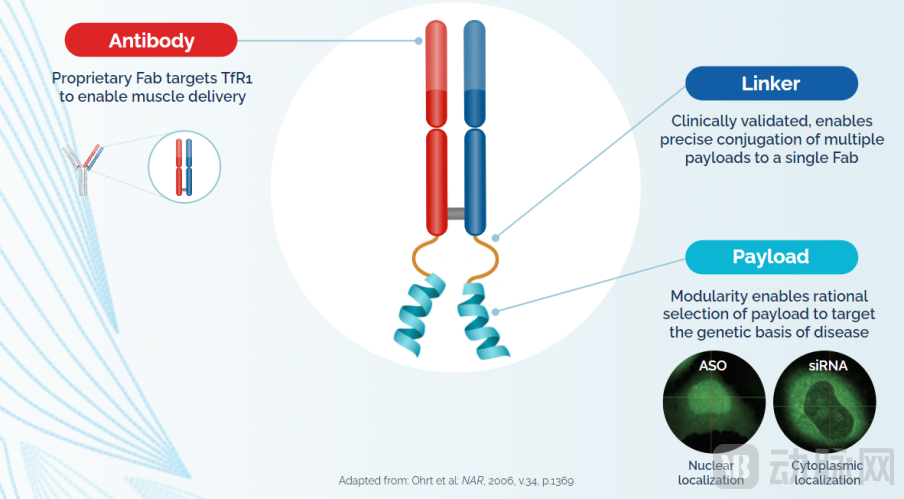
AOC Composition Diagram (Image Source: Dyne Official Website)
Dyne is committed to developing life-changing innovative therapies for patients with genetically driven diseases, and is leveraging its proprietary FORCE™ platform to develop AOCs that enable targeted delivery toTargeted delivery to muscle tissue, extended dosing intervals, repeatable administration, and the ability to halt or reverse disease progression by addressing its genetic basis.
Full-length antibodies in ADCs may induce the degradation of transferrin receptor 1 (TfR1), reducing drug efficacy and receptor availability during iron absorption. In contrast, in the platform’s AOCs,It is the antigen-binding fragment (Fab), rather than the full-length antibody, that exerts the targeted effect., holds promise for overcoming the limitations of drug delivery to muscle tissue, thereby achieving the goal of halting or reversing disease progression.
Fabs can bind to the highly expressed receptor (TfR1) on muscle cells, thereby achieving targeted drug delivery to skeletal muscle, cardiac muscle, and smooth muscle. The smaller antigen-binding fragments result in a lower protein load per dose, which may be more favorable in terms of tolerability, and the shorter half-life also reduces the risk of long-term drug exposure. Therefore,Compared with monoclonal antibodies (mAbs), Fab fragments offer distinct advantages for intramuscular administration, including enhanced tissue penetration, improved tolerability, and a reduced risk of immune system activation.
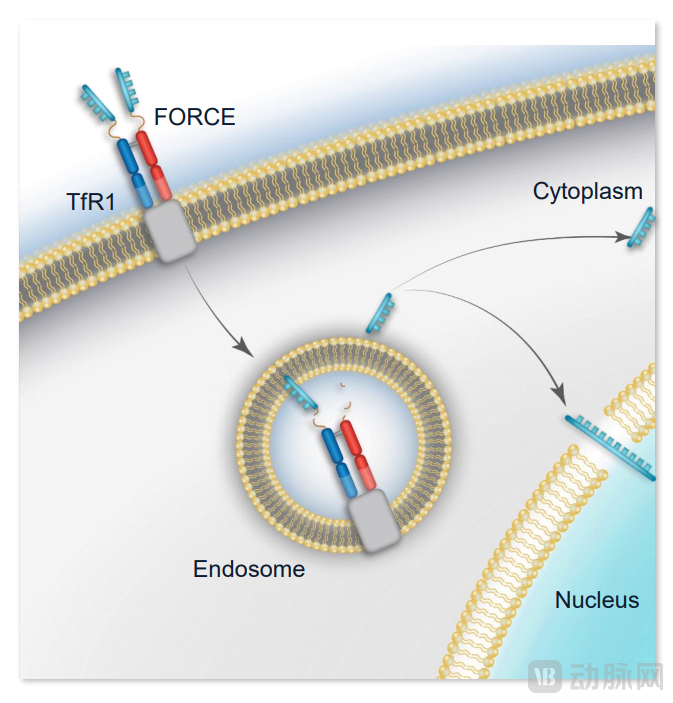
FORCE™ Platform Mechanism of Action Diagram (Image source: Dyne official website)
Dyne focuses on three rare muscle diseases, with a broad product portfolio that includes clinical programs for myotonic dystrophy type 1 (DM1) and Duchenne muscular dystrophy (DMD), as well as preclinical programs for facioscapulohumeral muscular dystrophy (FSHD). The company also plans to expand its pipeline by developing programs for additional indications, including more rare skeletal, cardiac, and metabolic muscle disorders.
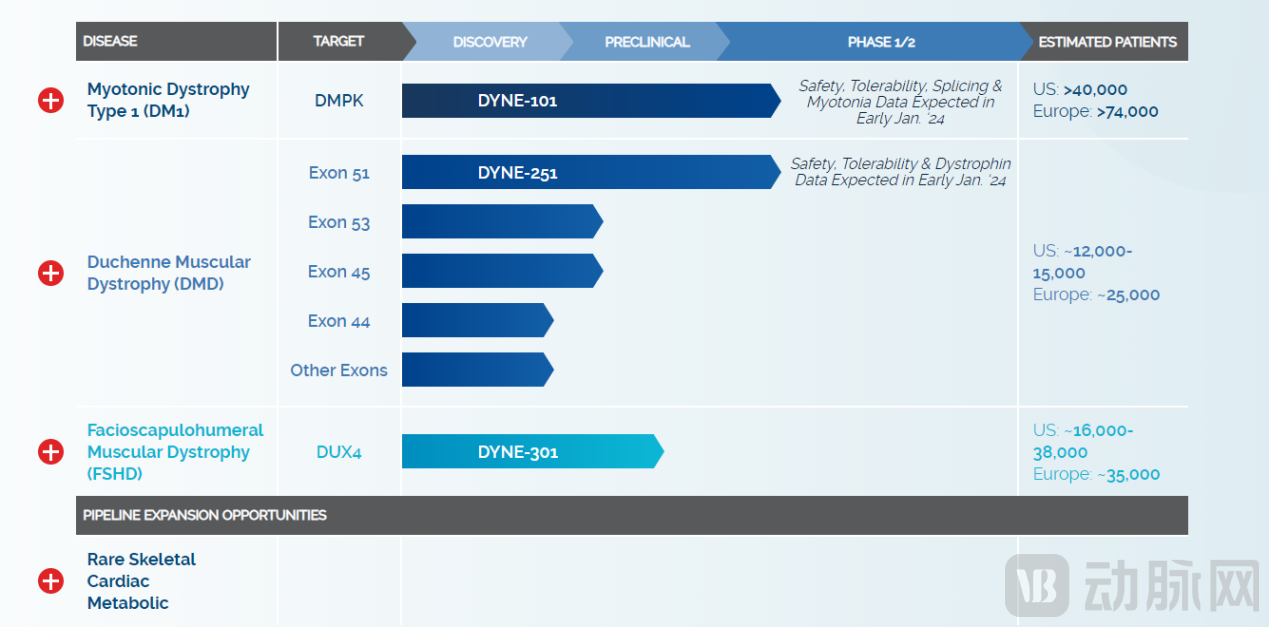
Product Pipeline (Source: Dyne Therapeutics Official Website)
· DYNE-101: Phase 1/2 ACHIEVE Global Clinical Trial
DM1 is a rare monogenic autosomal dominant disorder caused by abnormal expansion of a region in the DMPK (myotonic dystrophy protein kinase) gene. Patients present with a variety of symptoms, including generalized muscle weakness such as facial muscle involvement and dysphagia, hand and grip weakness, and lower leg and foot weakness; myotonia characterized by difficulty relaxing the muscles of the jaw, tongue, throat, lower limbs, and hands; respiratory problems; gastrointestinal dysfunction; and cognitive impairment.
Dyne’s DM1 research program, DYNE-101, consists of a proprietary Fab conjugated to an antisense oligonucleotide (ASO). It is designed to address the genetic basis of DM1 by reducing levels of mutant DMPK RNA in the nucleus, thereby releasing splicing proteins to allow normal mRNA processing and protein translation, with the goal of halting or reversing the disease.
DYNE-101 has obtained preclinical data support using the FORCE platform, including reduction of nuclear foci and correction of splicing in DM1 patient cells, stable knockdown of human intranuclear toxic DMPK RNA and correction of splicing in novel in vivo models developed by Dyne, and reversal of myotonia in disease models. In non-human primates, DYNE-101 demonstrated a favorable safety profile and enhanced muscle distribution, as evidenced by significant reduction of wild-type DMPK RNA.
In May 2023, the European Medicines Agency (EMA) granted orphan drug designation to DYNE-101. Currently, DYNE-101 is being evaluated in adult patients with DM1 in the Phase 1/2 global ACHIEVE clinical trial.
·DYNE-251: Phase 1/2 DELIVER Global Clinical Trial
Duchenne muscular dystrophy (DMD) predominantly affects males and is one of the more common rare diseases. It is the most prevalent subtype among progressive muscular dystrophies, listed as item 98 in the First Batch of Rare Diseases Catalogue. DMD is caused by mutations in the gene encoding dystrophin, a protein essential for the normal function of muscle cells. These genetic mutations, mostly deletions, lead to dystrophin deficiency and progressive loss of muscle function.
DYNE-251 is an investigational therapy under development by Dyne for patients with Duchenne muscular dystrophy (DMD) amenable to exon 51 skipping. DYNE-251 consists of a proprietary Fab fragment conjugated to phosphorodiamidate morpholino oligomers (PMOs). It is designed to achieve targeted delivery to muscle tissue, promoting exon skipping to enable muscle cells to produce truncated yet functional dystrophin, thereby halting or reversing disease progression.
In preclinical studies, DYNE-251 demonstrated robust and durable exon-skipping activity in the mdx mouse model, inducing dystrophin expression in skeletal and cardiac muscle, thereby reducing muscle damage and improving muscle function. Meanwhile, DYNE-251 exhibited a favorable safety profile in non-human primates and achieved potent exon skipping in the heart and diaphragm.
In 2022, the U.S. Food and Drug Administration (FDA) granted Fast Track designation to DYNE-251 for the treatment of Duchenne muscular dystrophy (DMD) amenable to exon 51 skipping. Currently, DYNE-251 is being evaluated in the Phase 1/2 DELIVER global clinical trial.
In addition to DYNE-251, Dyne is building a global DMD franchise and has preclinical programs targeting other exons, including exons 53, 45, and 44.
· DYNE-301: Proof of Concept
FSHD is a rare disease characterized by progressive skeletal muscle loss. FSHD is caused by the abnormal expression of the DUX4 gene in muscle tissue, which leads to muscle cell death and replacement by fat. Patients present with a variety of symptoms, including facial muscle weakness that makes it difficult to smile or use a straw; weakness in all major muscle groups, including the arms, trunk, legs, and abdomen; scapular winging and spinal abnormalities; and limited mobility.
Dyne’s FSHD candidate drug, DYNE-301, consists of a proprietary Fab conjugated to an ASO via a linker, designed to address the genetic basis of FSHD by reducing DUX4 expression in muscle tissue. Dyne has entered into an agreement with the University of Mons, which provides exclusive intellectual property rights targeting the genetic etiology of FSHD and complements its proprietary platform for precise delivery to muscle cells.
Dyne’s proof-of-concept data demonstrate that DYNE-301 reduces the expression of key DUX4 biomarkers in myotubes from patients with FSHD.
Why Has Dyne Therapeutics Achieved Such Rapid Growth in Just Two Years? In addition to its product R&D, this success is also attributable to the positive interactions with patients on the service side. Dyne Therapeutics launched the “United by Strength” dialogue series to understand the impact of diseases on patients’ daily lives and their hopes for the future, while addressing questions about the company’s efforts to advance potentially life-changing therapies.
Sarah, who has DM1 (for which there are currently no approved treatments), discussed with Chief Medical Officer Wildon Farwell how meaningful therapeutic options could transform her life and the challenges associated with treating DM1.

(Image source: Dyne official website)
June 20 is World FSHD Awareness Day. Each year, Dyne Therapeutics joins the patient community in observing this day. In 2023, it supported the FSHD Society’s annual campaign by sharing selfies with orange slices, raising awareness of the facial weakness and difficulty smiling experienced by individuals with facioscapulohumeral muscular dystrophy (FSHD). Just as the “Ice Bucket Challenge” brought attention to amyotrophic lateral sclerosis (ALS), commonly known as Lou Gehrig’s disease, the “Orange Slice Smile Challenge” aims to increase public understanding of FSHD, another rare neuromuscular disorder, and provide patients with confidence and hope in their fight against the disease.
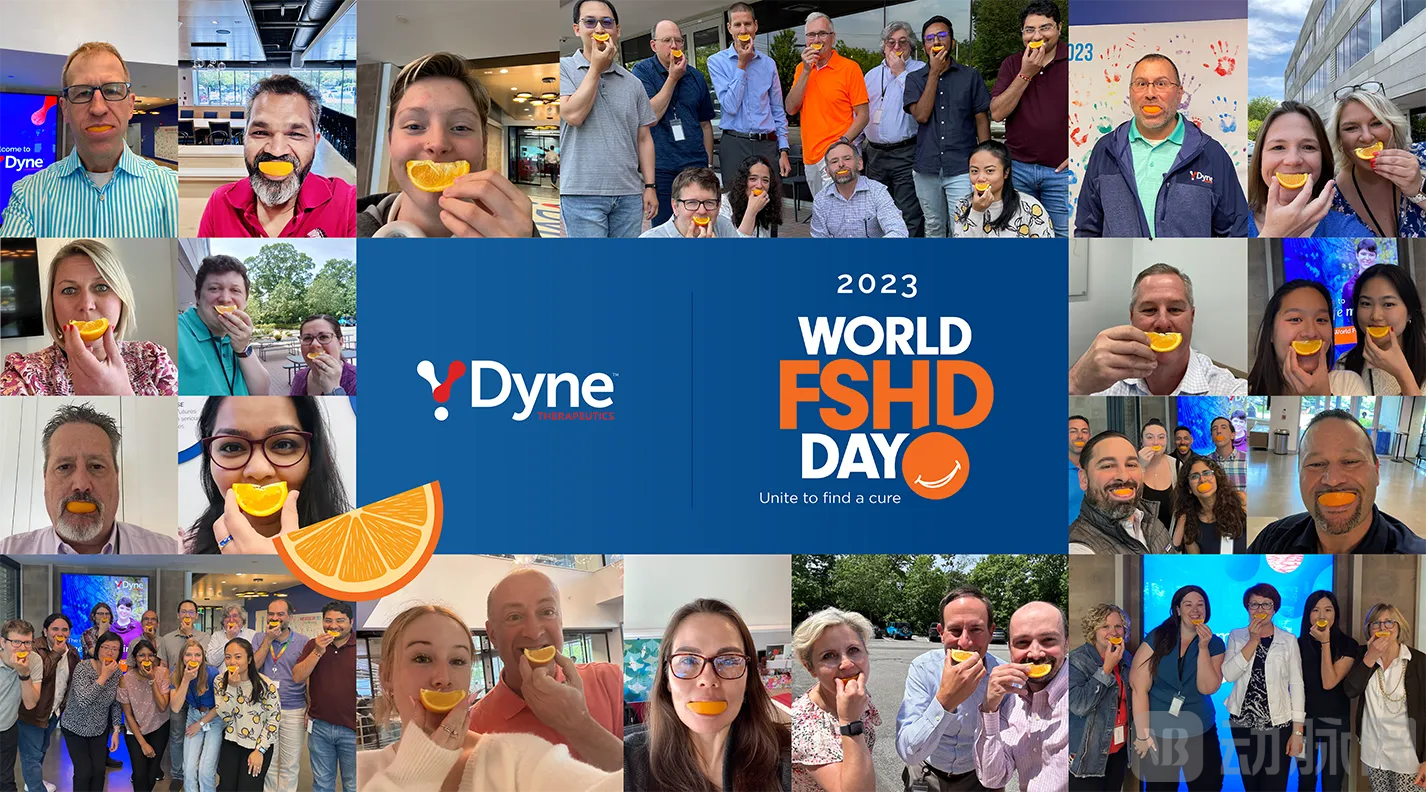
(Image source: Dyne official website)
In December 2019, the National Medical Products Administration explicitly stipulated in the issued Measures for the Administration of Drug Registration of the People's Republic of China that a green channel would be established for new drugs for rare diseases and other conditions, as well as for pediatric drugs, to prioritize their review and approval; in September 2021, it issued the Technical Guidelines for Clinical Development of Drugs for Rare Diseases.
Currently, rare muscle diseases are one of the primary therapeutic application areas for AOCs, though their use is not limited to this indication. The major companies globally developing AOCs include Avidity Biosciences, Dyne Therapeutics, Tallac Therapeutics, and Denali Therapeutics.
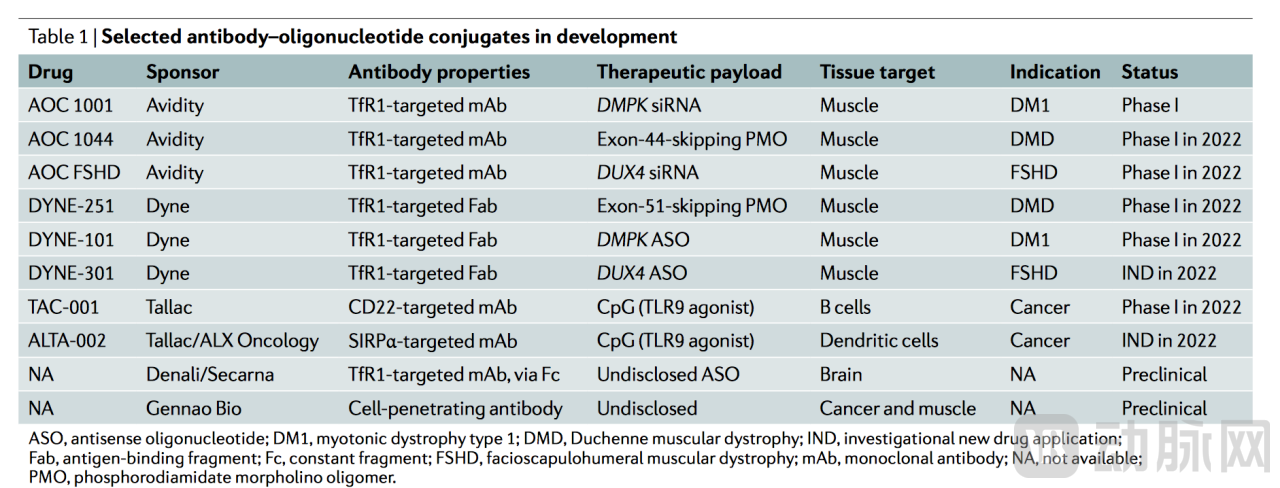
AOC Drugs Under Investigation (Image Source: Nature Reviews Drug Discovery)
Few domestic pharmaceutical companies have established a presence in this field. Jiajin Bio is among the first companies in China to engage in the research and development of Antibody-Oligonucleotide Conjugates (AOCs). In November 2022, the company successfully completed an angel financing round of RMB 45 million, co-led by Matrix Partners China and FreeS Fund. The company focuses on achieving extrahepatic delivery of small nucleic acids through conjugation technologies, with its primary strategic focus on rare diseases, oncology, and central nervous system disorders. According to Wu Hao, Founder and CEO, AOC drug development faces three major challenges: molecular design, process synthesis, and proof of concept.