

RMB 2 Billion Is Just Their First Step: Fudan University Launches Sci-Tech Innovation Mother Fund
December 4, 2023,“Fudan Sci-Tech Innovation Fund of Funds”The launch ceremony was held at Fudan University, with an initial scale of RMB 1 billion to support the university’s commercialization of scientific and technological achievements and alumni entrepreneurship. As the second university-affiliated sci-tech innovation fund of funds in China, it is also the largest such fund established by a Project 985 university this year.
On the day of the official announcement, major media outlets rushed to cover the news. Everyone was eager to see how much progress universities had made in facilitating the commercialization of research achievements. As a result, many people gained a direct impression:
Chinese Universities Have Escalated Their Engagement!Its investment vehicles have evolved from an initial educational foundation model to more targeted and clearly defined sci-tech innovation funds, and further to fund-of-funds with greater “initiative” in guiding investments.
Three years ago,Shanghai Jiao Tong University Future Fund of Funds Officially Launched, with an initial scale of RMB 1 billion as well. This fund of funds is known as: China’s first guidance fund of funds initiated and established by a university to support the commercialization of the university’s scientific and technological achievements and alumni entrepreneurship.
As the breeze blows over the Huangpu River, the story of Chinese university endowment funds unfolds.
Accumulation and Eruption
In 2020, Shanghai Jiao Tong University and Fudan University were approved as “University Technology Achievement Transformation and Technology Transfer Bases.” This also means thatThe Demand for Technology Transfer of University Achievements is Increasing。
According to the official data released by Shanghai Jiao Tong University, in 2021, the university signed 148 contracts for the direct transfer of scientific and technological achievements, with a total contract value of RMB 994 million, representing a nearly threefold increase compared to the pre-reform period.
Funding shortages are a frequent point of criticism regarding the commercialization of scientific and technological achievements in universities and colleges. A significant portion of basic research consists of applied basic research, which is closely linked to industrial applications. However, due to the forward-looking nature of basic research, there is often a considerable gap between such research and practical application, leading many domestic venture capital firms and enterprises to hesitate or refuse to invest.
Therefore,Providing investment services centered on the commercialization of university scientific and technological achievements is the primary objective for universities in establishing guidance funds.. An investor remarked, “Whether acting as a GP or an LP, universities enjoy the advantage of ‘proximity and access.’” Leveraging their natural ties with professors and alumni, university-affiliated venture capital firms and fund-of-funds are better positioned to identify and screen early-stage innovative projects that align with clinical needs and possess high potential for growth.
The emergence of university-guided fund-of-funds can also be regarded as a competitive advantage.
“Fudan Sci-Tech Innovation Fund of Funds” was launched without any prior leaks regarding its establishment.
As depicted in the recently popular TV series *Blossoms Shanghai*, Hu Ge’s character, a business luminary, tells Miss Wang (played by Tang Yan) that the first lesson in doing business is to master two words: “stay silent.” Do not speak on matters that should not be discussed, cannot be clearly articulated, are not fully thought through, or lack certainty; nor should you speak on issues that cause difficulty for yourself or others.
Since 2000, Fudan University has built a bridge between “academia” and “industry” from an investment perspective, facilitating the growth of Fudan’s scientific and technological projects from “0” to “1,” and then to infinity. Venture capital firms affiliated with Fudan University, such as Side Capital, Quantum Ventures, Furong Investment, and Fuchuang Investment, leverage their inherent connections with professors and alumni to identify and screen early-stage innovative projects that align with clinical needs and possess high potential and scalability.
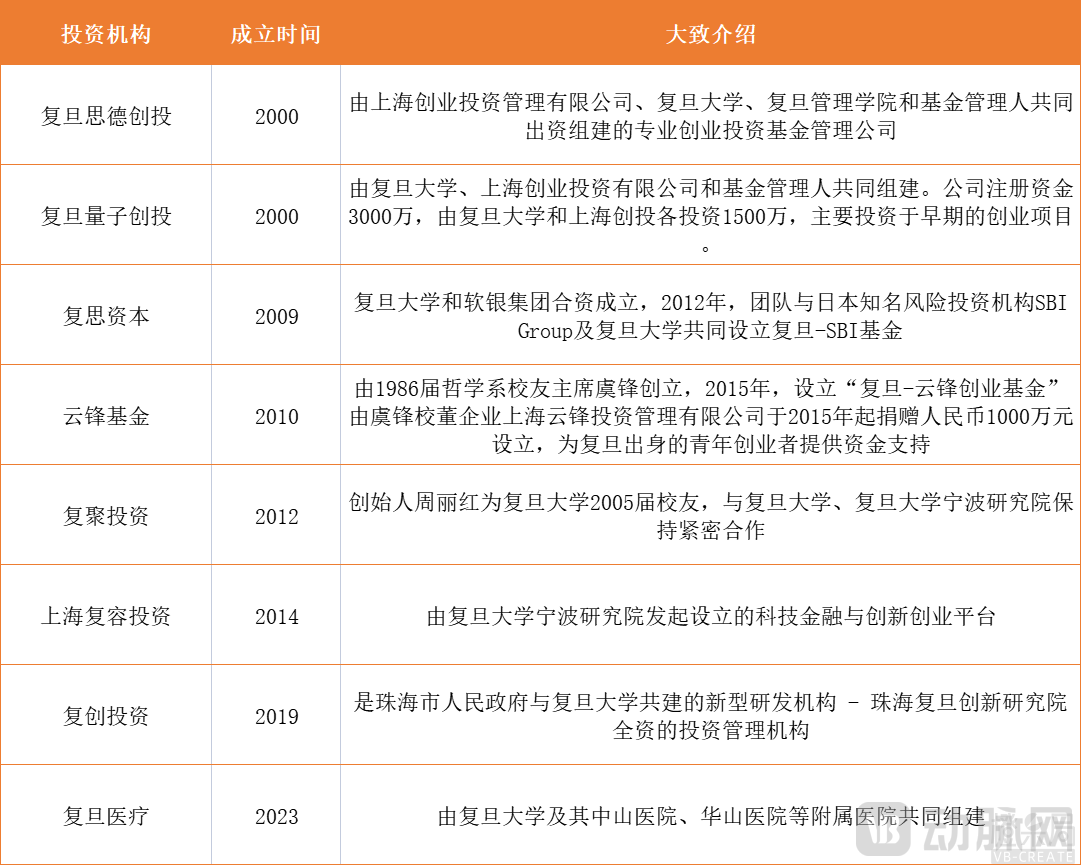 Fudan-affiliated venture capital firms; data sources: Juzi IT, Qichacha, and Dongmaicheng
Shanghai Jiao Tong University shares the same ethos.
In the world of venture capital, the legend of Shanghai Jiao Tong University has long been circulating. It is home to a significant portion of China’s investment community: Neil Shen of Sequoia China, Mao Chengyu of Yunqi Partners, Gong Ting and Wang Qiong of SIG China, Zhu Linan of Legend Capital, Xue Cunhe of SoftBank China and Warburg Pincus, Zhu Xiaohu of GSR Ventures, and Cai Mingpo of Cathay Capital...
Furthermore, the Shanghai Jiao Tong University Education Development Foundation has served as a limited partner (LP) in multiple funds managed by Sequoia China (multiple times), Legend Capital (multiple times), GSR Ventures, Qingsong Fund, Lianxin Capital, and Data Capital, among other SJTU alumni-affiliated managers or renowned institutions, thereby holding indirect equity stakes in more than 1,000 companies.
Today’s appearance of university-affiliated enterprises at the LP conference still reveals their initial capital accumulation in the capital markets.
N Empowerments
“The journey from a groundbreaking original innovation to a market-ready product is long and arduous, requiring many ‘companions who weather the storms together,’ ” said Sun Pengjun, head of the Fudan Science and Technology Innovation Fund of Funds (in preparation), at the fund’s launch event. He emphasized that only “patient capital” and “long-term capital” can help major original achievements achieve full-scale industrialization.
Scientists often face various challenges when launching startups. While their strengths may be highly pronounced, their weaknesses are equally apparent. Due to their focus on scientific research, they may lack experience in management, operations, and market expansion.
University-endowed funds should serve as long-term “partners” to scientists, with the requirement that they provide “not just capital, but more importantly, value-added support,” offering necessary assistance at every stage of the translation of scientific and technological achievements.
They not only provide funding but, more importantly, help scientists address these shortcomings. From building teams and identifying partners to exploring commercial applications and operational strategies, these institutions stand by scientists’ side, ensuring a smoother entrepreneurial journey.
Those deeply engaged in the commercialization of scientific research well understand that the proliferation of startups near Stanford University is driven by a positive ecosystem, characterized by a strong culture of scientific innovation and a concentration of early-stage capital, professional management talent, and intellectual property lawyers who truly understand scientists.
After establishing its fund of funds, Shanghai Jiao Tong University rapidly executed a series of strategic initiatives, with only one objective:
Build a mature ecosystem.
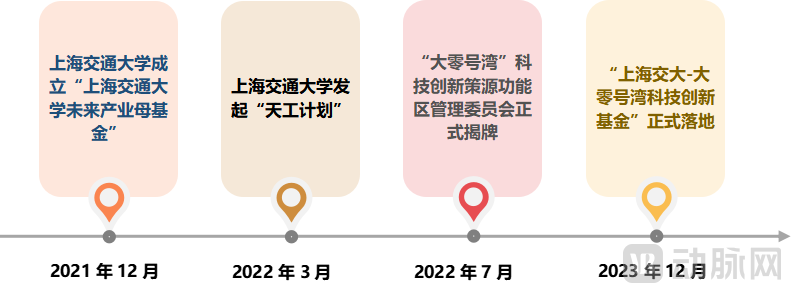
In March 2022, Shanghai Jiao Tong University launched the “Tiangong Initiative.” On one hand, it fully leverages alumni resources to guide capital toward greater attention on scientist-led startups, facilitate the efficient validation of innovative concepts, and help scientists secure financing. On the other hand, it engages professors or alumni who have already achieved entrepreneurial success to serve as startup mentors for other faculty members with entrepreneurial aspirations, providing more targeted entrepreneurship guidance.
With the support of the “Tiangong Initiative” and the “Future Industries Fund of Funds,” Shanghai Jiao Tong University helped five companies secure financing totaling RMB 198 million in less than one year.
In July 2022, the Management Committee of the “Grand Neo Bay” Science and Technology Innovation Source Function Zone was officially unveiled. Upon its launch, the science park immediately garnered strong support from Shanghai Jiao Tong University (SJTU). According to incomplete statistics, by the end of 2022, the core area of “Grand Neo Bay” housed more than 600 enterprises, among which approximately 550 were founded by SJTU faculty, students, and alumni or engaged in technical collaborations with them. Of these, 42 companies had secured financing exceeding RMB 10 million, 28 had raised over RMB 100 million, and 3 had attracted more than RMB 1 billion. Currently, innovation and entrepreneurship projects affiliated with SJTU in Grand Neo Bay have formed a significant cluster.
Supported by the Minhang District Government, this technology park offers comprehensive policy support to tenant enterprises and has systematically planned and upgraded surrounding ancillary facilities. Nearly all startup teams can occupy office space free of charge and gain access to a robust team of startup mentors and abundant venture capital funding.
“Funding” remains a key focus within the Shanghai Jiao Tong University ecosystem.. In December 2023, the “Shanghai Jiao Tong University–Grand Neo Bay Technological Innovation Fund” was officially launched, with a total scale of RMB 1 billion. Aligned with Shanghai Jiao Tong University’s strategic layout for technological innovation and leveraging the functional advantages of the “Grand Neo Bay,” this sci-tech innovation fund primarily focuses on equity investments in seed, angel, and acceleration rounds of tech startups, supporting the commercialization of basic and applied basic research outcomes originating from university laboratories.
Moreover, Shanghai Jiao Tong University periodically dispatches technology transfer professionals to study the most comprehensive and advanced commercialization systems abroad, while also providing solutions tailored to China’s specific conditions.
In August 2023, Shanghai Jiao Tong University released China’s first full-lifecycle guide to medical technology innovation and entrepreneurship—Medical Technology Innovation and Entrepreneurship. This guide draws on Stanford University’s Biodesign innovation model while integrating China’s entrepreneurial ecosystem and policy landscape, aiming to assist industry professionals in identifying and uncovering opportunities for technological innovation.
"The awakening of a university's consciousness toward technology transfer is the original form of the ecosystem."
Choosing Without Limits
Nearly all university endowment funds aim to achieve substantial investment returns, akin to the Yale University Endowment.
Data shows that the Yale Endowment achieved an annualized return of 9.9% over the past 20 years, compared to just 5.9% for the S&P 500 Index during the same period. Moreover, the Yale Endowment incurred losses in only one year—2009—over this 20-year span, with significantly fewer and smaller drawdowns than the S&P 500 Index.
Compared to the success of the Yale Endowment,Domestic university endowment funds are still in their infancy.. Domestic university endowment funds are primarily divided into two models: educational foundations and fund-of-funds.
The total scale of domestic education funds is only around RMB 40–50 billion, with a low investment participation rate. “Not only small in scale, but also lacking professional expertise” is the main reason why domestic funds are reluctant to engage in investments. The scale of government-guided sci-tech innovation funds that undertake investment projects is even smaller; the initial sizes of both the Shanghai Jiao Tong University Future Industries Fund of Funds and the Fudan University Sci-Tech Innovation Fund of Funds are merely RMB 1 billion each.
Although the overall scale remains relatively small, it is significant that university-affiliated science and technology innovation fund-of-funds in China have finally gained momentum. Currently, what these funds lack most are management and operational expertise as well as professional proficiency.
Early-stage projects exhibit high levels of uncertainty, and the commercialization of scientific and technological achievements involves multiple dimensions, including technology, law, and finance. This necessitates that funds possess more diversified capabilities in project screening, due diligence, and support services. Currently, domestic universities lack management experience and professional expertise in investment funds, and their understanding of market dynamics and industry trends is insufficiently accurate. This may lead to a certain degree of blind decision-making and risk in university investment decisions.
Furthermore, as educational institutions, universities may be subject to specific regulatory restrictions, such as regulations governing investment scope and fund utilization, which can constrain the operational flexibility and return levels of investment funds. Additionally, given that universities typically have lengthy decision-making processes involving numerous stakeholders, the decision-making cycle for investment funds may be prolonged, thereby reducing investment efficiency.
These weighty questions will determine the future development direction of university-affiliated fund-of-funds for sci-tech innovation.
According to Sun Pengjun, head of the Fudan Sci-Tech Innovation Fund of Funds (in preparation), in terms of GP selection,The Fudan Sci-Tech Innovation Fund of Funds will seek out the industry’s most outstanding professional investment management teams globally, forging strong partnerships to accelerate the commercialization of scientific research projects.。
In the latest job posting for an investment manager, we also see that “business background, five years of experience, Fudan University graduates preferred” are the most highlighted requirements.
Notably, while the Fudan Sci-Tech Innovation Fund of Funds focuses its primary investments on critical “chokepoint” sectors such as integrated circuits, artificial intelligence, biopharmaceuticals, and new materials, it does not require investment managers to have backgrounds in science or engineering or prior industry experience. Instead, it has extended opportunities to business graduates, who have been largely overlooked by the primary market. The fund still maintains certain requirements for experience and understanding in fund-of-funds operations, with financial acumen—specifically the ability to “crunch the numbers”—explicitly emphasized, underscoring its clear financial objectives.
The most critical task in the recent recruitment for the fund of funds was to substantially augment its roster of business professionals. The Fudan Sci-Tech Innovation Fund of Funds has identified a noteworthy trend: just as investment firms require their investment managers to understand scientists and technology when investing in scientific ventures, universities likewise need to comprehend general partners (GPs) and venture capital when selecting GPs.
In terms of project selection, while focusing on the commercialization projects of the “Fudan-affiliated” portfolio, the Fudan Sci-Tech Innovation Fund of Funds will also guide its subsidiary funds to cast a wider net over venture capital and private equity investments.Sun Pengjun publicly stated, “Although the fund bears the name of Fudan University and gives priority to supporting projects involving the commercialization of Fudan’s scientific and technological achievements as well as alumni-led innovation and entrepreneurship initiatives, we do not limit our investments solely to Fudan-affiliated ventures, nor do we engage in ‘exclusive cliques.’”
The only constant is that the Fudan Sci-Tech Innovation Fund of Funds remains committed to investing in small enterprises, early-stage ventures, and hard technology.
In fact, fund of funds (FoFs) carry a certain experimental nature. The road ahead will remain challenging, requiring greater efforts from them. They need to gain a deeper understanding of the market, capital, and the translation of scientific achievements into practical applications. More importantly, they must constantly remind themselves not to let their guard down.
Fortunately, they have taken the first step.。
References:
“Fudan Sci-Tech Innovation Fund of Funds Launched with Initial Capital of RMB 1 Billion, Aiming to Seek ‘Patient Capital’ and ‘Long-Term Capital’”
“Another University-Backed Fund of Funds Enters the Primary Market”
"20-Year Annualized Return of 9.9%: Why Has the 'Yale Model' of Asset Allocation Been So Successful?"
“Zhang Yue: Developing Fund of Funds and Learning from the ‘Yale Model’”
“Shanghai Jiao Tong University Also Steps Up Its Efforts in Fund-of-Funds: Is a Competition Among Domestic University Education Foundations About to Begin?”
“Scientists Take Center Stage at University Anniversary Celebrations”