

Songyang Bio Strengthens Sample Preservation Leadership and Expands into CGT Cell Culture and Expansion
Supported by policies, technology, and downstream markets, cell and gene therapy (CGT) has entered the “fast lane.”
According to Frost & Sullivan, the global CGT market size is projected to reach $30.54 billion in 2025, with a compound annual growth rate (CAGR) of 71% from 2020 to 2025. China’s CGT market is expected to maintain rapid growth, with its total market size reaching $2.59 billion in 2025 and a CAGR of 276% from 2020 to 2025.
Consequently, demand from the mid- and downstream markets for upstream equipment and consumables continues to intensify. On one hand, there is significant potential for the domestic production of upstream equipment and consumables in China, with cost-effective products, technological innovations, and industrial iterations constantly emerging. On the other hand, due to the relatively late start of the domestic industry, imports still dominate certain segments of mid-to-high-end equipment. Chinese companies lag considerably behind foreign competitors in key process technologies, including cell culture and development processes, centrifugal extraction, separation and collection, and aseptic connection systems.
Bingshan Songyang Biotechnology Co., Ltd. (hereinafter referred to as “Songyang Biotech”) was founded in 2008. Focusing on the fields of life sciences and biotechnology, it provides specialized equipment and comprehensive solutions for the research, development, and industrialization of biologics and cell-based therapies.
Songyang Biotech traces its origins back to 2008, when SANYO, a world-leading supplier of laboratory equipment, established its biomedical division in China. In 2012, the Panasonic Group completed its acquisition of SANYO, and the brand was updated to Panasonic. In December 2018, Songyang Biotech was officially established, completing the integration of Panasonic’s biomedical business.
In 2020, Songyang Biotech launched the new alphavita brand for the life sciences sector. “The establishment of this new brand made 2021 a critical milestone for Songyang. We comprehensively integrated the four stages of cell therapy—from theoretical technical research to clinical application—restructured our technological framework, and updated Songyang Biotech’s R&D direction and product portfolio,” said Pan Yue, Senior Director of Operations at Songyang Biotech, in an interview with VCBeat.
Following this update to the knowledge graph, Songyang Bio, while inheriting the Sanyo-Panasonic technology,Focusing on three product series—sample preservation, disinfection and sterilization, and cell culture expansion—the company provides comprehensive solutions for biobanking and Cell Processing Centers (CPC), leveraging digitalization and intelligence to enhance corporate competitiveness and user experience.To support multi-category operations, Songyang Biotech has established five product R&D teams and one technology innovation center, with R&D personnel accounting for over 20% of the workforce.
Specifically, under the sample preservation technology platform, Songyang Bio’s full-temperature-range product line includes 2–8°C refrigerators, -20 to -40°C low-temperature freezers, -40 to -90°C ultra-low temperature freezers, and -196°C liquid nitrogen tanks. The disinfection and sterilization platform is primarily based on vertical steam pressure sterilizers. The cell culture and expansion platform comprises a wide range of products suitable for various scenarios, including biological safety cabinets, CO₂ incubators, and closed-cell processing workstations.
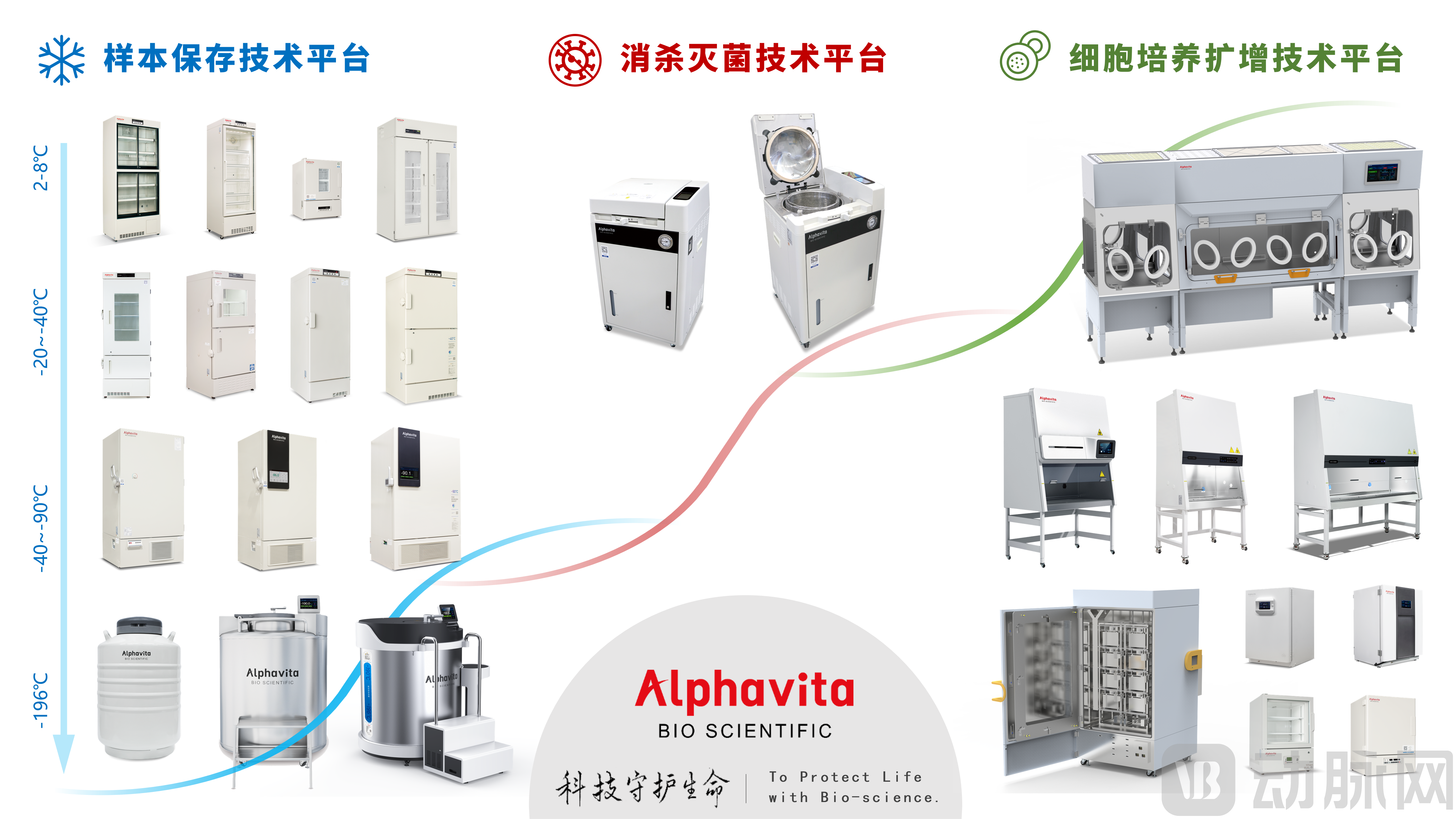
Songyang Bio’s Product Matrix (Image provided by the interviewee)
Pan Yue stated, “Our expansion into the cell and gene therapy (CGT) sector is, on one hand, a natural extension of Songyang Biotech’s years of accumulated expertise in cryogenic, ultra-low temperature, and deep-cryogenic biosample preservation technologies; on the other hand, it is driven by the demands of our downstream clients with whom we have maintained long-term collaborations.” Guided by customer needs and its own technical expertise, Songyang Biotech has not only extended its standardized product offerings into the CGT field but also provides customized products and service solutions to meet application requirements across various specialized scenarios, including hospitals, centers for disease control and prevention, and academic research institutions.
Sample Preservation and Cell Formulation Are Key Challenges to Be Addressed in the CGT Field.
Taking CAR-T cell therapy as an example, patients have blood samples collected at the treatment center, which are then transported to the manufacturing center via cold chain or ultra-cold chain logistics. During transportation, transit time and temperature are high-risk factors affecting the quality, viability, and recovery rate of peripheral blood mononuclear cells (PBMCs). If the PBMCs fail to meet the required standards, they cannot proceed to the manufacturing stage.
Entering the manufacturing phase, GMP-compliant facilities receive blood samples, isolate and activate T cells from peripheral blood mononuclear cells (PBMCs), and genetically engineer them via viral transduction. Subsequently, the activated T cells are expanded in specialized cell culture media to achieve the therapeutic dose, followed by cryopreservation, characterization, and analysis. Finally, they are shipped to treatment centers, thawed, and infused into the patient. Post-transduction T cells are more fragile, posing greater technical challenges and higher risks of contamination compared to other cell types, with elevated risks also present during the final cryopreservation and transportation stages.
In CGT laboratory configurations, technical approaches are primarily categorized into open and closed systems. Closed systems are further subdivided into fully automated, semi-automated, and manual operations within isolators. Aligning with the broader trends of intelligence and digitalization in the medical field, automation has become the mainstream direction for CGT laboratories. Two significant technical pathways are semi-automated processes and automated equipment that utilizes universal consumables, developed based on isolator technology.
Leveraging the advantages of biopreservation and addressing key challenges in preservation and modulation, Songyang Bio has launched an integrated, highly automated, closed-system cell modulation workstation.
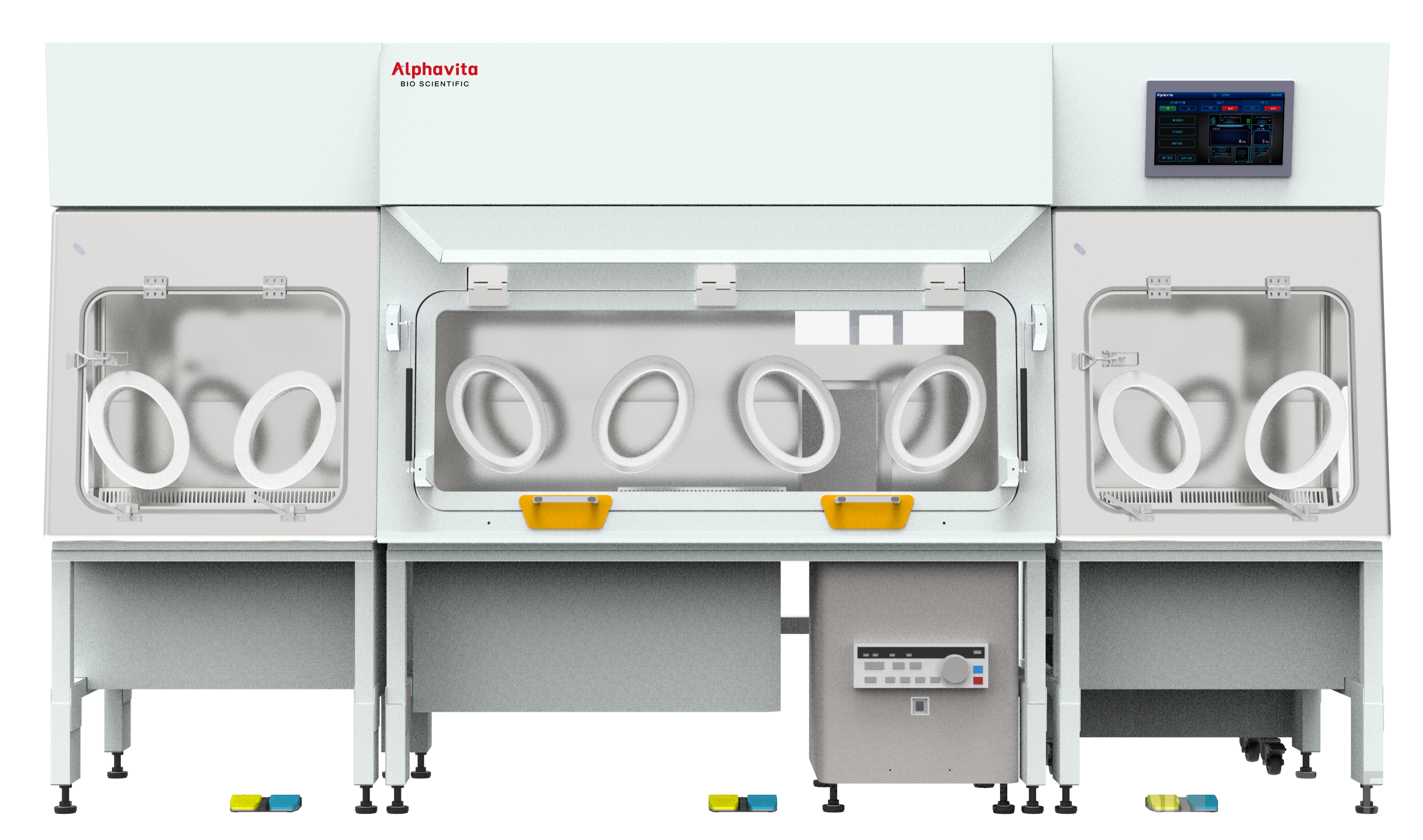
Closed Cell Modulation Workstation (Image provided by the interviewee)
Fully Enclosed Operating Chamber
Breakthrough All-in-One Fully Enclosed Cleanroom Operating Chamber: Integrating Cell Culture, Preparation, and Observation for One-Stop Cell Therapy Services
Intelligent and Automated Control
Configurable single- or double-sided pass-through chambers, integrated with either a fully automated honeycomb culture system or a carousel incubator system, minimize manual operational errors and enhance the uniformity and stability of cells during cultivation. The intelligent control system dynamically adjusts parameters based on experimental requirements, featuring automatic data logging, real-time monitoring, and automated alarms. This delivers multifunctional, diverse, and modular capabilities, ensuring the safety of cell samples.
High Safety and High-Standard Operating Environment
High-Efficiency HEPA Filtration, All-Around H2O2Decontamination with residue-free decomposition provides a strictly ISO Class 5 clean, sterile operating environment for cell preparation. One-touch switching between positive and negative pressure modes ensures the safety of both cell samples and operators. The combination of dual-side pass-through chambers and an operation chamber adopts an isolated transfer method to guarantee unidirectional flow of cell samples, preventing contamination caused by cross-movement.
“In the process of serving clients, we believe that the core pain point of CGT still lies in cost.”, Pan Yue stated, “Although this is a well-worn topic, the current equipment requirements across various stages of cell and gene therapy (CGT) development are still largely benchmarked against European and American standards. Domestic players tend to learn from and emulate foreign laboratories, not only in terms of equipment and consumables but also in overall process workflows, management models, and operation and maintenance (O&M) systems. This inevitably results in many CGT companies facing not only high O&M costs but also substantial trial-and-error expenses. From a long-term perspective, process workflows established during the R&D phase tend to become entrenched in manufacturing processes, thereby leaving few willing to pursue the path of ‘innovating processes to reduce costs.’”
However, Pan Yue believes this is also a major opportunity for domestic substitution.“First, upstream enterprises like ours must align with the technical routes and process characteristics of Europe and the United States, benchmark against international standards, and develop a competitive product portfolio. Simultaneously, we must leverage our cost advantages to accelerate the pace of import substitution.”
Leveraging the global DNA from its Panasonic era, Songyang Bio established an overseas sales team at an early stage. It has now set up seven domestic marketing centers and one overseas business division located in Osaka, Japan, serving a cumulative client base of over 1,000 customers both domestically and internationally.
“For many years, Songyang Biotech has consistently adhered to high-standard Japanese quality control and development control systems in its R&D, production, and operational frameworks. Many of our frontline veteran employees have been with us since the Sanyo and Panasonic eras, which has enabled us to achieve a high level and standard in our quality philosophy and quality control,” introduced Pan Yue.Such high standards, stringent requirements, and long-term, vertically focused R&D are key to Songyang Bio’s rapid expansion into overseas markets.
Pan Yue stated that Songyang Bio’s cost advantages would be even more pronounced in overseas markets. “The international environment also presents certain opportunities for Chinese-made products to expand globally. We have established close ties with countries and regions including Russia, Western Europe, Southern Europe, the Middle East, South Asia, and Southeast Asia, and our sales performance has been strong.”
“Overseas clients’ first impression of ‘Made in China’ remains high cost-performance ratio. However, in our actual engagements, we have observed that overseas clients’ needs are gradually diversifying, and the market is becoming increasingly multi-tiered.”Following the launch of its new independent brand, Songyang Bio has begun to establish a diversified product portfolio—featuring both premium high-end offerings and cost-effective products to penetrate lower-tier markets.“The most practical issue is that, during the bidding process, we need to promote products based on customer requirements to avoid being mere participants and to compete on a level playing field with large suppliers.”
In the interview, Pan Yue likened Songyang Bio’s role to that of a supplier providing brushes and pigments to painters. “We are not the primary creators, but we are indispensable to the creative process. When the pigments we supply differ, the resulting works downstream will also vary. Currently, we observe that many domestic alternatives pursue cost-effectiveness and follow-on strategies, while imported products target the high-end segment. This is akin to a world where everyone paints in oil, prompting suppliers to focus solely on oil paints. However, as ink wash painting gradually emerges as the global leading art form, Chinese suppliers of ink wash materials will likewise rise to leadership positions.”
Indeed, as downstream sectors continue to follow established trends, achieving “substitution” of imported products will be a key focus for domestic suppliers. In the long run, once China’s cell and gene therapy (CGT) sector takes a global lead and becomes a standard-setter, Chinese supply chain enterprises will continuously evolve through serving their clients, establishing Chinese standards for process workflows, equipment design, and more.
About Fosun Star Future Entrepreneurship Camp
Fosun Star Future Institute, established by Fosun Group in partnership with Fosun Pharma, aggregates industrial resources across Fosun’s biomedical, diagnostic devices, medical services, health insurance, and eldercare sectors. It serves as a platform for entrepreneurs and executives in the healthcare industry through an “investment + mentoring + incubation” model. Featuring instruction from industry leaders, direct access to Fosun’s various business units and supply chains, and support from industrial capital—including investments from numerous Fosun funds and strategic business development—the institute aims to identify and invest in future unicorns ahead of the curve.
Fosun Future Health Entrepreneurship Camp (Phase 5) is now actively recruiting!