

StellarSea Medical Secures Tens of Millions in RMB Series A+ Financing, Accelerating Global Expansion of Disposable Endoscopes

MacroLux
Provider of Comprehensive Endoscopic Interventional Diagnosis and Treatment Solutions

Dalton Venture
Venture Capital Institutions in the Medical and Health Field

Legend Capital
Early-stage venture capital and growth-stage private equity investment institutions
VCBeat Exclusively Learns: A Global Leader in Disposable EndoscopesShenzhen CityMacroLux Medical Technology Co., Ltd. (hereinafter referred to as "MacroLux"), announced recently that it has completed a funding round led by existing shareholdersDalton VentureandLegend CapitalA+ round of financing amounting to tens of millions of RMB through co-investment. This round of financing will support the company’s market promotion of single-use electronic endoscopes, as well as the research and development and market introduction of multiple innovative endoscope products.
It is reported that this round of financing is the second round secured by MacroLux Medical this year, with the cumulative amount of the two rounds exceeding RMB 100 million.
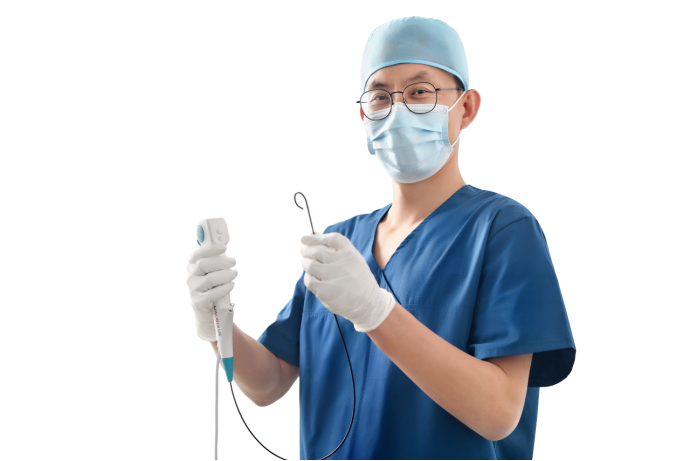
“With the continuous emergence of new technologies, the endoscopy industry is undergoing rapid and intense changes,” Zhang Weiqiang, General Manager of MacroLux Medical, told VCBeat. The sudden rise of domestic manufacturers in the endoscopy field, the gradual replacement of reusable endoscopes by single-use ones, and the integrated application of various new technologies onto endoscopic platforms... The endoscopy industry resembles a massive, flowing glacier, ushering in historic transformation and opportunities amidst heavy collisions.
Endoscopes are typical technology-driven products. MacroLux positions itself as an “innovator in endoscopic interventional diagnosis and treatment.” Its “innovation” is manifested in three aspects. First, rather than producing devices already widespread in the market, MacroLux focuses on developing future-oriented therapeutic solutions. Second, it conducts in-depth research into customer needs, adopting a backward-design approach that starts with the end goal to guide product development. Third, it builds foundational technical capabilities through R&D innovation, leveraging original innovations to establish core product competitiveness.
After years of accumulation, MacroLux has separately targetedUrology, Gynecology, Gastroenterology, and Respiratory & Critical Care: Four Product Pipelines Established,Including CoralView®Disposable Electronic Ureteropyeloscope, BubbleView™ Disposable Electronic Cystoscope, LoopView®Disposable Electronic Bronchoscope and ViewHub®Portable image processing host and other products.
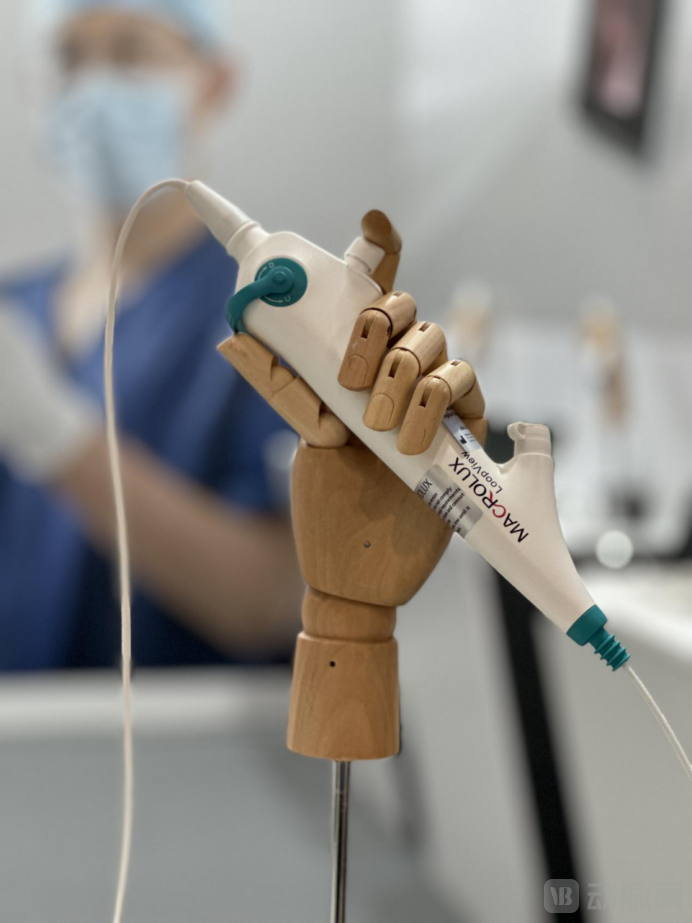
Disposable endoscope products are characterized by their miniature size and high precision, posing significant demands on the structural design of components, welding processes, and other aspects.High Technical Barriers. The supply chain for disposable electronic endoscopes involves hundreds of components, including image sensors, tubing, stainless steel pull wires, optical fibers, and handpieces, requiring a stable and mature supply chain to ensure reliability.Otherwise, it is difficult to ensure the stability of mass-produced devices.The single-use, disposable nature also necessitates the use of disposable endoscopes.Strict cost control is mandatory.Manufacturers typically reduce costs by using lower-grade materials, simplifying internal product structures, and reducing the number of components. However, for single-use products to be adopted in clinical departments, they must meet the department’s basic requirements for image quality and maneuverability.
Therefore, how to balance performance, cost (price), and quality has become a common industry challenge facing all manufacturers of disposable endoscopes.
“Costs are, to some extent, also engineered through R&D.”Zhang Weiqiang shared MacroLux’s key to success with VCBeat. A product originates from research and development (R&D) and design; once its design is finalized, the cost is essentially confined within a specific range. Therefore, how the product is designed during the R&D phase is a critical factor in cost control.
“Endoscopes are products that place a high priority on user experience. While they are relatively easy to manufacture, achieving excellence is particularly challenging due to the stringent requirements for image quality, outer diameter, and maneuverability. Our products are developed in direct response to customer needs,”“Products that meet customer needs do not require flashy features; instead, they demand comprehensive reinforcement and enhancement of core performance.”
Zhang Weiqiang cited as an example the current industry trend toward reducing the diameter of disposable ureterorenoscopes. Although ureterorenoscopes are already quite small, with market standards typically ranging from 8 to 9 Fr, further miniaturization requires overcoming core technical challenges in module integration, articulation mechanisms, precision packaging, and design. MacroLux’s disposable electronic ureterorenoscope, featuring an ultra-slim 7.5 Fr outer diameter, has been widely acclaimed for its superior imaging quality and ergonomic handling, offering clinicians a solution that enhances both clinical efficacy and safety.
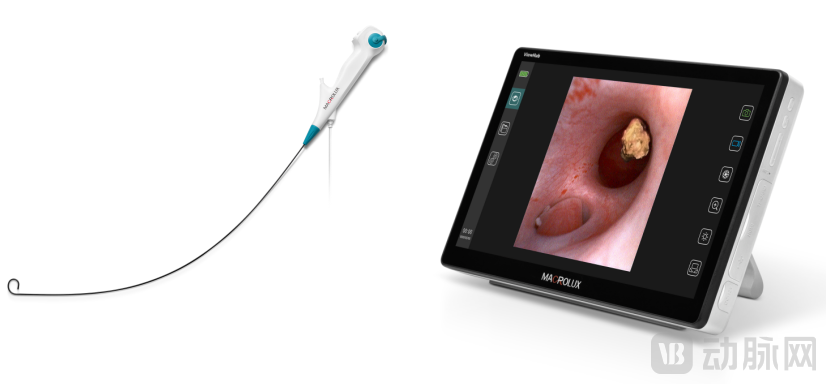
Take imaging, for example. Endoscopic image quality is determined by a combination of factors, including optical lenses, image sensor technology, illumination, data transmission, and processing algorithms, making it a comprehensive systems engineering challenge. The MacroLux team boasts over a decade of R&D experience in endoscopes and minimally invasive surgical instruments, with a proven track record of successful commercialization from concept to market. Leveraging its deep expertise in industrial R&D, marketing, and supply chain management, MacroLux Medical can rapidly integrate into the entire imaging chain and achieve swift optimization.“Much of this is not patented, but rather consists of know-how that requires internal accumulation and expertise.”Zhang Weiqiang concluded.
In China’s competitive market landscape, any new arena quickly fills up with players, and the field of single-use endoscopes is no exception.
In recent years, fueled by a surge in investment and financing within the endoscopy industry, numerous disposable endoscope companies have emerged, with many manufacturers delving deeply into various niche market segments. As domestically produced disposable endoscopes continue to enter the market, price wars have already begun.
“Once the price of single-use endoscopes drops to a certain level, customers become less price-sensitive. Consequently, the focal point of competition returns to the intrinsic value of the product itself. Factors such as superior performance, stability, and innovation will determine success or failure.”Zhang Weiqiang believes that China’s disposable endoscope market is still in its early stage of rapid growth. The intense competition, or “involution,” indicates widespread optimism within the industry, which can accelerate product adoption. For MacroLux, the key lies in rigorously refining its technology and products while effectively controlling costs to ensure steady and sustainable corporate development.
Currently, domestically produced single-use electronic endoscopes can be categorized into two types. The first type is therapeutic, such as pyeloscopes and choledochoscopes. These therapeutic endoscopic products are experiencing rapid market penetration and widespread adoption, as the procedural fees cover the cost of the device itself. The second type comprises diagnostic endoscopes, such as bronchoscopes and those used in outpatient settings. Due to reimbursement and pricing constraints, their penetration and adoption rates lag behind those of therapeutic endoscopes; nevertheless, overall demand is showing a trend of rapid growth.
“I believe that the issue of pricing is, at its core, a matter of customer education. On one hand, it is necessary to cultivate customer acceptance and adoption of the product. On the other hand, manufacturers must reduce costs and enhance performance to better meet customer needs. This is essentially a two-way process,” added Zhang Weiqiang. At the current stage, the usage cost of certain single-use endoscopes may be higher than that of reusable endoscopes; however, overall, the procurement cost and entry barrier for single-use endoscopes are significantly lower than those for reusable ones. In many specialized fields, the replacement of reusable endoscopes by single-use endoscopes is an inevitable trend.
MacroLux, which has been quietly surging ahead in the industry, rarely makes public statements except when disclosing news about financing and investment.
“Our team has had limited engagement with venture capital community events, including those organized by VCBeat. We prefer to devote our time and efforts to refining our products and delivering high-quality service to our customers,” revealed Zhang Weiqiang. He added that MacroLux will continue to focus on market introduction within China this year. The company has established a robust marketing network and has already partnered with dozens of hospitals, laying the groundwork for commercialization.
Although MacroLux has remained “silent” within the industry, an analysis of its official WeChat account reveals that the company has been highly active in overseas markets recently, with roadshow appearances spanning the United States, Germany, Singapore, Turkey, Japan, South Korea, and other countries.
True to its name, MacroLux’s journey is one of boundless ambition. Currently, the company is focusing its overseas efforts on Europe and North America, where market education is more mature. Its related products are in the critical stage of regulatory approval, with certifications expected to be obtained sequentially by the end of this year and the first half of next year, paving the way for their market launch.
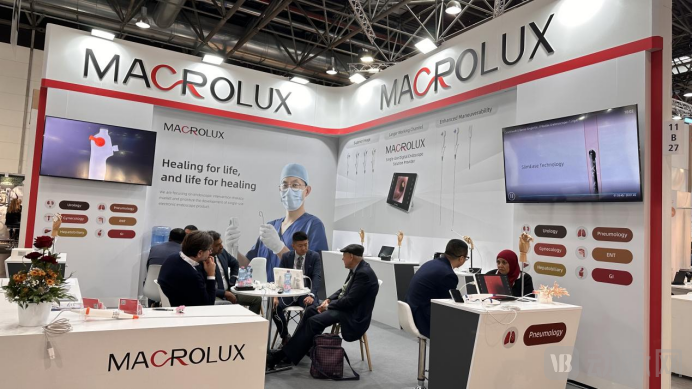
MacroLux Makes Appearance at MEDICA
How does MacroLux compete with foreign and local disposable endoscope manufacturers?
Zhang Weiqiang, General Manager of MacroLux, shared that foreign manufacturers can be mainly categorized into three types. The first type includes leading companies like Boston Scientific, which adopt a high-end strategy with superior performance but relatively high prices. For such competitors, “cost-effectiveness” serves as the key competitive advantage for Chinese manufacturers. The second type comprises mature single-use endoscope suppliers like Ambu, which excel in cost control and offer products at low prices. MacroLux’s strategy is to achieve differentiated competition in product performance, functionality, and applications, centered on customer needs, while maintaining strict cost control. The third type consists of foreign startups, which do not yet pose a threat to Chinese manufacturers due to constraints such as high entrepreneurial costs and technological development challenges abroad.
“If one remains nameless, one can focus entirely on honing their swordsmanship. Currently, our greatest challenge—or what we most aspire to achieve—can be summed up in one phrase: ‘stand out from the crowd,’” Zhang Weiqiang candidly stated. MacroLux has already achieved breakthroughs in its product portfolio, and its core team possesses comprehensive commercialization experience, having delivered impressive results from inception to market launch. In terms of both product development and commercialization, MacroLux maintains a strong and balanced approach. Nevertheless, as a young company, MacroLux Medical must still adhere to the natural laws of corporate growth, nurturing its development with time and patience.
Next, MacroLux will continue to anchor its deep expansion in the field of single-use electronic endoscopes. It will gradually introduce new products tailored to specific scenarios across four key specialties—urology, gynecology, gastroenterology, and pulmonology—striving to achieve “a depth of 10,000 meters within a width of one centimeter,” thereby expanding its reach across the global market.