

Sophway Technology Breaks Japanese Monopoly with Self-Developed 3-CMOS Chips, Enabling Domestic Production of Critical Endoscopy Components
As domestic substitution enters its “deep-water zone,” Chinese manufacturers continue to break through upward. Focusing on the field of medical imaging, the key to technological innovation lies in the breakthrough and development of core components.
Taking endoscopes as an example, although domestically produced endoscopes in China have been catching up rapidly in recent years and show strong momentum to surpass their foreign counterparts, most of the precision core components still need to be imported from Japanese and German manufacturers. A tiny chip condenses the most advanced imaging technology, providing image accuracy that makes it possible to diagnose extremely small lesions.
At that time, China did not yet have domestically manufactured three-chip sensors. Domestic endoscope manufacturers wishing to adopt this advanced technology had no choice but to import three-chip sensors from Japanese companies. However, during the actual tuning process, Chinese manufacturers were often unable to carry out secondary development according to their own design requirements, making it difficult to improve image quality.
Shenzhen Shuwei Technology Co., Ltd. (hereinafter referred to as "Shuwei Tech")Founded in 2019, its founding team members each have over two decades of experience in the field of medical imaging. Driven by the frustration of being dependent on foreign technology, they were determined to develop a three-chip camera system independently designed and manufactured in China.
Shuwei Technology was founded with the initial mission of dedicating itself to breakthroughs in core underlying technologies related to endoscopy and focusing on comprehensive solutions for minimally invasive surgery. The company has now achieved integrated optical modules, opto-mechatronic control, high-performance pneumatic circuit design, and mastered complete manufacturing processes.
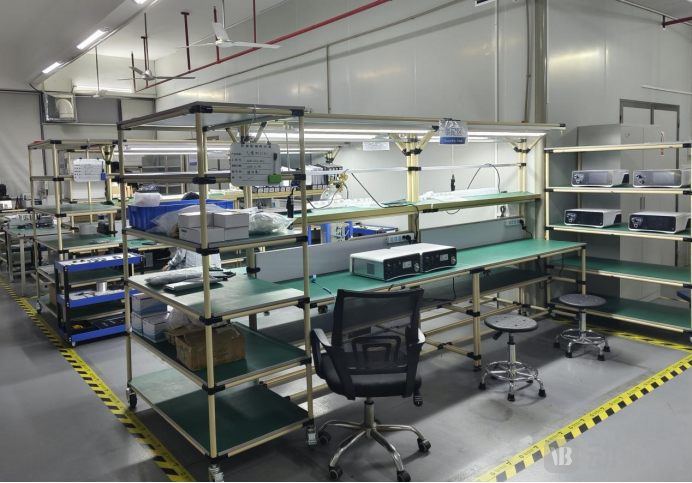
Independently designed full-process assembly tooling and calibration systems,
Overcoming Sub-Pixel Level Process Challenges in Three-Chip Technology
Three-chip sensors are image-sensing devices and one of the core components of endoscopes.
Compared with single-chip systems, three-chip imaging module technology effectively prevents color aliasing and provides superior color resolution. This is because a single-chip system uses only one image sensor to process the entire scene simultaneously, whereas a three-chip system separately detects and processes the three primary colors—red, green, and blue. This approach ensures color fidelity and produces more natural-looking images. Furthermore, independent processing of each color channel significantly reduces color mixing and mutual interference between colors.
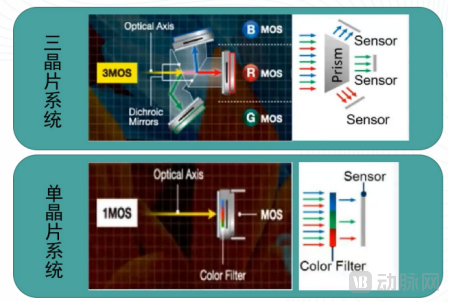
Three-Chip System vs. Single-Chip System. Image provided by Shuwei Technology
“Excluding Japanese companies, Shuwei Technology is the first company in China capable of independently developing and manufacturing CMOS three-chip modules.”Li Yong, founder of Shuwei Technology, told VCBeat that three-chip technology is not a new product or technology that has emerged in recent years; its principles have been around for four to five decades. However, it involves precision manufacturing, with process engineering being the greatest challenge. The three-chip system can separately detect the three primary colors—red, blue, and green—and process them individually, with each channel featuring a CMOS or CCD image sensor.The technical challenge of the three-chip process lies in the alignment of each channel, which requires sub-pixel precision.
In the early days, due to the relatively large pixel size (approximately 6–7 micrometers), there was sufficient margin for the alignment accuracy of three-chip sensors. Although other international companies besides Japanese enterprises also engaged in this field, as chips became smaller and resolutions higher, the difficulty of aligning the three chips increased sharply. Consequently, many companies either voluntarily or involuntarily halted their efforts. To address this challenge, Shuwei Technology spent four years exploring and independently developed a full-process assembly tooling and overall calibration system.
“During the assembly process of three-chip modules, temperature, humidity, and ambient vibrations can all affect assembly precision. We utilize a fully enclosed, heavy-duty precision manufacturing and machining workshop with year-round constant temperature control to maintain stable temperature and humidity levels while mitigating the impact of external vibrations,” Li Yong, founder of Shuwei Technology, told VCBeat.
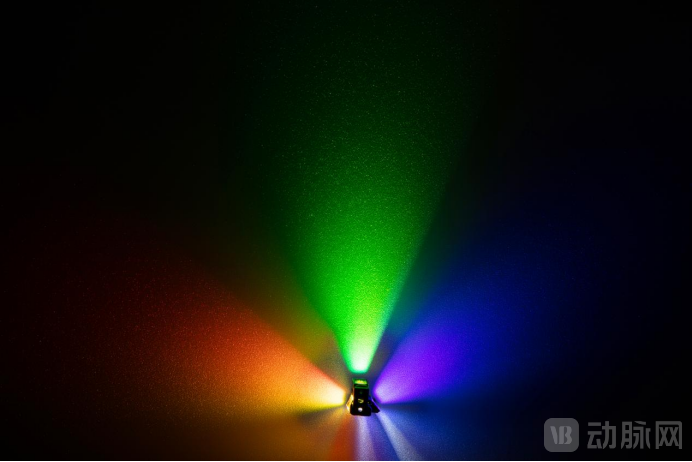
Shuwei Technology Three-Chip Light Emission Diagram
The three-chip CMOS image sensor, manufactured by Shuwei Technology, features a compact size and low power consumption. It accurately reproduces vivid colors and clear details of endoluminal tissues, thereby ensuring safe surgical procedures and precise maneuvers for physicians. Thanks to its small form factor and low power draw, the endoscope handle can be designed to be more compact and ergonomic, fitting comfortably in the hand without generating heat.
Shuwei Technology’s independently developed and manufactured three-chip CMOS not only breaks the long-standing monopoly held by Japanese companies and strengthens China’s rigid endoscope industrial chain, but also achieves in-depth development of image algorithms along with optimized independent design and refinement. This enables technological iterability and cost control at the source, significantly accelerating the pace of domestic substitution for endoscopes in China.
Shuwei Technology focuses on the field of minimally invasive surgery, committed to creating endoscopic technology solutions with a complete R&D technology chain. In addition to three-chip sensors, the company has also launched 4K ultra-high-definition endoscopic camera systems and HD camera systems equipped with its self-developed three-chip modules, as well as an ultra-high-flow insufflator.
4K Ultra-High-Definition Endoscopic Camera System: Utilizes unique lens technology to achieve 0.4s electronic autofocus
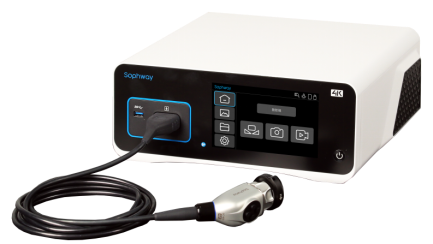
4K Ultra-High-Definition Endoscopic Camera System
Shuwei Technology’s 4K Ultra-High-Definition Endoscopic Camera System consists of a 4K ultra-high-definition camera, a cold light source system, and a rigid endoscope, with all the aforementioned core components independently developed by Shuwei.
Equipped with a proprietary three-chip sensor, the 4K Ultra HD endoscopic camera system accurately reproduces colors to match those of the imaged objects, offering high color fidelity and strong transparency that closely mimic human visual perception. It clearly displays visceral tissues with pure colors and distinct layers, supports high color reproduction, and enhances surgical safety.
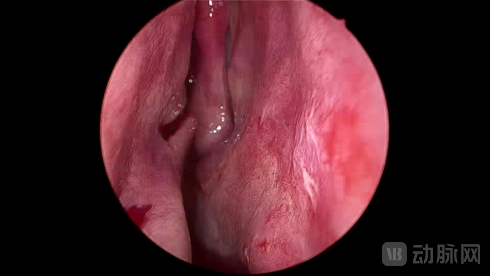
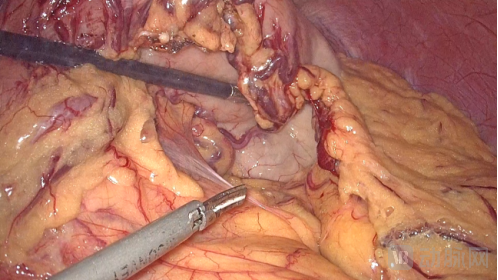
4K Ultra-High-Definition Endoscopic Camera System Image
It is worth noting that the system’s lens employs a unique optical technology that eliminates traditional mechanical focusing, enabling automatic focus within 0.4–0.5 seconds regardless of distance, thereby ensuring clear and visible imaging. Complemented by Shuwei Technology’s proprietary image optimization technologies—including SD-WDR™ ultra-wide dynamic range, WV-AIE™ full-field image dynamic sharpening, and BV-ACE™ microvascular dynamic equalization—the imaging performance is maximized. Furthermore, the camera supports low-temperature plasma sterilization.
The system’s video and image storage supports not only external media such as USB flash drives and portable hard drives, but also features a built-in high-capacity hard drive capable of storing at least 100 hours of video, thereby ensuring the security of surgical imaging data.
HD Camera System: 2x Optical Zoom, Compatible with Light Guide Bundles from Major Brands
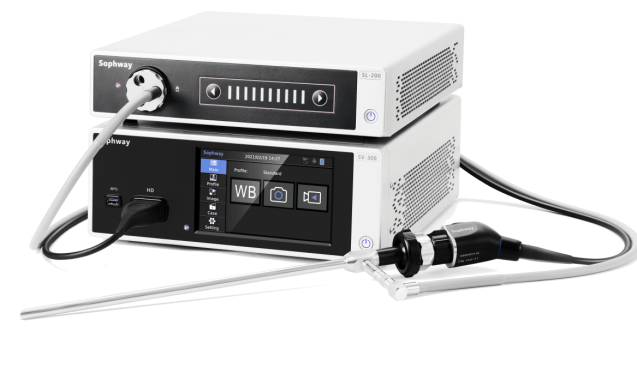
HD Camera System
The HD camera system launched by Shuwei Technology is also equipped with a self-developed and self-manufactured three-chip module. The camera of this system features a 2x parallel zoom function, enabling close-up shooting of target objects thanks to the image sensor’s high sensitivity, thereby capturing clearer images.
Furthermore, the system features light source linkage, which automatically matches the optimal brightness to ensure clear visualization of the surgical field and enhance procedural safety. Meanwhile, the medical cold light source’s light guide exhibits strong compatibility, supporting interfaces from major mainstream manufacturers on the market.
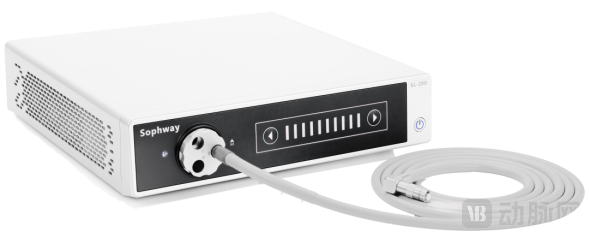
An insufflator is a specialized device used in laparoscopic surgery to establish and maintain pneumoperitoneum. It functions by delivering monitored, stable airflow into the abdominal cavity, thereby separating the abdominal wall from the intra-abdominal organs to create adequate visualization and operational space.
Shuwei Technology has launched an ultra-high-flow insufflator with a maximum flow rate of 50 L/min. Designed to address the practical demands of surgical procedures, the device features gas heating (to maintain constant intra-abdominal gas temperature and prevent hypothermia) and multi-level smoke evacuation (to provide a clear, unobstructed surgical field during challenging laparoscopic surgeries).
The most striking feature is that this product canPrecise adjustment down to 0.1 L/min is achievable under low-flow conditions (primarily for pediatric surgery).。Compared to similar products on the market, which have an error of approximately 2 L/min at low flow rates, Shuwei Technology can control the error within 0.6 L/min, achieving high-precision regulation at low flow rates.
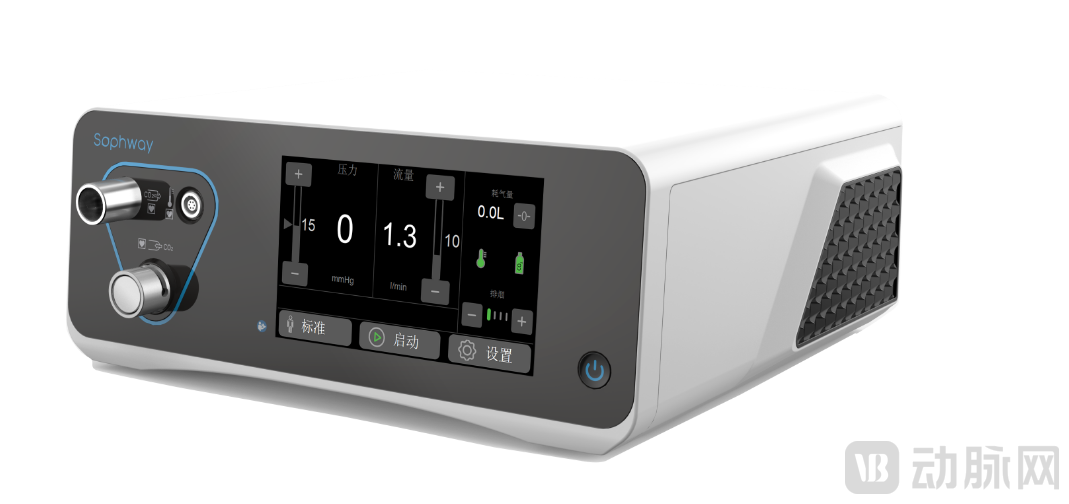
Shuwei Technology's Ultra-High-Flow Insufflator
Finally, let us introduce the team at Shuwei Technology. The company’s core technical personnel hail from prestigious universities such as Tsinghua University, Huazhong University of Science and Technology, and South China University of Technology, and possess nearly 20 years of experience working at top-tier medical device enterprises. The founder has repeatedly received honors including the First Prize for Provincial Technological Invention and the China Excellent Patent Award, demonstrating strong capabilities in original innovation and persistent technical problem-solving.
Although the endoscopy market appears to be a saturated "red ocean," it actually resembles the PC or smartphone markets of earlier years: the high-end segment is monopolized by international brands, while domestic manufacturers in the mid- and low-end segments primarily focus on integration, with core modules largely dependent on imports. Shuwei Technology is not only one of the few innovative enterprises in China that has fully mastered the underlying technologies of endoscopes, but also among the very few to break the overseas monopoly on optical module processing and precision manufacturing techniques. The company is well-positioned to strengthen the domestic endoscopy industry chain and accelerate the process of import substitution for endoscopes in China.