

Shanghai Introduces 32 New Measures to Accelerate Innovation Commercialization
On January 10, 2024, the General Office of the Shanghai Municipal People's Government released“Several Measures to Further Promote the High-Quality Development of Shanghai’s Equity Investment Industry”(hereinafter referred to as the “Several Measures”). The Several Measures shall come into force on February 1, 2024, and shall remain in effect for a period of five years.
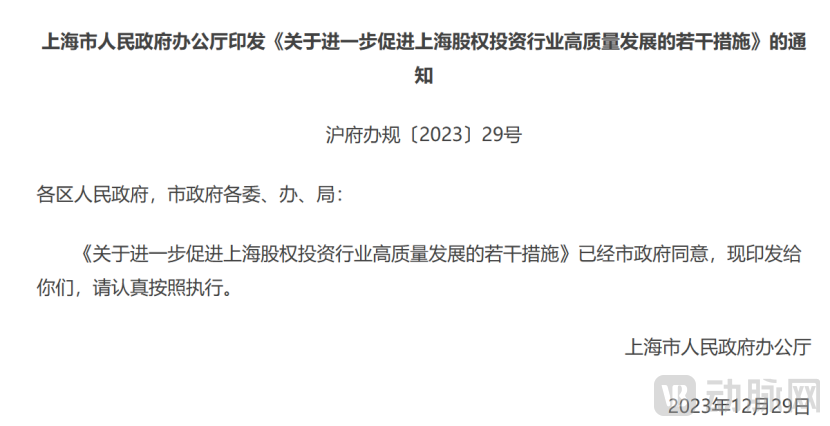
The image shows the "Several Measures," sourced from the official website of the Shanghai Municipal People's Government.
The “Several Measures” mainly include 32 measures across nine aspects, such as optimizing services for the establishment and industry management of equity investment institutions; guiding investments toward early-stage, small-sized, and technology-focused enterprises; supporting the development of corporate venture capital; cultivating long-term and patient capital; facilitating exit channels for equity investments; implementing fiscal and tax preferential policies; promoting collaborative and innovative development within the industry; high-quality development of equity investment clusters; and strengthening the construction of industry social organizations.
These new regulations have made significant breakthroughs and innovations, making it more conducive for capital to focus on early-stage, small-scale, and innovative ventures in Shanghai.“Daring to venture and daring to change” has long been Shanghai’s hallmark, and a key reason why the city leads the way in translating technological innovations into practical applications.
Strengthen early-stage, small-scale, and technology-focused investments
Guide investments toward early-stage, small-scale, and technology-driven ventures, is a noteworthy component of the “Several Measures,” serving the central objective of translating scientific and technological innovations into practical applications.
A frequent criticism of the commercialization of technological innovations is the insufficiency of funding. Given the long cycles and high investment risks associated with projects for translating scientific and technological achievements, social capital must account for market risks, resulting in inadequate motivation and risk-bearing capacity. Furthermore, many industrial funds in the market exhibit a prevalent tendency to seek “quick profits,” leading to insufficient incentive to invest in the early and mid-stage projects of technological achievement commercialization.
To address this challenge, in addition to providing policy guidance, governments and universities have also invested substantial financial resources to effectively encourage capital to invest early, invest in small enterprises, and invest in technology. For instance, the Fudan Sci-Tech Innovation Fund of Funds, jointly established by Fudan University, local governments, state-owned enterprises, and market-oriented institutions, has a total initial size of RMB 1 billion, making every effort to build an “ecosystem” for the transformation of scientific and technological achievements both on and off campus.
In the "Several Measures," the Shanghai Municipal Government, throughImprove the government guidance fund system, establish a professional service platform for angel investment, and formulate reward policies for early-stage, small-scale, and technology-focused investments, further strengthen guidance and support for early-stage, small-scale, and technology-focused investments.
1Improving the Government Guidance Fund System
Establish the Shanghai Science and Technology Innovation Guidance Fund, with a focus on investing in early-stage scientific and technological innovation sectors. Orderly expand the scale of the Shanghai Venture Capital Guidance Fund and the Shanghai Angel Investment Guidance Fund, leveraging the multiplier effect of fiscal funds. Improve the profit-concession mechanism for government guidance funds; in accordance with the Administrative Measures for the Shanghai Venture Capital Guidance Fund and the Detailed Implementation Rules for the Administration of the Shanghai Angel Investment Guidance Fund, gradually establish market-oriented work processes for valuation, negotiation, and pricing in share transfers. Strengthen coordination between municipal and district-level government guidance funds to enhance guided support for early-stage, small-scale, and technology-focused investments.
2Establishing a Professional Service Platform for Angel Investment
Support the establishment of angel investment industry organizations by professional teams, and build a specialized investment and financing service platform that aggregates angel investors, projects for the commercialization of scientific and technological achievements, and technology-based enterprises in the seed and early start-up stages. Conduct joint due diligence, valuation, and investment activities to strengthen the discovery, investment, and incubation of high-quality early-stage sci-tech innovation projects. Establish an angel investment database to carry out tracking, statistical analysis, screening, and evaluation of angel investment managers and their core teams, and enhance the reference use of evaluation results in matters such as investments by government guidance funds and applications for policy support.
3Formulate Reward Policies for Early-Stage, Small-Scale, and Technology-Focused Investments
Equity investment clusters shall formulate investment incentive policies to reward equity investment fund managers and their business teams that have invested for more than two years in seed-stage and start-up technology enterprises within the designated investment zones, thereby guiding social capital to invest early, invest in small businesses, and invest in technology. Seed-stage and start-up technology enterprises shall be identified in accordance with relevant regulations, including the Announcement of the Ministry of Finance and the State Taxation Administration on Continuing the Implementation of Policy Conditions for Venture Capital Enterprises and Angel Investors Investing in Start-up Technology Enterprises.
The Shanghai government is well aware that,Capital holds the power to change the world. Only by encouraging investment institutions to increase their support for early-stage sci-tech innovation enterprises can we nurture more startups with innovative potential and accelerate the marketization of scientific research achievements.。
Government Creates the Environment
In 1996, the Standing Committee of the National People's Congress passed the "Law of the People's Republic of China on Promoting the Transformation of Scientific and Technological Achievements." This marked the birth of a law designed to promote and regulate activities related to the transformation of scientific and technological achievements. Many have regarded it as China's Bayh-Dole Act.
The Chinese government has since then vigorously promoted the commercialization of scientific and technological achievements. Provincial and municipal governments across the country have also responded in kind,Shanghai can be considered the most highly anticipated one.
In recent years, the Shanghai Municipal People’s Government has successively promulgated regulations and policy documents, including the Regulations of Shanghai Municipality on Promoting the Transformation of Scientific and Technological Achievements, the Action Plan for Promoting the Transfer and Transformation of Scientific and Technological Achievements in Shanghai (2017–2020), the Opinions on Further Deepening the Reform of the Science and Technology System and Mechanisms to Enhance the Source Innovation Capacity of the Science and Technology Innovation Center (“25 Measures for Sci-Tech Reform”), and the Regulations of Shanghai Municipality on Advancing the Construction of a Science and Technology Innovation Center.
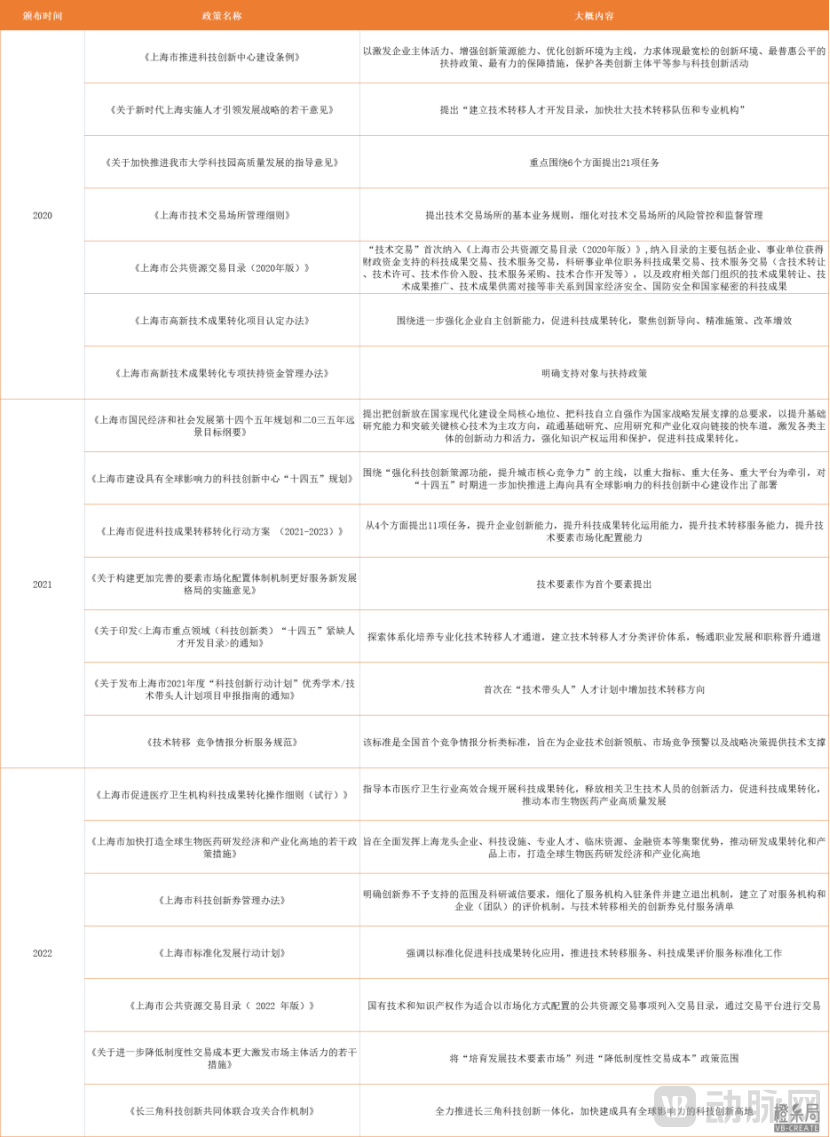
Policies on the Transformation of Scientific and Technological Achievements Issued in Shanghai from 2020 to 2022; Data Source: “White Paper on the Transformation of Scientific and Technological Achievements in Shanghai” (2020, 2021, 2022)
These regulations and policy documents are driving the gradual improvement of Shanghai’s institutional framework for the commercialization of scientific and technological achievements.They provide guidance in areas such as establishing mechanisms for the commercialization of scientific and technological achievements, supporting the cultivation of innovative and entrepreneurial talent, strengthening financial support for science and technology, and promoting the practical application of scientific and technological achievements.
For instance, in establishing a talent and technology transfer system, the Shanghai Municipal People’s Government has successively issued corresponding policy documents, such as the “Notice on Printing and Distributing the ‘14th Five-Year Plan Catalogue of Urgently Needed Talents in Key Fields (Science and Technology Innovation Category) of Shanghai’” and the “Notice on Releasing the Project Application Guidelines for the 2021 Shanghai ‘Science and Technology Innovation Action Plan’ Outstanding Academic/Technical Leader Program.” These initiatives aim to explore systematic pathways for cultivating specialized technology transfer professionals, establish a classified evaluation system for technology transfer talent, and facilitate career development and professional title advancement.
Notably, this marks the first time Shanghai has added a technology transfer track to its “Technical Leader” talent program, aiming to cultivate a cohort of experienced, innovative, interdisciplinary, and specialized leaders in technology transfer services to deliver professional technology transfer solutions.
Driven by a multitude of policy incentives, the enthusiasm for commercialization among researchers, technology transfer professionals, and investors has continued to grow, leading to a significant increase in the effectiveness of outcome conversion.。
In 2020, the value of technological achievements commercialized by universities and research institutions in Shanghai reached RMB 4.7 billion. In 2021, the total contract value of technologies transferred by Shanghai’s universities, research institutes, and other public research entities amounted to RMB 21.52 billion, representing a year-on-year increase of 65.7%. In 2022, the transaction volume of technical contracts in Shanghai exceeded RMB 400 billion, marking a 45% year-on-year growth and a cumulative increase of 120% over two years.
Looking at the policies recently introduced by the Shanghai municipal government, they offer hope for the translation of scientific and technological innovations—aiming to revitalize the city’s innovation ecosystem and bring forth a vibrant, dynamic Shanghai. Professor Song Shiming has proposed a concept:
The government creates the environment, and the people create wealth.
The promulgation of policies is always the first step.
Leverage All Strengths to Focus on Innovation Translation
In 1924, Japanese writer Muramatsu Shofu published his observational record *Mato* (The Devil’s City), based on his experiences both inside and outside the Shanghai International Settlement; this marked the first historical appearance of the term “Modu” (Devil’s City).
A century has passed, and whenever people mention Shanghai, this “incredible city,” they still find no other term in any language that captures its essence more incisively than “Mo Du” (Magic City).
In the realm of translating technological innovations into practical applications, Shanghai’s magic lies in:
Concentrate All Strengths to Focus on One Thing。
1Leveraging Strengths in Basic Research to Drive Original Innovation
From 2010 to 2022, the number of papers published by Shanghai-based scientists in Science, Nature, and Cell increased from 6 to 120 per year, with their share of the national total rising steadily from 15.8% to 28.8%, far exceeding that of any other region outside Beijing; moreover, the average number of citations per international paper has long ranked first nationwide.
This is underpinned by Shanghai's robust scientific research capabilities.. This region hosts 15 national major science and technology infrastructure facilities, covering fields such as photonics, life sciences, marine sciences, and energy sciences, accounting for approximately one-quarter of the national total; it has cultivated 171 academicians of the Chinese Academy of Sciences and the Chinese Academy of Engineering, including 97 from the former and 74 from the latter; disciplines at its higher education institutions have entered the global top 1%, with 180 disciplines in the top 1% and 31 in the top 1‰ globally, and one discipline ranked among the global top 1%; additionally, 34 disciplines across 14 universities were selected as “China’s Top Disciplines,” representing 14.2% of the national total and ranking second nationwide; in 2021, Shanghai’s investment in basic research reached RMB 17.773 billion, accounting for nearly 10% of its total R&D expenditure......
Technological and talent advantages have laid a solid foundation for Shanghai to promote the commercialization of scientific and technological achievements. To further stimulate vitality at the source of innovation, universities in Shanghai are implementing internal reforms to enhance the efficiency of mission-oriented scientific research.
For instance, Fudan University has successively established research principles centered on people and breaking disciplinary boundaries, set up “Special Zones for Basic Research,” developed review and support mechanisms for original and frontier scientific innovation, provided stable support in various forms, and created a flexible environment conducive to scientists’ dedicated research; it has also built operational institutional platforms oriented toward major international frontiers and critical national needs, gathering advantageous research strengths from within and outside the university to achieve breakthroughs in scientific peaks or resolve key challenges in specific fields...
2Financial Capital Advantage, Stimulating Innovation Translation
In 1843, Shanghai became an open treaty port.
Building on its existing commercial foundation, Shanghai stimulated the growth of industrial conglomerates. Heavy industry, exemplified by the Jiangnan Manufacturing Bureau, and light industries such as cotton textiles, flour milling, and match production, were among the first to establish corresponding sectors and achieve scale in Shanghai. The prosperity of these real-economy sectors provided the material basis for the development of financial services, ushering in modern finance in Shanghai.
To date, Shanghai has developed a relatively comprehensive financial market encompassing the money market, securities market, gold and silver market, foreign exchange market, and domestic foreign exchange market, establishing itself as the largest financial center in China, and indeed throughout the Far East and Asia.
Currently,“Finance + Technology” / “Finance Empowering Technological Innovation”: Capital Enablement Becomes a Key Driver for the Commercialization of Technological Innovations in Shanghai。
Seed and angel financing rounds in Shanghai are extremely active, with a large number of venture capital firms and enterprises actively participating in the commercialization of scientific and technological achievements. These include top-tier domestic investment institutions such as Sequoia China, Qiming Venture Partners, CAS Star, Matrix Partners China, and Hillhouse Capital.
According to statistics from Hanyuan Investment of Shanghai Jiao Tong University, in 2022, various types of capital in Shanghai invested over RMB 30 billion in scientists, with 24 companies securing financing rounds exceeding RMB 100 million each. Notably, three companies that received seed funding, angel investment, or Pre-A round financing collectively raised more than RMB 1 billion, highlighting a clear trend in equity investment toward “early-stage, small-scale, and hard-tech” ventures.
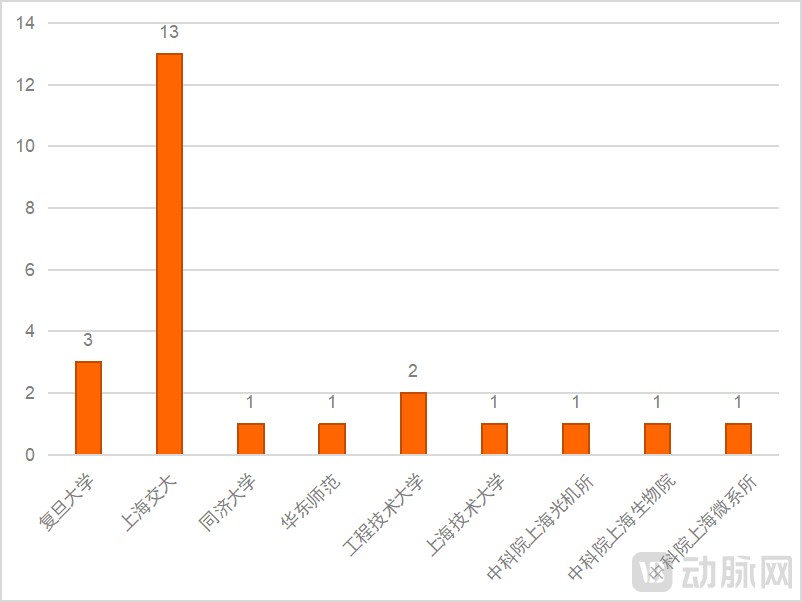 Figure: Universities and research institutes of entrepreneurial scientists who secured over RMB 100 million in financing in 2022, and the corresponding number of such individuals. Data source: White Paper on the Transformation of Scientific and Technological Achievements in Shanghai
3Robust Industrial Advantages to Promote Horizontal Collaboration
Shanghai’s industrial system is highly comprehensive, spanning multiple sectors from industry and manufacturing to services and finance. Among these, biomedicine is one of the three leading industries in which Shanghai is “concentrating its best resources to accelerate development and achieve breakthroughs.”
As of the end of May 2023, Shanghai had 3,224 companies operating in the biopharmaceutical industry. In terms of enterprise qualification distribution, as of the end of May 2023, there were 449 high-tech enterprises, 218 specialized and sophisticated enterprises, 2 gazelle enterprises, 33 specialized and sophisticated “little giant” enterprises, and 10 unicorn enterprises in Shanghai’s biopharmaceutical sector.
Enterprises are the industrial players that unlock Shanghai’s potential for innovation and commercializationOn one hand, enterprises serve as the “vitality engine” of Shanghai; their clustering has made the city a thriving hub for life sciences, providing employment opportunities for a large number of graduates. On the other hand, they have attracted talent to the region. Many investors in Shanghai are former pharmaceutical executives, bringing deeper life-science expertise to the venture capital industry.
Enterprises based in Shanghai, particularly large corporations and those focused on technology transfer, frequently collaborate with universities and research institutions to establish joint laboratories and promote horizontal cooperation in translating research outcomes into practical applications.For example, in April 2023, the reorganization of the “National Key Laboratory of Innovative Immunotherapy,” jointly established by Shanghai Pharmaceuticals and the School of Pharmacy at Shanghai Jiao Tong University, was approved. The laboratory focuses primarily on the development of original core technologies to produce first-in-class innovative immunotherapies, with a main emphasis on elucidating novel mechanisms of immune cell regulation, identifying new targets for immunotherapy, inventing new technologies for immune drug development, and creating new immune therapeutic products.
It can be said that it is“Enterprises have demands, and universities have resources” has fostered the prosperity of university-enterprise cooperation in Shanghai.
What ties these advantages together is government policy.
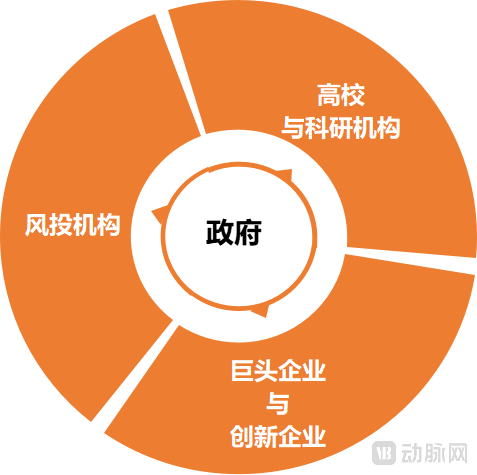
Through long-term policy support provided by the government to guide the development of achievement transformation, and by establishing technology parks such as “Zhangjiang High-Tech Park,” “Zero Bay,” and “Grand Zero Bay,” universities, venture capital firms, and enterprises are brought together to form a spatially integrated innovation loop.
As a global metropolis, Shanghai approaches the commercialization of scientific and technological achievements with an international perspective, maintaining close ties and collaboration with global hubs of technological innovation and industry. By introducing advanced international scientific achievements and best practices in commercialization, Shanghai is propelling local innovations onto the world stage.
In the cafeteria at 141 Pudong Avenue, a slogan penned by some of Pudong’s earliest pioneers hangs prominently: “Stand beside the globe and contemplate Pudong’s development.” The words exude an extraordinary demeanor of optimism and confidence in staying in step with the world.
At this very moment, as it stands at the forefront of translating technological innovation into practical applications, Shanghai is also contemplating the future.