

Interview with Dong Yin, President of Yuhuan People's Hospital Health Community Group: Medical-Engineering Integration as a Two-Way Commitment Between Hospitals and Enterprises
The Future of Medical Innovation: The Integration of Medicine and Engineering Is an Inevitable Topic
Since the 1970s, world-leading research universities such as Harvard University, Stanford University, and Princeton University have invested heavily in interdisciplinary research integrating medicine and engineering. China followed closely behind, witnessing a wave of mergers among comprehensive universities, institutes of science and technology, and medical colleges in the 1980s.
Nowadays, the trend of medical-engineering collaboration has also reached hospitals. In December 2023,Yuhuan People's Hospital Health Community GroupandMedico Medical Industrial Equipment Co., Ltd.(hereinafter referred to as: Maide Medical) signed“Strategic Cooperation Agreement on the Integration of Medicine and Engineering”, which will soon launch a “medical-engineering integration” initiative through hospital-enterprise collaboration. Dong Yin, President of the Yuhuan People’s Hospital Health Community Group, told Chengguo Bureau that this is merely the beginning.
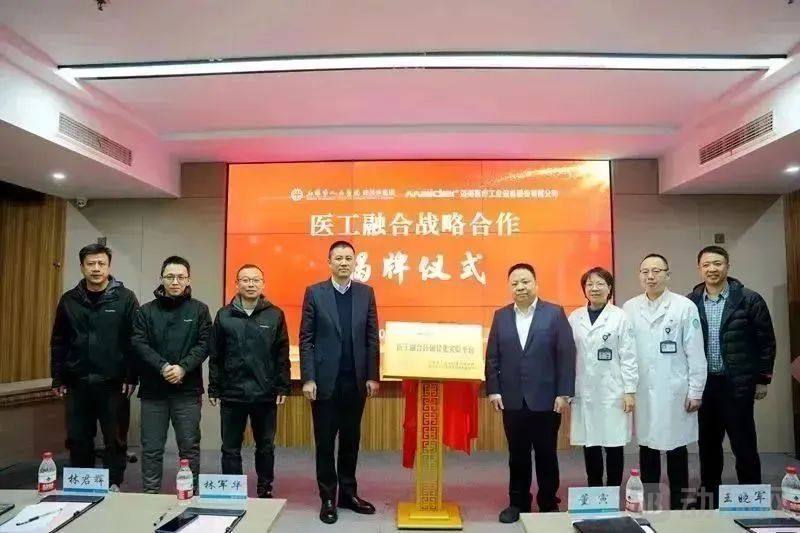
Scene of the Signing Ceremony for the Strategic Cooperation Agreement on Medical-Engineering Integration (Image source: Yuhuan People's Hospital Health Community Group)
I. Collaboration: Establishing a Dual Circulation of Healthcare and Innovation
For the Yuhuan City People’s Hospital Health Community Group, “collaboration” has long become an integral part of daily operations.
In 2018, Yuhuan City People’s Hospital took the lead in joining forces with its five branch hospitals—Kanmen, Damaiyu, Yucheng, Lupu, and Haishan—to jointly establish the Yuhuan City People’s Hospital Health Community Group (hereinafter referred to as the “Health Community”). Dong Yin explained, “The Health Community has formedService Closed-Loop of Medical Institutions, improved the primary healthcare service system, and also drove the cycle of online and offline medical services.”
Over more than five years of practice, the County-level Medical Community has not only driven improvements in county-level healthcare services and established integrated management teams combining general practitioners and specialists for mutual support, but also transformed the fundamental model of chronic disease management, thereby enhancing the quality of care for patients with chronic conditions.
However, in addition to the closed loop on the medical side, Dong Yin believesMedical innovation also needs to form a virtuous cycle with the industry sector.“As public health awareness rises, hospitals must transition from being purely clinical institutions to becoming clinical-research oriented entities, and partnering with the industry sector is the optimal approach.” Based on this rationale, the Health Community has entered into a collaboration with Maitai Medical.
This collaboration is primarily divided into three major directions, the first of which isTalent Exchange and Cooperation Platform. Undoubtedly, clinicians are the most accessible group for identifying clinical needs and possess a certain level of research capability. However, due to their relative lack of market experience and industrial knowledge, it is difficult for them to propose projects with significant potential for scientific translation. Researchers in enterprises can precisely compensate for this shortcoming. Therefore, the Health Community will enhance exchanges between clinical research talents and industrial research talents through measures such as jointly establishing postdoctoral workstations with enterprises and implementing dual-appointment systems for talents, thereby achieving a win-win situation for talent development.
Next is to establishClinical Research Translation PlatformA robust research platform should not only provide researchers with advanced hardware and a conducive working environment but also stimulate their innovative thinking and enhance the efficiency of translating research findings into practical applications. To this end, the Health Community will collaborate with enterprises to establish a Clinical Research Translation Platform, aiming to accelerate the development and translation of scientific achievements while simultaneously promoting the construction of teaching hospitals.
Finally, collaborative initiatives are launched.Clinical Drug and Device Clinical Trial Platform. Any translation of research findings into practical applications inevitably involves clinical trials. Currently, the Health Consortium has completed the application and registration for its Good Clinical Practice (GCP) clinical drug research base and medical device research base. The establishment of a clinical trial platform can not only facilitate the approval of in-house research projects but also attract more enterprises and research institutions to conduct project exchanges within the hospital, thereby achieving win-win cooperation.
At this point, Dong Yin couldn’t help but remark, “This is a very interesting point. Medical-engineering collaboration was originally intended to promote the translation of scientific research into clinical applications. Now, however, we have found that high-quality projects can automatically facilitate such collaborations between medical and engineering professionals.”
II. Cross-sector Collaboration: Focus on Finding Common Ground
As a vital force driving the advancement of modern medicine, the integration of medicine and engineering has seen rapid growth; nonetheless, it is undeniable that challenges and dilemmas persist. The language barrier between medical and engineering professionals stands out as one of the most apparent issues.
The Health Consortium had previously attempted cross-sector collaborations with Xi’an Jiaotong University, commercial insurance companies, and the Chinese Academy of Sciences. However, the issue of a “language barrier” remained unavoidable: “Frankly speaking, the language barrier cannot be resolved through experience alone; each collaboration requires a period of adjustment.”
When it comes to sharing experience, Dong Yin said:“The key is to find common ground.”
From the inception of a project, disagreements between medical and engineering teams are inevitable. Clinicians prioritize clinical applicability and patient benefits but lack the capability to translate concepts into tangible products; whereas engineering experts, while possessing sufficient knowledge of market dynamics and production regulations, often fall short of clinicians’ level of expertise in managing and controlling medical risks.
Therefore, both parties must not only identify common ground for project collaboration but also strike a balance in bargaining power across different stages.
During the project initiation phase, decision-making authority should rest primarily with clinicians. Physicians working on the clinical front lines are better positioned to identify clinical needs, while engineering experts play a more supportive role. In the productization phase, decision-making authority shifts back to engineering experts, who focus on ensuring practical implementation from a market-oriented perspective. Ultimately, commercialization must be driven by enterprises.
Years of “cross-industry” experience have taught the Health Community that:It is crucial to accurately identify one's position at each stage.
III. Multi-Party Alliances: Advancing Medical-Engineering Innovation Further
Medicine is a discipline that demands constant innovation. This requires researchers not only to make effective use of the microscope but also to pick up the telescope, boldly speculating about the future.
When discussing future opportunities in the integration of medicine and engineering, Dong Yin stated:“The integration of digital technology and healthcare is undoubtedly the direction for the future.”
Whether on the treatment side or the healthcare service side, medical advancement cannot be achieved without digital integration. Using chronic disease whole-course management as an example, Dong Yin demonstrated the advantages of digital integration in healthcare.
The Healthcare Community has also leveraged digital innovation to consolidate all medical and public health data within the region. By analyzing disease distribution patterns, it has gained a detailed and comprehensive understanding of common, frequently occurring, and prevalent conditions across different areas, thereby establishing a city-wide digital health management platform—Health Map。
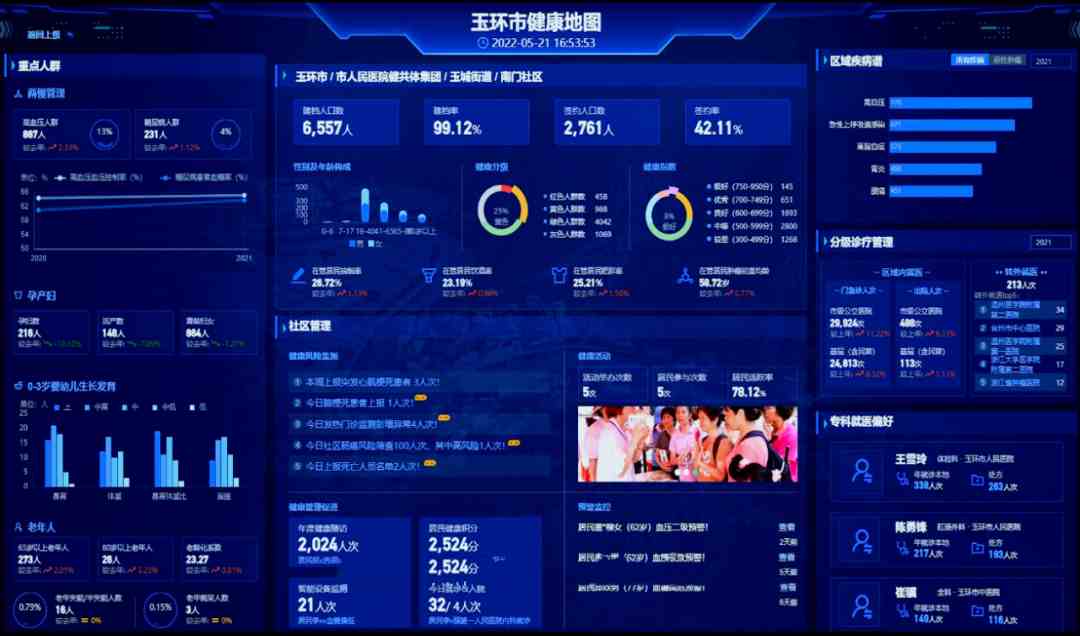
Yuhuan Health Map(Image source: Yuhuan People's Hospital Health Community Group)
Supported by digital health management platforms, gaps in out-of-hospital patient management can be further addressed, enabling patients to receive continuous, full-cycle, personalized post-diagnosis care services, thereby enhancing patient loyalty and satisfaction with the hospital. Furthermore, this approach extends the reach of healthcare professionals’ services and reinforces the “patient-centered” brand image.
With the support of the Full-Course Disease Management Service Center,The chronic disease management centers within the health community’s jurisdiction are gradually transitioning from cost centers to profit centers,Achieved sustainable development. Thanks to this, the Healthcare Community can allocate more medical resources to areas that require greater attention.
In this medical-engineering collaboration with Maide Medical, the Health Consortium will also pursue more “digital + healthcare” initiatives. As a next step, the Health Consortium will partner with leading medical institutions, national-level research platforms, and healthcare companies to jointly establish a medical-engineering translation platform. The aim is to build a bridge to the market for clinical healthcare professionals who have research ideas and a mindset toward commercialization. Meanwhile, the Health Consortium will also drive continuous improvement in clinical capabilities from the research end, enabling more patients to benefit from the dividends of medical innovation.