

Rokid Submits IPO Prospectus Highlighting Its AR+AI Smart Healthcare Platform Deployed in Nearly 100 Medical Institutions
Is the Era of Spatial Computing About to Arrive?
In 2023, Apple CEO Tim Cook spent a full 40 minutes introducing the Apple Vision Pro mixed reality headset, asserting that this technology would redefine how humans connect, create, and explore. As a tech giant consistently at the forefront of the industry, Apple is clearly optimistic about the advent of the spatial computing era.
The healthcare sector has been equally captivated by this technology. In 2016, as various new internet technologies rushed to enter the medical industry, AR/VR experienced an explosive surge in adoption. There was a strong expectation that this technology could be applied in healthcare to address long-standing pain points within the industry. For instance, by integrating medical imaging with patient physiological data, it can assist physicians in making precise diagnoses. Alternatively, through AR devices that enable real-time sharing of images, videos, and data, multidisciplinary experts can leverage their collective knowledge and experience to conduct remote consultations and formulate comprehensive treatment plans. This approach provides patients with more thorough and accurate diagnostic and therapeutic solutions, further helping to overcome challenges in accessing medical care, such as urgency, geographical distance, and difficulty.
Technological advancement always proceeds more rapidly than anticipated.
Against the backdrop of comprehensively advancing the construction of medical consortia, Hangzhou Lingban Technology Co., Ltd. (hereinafter referred to as “Hangzhou Lingban Technology”)Launch of AR+AI Smart Healthcare Platform Based on Integrated Hardware, Software, and Service Solutions, providing remote medical services and simulated medical services, thereby helping county-level medical institutions alleviate pain points such as the imbalance of grassroots medical resources, insufficient information sharing between pre-hospital and in-hospital settings, and significant disparities in the capabilities of urban and rural medical personnel, thus contributing to the improvement of grassroots medical service levels.
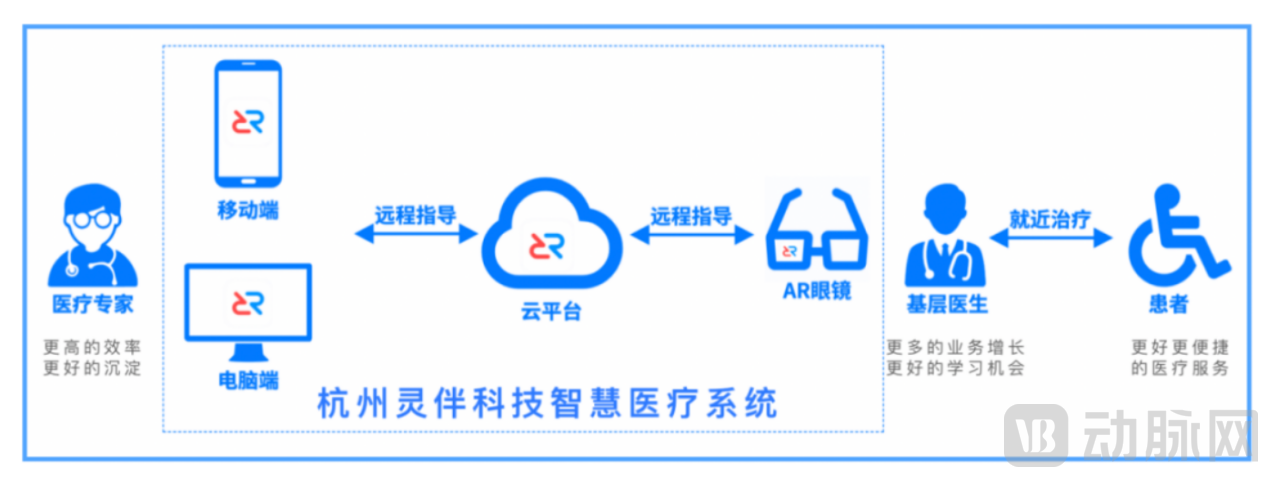
Currently, its telemedicine solutions have been deployed in nearly 100 medical institutions both within and outside Zhejiang Province, including Sir Run Run Shaw Hospital of Zhejiang University, Zhoushan Putuo People’s Hospital, Anxi County Traditional Chinese Medicine Hospital, Gaoping People’s Hospital, Longyou County People’s Hospital, and Yuyao People’s Hospital. In 2023, the General Hospital of the Xinjiang Military Command also explored artificial intelligence technologies and introduced Hangzhou Lingban Technology’s smart healthcare platform to support scenarios such as remote expert guidance, in-hospital multidisciplinary team (MDT) consultations, and teaching ward rounds, thereby promoting the establishment of an “AR-based Remote Smart Healthcare System.”
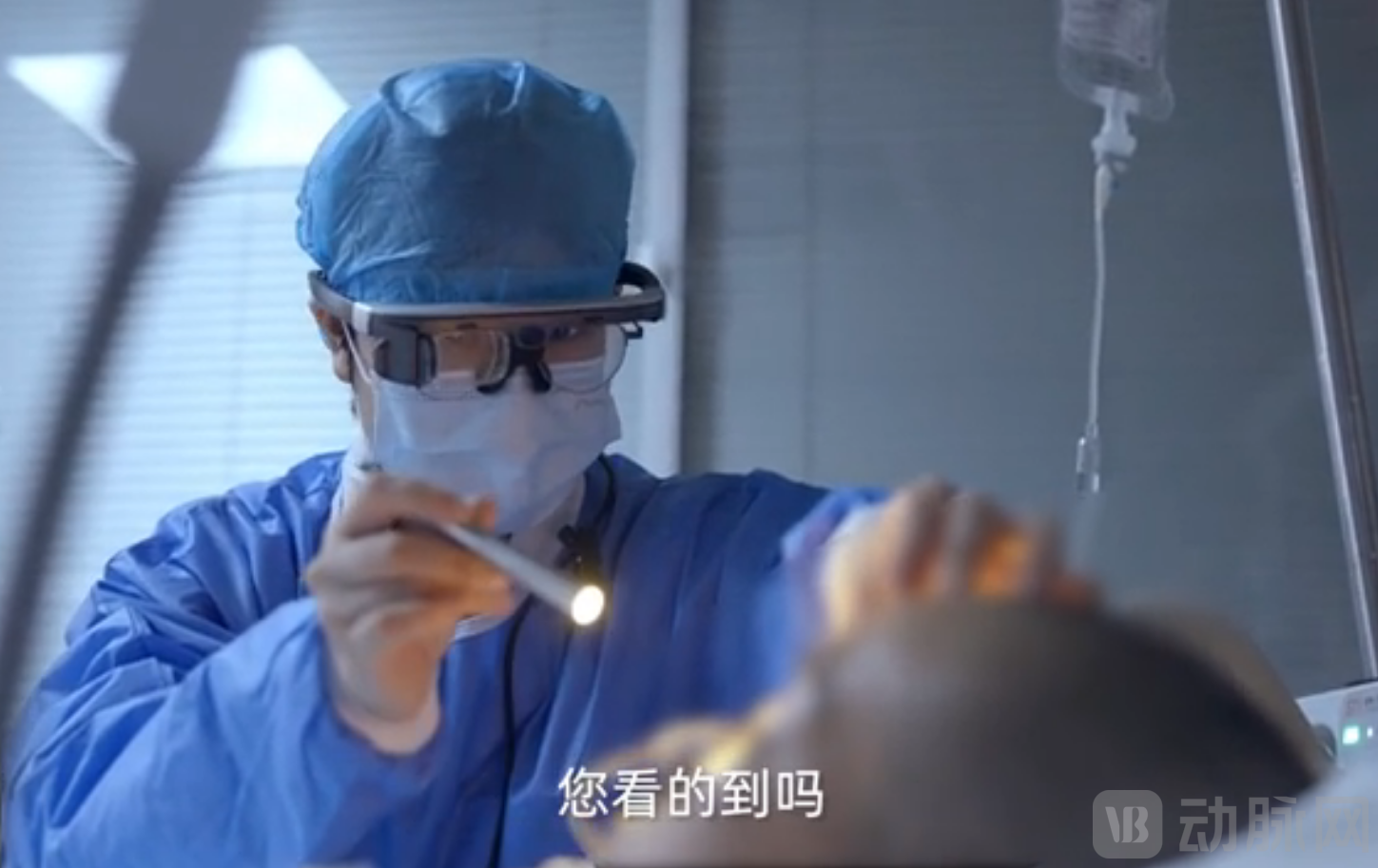
Sir Run Run Shaw Hospital AR Remote Expert Guidance
The product has expanded into three major application scenarios: telemedicine, standardized medical residency training, and visual assistance for patients with retinal diseases.
Empowering the Development of Smart Healthcare
According to statistics from the China Commercial Industry Research Institute, the scale of smart healthcare applications in China has maintained a rapid growth trend since 2019. The market size reached RMB 78.05 billion in 2022 and is projected to reach RMB 93.66 billion in 2023, representing a 20% year-on-year increase. In recent years, AR/VR technology has demonstrated its value in medical imaging, surgical procedures, clinical treatment, telemedicine, and medical/health education, becoming a key technology driving the development of smart healthcare.
Hangzhou Lingban Technology Co. Ltd. currently has three strategic focus areas in the medical field:
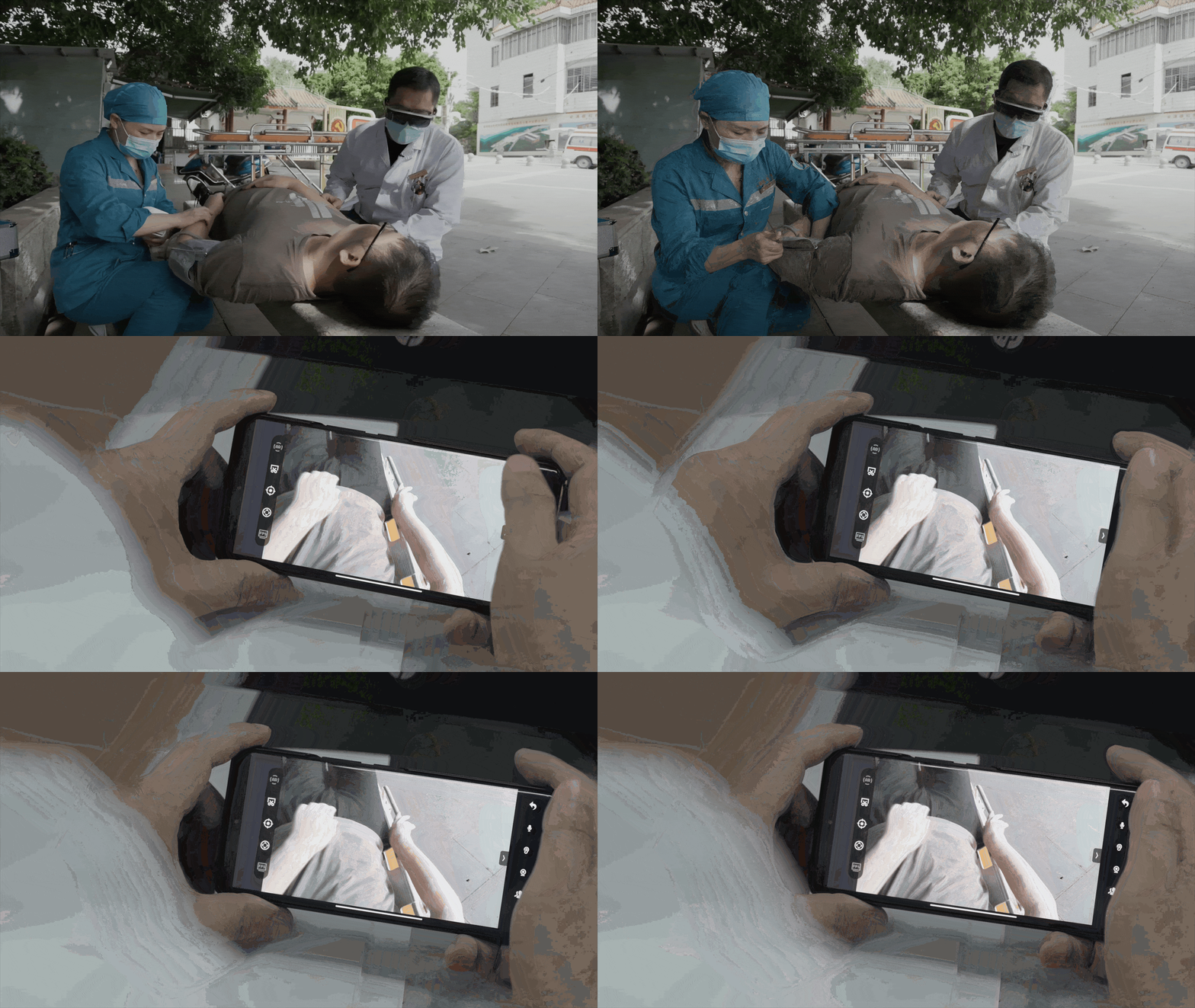
First, to provide remote teaching or telemedicine services for the construction of a closely integrated medical consortium with three-level linkage among county, city, and township levels.
Hangzhou Lingban Technology’s smart healthcare system is built upon the world’s first full-stack metaverse ecosystem, along with the AR Studio spatial computing suite and Glass 2, China’s first split-type monocular optical waveguide AR smart glasses. The system enables specialists from tertiary hospitals to deliver clinical services across five major centers—tumor prevention and treatment, chronic disease management, minimally invasive intervention, anesthesia and pain diagnosis and treatment, and intensive care—via smartphones, computers, and large conference screens. This meets the medical service needs of patients in remote locations, alleviates the difficulties faced by patients with complex and critical conditions in seeking care outside their local areas, and allows high-level medical experts from tertiary hospitals to extend their expertise more broadly and rapidly to grassroots communities, thereby maximizing the utilization of healthcare resources.
Second, it provides virtual-real integrated simulated medical teaching support for leading hospitals to train young physicians.
Young resident physicians must not only master theoretical knowledge but also acquire clinical practical skills. By leveraging MR smart glasses and spatial computing platforms, experts at leading hospitals can develop virtual simulation training courses for clinical practice that feature standardized processes, immersive visuals, 3D models, and gamified experiences. These tools enable young doctors to engage in immersive, standardized learning under the guidance of virtual experts and through scenario simulations via MR smart glasses, thereby shortening the learning curve for residents in standardized training programs. Furthermore, MR glasses support unique multi-tasking and multi-window functionalities. During live-streamed surgeries, users can view teaching materials in one window, the surgical video in another, and connect with supervising instructors in a third window. This approach overcomes barriers related to geographic location and limited observer capacity in operating rooms, breaking through temporal and spatial constraints to facilitate the teaching and exchange of medical techniques.
Third, leverage AR smart glasses to provide mobile visual assistance support for individuals with low vision.
Hangzhou Lingban Technology, leveraging AR smart glasses and in collaboration with ecosystem partners, has jointly launched an AR mobile intelligent visual assistance solution. By integrating computer graphics and image processing, sensor technology, and spatial computing, the solution enhances patients’ vision and assists them in reading, watching films, socializing, and exercising. Each year, thousands of patients utilize this product to reintegrate into social life.
Compared to the approximately 8,500 public hospitals at or above the secondary level across China, Hangzhou Lingban Technology Co. Ltd. currently serves only a small fraction of these institutions. Moving forward, the company will continue to uphold its mission of “Leave Nobody Behind” by expanding and enhancing the application scenarios of its products and the effectiveness of its solutions, thereby further enabling both patients and physicians to benefit from AR technology.