

PSFK's Vision for the Future of Wearable Technology (4): The Potential for Co-Evolution
Editor’s Note: PSFK, a commercial creativity and marketing platform founded by Piers Fawkes, is dedicated to providing trend insights and business strategy services to the world’s leading enterprises. Its consulting offerings include customer research and advisory services tailored to specific technologies or innovation topics. Recently, PSFK released a forecast titled “The Future of Wearable Technology,” which aims to analyze the key trends driving the evolution in form and function of personal wearable devices. The forecast outlines ten functionalities under three major themes: “Intimate Connections,” “Tailored Ecosystems,” and “Possibilities for Co-Evolution.” VCBeat has compiled and translated the report, publishing it in four parts. This article is the fourth part of the forecast:The Possibility of Co-evolution。
PSFK Predicts the Future of Wearable Technology (1) Development Trends for the Next Five Years
PSFK Predicts the Future of Wearable Technology (2): Intimate Connections
PSFK Predicts the Future of Wearable Technology (3): Tailored Ecosystems
Technical features and designs are continuously evolving alongside human behavior, assuming an increasingly significant role in people’s daily lives. Whether by augmenting existing human capabilities or by developing interfaces that integrate with natural inputs to enable more intuitive control, these devices underscore the growing complexity of the relationship between humans and technology.
07. Enhanced Sensory Perception
Hybrid technologies are becoming tightly synchronized and integrated with the human body to enhance existing paradigms and capabilities. Whether through biomedical research or DIY “hacking,” these innovative products are expanding possibilities while helping individuals overcome personal challenges.Data Support
“If you intend to use a machine to assist in processing what is before your eyes, what can the machine do that the user cannot? It will bring humanity a sixth or seventh sense.”
—Stephen Balaban, Co-founder of LAMBDA Laboratory
“Ten years from now, assuming we still cannot cure neurodegenerative diseases such as Alzheimer’s disease, brain-computer interfaces will be able to help you recognize the people around you.”
—Mary Lou Jepsen, Head of Display Projects at Google X, University College London, 2013
In a survey on wearable technology, 53% of U.S. respondents and 39% of U.K. respondents believed that wearable technology made them “feel smarter.”
——2013 Goldsmiths, University of London, Centre for Innovation and Social Technology
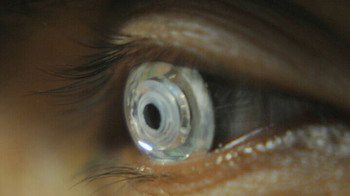
Zoomable Contact Lenses Can Help Patients with Presbyopia
An international research team has created the world's first retractable stent.Prototype telescopic contact lenses provide wearers with nearly three times the magnified field of view. This technology was developed by Eric Tremblay and his colleagues at the Swiss Federal Institute of Technology. The telescopic lens operates by surrounding a central non-magnified optical path with an outer optical path that magnifies the view by 2.8x. Liquid crystal shutters control the activation and deactivation of these optical paths, enabling wearers to switch between normal and magnified vision through polarizing filters. At only 1.17 millimeters thick, the telescopic contact lens is highly comfortable to wear and is particularly beneficial for individuals with age-related macular degeneration.
Biohacker-style implanted earphones enable users to determine direction or distance via echolocation.

Biohacker Rich Lee once implanted a transduction magnet into his ear, enabling him to compensate for his vision loss by learning to determine direction and distance through echolocation. After the implantation of the device, he began interpreting the shapes and sizes of surrounding objects based on acoustic feedback from his environment, akin to how bats perceive their surroundings. Lee’s device also allowed him to utilize auditory perception in another dimension: listening to his wife’s heartbeat and pulse like a stethoscope. To ensure the safety of the implanted magnet, he coated it with a layer of gold and encased it in “implant-grade bioprotective material.”
Hearing aids and glasses use bone conduction to amplify sound

NuWave Glasses help amplify sound for individuals with hearing impairment by converting sound waves into vibrations, thereby achieving functionality similar to that of conventional hearing aids. Its bone-conduction sensors are ergonomically positioned to deliver mechanical vibrations from the temporal bone to the inner ear. The Wireless Research Engineering Resource Center (RERC), leading a team of students from Virginia Tech, developed NuWave Glasses to provide people with hearing loss a novel and discreet way to experience sound.Additional Examples

Argus II: Camera-Equipped Glasses Restore Partial Vision for the Blind

Sign Language Ring: The sign language ring can translate hand gestures into spoken language

3D-Printed Ear: Artificial Ears Can Hear Sounds Beyond the Normal Human Range
Implications·Exoskeleton technology can sense muscle fatigue to adapt its form and structure, allowing muscles to rest and recover.
·Embedded garment technology can assist in the recovery process of muscle strains by providing support where needed and relaxing stronger muscles.
08. Onboard Interface
Wearable technology empowers users to interact with their devices through gestures or other natural inputs, thereby enabling new forms of control. By leveraging existing human behaviors, these solutions can reduce complex computational tasks into intuitive operations accessible to users of all skill levels.
Data Support
“Wearable computers are an extension of yourself. They make taking photos faster, with a speed that is captivating, allowing you to complete tasks more quickly and easily.”
—Mary Lou Jepsen, Head of Display Projects at Google X
“Applications and services need to take into account a broader range of use cases, contexts, and interaction methods.”
——Kim DeReuter, Head of Mobile at Cheil Worldwide, University of London, 2013
Electronic cosmetics allow users to activate mechanisms by blinking

Electronic designer Katia Vega has created a prototype cosmetic product that incorporates low-voltage circuits to detect blinking and convert this action into electrical signals for communication with other devices. This product line, which includes metallic elements, false eyelashes, and conductive eyeshadow, has been used to launch micro drones into the air and activate LED-adorned headpieces.
Wristbands allow wearers to configure gestures into specific actions.

TapTap is a wearable wrist device that communicates with and controls other applications through gestures and touch. The device features only one “button”—a capacitive sensor that connects directly to another TapTap unit via Bluetooth. Its creators have mapped six distinct gestures, captured by the TapTap’s accelerometer, gyroscope, and capacitive sensor, to specific actions. For example, if the wearer wishes to decline an incoming call, a double shake of the wrist can mute the phone. TapTap will release an API for third-party developers, enabling them to map their own gestures into games, turning the wristband into a joystick, or integrating it into applications that benefit from its remote interface or sensor data.
Capture Photos by Blinking

Winky is a third-party application developed for Google Glass that enables wearers to capture photos by blinking, which is detected by the device’s inward-facing camera. The app bypasses the need for voice commands or the touchpad mounted on the side of the glasses. Instead, once the application is launched, users can simply blink slowly, and the device will discreetly and instantly capture whatever is in the wearer’s field of view. This innovation was created by Mike DiGiovanni, Head of Emerging Technologies at Roundarch Isobar, allowing people to more easily capture images at moments of inspiration.
“What is holding back wearable devices from entering the market? … They fail to integrate all the features you desire. You still need to pair them with other devices. Moreover, wearables do not address the practical problems that people actually want to solve… So the next question we ask is: How can we remedy this? And we came up with a simple answer: Make everything smart.”
—Brian Krzanich, CEO of Intel
Additional Examples

Finger Scanner: Wearable Barcode Scanners Reduce Grocery Store Queues

Read and Run: Wearable Devices Enable Runners to Read While Exercising by Tapping to Turn Pages

Auto-Activated Flashing Signal: Activates when the cyclist raises their arm.Implications· Technology allows wearers to set specific gestures for particular actions (such as unlocking) according to their preferences.
· Create instructions for others by performing routine operations (e.g., activating the turn signal when checking blind spots while driving) to establish a safer environment.
· Enable electronics to be integrated into cosmetics and other wearable devices, allowing for rapid access to various personal devices.
09. Self-Verification
Wearable and embedded technologies are connecting with individual users, accelerating the authentication process when accessing other connected devices and systems. By synchronizing the wearer’s unique characteristics, these technologies ensure enhanced privacy and security control without the need to remember passwords or other protocols.
Data Support
“Passwords and ID cards may be stolen, shared, or misused. You are unlikely to forget or lose your fingerprints, making biometric systems an effective and cost-efficient method for identifying diverse populations.”
—Richard Agostinelli, President and CEO of DigitalPersona
“Verification is quite frustrating. In fact, although people’s smartphones contain a wealth of personal information, only about half of users go through the hassle of verification. Those who skip verification are often more susceptible to identity theft.”
—Regina Dugan, Senior Vice President of Advanced Research and Technology at Motorola
Ingestible Password Pills Enable Seamless Device Access

Motorola Wireless has successfully developed an ingestible technology that allows it to identify users of its upcoming mobile phones. This technology, produced by Proteus Digital Health, has received approval from the U.S. FDA. It is capable of generating a unique 18-bit signal that can be detected by external devices, such as mobile phones, computers, and even cars. When individuals swallow the pill, stomach acid dissolves it, effectively turning the entire human body into an authentication token for accessing devices.
Wristband Converts Heartbeat into Device’s Unique Passcode

The Nymi wristband replaces passwords or PINs used in authentication by identifying the wearer’s unique cardiac rhythm. Developed by the biometrics company Bionym, it features a three-factor security system comprising the wristband itself, the wearer’s unique heartbeat, and a smartphone or device registered with the Nymi app. The Nymi activates when worn snugly around the wrist; placing a finger on the top sensor while the wrist contacts the bottom sensor completes the circuit. The wearer then feels a vibration and sees an indicator light illuminate, signaling that authentication is complete. At this point, the wearer can securely unlock any Nymi-paired device.
File Transfer Chip Converts Fingers into USB Drives and Shortcut Keys

inTouch technology is a concept that employs rings, bracelets, or “smart nails” to enable secure and simple data transmission between devices. This technology was developed by researchers at the VTT Technical Research Centre of Finland. When the wearer touches a device with the inTouch ring, a special icon appears to indicate that information upload is permitted. After touching another device equipped with the same technology, the user can initiate the download of information from the ring to the device. The device contains a small amount of memory and is powered via a specialized antenna. The ring or bracelet can also serve as a password or security device to unlock doors, start cars, or charge laptops.
“Imagine that when wearable devices are with us at all times, data, information, and personal content will be exchanged, making security even more critical.”
—Brian Krzanich, CEO of Intel
Additional Examples

XNT Implantable Chip: RFID Tags the Size of a Needle Tip Make Implant Verification Technology Mainstream

Geak Ring: An NFC-enabled ring capable of storing password information and connecting to devices

iHeart Locket: Scan the locket to serve as the password for your child’s iPad diary.
Insights· Medical records may be presented in pill form, allowing first responders to immediately access relevant data in the event of a collision.
· Wearable devices enable users to instantly access and continue their ongoing projects from anywhere in the world, a feature that can foster flexible work and educational environments.
· Embedded technology enables users to quickly connect with each other and rapidly exchange contact information.
10. Cloud Storage
Automated tools enable individuals to instantly transcribe the events and experiences that constitute our daily lives, storing them in the cloud for future access. By capturing, recording, and preserving memories in digital form, these devices allow people to revisit these moments at any time, creating meaningful stories that can be shared with others.
Data Support
Photos remain the most popular form of personal content sharing, but the volume of video and even audio data uploaded to the web via wearable devices is growing exponentially.
——The New York Times, May 2013
“The most important thing about increasing memory is access time.”
—Thad Starner, Technical Lead/Manager of Google Glass
Lifelogging Created by Wearable Cameras That Capture Photos Throughout the Day

Autographer is a hands-free wearable camera that automatically captures thousands of photos throughout the day, generating a visual diary for the user. The device is worn by hanging it around the neck. It utilizes six onboard sensors—including GPS, color sensor, accelerometer, motion detector, magnetometer, and thermometer—to determine the optimal moments to capture specific images. For instance, Autographer might capture footage of the wearer accelerating to catch a bus or turning to greet a friend. Its built-in algorithms ensure the relevance and usability of the captured images. The camera features a 5-megapixel sensor, an OLED display, 8GB of onboard storage, and Bluetooth connectivity for sharing.
Wristband with Automatic All-Day Audio Recording and Storage

Kapture is an always-on wristband that automatically records audio throughout the wearer’s day. The device listens to conversations and maintains a 60-second rolling buffer. This buffer continuously overwrites itself until the user taps the device to save the clip. Saved files are downloaded to a smartphone, where users can trim, name, tag, filter, and share them. The company has raised $300,000 in seed funding and will turn to Kickstarter to raise the remaining capital needed for production.
Sensor Monitors Brainwaves to Enable Hands-Free Image Capture on iPhone

Neurocam is a wearable camera system that uses brainwave sensors and a smartphone camera to determine what captures the wearer’s interest, automatically recording footage and saving it to an album. The system includes an EEG sensor headset. Users connect their iPhone to the headset, enabling the iPhone camera to “see” everything the wearer views through a prism, while an iPhone app analyzes the wearer’s brainwaves. The app rates the wearer’s level of interest on a scale from 0 to 100; if the brainwave data indicates an interest level of at least 60, the system automatically records the current scene and saves it as a five-second GIF clip. Neurocam is the latest innovation developed under the Neurowear project, leveraging brainwave and biosensor technologies.
Additional Examples

BULT Helmet: Extreme Sports Helmet with Built-in HD Camera

Narrative: Ear-worn cameras can create instantly shareable photographic memories

Evernote: Wearable Device Interface Adds Evernote Voice Command Integration
Insights· Wearable devices can monitor mental flow states and encourage users to blog or journal during their peak creative periods.
· Wearable cameras can automatically associate images to create highlight reels of users’ daily lives, activities, gaming sessions, or social events.
· Biofeedback information enables individuals to identify which activities or environments elicit the optimal responses from their mind and body. By recording when and where users are in their peak state, it helps quantify well-being.
(To stay updated on the latest information about internet healthcare startups, please follow VCBeat’s WeChat official account: vcbeat. We also welcome you to engage with us on topics of interest, contact us via WeChat, and share your startup projects or related research insights.)