

Deep Dive into the Internet Healthcare Apps Most Favored by Physicians
Last month, VCBeat compiled excerpts from HealthTap’s survey report on “Doctors’ Favorite Telemedicine Apps” (For details, please see here.), which announced the top ten healthcare apps in the iOS and Android markets. The article garnered enthusiastic responses from readers. To help them uncover more “secrets” from this report, VCBeat’s Internet Healthcare Research Institute conducted a categorized statistical analysis and in-depth examination of the data provided in the full HealthTap report.
iOS Has the Most Nominations, with the Top 10 in the Top 100 Largely Consistent
According to VCBeat’s statistics, among the Top 100 healthcare apps, there were a total of 8,183 nominations from verified physicians on iOS and 5,844 recommendations from verified physicians on Android. The top ten rankings remained relatively stable, with eight apps appearing in the Top 10: Weight Watchers Mobile, Lose It!, First Aid, White Noise Lite, RunKeeper, Emergency First Aid/Treatment, Instant Heart Rate, and Fooducate received recommendations from physicians on both platforms; the remaining apps did not have Android versions. VCBeat also compared the number of physician nominations within the Top 10 and found that iOS consistently had more nominations than Android. As we are unaware of the specific mobile phone models used by these physicians, we speculate that this may be due to a higher proportion of affluent physicians using iOS devices.

Highly Recommended Weight Loss Apps
We compiled statistics on the number of physician recommendations and nominations across 30 app subcategories. On both iOS and Android platforms, the categories that received strong and consistent endorsements from physicians were Physician Tool Apps (3,311 and 2,727 nominations, respectively), Medical Anatomy Apps (1,182 and 854), and Weight Loss Apps (868 and 795), with relatively small differences in nomination proportions between the two platforms. However, significant disparities in recommendation counts were observed within certain subcategories, such as Cardiac Health Apps (729 vs. 154), Medication Guidance Apps (539 vs. 196), and Women’s Health Apps (512 vs. 144). In most cases, the number of recommendations on the Android platform was lower than that on iOS. Given this substantial divergence in physicians’ opinions, VCBeat speculates that one possible reason is that some apps may have been developed for only one platform. From another perspective, this suggests considerable room for improvement among such apps on the Android platform. Meanwhile, Endurance Training Apps, Cosmetic Surgery and Aesthetics Apps, Mental Health Apps, Smoking Cessation Apps, Sexual Health Apps, and Aerobic Exercise Apps received few nominations on both platforms, ultimately garnering support from only a handful of physicians. It remains unclear whether physicians consider these apps unnecessary or ineffective.


Doctor-Focused Apps for Clinicians Are Gaining Widespread Attention
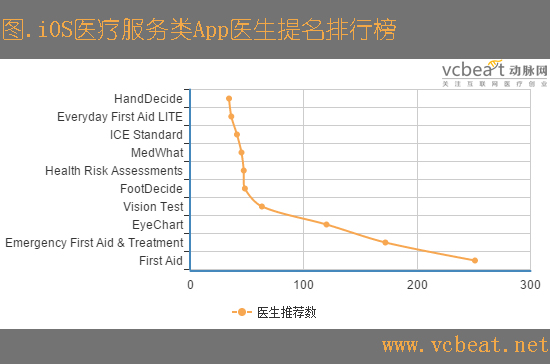
In each subsector, we found that the top three apps in the categories of medical anatomy, medical services, healthy diet, heart health, and weight loss received significantly more nominations than those ranked lower. The combined total of nominations for the top three even exceeded the sum of the next seven. It appears that the leading three apps in these subcategories have pulled ahead of their competitors, securing a dominant position, at least in the minds of physicians.
In the rankings of physician-focused apps, the difference in nominations between those ranked 2nd to 10th was minimal. However, Epocrates, ranked first, stood out with exceptionally high “appeal” scores (1,219 and 1,033), leading the second-place contender by nearly 1,000 points. In April 2011, Epocrates became the first mobile health company to go public. It boasts over one million physician users worldwide, features the number-one drug dictionary in the United States, and is used by more than 50% of U.S. physicians. Evidently, four years on, Epocrates continues to maintain a dominant position.

52 medical apps were nominated on both lists
Among the rankings of the Top 100 healthcare apps and 30 subcategories, our statistics reveal that a total of 52 healthcare apps were nominated in both major versions. There are two main scenarios: first, 28 apps received support across both the subcategories and the Top 100 list; second, 24 apps were nominated in their respective subcategories but, due to lower support rates, only appeared on one of the Top 100 lists (iOS or Android).

In summary, among internet healthcare apps favored by physicians—excluding those designed specifically for doctors, such as clinical tools and medical anatomy applications—the only category deemed reliable for consumers is weight-loss apps.
Attachment:Download the Full Healthtap Report (iOS, Android)