

U.S. Consumer Survey Reveals Strong Acceptance of Video-Based Telehealth Services
In December 2014, U.S.-based telehealth company American Well, in collaboration with the market research firm Harris Poll, conducted a nationwide online survey to gauge consumer perceptions and expectations regarding video-based medical consultation services. The survey collected 2,019 responses from a nationally representative sample of consumers. VCBeat has compiled and translated the main contents of the report as follows. (Further reading:Can Mobile Video Become the Next Breakout Point in Mobile Health?)
Most consumers are willing to consult with doctors via video.
During the survey, an impressive 64% of consumers expressed willingness to engage in video consultations with physicians. The reasons cited by consumers were remarkably similar. Common feedback included: “It’s much more convenient,” “Wait times are shorter,” and “It would be great if I didn’t have to drive there!”
Among all the reasons provided by consumers, “convenience” accounted for 61%. Other cited reasons included “saving time and money,” “avoiding exposure to germs lurking in hospitals and clinics,” and “the comfort of staying at home when feeling unwell.” On the other hand, 36% of consumers expressed reluctance to use video consultations. Some were unfamiliar with this new concept, while others did not understand how it worked. The most frequently asked questions from consumers included: How can doctors examine patients remotely? How can one verify that the person on the other end of the screen is a licensed physician?
Late-Night Medical Visits: Emergency Department First, Video Consultation Second
When people fall ill, especially late at night, many are unwilling or unable to see a doctor. In certain critical situations, those who are sick or injured and require medical care have little choice. Care options depend on physicians’ schedules and local emergency services, but these are often inconvenient, costly, and may involve long waiting times. Given the availability of virtual consultation options, how would consumers or their loved ones choose when they develop a high fever late at night and need medical attention? Evidence shows that most people still prefer emergency departments as their first choice, with virtual consultations ranking second, ahead of 24-hour nurse hotlines.
This may not be surprising, especially for parents with children under the age of 18, as shown in the figure below. Households with children under 18 preferred video consultations 30% of the time, which is higher than their average population proportion of 21%, and significantly higher than households without children.
Which Prescription Drugs Do Consumers Prefer to Obtain Through Video Consultations?
At least 70% of consumers reported that they would prefer to obtain prescriptions via video consultations rather than visiting a doctor’s office. This preference is well-founded. In the United States, the average wait time for a doctor’s appointment is 20 days. Physicians are often reluctant to take phone calls because they are not reimbursed for the time spent on such calls. Additionally, the cost of outpatient visits continues to rise. Survey respondents indicated that they are avoiding in-person medical appointments due to the annual increase in insurance deductibles.
To put it more clearly, consumers are interested in obtaining diagnoses and prescriptions for common, appropriate medications through real-time video consultations with physicians, rather than relying on simplistic online “pill mills.” The top medications that consumers seek to obtain via online consultations, instead of visiting hospitals in person, are as follows:
Prescription Refill.Consumers often dislike visiting doctors’ offices for routine prescription refills, as they cannot always accommodate physicians’ schedules and end up wasting time waiting. One consumer responded, “Online video consultations would be very useful when I need a prescription refill.” Video consultations can be a win-win option for both patients and healthcare providers: patients receive the care they need, and physicians get compensated.
Birth Control.An astonishing number of consumers are interested in online video consultations for contraception: 42% of women aged 18–34 expressed interest, with this figure rising to 44% among students. In the United States, 62% of women of reproductive age are using contraception, indicating a substantial market for online contraceptive services.
Antibiotics.People often fall ill when it is inconvenient to see a doctor. Bacterial infections do not consider whether you can secure an appointment; for patients, the only option is often to seek emergency care. As one consumer stated, “For simple issues like sinus infections... online consultations seem more efficient.”
Prescription for Chronic Diseases.The incidence of chronic diseases in the United States remains persistently high, and consumer feedback on medications for these conditions has been striking. One consumer remarked, “I have a disability, making it extremely difficult for me to get in and out of a sedan. For me, attending outpatient appointments is a painful experience.” If certain aspects of long-term care, including medication management, could be provided online, the quality of life for many individuals would be significantly improved.
Consumers believe that high-definition video is more effective than phone calls and email.
Today, anyone can seek medical diagnoses online. Consumers have various options, such as Q&A chat rooms, email services, mobile-based callback services, and online clinics offering audio and video streaming. Among these options, which channel do consumers believe provides the highest quality healthcare services?
When it comes to accuracy, patients consider video consultations the most effective method for obtaining a diagnosis. This is most evident among smartphone users, 69% of whom believe that high-definition video is the best way to see a doctor.
A patient discussed the benefits of video-based telemedicine consultations for postoperative follow-up: “Video visits have been extremely helpful for me. I can clearly see the doctor’s face on the screen, and speaking with him through the screen feels very natural, as I am already accustomed to doing so with family and friends. When [the doctor] asked to examine my scar and observe my toe movements, all I had to do was lift my foot in front of my laptop’s camera.”
The doctor also agreed: “The first thing I do during a consultation is observe their faces,” said Dr. Peter Antall, President and Medical Director of Online Care Group, a provider of telemedicine services. “Facial expressions and body language give me insights into their overall health, which is not possible over the phone. Additionally, video allows me to examine rashes or tonsils to aid in diagnosis. With high-definition video, I can provide diagnoses after carefully evaluating patients, leading to better treatment outcomes.”
Importantly, this aligns with the guidelines established by the Federation of State Medical Boards in its “Model Policy for the Appropriate Use of Telemedicine Technologies in the Practice of Medicine.” The policy states that the use of audio and video technologies constitutes best practice when establishing a telemedicine relationship.
Consumers want to choose their own doctors rather than being assigned one at random.
In certain circumstances, selecting one’s own physician is not an option, such as when visiting the emergency department. However, given the opportunity to choose, are consumers more inclined to select their own doctors?
The answer is an overwhelming “yes”: 88% of people wish to choose their own physicians. Retirees, who face more severe health conditions, show an even higher preference, with the figure reaching 94%. High-income individuals also place significant value on this choice: 92% of those with an annual household income exceeding $100,000 want the ability to select their own doctors.
Whether patients can access information about the physicians they consult remotely—such as which medical school they attended, their specialty, and whether they are certified by the American Board of Medical Specialties—is a primary concern among consumers regarding online doctors, as revealed by surveys. If patients can view physicians’ credentials and photos and verify their board certification, they are likely to be more satisfied with the service.
Consumers Hope for Affordable Online Consultation Fees
Many consumers have reported that they would be willing to consult online doctors if the costs were reasonable. In surveys, most respondents believe that telemedicine consultations should cost less than in-person visits. Fortunately, the price of online video consultations is generally equivalent to or lower than the inpatient out-of-pocket maximum (Milliman (2011) Insurance Statistical Analysis and American Well customer data). Providing more care while controlling costs is one of the core values of telemedicine services.
Some consumers are willing to replace initial in-person doctor visits with online video consultations.
How Does the Availability of Telemedicine Affect the Doctor-Patient Relationship? First, we asked consumers about the duration of their established doctor-patient relationships with their Primary Care Physician (PCP), also known as a family physician. The results showed that 76% had maintained a relationship with their PCP for two years or longer; the remaining 34% had either switched to a new PCP or did not have a PCP at all.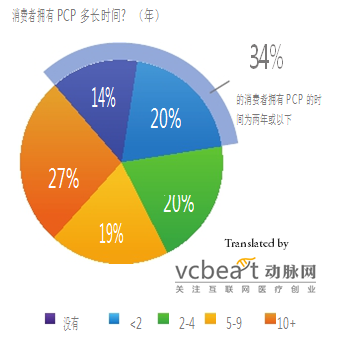
Surprisingly, 7% of consumers stated that they would actually prefer to replace their primary care physicians (PCPs) with online video consultations. Although this figure may seem low, it is high enough to warrant serious concern. Consumers who have maintained a patient–physician relationship for two to four years are the most likely to switch to online consultations—even more so than those who have recently established such relationships. This trend is partly demographic—younger individuals tend to place greater value on online video consultations—but it also reflects that some consumers are not fully satisfied with their current patient–physician relationships, citing issues such as long wait times to see a doctor. In contrast, consumers who have built patient–physician relationships lasting ten years or more are the least willing to replace their doctors.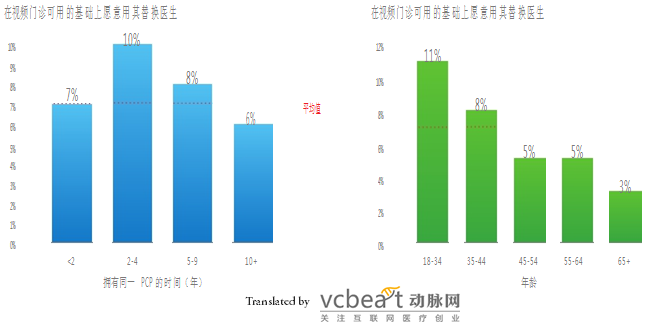
Demographic data indicate that up to 11% of young adults aged 18–34 are willing to replace their primary care physicians (PCPs) with video consultations. This suggests that younger consumers exhibit lower loyalty toward their physicians, aligning with the age group most inclined to utilize video-based care. Although the proportion of patients willing to substitute in-person visits with video consultations remains relatively low, change is imminent if younger healthcare consumers are indeed more likely to seek out providers who offer virtual services. In the near future, only those physicians who fully integrate video consultations into their clinical practice will secure a stronger competitive position in the long run.
Market Influence of Online Video Consultations
1. The healthcare system can acquire new patients while retaining existing ones.
Healthcare institutions have recognized the value of telemedicine in cost savings. Financial incentives under the Affordable Care Act (ACA) are shifting from a fee-for-service model to one based on patient outcomes. According to feedback from 84% of healthcare executives surveyed, telemedicine is highly important to their organizations, while 90% reported that they are developing or implementing at least one telemedicine program. However, most of these solutions are device-intensive rather than specifically designed for acute emergency care services.
Currently, 64% of consumers expect video consultations to be available for general services, such as prescription refills and after-hours care. As healthcare practitioners, we should further consider how to integrate telemedicine into the healthcare delivery system to compete with retail and urgent care models, thereby retaining existing patients while attracting new ones. Telemedicine also facilitates a shift toward patient-centered care—particularly for high-risk patients and those with comorbidities—by providing necessary primary and specialty care. This approach will improve patient health, prevent readmissions, and help retain more capitated revenue.
2. Employers can achieve cost savings.
For employers who bear the financial risk of their employees’ healthcare consumption, it is particularly significant to have more convenient alternatives to emergency department visits and emergency care utilization, thereby reducing employee medical costs. Towers Watson projected that by 2017, 71% of employers would offer telemedicine services to their employees, and that adopting telemedicine could save employers up to $6 billion.³ Telemedicine is also crucial for productivity, as consumers believe it saves time, enabling employees to return to work more quickly. Hourly workers, in particular, stand to benefit from telemedicine services; for these employees, absenteeism often leads to reduced wages, while employers face challenges related to understaffing.
3. Healthcare plans can retain key accounts, attract new consumers, and reduce costs.
As employers increasingly adopt telemedicine, they will consider selecting health plans that include these services. To remain competitive, retain large clients, and succeed in the new era of healthcare exchange, health plans must cover telemedicine. By providing telemedicine to all enrollees, health plans can also achieve direct cost savings.(To stay updated on the latest information about internet healthcare startups, please follow VCBeat’s WeChat official account: vcbeat. We also welcome you to engage with us on topics of interest, contact us via WeChat, and share your startup projects or related research insights.)